
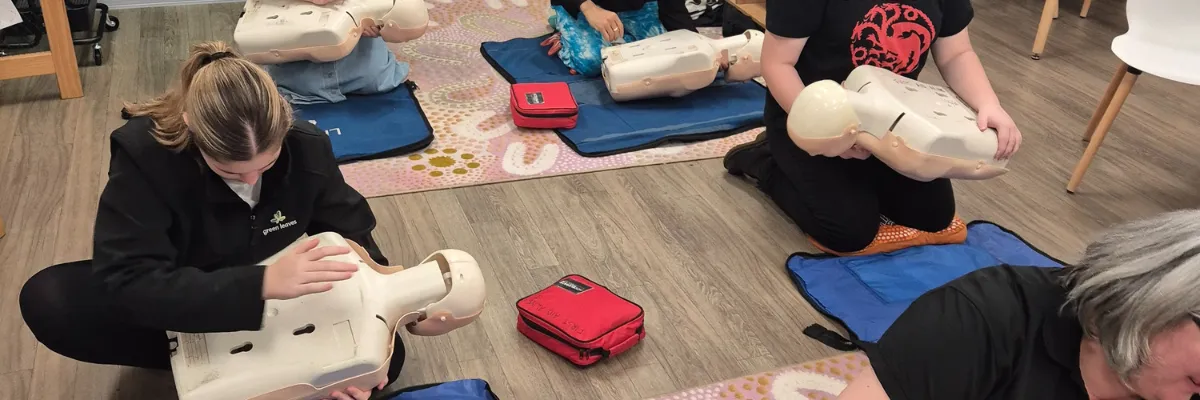
Workplace Electrical Rescue Certificate: How to Get Yours
You turned up to site induction Monday morning, tickets in hand - then the WHS coordinator flagged your workplace electrical rescue certificate as expired. Job's on hold until you sort it. Sound familiar?
If you've been around the electrical trade long enough, you've probably been there. Or you know someone who has. The thing about a workplace electrical rescue certificate - officially unit UETDRRF004, Perform Rescue from a Live Low Voltage Panel - is it's easy to lose track of. You're juggling your White Card, your first aid, maybe a confined space ticket. The LVR renewal sneaks up, and when it does, it doesn't just mean paperwork. It means you're not starting that job.
No fluff. No safety consultant speaks. Just what you need to know to get sorted.
What Is a Workplace Electrical Rescue Certificate?
A workplace electrical rescue certificate is the nationally recognized credential you receive after completing unit UETDRRF004 - Perform Rescue from a Live Low Voltage Panel. It confirms you can safely rescue a person in contact with a live LV panel, perform CPR, and manage the emergency scene until paramedics arrive. It's a mandatory compliance requirement for electricians, electrical contractors, and trades workers who operate near live low voltage electrical equipment in Australian workplaces. It is issued by registered training organizations (RTOs) only and is recognized across every state and territory in Australia.
Unit code: UETDRRF004
Issued under: the UET (Electrotechnology) training package
Nationally recognized across all Australian states and territories
Valid for: 12 months from date of completion
Required by principal contractors on most commercial and industrial job sites
Delivered by registered training organization's (RTOs) only
Who Needs a Workplace Electrical Rescue Certificate in Queensland?
If you work near live low voltage electrical equipment, this isn't optional. Safe Work Australia's electrical safety guidelines and the Queensland Electrical Safety Act 2002 both place the duty of care squarely on employers and workers to manage the risk of electrical incidents on site - and a current UETDRRF004 is how you demonstrate you can respond when something goes wrong.
Here's who that applies to in practice:
Beyond the legal side, there's the site entry side. Most Tier 1 and Tier 2 Brisbane principal contractors treat a current LVR ticket as a hard gate - not a nice-to-have. If your UETDRRF004 isn't current, you're not getting through site induction. It doesn't matter how long you've been in the trade.
Is LVR a Legal Requirement or a Site Requirement?
Often both. Under Queensland's Electrical Safety Act 2002 and the broader Safe Work Australia framework, workers and their employers carry a duty to manage the risks of working near live LV equipment. A current workplace electrical rescue certificate is one of the primary ways that duty gets demonstrated. On top of that, principal contractors set their own site entry conditions - and LVR is almost always on that list for electrical trades. So even where it's not strictly mandated by legislation in every scenario, the site will mandate it anyway.
Do Apprentice Electricians Need LVR?
Yes - from third year. If you're running a small electrical contracting team and your apprentices are in their third or fourth year, their LVR needs to be current before they're working near live LV equipment. A lot of employers arrange group training for their whole team at once, which is the most efficient way to handle it. More on that in the booking section.
Now you know who needs it - here's exactly what the course covers on the day.
What Does the UETDRRF004 Course Actually Cover?
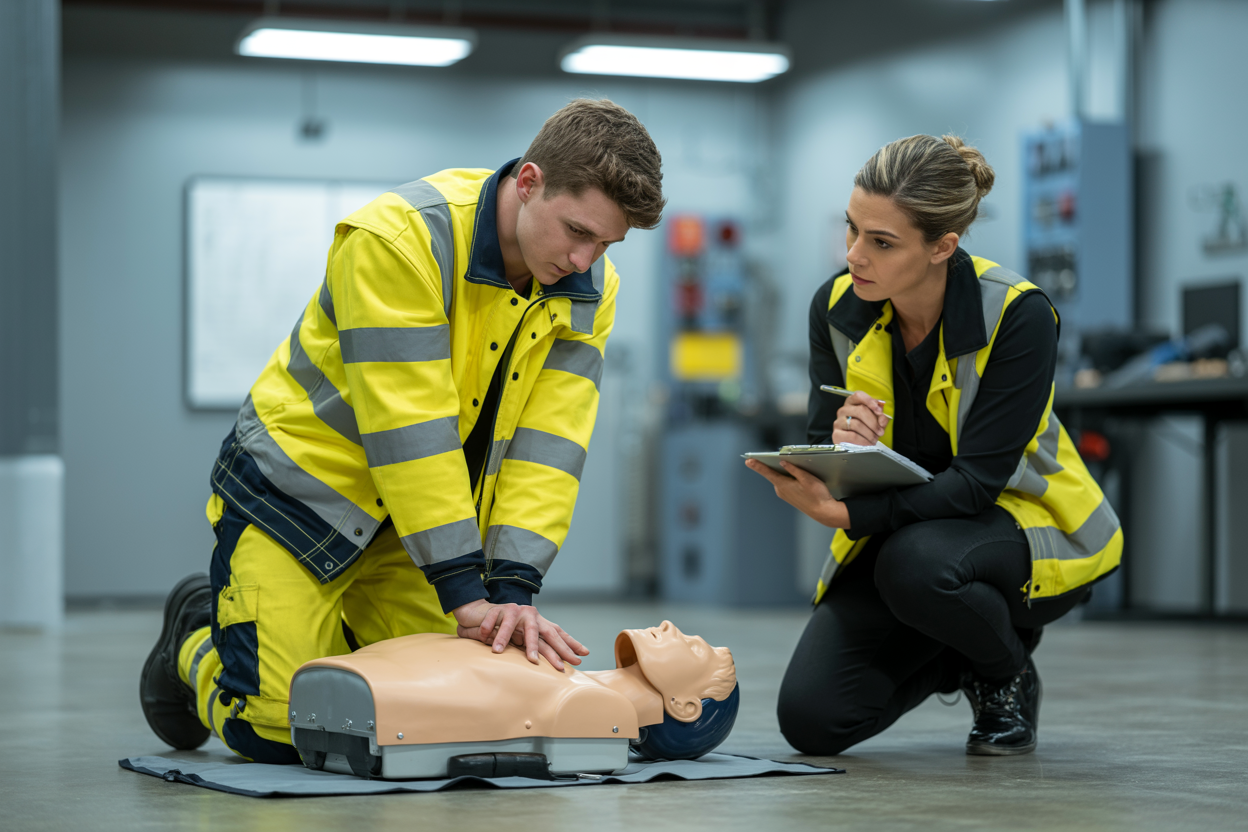
UETDRRF004 isn't a day of PowerPoint slides and theory you learned years ago on the tools. It's a hands-on, practical course - and the assessment reflects that. You're not just sitting in a room ticking boxes. You're demonstrating competency in real rescue scenarios.
There are four core areas the course covers and assesses:
Identifying hazards at a live LV panel scene - recognizing the risks before you touch anything; understanding what you're walking into
Safely isolating or managing the electrical source - how to make the scene safe for yourself and the casualty without becoming a second victim
Performing a rescue from contact with live LV equipment - the actual physical rescue; this is the practical skill that makes the ticket worth having
Applying CPR and AED use until emergency services arrive - because ventricular fibrillation is a known consequence of electrical shock, and the minutes before QAS arrives matter
The course is built around scenarios that reflect what actually happens on a Brisbane job site - not sanitized classroom simulations. Trainers who've worked in the electrical trade know the difference, and it shows in how the course is delivered.
No prior first aid certificate is required to do UETDRRF004. That said, CPR competency is assessed as part of the unit - so you'll be demonstrating chest compressions and AED use on the day regardless.
What Do You Need to Bring?
Keep it simple. Here's what to have ready on the day:
Photo ID - driver's license is fine
Enclosed footwear - non-negotiable for a practical electrical safety course
Any prior certificates if you're renewing - handy for your own records, not a course entry requirement
Yourself, on time - practical sessions run to schedule; late arrivals can miss assessment windows
With the course content clear, let's look at the question that catches most tradies off guard - how long the certificate actually lasts.
How Long Is a Workplace Electrical Rescue Certificate Valid?
Twelve months. That's it.
It's one of the shorter ticket validity periods in the trades compliance world, and it catches people out more than almost any other ticket. The reason it's 12 months isn't bureaucracy for the sake of it - ANZCOR (the Australian and New Zealand Committee on Resuscitation) updates CPR guidelines on a regular cycle, and practical rescue skills genuinely deteriorate without reinforcement. The 12-month window exists to make sure the person holding the ticket can actually do the thing the ticket says they can do.
What Happens If Your LVR Certificate Expires?
First - don't stress more than you need to. An expired workplace electrical rescue certificate doesn't mean you're starting from scratch or copping some kind of penalty. Renewal is the same course. There's no extended assessment, no extra theory, no fine for letting it lapse. You can renew at any time, even if you're overdue by weeks or months.
What it does mean is you can't work near live LV equipment until it's current again. If a principal contractor's WHS coordinator pulls you up at site induction - and they will check - you're off site until the certificate is sorted. That's the real cost. Not the renewal itself, but the lost days on the job.
When Should You Renew?
Four weeks before your expiry date is the right window. It gives you enough buffer to find a session that fits your schedule without scrambling, and it means there's no gap in your compliance record if a new principal contractor asks for it.
The practical problem is that most tradies are holding four, five, or six different compliance tickets at once - LVR, first aid, CPR, White Card, asbestos awareness, sometimes confined space. Keeping track of all those expiry dates in your head isn't realistic.
Once your renewal's sorted, the next step is making sure you're booking with a provider whose certificate will actually be accepted on site. That's coming up - but first, here's how to get your UETDRRF004 certificate sorted.
How to Get Your Workplace Electrical Rescue Certificate in Brisbane
Whether you're a sole trader sorting your own tickets or an employer booking a team, the process is straightforward. Six steps, and most of it takes under 10 minutes total.
Confirm you need UETDRRF004 - double-check your principal contractor's site requirements. Most Brisbane commercial and industrial sites require UETDRRF004 specifically. It's not interchangeable with a general first aid certificate or a different electrical safety unit.
Choose a registered RTO - your workplace electrical rescue certificate is only as good as the RTO issuing it. Verify ASQA registration before you book. More on how to do that in the next section.
Check upcoming session dates - [LVR Course Brisbane - see upcoming dates]
Book online and pay - you'll get a confirmation email immediately with the date, time, and what to bring.
Attend and complete the practical assessment - hands-on. Turn up ready to work.
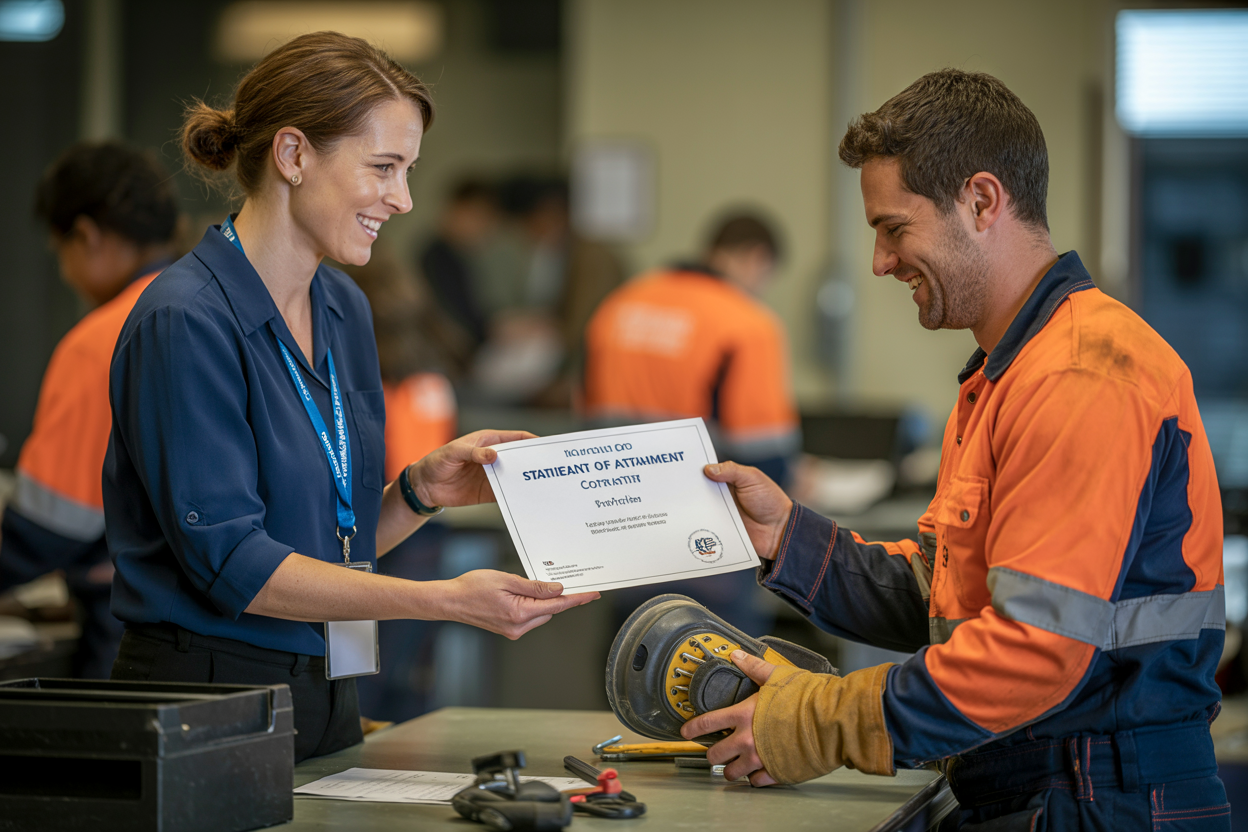
Receive your certificate - issued the same day or within 24 hours as a statement of attainment under the UET training package.
Booking for Yourself vs. Booking for Your Team
If you're a sole trader or subcontractor managing your own compliance tickets, the online booking path is the fastest option. Pick a date, pay, done. Most Brisbane electricians in urgent mode - certificate expired, job starts Monday - are through the booking process quickly.
If you're an employer or admin coordinator with staff whose LVR is due, group training is the smarter option. We come to your depot or worksite, train your whole team in one session, and issue a single invoice. No one loses a day travelling across Brisbane.
Can You Do LVR Training Online?
No. UETDRRF004 cannot be completed online. There are no fully online low voltage rescue courses that result in a recognized statement of attainment - full stop. Some providers offer an online theory component as pre-reading before the face-to-face session, but the practical assessment has to happen in person. If someone is selling you a fully online LVR certificate, that's not a certificate that will hold up on a Brisbane job site.
Once you've got a session locked in, there's one more thing worth confirming before you turn up to site induction - that your certificate will actually be accepted.
Will Your Certificate Be Accepted on Brisbane Job Sites?
This is the question that sits in the back of every subcontractor's mind, especially if you've ever seen a workmate's ticket questioned at site induction. The short answer is yes - provided the certificate was issued by a properly registered RTO delivering UETDRRF004 under the UET training package.
A workplace electrical rescue certificate issued under those conditions is nationally recognised under the Australian Quality Training Framework and accepted on all job sites governed by Safe Work Australia standards. That covers every major Brisbane principal contractor, every Tier 1 and Tier 2 builder, and every industrial site operating under standard WHS legislation.
The certificates that get questioned on site aren't from legitimate RTOs - they're from unaccredited providers running "refresher" sessions or electrical safety awareness courses that don't result in a proper statement of attainment. Those courses have their place, but they won't get you through site induction. Only a statement of attainment showing unit code UETDRRF004, issued under a nationally registered RTO, will do that.
How to Check If a Training Provider Is a Registered RTO
It takes about two minutes. Here's how:
Go to training.gov.au - this is the Australian government's national register of training organizations and accredited courses
Search for the provider by name or RTO number - their registration status, scope of registration, and the specific units they're authorized to deliver are all listed publicly
Confirm UETDRRF004 is on their scope - an RTO can be legitimately registered but not authorized to deliver every unit. Check the specific unit is listed, not just the general training package
When you get your certificate, here's what a valid statement of attainment for UETDRRF004 should show:
The unit code - UETDRRF004 - printed clearly
The issuing RTO's name and their national provider number
Your full name and the date of completion
The words "Statement of Attainment" - not just "Certificate of Completion" or similar
If any of those elements are missing, the certificate may not hold up on site.
Get Your LVR Certificate Sorted Before the Job Does It for You
The electrical trade in Brisbane moves fast. Jobs get locked in, site inductions get scheduled, and principal contractors don't wait around for someone to sort their compliance tickets. A lapsed workplace electrical rescue certificate isn't just a paperwork problem - it's a Monday morning phone call telling you that you're not starting the job you've already committed to. That's real money, and it's a situation that's entirely avoidable.
UETDRRF004 isn't a difficult ticket to hold. The course is practical, the renewal is straightforward, and getting booked in takes less time than it takes to find a park at a hardware store. What trips tradies up isn't the course itself - it's losing track of the expiry date while they're busy running jobs, managing their team, and dealing with everything else the trade throws at them. One phone reminder set at 11 months fixes that permanently.
There's also something worth saying about what the ticket actually represents. Underneath the compliance requirement, the site entry condition, and the renewal cycle - UETDRRF004 exists because electrical incidents happen, and the person most likely to be first on scene is another tradie. The practical skills you walk away with aren't just for passing an assessment. They're for the day something goes wrong on site and someone needs you to know what to do.
If your workplace electrical rescue certificate is due - or already overdue - the next step is simple. Check the upcoming session dates, pick one that fits your schedule, and get it booked. Your LVR certificate Brisbane sorted, your compliance record current, and your spot on site secured.