Who Should Take CPR Training? Top 7 Roles That Need It
CPR training isn't just for paramedics and nurses. It's for the person sitting three desks away from a colleague with a heart condition. The parent watching swimming lessons from the pool deck. The gym instructor whose client pushes a little too hard one morning. The childcare worker who needs to be ready before anything ever goes wrong.
If you've landed here wondering whether CPR training actually applies to you — the honest answer is: probably yes.
Cardiac arrest can happen anywhere, to anyone, at any age. In most cases, the first person on scene isn't a healthcare professional. It's an ordinary person — a coworker, a coach, a family member — who either knows what to do or doesn't. And here's the thing most people don't want to sit with: in the minutes before an ambulance arrives, you are the difference. Not a paramedic six minutes away. Not the person standing next to you. You.
In this article, we break down the seven roles most likely to need CPR training, explain what the nationally recognized HLTAID009 certificate covers, and help you work out whether now is the right time to book.
Who Needs CPR Training?
CPR training is recommended for anyone who may be the first person to respond to a cardiac arrest or drowning emergency. In Australia, the nationally recognized course is HLTAID009 — Perform CPR — and it applies across a wide range of roles and life situations.
The following groups have the strongest need for CPR training:
Parents and caregivers of young children
Childcare educators and early learning staff
Teachers, school aides, and sports coaches
Fitness instructors and personal trainers
Aged care and NDIS disability support workers
Trades and construction workers (WHS compliance)
Community volunteers — SES, surf lifesavers, swim teachers
CPR certification in Australia must include a hands-on practical component to be nationally recognised. Online-only courses do not meet the current Australian Resuscitation Council (ARC) standard for HLTAID009.
Why CPR Training Isn't Just for Medical Professionals
Most people assume CPR training is something healthcare workers sort out — and everyone else just hopes someone qualified is nearby when things go wrong. That assumption costs lives.
The majority of cardiac arrests in Australia happen outside of a hospital. At home, at the oval, in the office, at the pool. The first person on scene is almost never a clinician. It's a bystander who either has the skills to act or doesn't. According to the Australian Resuscitation Council, bystander CPR can more than double a person's chance of survival from out-of-hospital cardiac arrest. Without it, survival rates drop by roughly 10% for every minute that passes.
Proximity matters far more than profession. The question isn't whether you have a medical degree — it's whether you're likely to be near someone when something goes wrong. For most people, in most roles, the answer is yes.
Role 1: Parents and Caregivers
The risk at home is higher than most parents realise
If you have young children at home — or spend time around them — CPR training isn't optional. It's one of the most practical things you can do.
Queensland has some of the highest child drowning rates in Australia. Backyard pools, Moreton Bay, local aquatic centers, school swimming carnivals — the opportunities for a water emergency are woven into everyday life here. Add in the long warm season, and the window where a drowning incident can happen is basically half the year.
But it's not just drowning. Infants can choke. Toddlers fall. Children with undiagnosed heart conditions can collapse during sport. The scenarios aren't dramatic — they're ordinary moments that turn in a second.
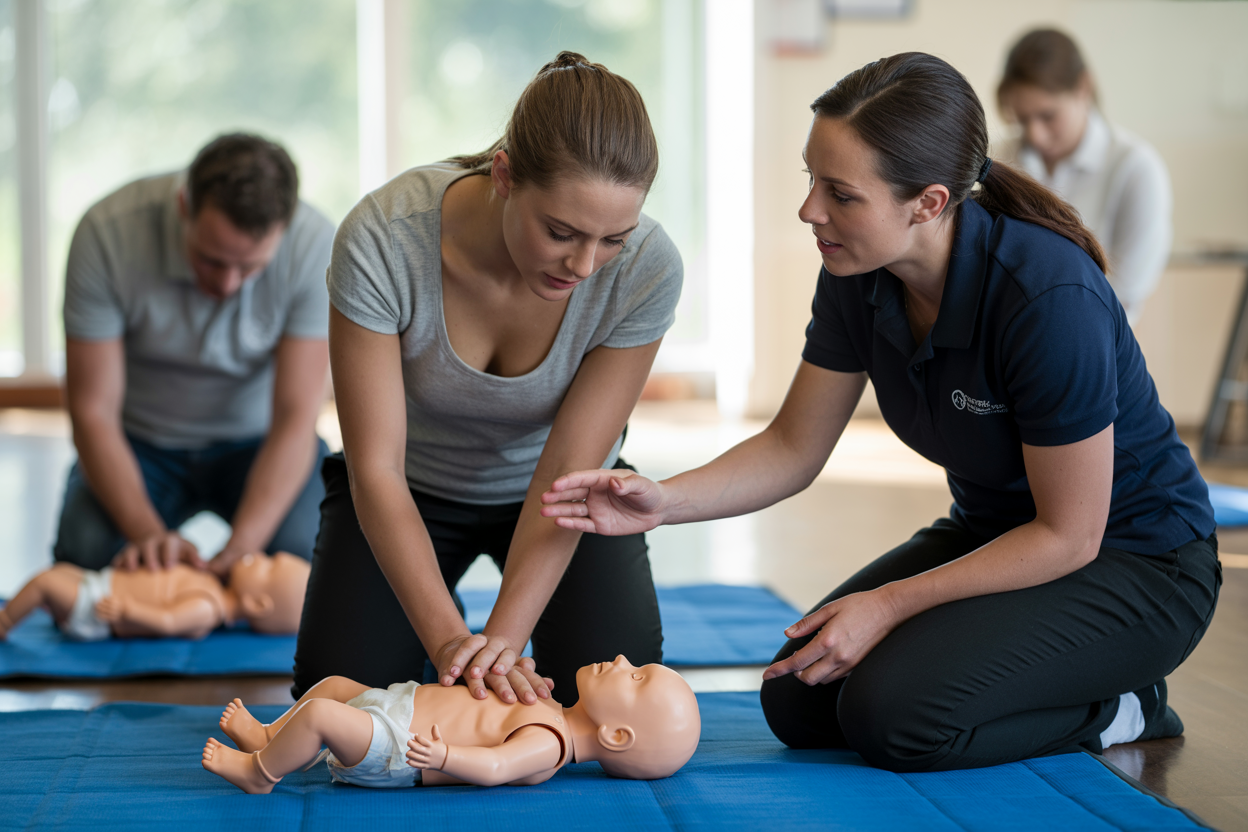
CPR technique differs between adults, children, and infants — compression depth, breath ratios, and hand positioning all change depending on who you're helping. HLTAID009 trains you across all three, so you're not limited to helping one age group.
Most parents who book don't do it because they think something bad is about to happen. They do it because a friend mentioned their course, or their child started swimming lessons, or they just got tired of knowing they hadn't done it yet. That's a completely normal trigger — and it's enough of a reason. You don't need to be a first responder. You just need to know the steps.
Role 2: Childcare Educators and Early Learning Staff
ACECQA compliance and what it actually requires
If you work in early childhood education, a current CPR certificate isn't a nice-to-have — it's a regulatory requirement your director is watching closely.
Under ACECQA guidelines, childcare services must have at least one staff member with current first aid qualifications — including CPR — present at all times during operating hours. Not on the roster for the week. Present. On the floor. Every single day.
If your certificate lapses, you're not just personally out of compliance — you become a gap in your centre's legal obligations. Directors know this. Compliance audits check for it. And the scrutiny on staff credentials is only increasing.
HLTAID009 covers the CPR requirement, but HLTAID012 — the childcare-specific first aid certificate — goes further. It includes anaphylaxis response, asthma management, and paediatric emergency care on top of CPR. For most childcare workers, HLTAID012 is the more complete solution and what most directors expect at room leader level and above.
The renewal cycle matters here too. Under ARC guidelines, CPR certification needs to be renewed every 12 months. A certificate that's 13 months old is a lapsed certificate — and that's exactly what shows up in an audit. Frame this as career protection, not just compliance. Room leaders with lapsed certs don't get promoted — they get flagged.
Role 3: Teachers, School Staff, and Sports Coaches
Duty of care and the gap most schools don't talk about
If you work in a school or coach a junior sports team, you have a duty of care to the people in your charge — and that duty doesn't pause because the designated first aider called in sick.
Education Queensland guidelines place a clear obligation on schools to maintain adequate first aid provisions during school hours and at school-organised events. In practice, that often means one or two staff members hold the credentials for the whole campus. It works fine — until the designated first aider goes home sick and the sports teacher is already running an oval session alone.
For sports coaches, the risk picture is different. Physical exertion during training and competition — rugby, AFL, cricket, swimming — carries an elevated cardiac risk, especially in older players or anyone with an undiagnosed condition. AEDs are increasingly installed at Queensland sporting grounds, but an AED in a cabinet doesn't help anyone if the coach on the sideline doesn't know how to use it.
Most coaches have never thought of themselves as a "first aid person." That's understandable. But when you're the adult in charge of kids on an oval on a 32-degree Queensland afternoon, the question of whether you know what to do matters a lot more than the label.
Role 4: Fitness Instructors and Personal Trainers
Insurance, registration, and client safety
If you're a registered fitness professional in Australia, CPR training isn't just a good idea — it's a condition of your industry registration and your professional indemnity insurance.
Most professional indemnity insurance policies carry the same expectation. If something happens with a client and your certificate was expired at the time, that's a conversation you don't want to be having with an insurance assessor.
High-intensity training environments — HIIT, bootcamp, outdoor group fitness — put the body under real stress. For clients who are older or carrying undiagnosed conditions, the risk of a cardiac event is documented, not hypothetical. Clients notice the PT who takes that seriously. It builds a different kind of trust.
Role 5: Aged Care and Disability Support Workers
NDIS compliance and what employers actually check
If you work in aged care or as an NDIS disability support worker, a current HLTAID009 certificate is the baseline expectation — and employers are checking it before your first shift.
The NDIS Practice Standards require current first aid certification — including CPR — as an employment baseline for support workers delivering hands-on care. It's what registered providers are audited against and what shows up on onboarding checklists when you apply.
Aged care accreditation frameworks reference staff capacity to respond to emergencies in the same way. A workforce where support staff can't perform CPR is a workforce with a compliance gap assessors will flag.
What makes this cohort different is the solo working context. Support workers often operate independently — in a client's home, in the community — without a colleague nearby. There's no designated first aider down the hall. It's you, your client, and whatever happens next. Lapsed certification can also stall a job start — don't let an expired cert be the thing that delays a role you've already been offered.
Role 6: Trades, Construction, and FIFO Workers
WHS obligations and remote worksite reality
If you work in trades, construction, or fly-in fly-out roles in Queensland, CPR training sits inside a legal framework — and the consequences of a gap on a remote worksite go well beyond a compliance notice.
The Queensland Work Health and Safety Act 2011 requires employers to ensure adequate first aid provisions on every worksite. Safe Work Australia's Code of Practice outlines the number of trained first aiders required based on site size, risk level, and distance from emergency services. On a large construction site or remote FIFO operation, that's not one person — it's several, all with current credentials.
CPR is increasingly flagged during site inductions alongside fire warden training and white card requirements. If you're going through an induction and your certificate is expired, that conversation with the site supervisor is an uncomfortable one. On a FIFO site hours from the nearest hospital, the person trained in CPR is the difference between a survivable event and a fatality.
Role 7: Community Volunteers and Water Safety Roles
Surf lifesavers, swim teachers, and SES volunteers
If you volunteer in a community safety role — or work in and around water professionally — CPR training isn't background knowledge. It's the core skill your role is built around.
Surf Life Saving Queensland requires CPR as a core component of the Bronze Medallion. It's not an add-on. It's central to what a lifesaver does, and annual renewal is mandatory to maintain patrol eligibility. Swim teachers are in the same position — most aquatic centres require HLTAID009 as a condition of employment before you get in the water with a class.
SES volunteers and community emergency response teams operate in high-pressure, low-resource environments where CPR capability matters most — showing up before professional services arrive, and needing the skill to make that response meaningful.
There's also a group that often gets overlooked: community sport administrators. The club president. The team manager. The treasurer who's always at the ground on game day. These people are consistently present at events for years, rarely think they need first aid training, but are frequently the first adult someone turns to when something goes wrong.
What Does HLTAID009 Actually Cover?
What you'll learn in the course
Most people are surprised by how much ground HLTAID009 covers — and how practical it is.
It's a nationally recognized qualification under the Australian Qualifications Framework, delivered by ASQA-registered RTOs, and it's the standard workplaces and regulators across Australia refer to when they say "current CPR certification." Here's what the course covers:
Recognizing cardiac arrest — unresponsiveness, absent or abnormal breathing
The DRS ABCD action plan — Danger, Response, Send for help, Airway, Breathing, CPR, Defibrillation
CPR on adults, children, and infants — compression rate, depth, hand positioning, differences between age groups
Hands-only CPR vs rescue breathing — when each applies under current ARC guidelines
AED use — operating a defibrillator alongside CPR
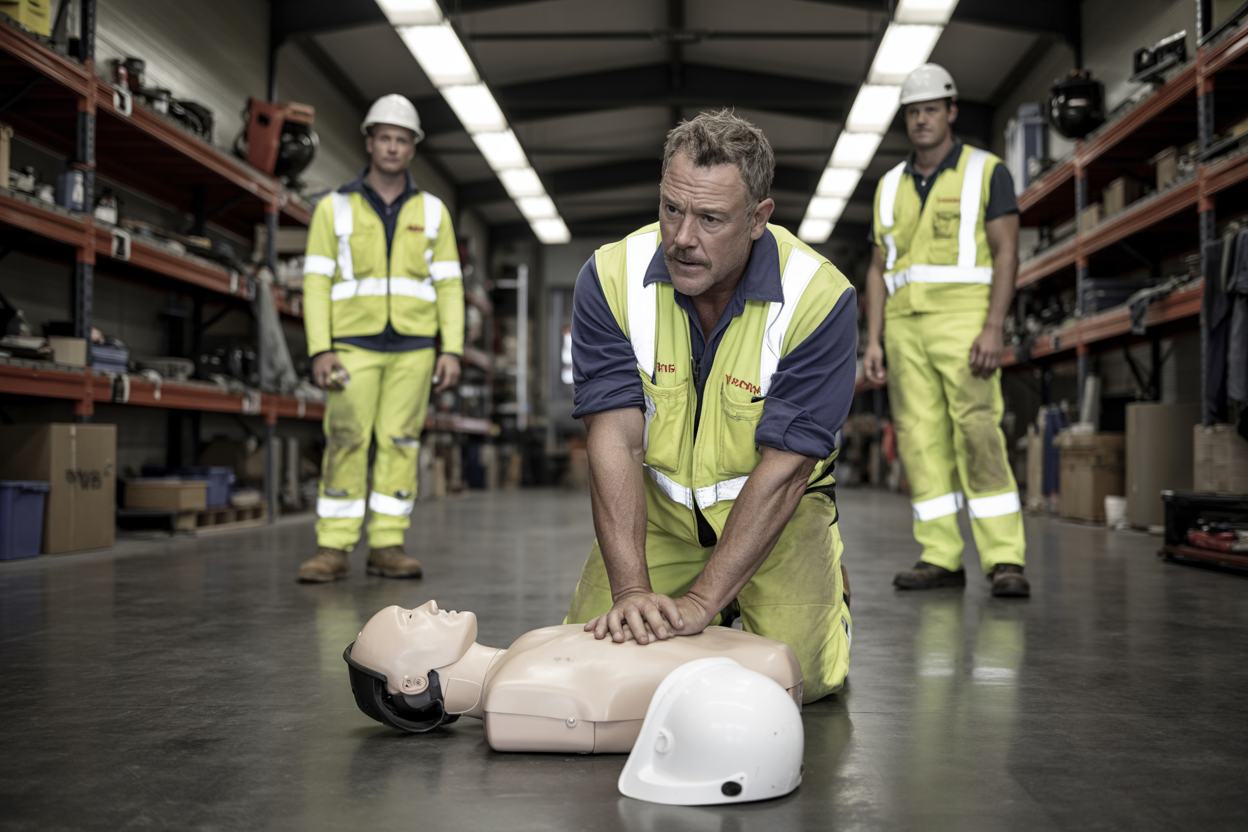
Practical manikin sessions — where the skill actually transfers
ARC guidelines recommend 100–120 compressions per minute for adults, at a depth of 5–6 centimeters. That's faster and deeper than most people expect — which is exactly why the practical component exists. The assessment must be completed face-to-face. Online-only certificates do not meet HLTAID009 requirements and are not nationally recognized.

How Often Do You Need to Renew?
The 12-month renewal rule explained
CPR certification needs to be renewed every 12 months — and that surprises more people than you'd expect.
The ARC recommends annual renewal for HLTAID009. Some frameworks accept two years for HLTAID011, but for HLTAID009 — and most childcare, NDIS, and workplace compliance requirements — it's 12 months. The reason isn't bureaucratic. Research consistently shows significant skill fade within months of training without practice. Compression rate drifts. Depth decreases. The sequence gets fuzzy. Annual renewal is a confidence refresh, not just a compliance tick.
The 12-month mark creeps up on most people. Life gets busy, the date slides past, and suddenly the cert is expired right when it matters — a job application, an audit, a compliance check. Treat it like a car registration. Set a reminder at the 10-month mark and book before the pressure is on.
Ready to Book Your CPR Course in Brisbane?
Don't wait for an emergency to wish you'd done this. If any of the seven roles in this article sound like your situation — or if you've just been putting it off and you know it — the next step is simple. The question of who should take CPR training almost always has the same answer: the person who's going to be nearby if something happens. And that's most of us.
Advanced Resuscitation Training runs HLTAID009 CPR courses across Brisbane with hands-on practical sessions and certificates issued the same day. As an ASQA-registered RTO, every certificate is nationally recognised and meets current ARC guidelines. Weekend and select weekday sessions are available, and booking takes a few minutes online.
If you've been putting this off, you're not alone — most people have. But the course is straightforward, the skill is real, and the confidence you leave with doesn't expire the way a certificate does.
✓ Nationally recognized HLTAID009
✓ Brisbane weekends and select weekdays
✓ Certificate issued same day
✓ ASQA-registered RTO