Who Needs Advanced Resuscitation Training? (HLTAID015)
If a client crashed in your chair right now, mid-treatment, would you actually know what to do beyond compressions? Not "call for help and wait." Actually manage it, airway and all, until paramedics walk through the door.
That question is exactly why so many nurses, dental staff, and allied health professionals end up here. Most of you already hold a basic first aid or CPR certificate. HLTAID011 covers compressions, a defib, the basics. HLTAID015 is a different animal entirely, built for people whose day-to-day work puts them closer to genuine clinical risk.
So who actually needs it, and who's just doing it because their employer said so?
By the end of this, you'll know exactly where your role sits, whether HLTAID011 is quietly leaving a gap in your coverage, and what to do about it if it is.
Who needs advanced resuscitation training?
Advanced resuscitation training, HLTAID015, is needed by anyone whose role involves higher-acuity patient risk than basic first aid covers. That includes:
Registered nurses working in practice, clinic or cosmetic/aesthetic settings
Dental practice clinicians and clinical leads
Allied health professionals treating high-risk clients (cardiac rehab, older or comorbid populations)
Paramedics and flight nurses
Aquatic center and fitness facility supervisors
Anyone whose employer, insurer or accrediting body requires a qualification beyond HLTAID011
If your job puts you within arm's reach of a genuine airway or cardiac emergency, and not just a scraped knee or a fainting spell, HLTAID015 is probably the right call.
Healthcare and Clinical Roles That Require Advanced Resuscitation Training
Registered Nurses in Practice, Clinic and Cosmetic Settings
If you're a practice nurse, a cosmetic or aesthetic injector, or a recovery nurse, this one's for you. You already know your basic CPR cold, that's not the issue. The issue is what happens in the gap between "started compressions" and "actually stabilized the patient."
Think about a vascular occlusion from a filler injection. Or an anaphylaxis-adjacent reaction that starts building the moment local anesthetic hits the bloodstream. These aren't hypothetical, they happen, and they happen fast. HLTAID011 doesn't really prepare you for that scenario. HLTAID015 does.
What tends to catch nurses off guard isn't the theory, it's the pace. A basic CPR refresher gives you a checklist and enough time to work through it. A real vascular event doesn't hand you that luxury, the window to act is small and the decisions stack on top of each other fast. That's the whole point of scenario-based advanced training, it's built to put you in that pressure before it happens for real, so the first time you're managing it isn't also the first time you're thinking it through.
"The nurses who come through our advanced course usually tell us the same thing afterward, they didn't realis how much their basic cert wasn't covering until they saw what the advanced scenarios actually involve."
Paramedics and Flight Nurses
For this group, HLTAID015 isn't a stretch qualification or a nice-to-have add-on. It's the baseline. It's what you recertify against, not what you're working toward. If you're already operating at this level clinically, the course content should feel like familiar territory, just formalized and current.
Dental Practice Clinical Staff
Dental settings carry their own quiet risk profile. Chairside collapse, sedation-adjacent complications, reactions to local anesthetic, these all sit closer to advanced resuscitation territory than most dental clinics like to admit. If you're the clinical lead in a practice that does any sedation work, or even just higher-volume local anesthetic procedures, this is worth taking seriously rather than assuming your basic cert has you covered.
For those of you working specifically in emergency responder roles rather than clinic settings, there's a separate angle on training worth reading that's tailored to that context. And if you want the clinical backing behind why this level of training matters, the ANZCOR guidelines lay out the resuscitation standards Australian training is built against.

Allied Health and High-Risk Client Settings
Physiotherapists and Exercise Physiologists Working With High-Risk Clients
If a decent chunk of your caseload is cardiac rehab, or clients who are older and carrying a few comorbidities, you're working closer to the edge than a general physio practice does. A client pushing through a supervised session with a cardiac history isn't the same risk profile as someone rehabbing a sprained ankle. HLTAID011 wasn't built with that scenario in mind. HLTAID015 was.
Aquatic Centre and Fitness Facility Supervisors
This one comes down to duty of care, plain and simple. If you're supervising a pool, near-drowning and cold-water incidents are a real possibility, not a remote one. And when something goes wrong in water, the response window is short and the stakes are about as high as they get. Basic first aid training doesn't really equip you for that specific chain of events the way advanced resuscitation training does.
A near-drowning isn't the same event as a collapse on dry land, and it shouldn't be treated the same way in training either. There's the water itself to manage, the cold, the airway complications that come from aspiration, and often a patient who's been submerged long enough that standard resuscitation steps need adjusting on the spot. Facility supervisors who've only ever done a basic course tend to describe the same feeling afterward, that they knew the compressions but weren't sure about everything that comes before and after them in a water-based incident. That's precisely the gap this training closes.
Roles that typically need HLTAID015:
How to Tell If Your Current HLTAID011 Certificate Isn't Enough
The Scope Gap Between HLTAID011 and HLTAID015
The short version: HLTAID011 covers compressions, basic airway, and defib use. HLTAID015 adds advanced airway management, oxygen therapy, and resuscitation scenarios that go well past what a general workplace certificate touches. If you want the full breakdown of the differences, that's covered in more depth in a separate piece, this is just the gap you need to know about right now.
Questions to Ask Yourself
A few quick questions usually make the answer obvious:
Does my role involve any real airway risk, sedation, anesthesia, or high-acuity procedures?
Would I ever need to use oxygen equipment on a patient or client?
Do I regularly treat high-acuity or high-risk clients, cardiac history, older age, comorbidities?
Has a near-miss ever happened in my workplace that made me question whether I'd actually know what to do?
Has my role grown since I got my last certificate, without my training keeping pace?
If you answered yes to two or more of those, your current certificate is probably leaving a gap. That's usually the moment people either had a scare themselves, heard about one from a colleague, or got a new employer requirement land on their desk, and it's exactly the moment worth acting on rather than sitting with.
Here's the honest bit most people don't say out loud. A lot of clinicians already suspect the answer before they run through the checklist. It's less about discovering something new and more about admitting what's already been nagging at the back of your mind since that last near-miss, or since your role started involving procedures your original certificate never anticipated. Certificates don't expire the moment your job changes, but the coverage they were built for does, quietly, without anyone flagging it.

Employer, Insurer and Accreditation Requirements
When Your Workplace or Insurer Mandates It
If you own or manage a clinic, this bit matters more than it might seem at first glance. Insurers are increasingly specific about what level of resuscitation training they expect from clinical staff, especially in cosmetic, dental and higher-acuity allied health settings. And if something does go wrong and it comes out in review that your team wasn't trained to the level your procedures actually require, that's not a conversation any practice owner wants to have. Getting the whole senior clinical team certified together isn't just about compliance paperwork, it's about closing that exposure before it becomes a problem.
Accreditation Pathways That List HLTAID015 as a Requirement
For cosmetic nurse injectors specifically, a lot of accreditation pathways now list HLTAID015 as an explicit requirement, not a suggestion. Same goes for CPD points, HLTAID015 can count toward your ongoing AHPRA CPD requirements, which makes it one of those rare bits of compliance training that actually works double duty, covering both your clinical competency and your points tally in one sitting.
If you're not sure exactly how your CPD points map against this course, the AHPRA CPD framework is the place to check the current requirements directly.
Clinic owners often end up doing this work on behalf of their whole team, checking which accreditation pathways their senior staff are tied to, then working backward to figure out what training actually satisfies each one. It's tedious, but it beats finding out after the fact that a staff member's accreditation lapsed because nobody cross-checked the requirement against their current certificate. Getting ahead of it once tends to save a lot of scrambling later, especially when renewals for different staff fall on different cycles.
What HLTAID015 Actually Covers (Brief Overview)
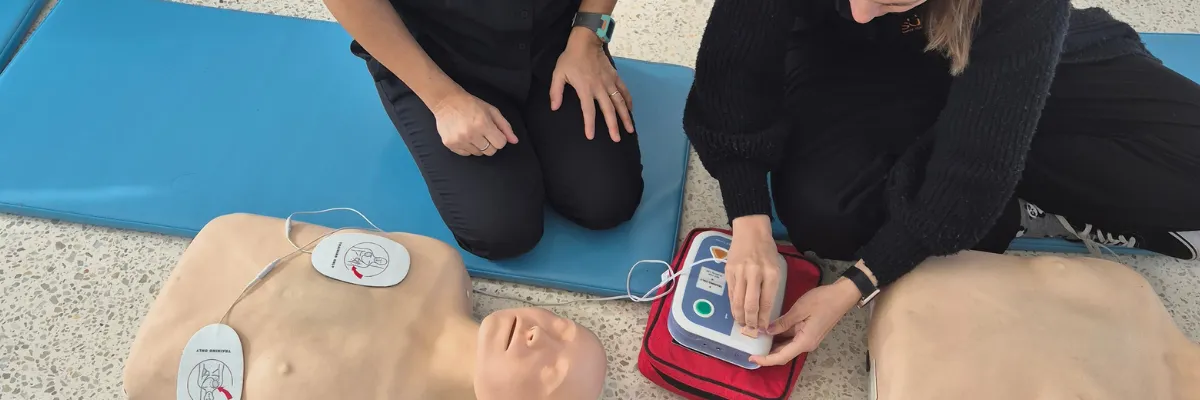
Without going too far into the weeds here, since the full curriculum lives on the course page itself, HLTAID015 covers three main areas: advanced airway management, oxygen therapy, and advanced resuscitation scenarios built around real clinical situations rather than generic workplace ones.
That's the shift in one sentence, really. HLTAID011 teaches you to respond. HLTAID015 teaches you to manage the situation until paramedics take over, which for a lot of the roles covered above is exactly the gap that's been sitting there unaddressed.
It's worth being clear about what this course isn't, too. It's not a repeat of your first aid certificate with an oxygen mask bolted on for good measure. The scenarios are built around what actually happens in clinical, dental, allied health and aquatic settings, not generic workplace incidents, which is usually the exact complaint clinicians have about training they've sat through before.
If you want the full breakdown of what's actually taught, session by session, that's all laid out on the HLTAID015 course page. And if getting a full weekday off is the thing standing between you and booking, there's a weekend and evening intensive scheduling option built specifically for clinicians who can't just close the appointment book for a day.
Wrap up
So, who needs it, in one line. If your role puts you near real airway or cardiac risk, if your employer, insurer or accreditor expects a level above HLTAID011, or if you've ever had a moment where you weren't sure your training would hold up, HLTAID015 is worth booking.
Go back through the list if you're still on the fence. Practice and cosmetic nurses, dental clinical leads, paramedics and flight nurses, physios and exercise physiologists with high-risk caseloads, aquatic and fitness supervisors. If you saw yourself in any of those, that's not a coincidence, that's the answer.
And if the role list didn't make it obvious, the self-assessment questions probably did. Airway risk, oxygen equipment, high-acuity clients, a near-miss that's stuck with you, a role that's grown past what your last certificate covers. Two yeses is usually enough to know where you stand.
Checking is the easy part, honestly. The harder part is admitting the gap once you've spotted it, especially if you've been telling yourself for a while that your basic cert probably still covers you. It probably doesn't, not for the situations this training is actually built around.
Booking doesn't need to mean losing a full clinic day either. That's the objection that stops most people, and it's the one weekend and evening intensives exist specifically to remove. You can get certified without closing the appointment book.
Weekend and evening intensives are available for exactly this reason, so a full clinic day off shouldn't be what's holding you back.