Which Childcare First Aid Course Should You Choose?
If you've ever sat at your desk googling which childcare first aid course to choose while a new educator's start date creeps closer, you already know the problem. You type in "childcare first aid course" and you get ten different providers all saying they'll sort you out, but none of them actually tell you which certificate covers what. HLTAID012. HLTAID011. HLTAID009. 22300VIC. 22556VIC. It reads like alphabet soup, and somewhere in the middle of all those letters and numbers is your actual compliance obligation, sitting there quietly waiting for you to get it wrong.
Here's what makes it worse. Get the wrong course and you haven't just wasted a training budget you didn't have much of to begin with, you might still be short of a certified first aider for ratio purposes, and that's the kind of gap that turns into a very bad phone call from ACECQA.
This guide walks you through exactly which course, or combination of courses, actually meets the requirement, so you're booking the right training the first time.
Quick Answer: Which Childcare First Aid Course Should You Choose?
For full ACECQA compliance, you need HLTAID012 plus 22300VIC (anaphylaxis) plus 22556VIC (asthma). HLTAID012 alone doesn't satisfy Regulations 136 and 137 on its own.
HLTAID012: the base childcare first aid qualification
22300VIC: Anaphylaxis Management (Regulation 136)
22556VIC: Asthma Management (Regulation 137)
HLTAID009: CPR-only refresher, not a substitute for the full qualification
HLTAID011: general workplace first aid, not ACECQA-compliant on its own
Why "Which Childcare First Aid Course" Confuses So Many Educators
Honestly, a fair bit of the confusion isn't your fault. The course code has changed more than once. What used to be HLTAID004 got replaced, and older educators who trained years ago are sometimes still working off a mental map that doesn't match what's current anymore. Add to that the number of generic first aid providers out there running the same workplace course for offices, warehouses, and childcare centers alike, with barely a mention of anaphylaxis plans or pediatric CPR, and you can see why so many Directors end up guessing.
The bit that trips people up most is that a "childcare first aid course" isn't really one course at all. It's a combination, and if a provider doesn't spell that out clearly, you can walk away thinking you're covered when you're not. We've written a separate piece on the actual steps to get certified if you want the full process once you've worked out which units you need, but for now, let's clear up the confusion properly.

HLTAID012: The Core Qualification Every Educator Needs
What HLTAID012 Actually Covers
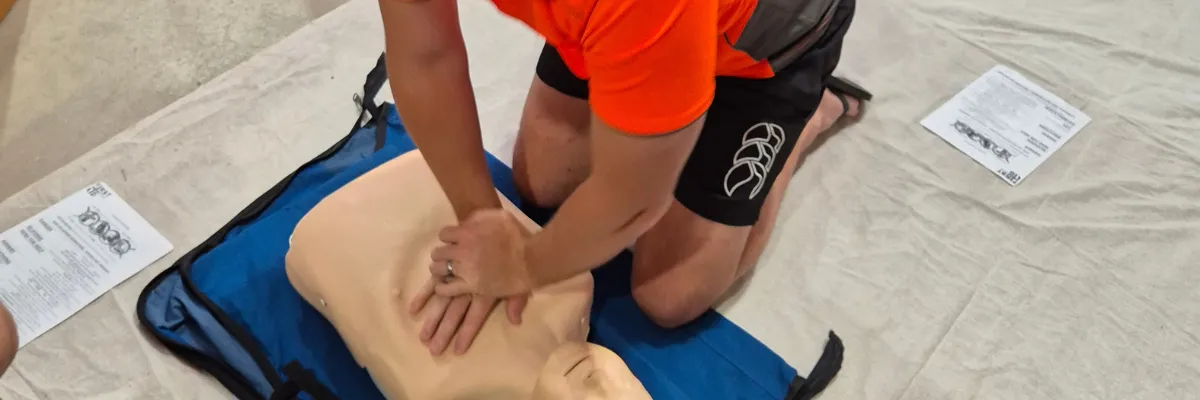
HLTAID012 is the current national unit for providing first aid in childcare settings and it's the one that replaced the older HLTAID004. It covers infant and child CPR, choking response, and the kind of paediatric emergencies that show up in a long day-care centre far more than in a standard office. It's aligned with ANZCOR guidelines, which is the resuscitation council standard used across Australia, and you can check the current unit details yourself on training.gov.au if you want to see exactly what's mapped to it.
Who Needs It
Every educator who counts toward your ratio needs to be currently certified in HLTAID012. For new hires, this is usually the first thing you should be booking, ahead of anything else, because it's what lets them count toward your numbers on the floor from day one.
Now here's the part that catches a lot of Directors out, and it's worth saying plainly rather than burying it: HLTAID012 on its own does not satisfy ACECQA's Regulations 136 and 137. It's the base qualification, not the full compliance picture. You'll still need anaphylaxis and asthma management training on top of it, which is exactly what the next section covers.
Why You Also Need Anaphylaxis and Asthma Management (22300VIC / 22556VIC)
This is the bit that generic first aid training just doesn't touch, and it's exactly where the real pain point sits for most Directors. Every center has kids with different allergens, different medications, different individual medical action plans pinned up in the kitchen or the office. Generic training can't drill your team on that, because it doesn't know your kids. It can only teach the general shape of a response.
22300VIC: Anaphylaxis Management
This unit sits under ACECQA Regulation 136 and it's specifically about anaphylaxis response, including EpiPen protocol and working through individual medical action plans for real children with real allergies, not a hypothetical one from a textbook. If you've got even one child with a diagnosed allergy at your center, and most centers do, this isn't optional.
22556VIC: Asthma Management
This one covers Regulation 137 and focuses on recognizing and responding to an asthma attack in a childcare setting specifically, which looks different to how it might present in an adult workplace. Outdoor play, exertion, seasonal triggers, all of it matters more with kids than most generic courses acknowledge.
Between the two, you're covering the two most common medical emergencies a center actually faces day to day. For further reading on anaphylaxis management standards, ASCIA is a solid authority to check.
HLTAID012 vs HLTAID011: What's Actually Different
This is one of the most common mix-ups Directors run into, and it's an easy one to make because both courses sound similar on paper. HLTAID011 is a general workplace first aid course. It's built for offices, retail, trades, basically any general workplace setting, and it does not cover the pediatric-specific content or the ACECQA compliance requirements that childcare demands. On its own, it won't get you across the line for regulatory purposes.
Course | Setting | ACECQA-Compliant Alone | Typical Buyer |
HLTAID012 | Childcare, pediatric-specific | No, needs 22300VIC + 22556VIC | Centre Directors, educators |
HLTAID011 | General workplace | No | Offices, retail, trades |
For a Director juggling ratios across a growing center, the real risk with HLTAID011 isn't just that it's the "wrong" course on paper. It's that you could book a whole team into it, spend the budget, pull staff off the floor, and still not have a single person who satisfies your actual first aider requirement. That's a booking mistake that costs you twice, once in dollars and once in ratio coverage you still don't have.
HLTAID009: The CPR Refresher Between Full Renewals
HLTAID009 is the CPR-only refresher, and it's not a substitute for HLTAID012 no matter how tempting the shorter, cheaper option looks when your training budget's already stretched thin. Think of it as the top-up you book between full HLTAID012 renewal cycles, a way to keep the whole team's skills sharp and current without pulling everyone off the floor for training.
It's a good, budget-friendly way to maintain confidence across your team between the bigger renewals. Just don't let it replace the full HLTAID012 requirement when someone's certificate is actually due. If you're unsure where a particular staff member sits in their renewal cycle, our piece on HLTAID012 validity and renewal timing walks through exactly how long each certificate lasts and when to rebook.
Which Course Do You Need? A Role-by-Role Breakdown
Here's the part most generic provider websites skip entirely, and it's genuinely the fastest way to answer which childcare first aid course to choose for your specific situation. Different people on your team, at different points in their journey with you, need different things.
Centre Directors & Educators (ratio-counted staff) These are your core, ongoing team members who count toward your daily ratio requirement. They need HLTAID012 plus 22300VIC plus 22556VIC, full stop. This is the baseline every ratio-counted educator should be sitting at.
New Hires / Onboarding Book HLTAID012 first, as a priority, because that's what gets them counted toward ratio the fastest. Anaphylaxis and asthma units can follow, but getting the base qualification sorted quickly is what actually solves your onboarding bottleneck.
Existing Staff Between Renewals This is where HLTAID009 fits, the CPR refresher that keeps skills sharp without the cost or disruption of a full HLTAID012 re-sit before it's actually due.
Non-Ratio Staff Admin staff, kitchen staff, anyone not directly counted in your educator-to-child ratio. Whether they need certification at all really comes down to your individual center policy, so it's worth checking your own procedures here rather than assuming.

Choosing a Provider That Trains Around Your Roster, Not the Other Way Around
This is the practical bit, and it's where a lot of centers get stuck without realizing it. The ratio trap is real. If you pull too many staff off the floor for training at once, you risk breaching your minimum ratio requirement and having to close a room or turn kids away, and that's not a risk any Director wants to explain to head office or to parents.
What actually works is a provider who trains around your roster instead of expecting you to build your roster around their calendar. That means:
Small-group, staggered sessions rather than one all-staff session that shuts part of the center down
On-site delivery, so you're not coordinating transport or finding backup educators to cover a commute
Digital certificates, so there's no chasing paperwork or waiting on a piece of paper to arrive in the mail
Getting this part right isn't just about convenience. It's what actually lets you hit 100% ratio-safe coverage without the constant background stress of someone being mid-onboarding, mid-renewal, or on leave at exactly the wrong moment.
Real Paramedic Experience, Not Just a Certificate to Teach From
There's a difference between a trainer who's memorized a slide deck and one who's actually been in the room when a child's airway closes over. Jarryd Hunter, who reviews the training content behind this course, has a genuine paramedic background in real-world emergency response, including pediatric and childcare-specific incidents. That's the kind of context that shapes how a course gets taught, not just what's on the slide.
The pattern that comes up again and again from Directors isn't really about the certificate at all. It's about walking away from a session actually feeling like their team could handle a real emergency, not just tick a compliance box.
Book the Right Course the First Time
If you've read this far, you already know what you actually need: HLTAID012 as the base, plus 22300VIC and 22556VIC to cover anaphylaxis and asthma properly. That's the combination that gets you genuinely ratio-safe and compliant with Regulations 136 and 137, not just partway there.
We run sessions in small, staggered groups so you're never forced to breach ratios or close a room to get your team trained, and certificates go out digitally, so there's nothing to chase.
Book online: acceleratefirstaid.com.au/book-type Or call: 0434 778 243
Want a simple reference to keep on hand? Our one-page "Which Childcare First Aid Course Do I Need?" The decision chart lays out exactly what's covered above in a format you can pin up in the staff room. Get in touch for a copy, and while you're there, it's worth asking about renewal reminders too, so you're never the Director scrambling the night before an ACECQA visit because a certificate lapsed without anyone noticing.
For the next steps once you've worked out what you need, our guide on the steps to get HLTAID012 certified walks through the actual booking and completion process, and our HLTAID012 validity and renewal piece covers exactly how long each certificate lasts.
Conclusion
There's no getting around the fact that childcare first aid requirements are more layered than most people expect walking in. Between the course codes, the regulation numbers, and the generic providers who blur the lines between a workplace course and a childcare one, it's easy to see why so many Directors end up second-guessing a booking they should be able to make with total confidence.
Once you know the combination though, the confusion mostly disappears. HLTAID012 sits as the foundation, 22300VIC and 22556VIC sit on top of it to cover anaphylaxis and asthma properly, and HLTAID009 fills the gap between full renewals without pulling your whole team off the floor. That's the actual answer to which childcare first aid course to choose, and it stops being a guessing game the moment you see it laid out plainly rather than buried in a provider's product list.
What it comes down to in practice is a checklist you can run against your roster, your ratios, and whoever's walking in the door as your next new hire. Centre Directors and educators get the full combination. New hires start with HLTAID012 first. Existing staff top up with HLTAID009 between renewals. Non-ratio staff depend on your own center policy. None of it needs to feel complicated once it's broken down by who's actually sitting in the room.
That's really all compliance ever needed to feel like, something you can check off with a bit of certainty rather than something that keeps you up at night wondering if you've missed a piece. Get the combination right once, keep an eye on renewal dates, and the background hum of never quite feeling fully covered starts to quiet down for good.