What to Do During Anaphylactic Shock: Essential Steps for Childcare Professionals
What if a 4-year-old in your care suddenly can't breathe, their lips turn blue, and you have less than 15 minutes to save their life?
I'll never forget Sarah's story. She was a childcare director in Southport who'd been working with kids for twelve years. She thought she knew everything about managing allergies until that Tuesday morning when little Emma collapsed during morning tea. Emma had eaten something with traces of nuts - something so small Sarah hadn't even noticed it on the ingredient list. Within minutes, Emma's face was swelling, she was struggling to breathe, and Sarah realized this wasn't just another upset tummy.
This nightmare scenario faces Gold Coast childcare professionals every day. Anaphylactic shock is a severe, life-threatening allergic reaction that can kill a child within minutes if not treated immediately. Unlike a mild allergic reaction where you might see some hives or a bit of swelling, anaphylaxis attacks multiple body systems at once. Breathing shuts down. Blood pressure drops. The child can lose consciousness.
As a childcare educator, you carry this enormous weight every single day. Parents drop their children off trusting that you'll keep them safe. That if something goes wrong, you'll know what to do. This isn't about ticking compliance boxes for ACECQA - this is about having the knowledge and confidence to act decisively when a child's life hangs in the balance.
In this guide, you'll learn the exact step-by-step protocol for managing anaphylactic shock. We're talking about everything from spotting the first warning signs to administering an EpiPen correctly to coordinating with emergency services. We'll cover the scenarios you might face here on the Gold Coast and the confidence-building techniques taught in our 22300VIC and 22556VIC certification courses.
Recognizing Anaphylactic Shock: Early Warning Signs That Save Lives
The hardest part about anaphylaxis? It doesn't always look like what you'd expect. We've all seen those dramatic movie scenes where someone eats a peanut and immediately starts gasping for air. But real life is messier. Sometimes it starts with a child complaining their tummy feels funny. Or they get a bit cranky for no obvious reason.
Here's what I learned from talking to paramedics across the Gold Coast: the children who have the best outcomes are the ones whose carers recognize the signs early. Not when the child is already turning blue - but in those first few minutes when something just doesn't seem right.
Physical Signs vs. Mild Allergic Reactions
The key thing to understand is that anaphylaxis affects at least two body systems at once. This is what separates it from a regular allergic reaction that might just give a child some hives or a runny nose.
Think of it this way - if you're seeing just one thing happening, keep watching closely. If you're seeing two or more systems affected at once, that's when you need to act fast.
I remember chatting with Amanda, who runs a family day care in Robina. She told me about a time when 3-year-old Jack started getting hives after eating lunch. At first, she thought it was just a mild reaction. But then he started coughing and said his throat felt "scratchy." That's when she realized this wasn't just hives anymore. This was affecting his breathing too. She grabbed the EpiPen and called 000 immediately.
Behavioral Changes and Gold Coast Triggers
Kids often can't tell you what's wrong when anaphylaxis starts. Instead, watch for these behavioral changes:
Sudden change in voice (hoarse, muffled, or high-pitched)
Refusing to eat or drink
Pointing to their throat or chest
Becoming unusually quiet or clingy
Seeming confused or restless
Working here on the Gold Coast, we've got some specific risks other places don't deal with. Beach and outdoor triggers to watch for include bee and wasp stings, bluebottle stings at the beach, tropical plant allergies, and fire ant bites. In our heat and humidity, reactions can progress faster than they might in cooler climates - what might take 15-20 minutes elsewhere can happen in 5-10 minutes here.

Emergency Response Protocol: Your Step-by-Step Action Plan
When anaphylaxis hits, your brain wants to freeze. It's completely normal. But this is exactly when you need to move fast and follow a clear plan.
Michelle, a childcare director in Nerang who's been through three anaphylactic emergencies, told me: "The first time, I panicked. I wasted precious seconds trying to remember what I was supposed to do. Now I've got the protocol so drilled into my head that my body just takes over."
The Critical First 60 Seconds
Second 1-10: Assess and Call
Look at the child - are they conscious? Breathing? Alert?
Shout for help immediately - "I need assistance NOW!"
Call 000 or have another staff member do it
Say exactly: "We have a child experiencing anaphylactic shock at [your center name and address]. We need paramedics immediately."
Second 11-30: Get the EpiPen and Position
Locate the child's EpiPen (should be in their medical kit)
If the child is conscious and breathing, help them sit up
If they're unconscious or struggling to breathe, lay them flat with legs elevated
Stay calm and talk to the child - "You're going to be okay, I'm here to help you"
Second 31-60: Administer the EpiPen
Remove the blue safety cap
Place orange end against outer thigh
Push down hard until you hear a "click"
Hold for 10 full seconds
Remove and massage injection site
Managing Multiple Children During Crisis
This is what keeps most childcare workers up at night. You've got 15+ other children who are now watching one of their friends having a medical emergency.
If you have other staff:
Designate someone as "group manager"
Move other children to a different area where they can't see what's happening
Give the group manager a simple activity - story time or quiet play
EpiPen Usage: Proper Technique and Common Mistakes
Most EpiPen "failures" aren't actually device failures. They're technique mistakes that anyone could make under pressure. But here's the thing - an EpiPen is designed to be simple to use, even under pressure.
Step-by-Step Injection Process
The "Orange to Thigh, Blue to Sky" Rule:
Orange end goes against the child's outer thigh
Blue end points toward the sky
You can inject through clothing - don't waste time removing pants
Detailed technique:
Pull off the blue safety cap (don't touch the orange end)
Hold the EpiPen firmly like a dart
Place orange end against outer thigh, halfway between hip and knee
Push down hard until you hear a "click"
Hold for 10 full seconds (count out loud: "1 Mississippi, 2 Mississippi...")
Remove and massage injection site for 10 seconds
Keep the used EpiPen to give to paramedics
After Administration and Storage
The EpiPen isn't a magic cure. It's buying you time until proper medical help arrives. Monitor the child constantly - are they breathing better? Is their color improving? If the child isn't improving within 5-10 minutes and you have a second EpiPen available, don't hesitate to use it.
Common Dangerous Mistakes
Injecting into wrong body part: Only use the outer thigh muscle
Not holding long enough: Always count to 10
Hesitating because you're afraid of hurting them: Hesitation can be deadly
Assuming one EpiPen is always enough: Sometimes you need a second dose
After the Emergency: Recovery and Follow-Up
The ambulance has left. The child is safe at the hospital. And you're sitting there thinking, "What now?" This is the part nobody really prepares you for - everything that comes after the emergency.
Hospital Handover and Staff Debriefing
Critical information for paramedics:
Exact time symptoms started and suspected trigger
Time EpiPen was administered
Child's response to treatment
Any other medications the child takes
Immediate staff debrief (same day): Gather everyone involved. This isn't about blame - it's about learning. Discuss what went well, what could improve, and how everyone's feeling emotionally.
Family follow-up: Call within 24 hours: "I wanted to check how [Child's name] is doing and see if you have questions about what happened." Schedule a face-to-face meeting within a week to review the incident and address concerns.
Emotional Support for All
Anaphylaxis emergencies are traumatic for everyone - the child, witnesses, staff, and families. The child might be scared about returning to childcare. Other children need reassurance. Staff can experience secondary trauma even when everything goes right. Take care of everyone's emotional needs, not just the medical procedures.

Building Confidence Through Professional Training
Reading about anaphylaxis management and actually feeling confident to handle it are two completely different things. The childcare professionals who feel most confident have had proper hands-on training that prepared them for the reality of these emergencies.
22300VIC vs 22556VIC: Which Do You Need?
22300VIC - Basic requirement for all childcare educators:
Recognition of anaphylaxis symptoms
Basic EpiPen administration
Emergency response procedures
Required for all staff, renewed every 3 years
22556VIC - Advanced course:
Required if your center cares for children with diagnosed anaphylaxis
More detailed training and risk assessment
At least one staff member needs this
Also renewed every 3 years
Hands-On Practice Makes the Difference
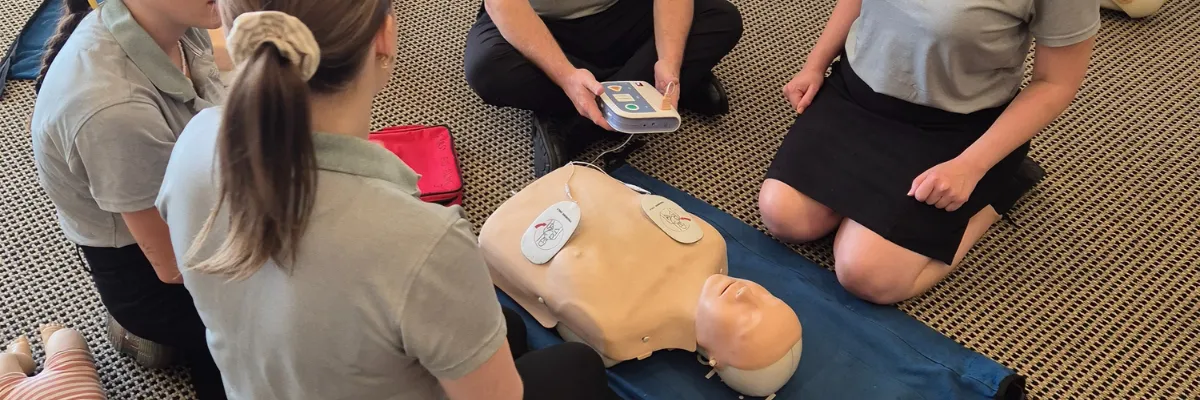
Good practical training includes practice EpiPens you can actually fire, scenario-based training with time pressure, and multi-child management scenarios. The difference in confidence before and after practical training is amazing.
Rachel from Robina told me: "Before training, I used to lie awake worrying about anaphylaxis emergencies. After completing 22300VIC with practical scenarios, I feel like I've got the tools and confidence to handle whatever comes up."
Creating Emergency Preparedness Culture
Individual training is important, but what really builds confidence is working in a center where emergency preparedness is taken seriously. This means regular team training, clear procedures, well-maintained equipment, and open communication about concerns.
The transformation every childcare professional describes after comprehensive training is the same: they go from feeling anxious and underprepared to feeling capable and confident. "I went from dreading the possibility of an emergency to feeling like I could handle whatever came up," one educator told me.
Ready to build the confidence that could save a life?
Don't wait for an emergency to realize you need better training. Our comprehensive 22300VIC and 22556VIC courses are designed specifically for Gold Coast childcare professionals, with realistic scenarios, hands-on practice, and ongoing support.
Next Gold Coast training sessions start soon - limited spots available. Join the hundreds of local educators who now feel confident and prepared to handle anaphylaxis emergencies.
Contact us today at 0434778243 | 04FIRSTAID to secure your place in life-saving anaphylaxis training that goes beyond compliance to build real confidence and capability.