What to Bring to a First Aid Course: Don't Forget These
Here's something every first aid trainer has seen at least once — probably more times than they'd care to admit.
Someone arrives at the course flustered. They're five minutes late, they can't find their booking confirmation, and they've just realised they left their reading glasses in the car. For the first stretch of the session, they're not really there. They're still back in the carpark, mentally running through everything that went wrong that morning.
And that's a shame — because a first aid course isn't a passive experience. You're learning skills that could genuinely save someone's life. You want to be present from minute one.
The good news? This is completely avoidable. Most of what you need to bring to a first aid course is already in your house. It just takes five minutes the night before to get it together.
Whether you're heading to an HLTAID011 course in Brisbane, booking in on the Gold Coast, or showing up for the first time ever with no idea what to expect — this article covers exactly what to bring, what to wear, what your body will actually be doing on the day, and what you absolutely don't need to worry about (because your provider supplies it).
No guesswork. No last-minute scrambling. Just show up ready.
What to Bring to a First Aid Course
To attend a first aid course in Australia, you need valid photo ID, your booking confirmation, any required pre-course work, and appropriate clothing for physical activity. Most providers — including HLTAID011 courses in Brisbane and the Gold Coast — do not require you to bring your own equipment.
Your quick-answer checklist:
Government-issued photo ID (driver's license or passport)
Booking confirmation or enrolment reference number
Completed pre-course online theory (if required by your provider)
Comfortable, flexible clothing suitable for kneeling and floor work
Enclosed, flat-soled footwear — no thongs or heels
Reading glasses if you need them for written assessment
Any relevant medical information your trainer should know about
Water bottle and a light snack
What to Wear to a First Aid Course
Why Clothing Choice Actually Matters for Your Assessment
This isn't just comfort advice. What you wear to a first aid course can genuinely affect how well you perform — and whether you get assessed as competent on the day.
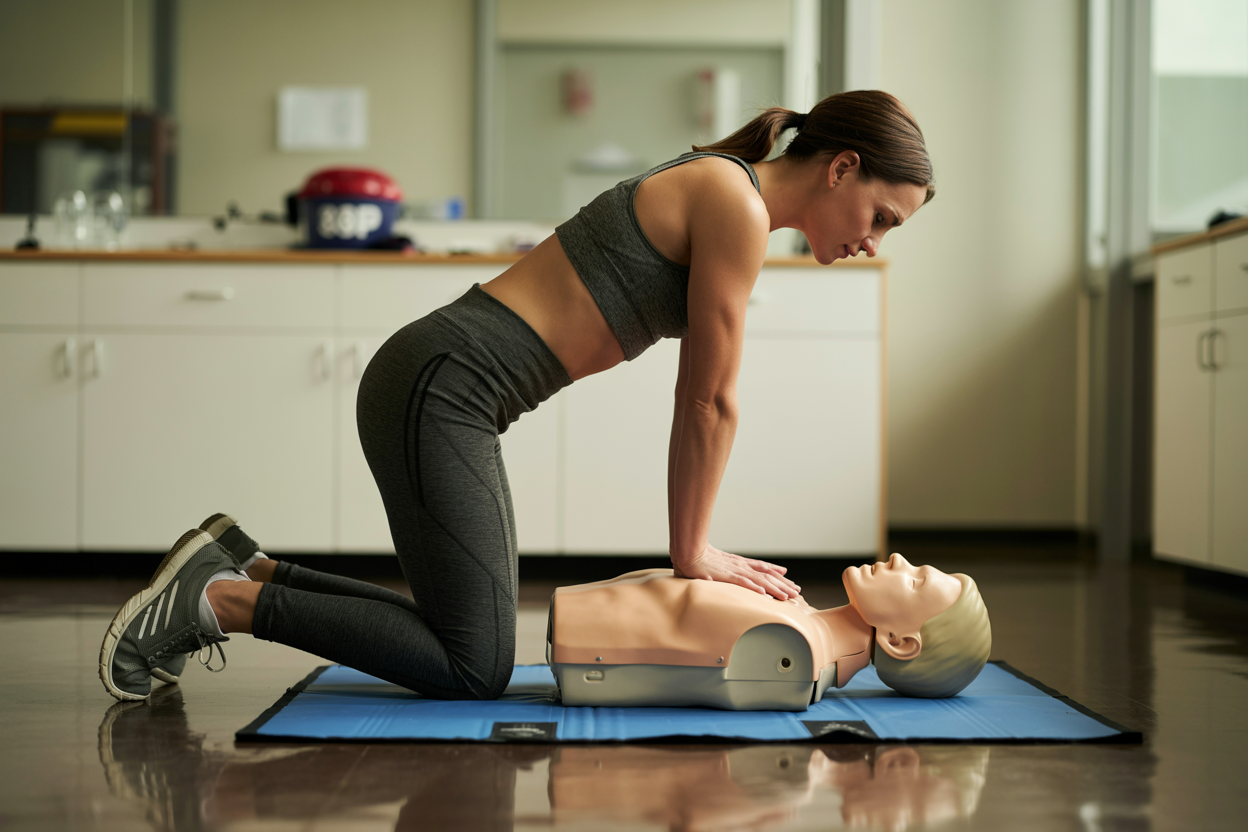
HLTAID011 requires sustained kneeling, bending, and floor-based CPR compression work. You're not sitting at a desk watching a slideshow. You're down on the ground, working over a manikin, putting real body weight behind each compression. The current ARC resuscitation guidelines specify a compression depth of 5–6cm — and hitting that depth consistently requires you to transfer your body weight through your arms. Restrictive clothing doesn't just make you uncomfortable. It physically limits your technique, and that can affect your assessment performance.
Activewear, gym clothes, or anything you'd wear to a casual workout is ideal. Loose-fitting pants, a comfortable t-shirt, a zip-up hoodie if the room runs cold. That's genuinely all you need.
The Best Footwear for First Aid Training
Flat, enclosed footwear is what you're after. Athletic sneakers are ideal — they give you the stability you need when you're applying body weight over a manikin, and they won't slip out from under you mid-compression.
If you're coming to a course on the Gold Coast, it's worth noting that training rooms can get warm — lightweight, breathable sneakers are a better call than heavy boots.
What Not to Wear and Why It Can Affect Your Performance
Thongs, heels, or open-toed sandals - these create genuine stability problems when you're leaning over a manikin at compression depth. Leave them at home.
Tight jeans, pencil skirts, or body-con dresses - anything that restricts movement from the hip down will make kneeling and bending uncomfortable and limit your range of motion.
Business formal - this one catches a lot of people out, especially staff sent by their employer on a weekday. If you're coming straight from the office, bring a change of clothes. A blazer and dress shoes are fine for the commute. They're not fine for sustained chest compressions.
Once you've sorted your outfit, there are a couple of documents you'll want to have on hand before you walk through the door.
Documents and Details to Have Ready
Photo ID: Why It's Non-Negotiable for a Nationally Recognised Certificate
This one isn't optional, and it's not bureaucratic box-ticking either. There's a real reason behind it.
Accelerate First Aid is an ASQA-registered RTO, which means every Statement of Attainment issued through this course sits within Australia's nationally recognised training framework. That certificate is the thing that satisfies WorkSafe Queensland, ACECQA, and AHPRA when they ask to see proof of your training. For that certificate to be valid, your RTO is required to verify your identity before issuing it. No ID, no certificate — it's that straightforward.
Accepted forms of photo ID:
Australian driver's license
Passport
Proof-of-age card
One thing worth double-checking before you leave home: the name on your ID needs to match the name on your enrolment exactly. If you've recently changed your name and your licence hasn't caught up yet, give the team a call before the day so it can be sorted in advance.
Your Booking Confirmation and Enrolment Details
Have your enrolment reference number somewhere easy to find — either pulled up on your phone or printed out. Your confirmation email is also where you'll find the venue address and parking details. It sounds obvious, but it's the kind of thing people assume they'll remember and then absolutely don't on a Saturday morning. Contact Accelerate First Aid directly if you need your certificate by a specific date for work or compliance reasons.
Pre-Course Online Theory: What Happens If You Haven't Done It
Many first aid courses — including HLTAID011 — use a blended delivery model. That means there's an online theory component you complete in your own time before the face-to-face practical day. The practical session is built on the assumption that you've already worked through that theory. If you arrive without having completed it, you may not be able to be assessed on the day.
If you're not sure whether your course requires pre-course online work, or you're not sure if you've actually finished it — don't leave that question until you're standing at the venue door. Contact Accelerate First Aid before the day and get it sorted.
With your documents sorted, the next thing worth knowing is what your body will actually be doing on the day.
Physical Preparation: What to Expect on the Day
How Physical Is a First Aid Course, Really?
It's not a boot camp. Nobody's going to ask you to do burpees or run laps. But it is actively physical throughout — and that's worth knowing going in, especially if you've never done one before.
The day is a mix of trainer demonstrations, scenario-based practice, partner work, and floor-based skills. You'll be kneeling, bending, and moving around the room. A light meal beforehand is a good idea — low blood sugar during compression work is more common than people expect. No prior experience is needed, and there's no fitness test. People of all ages and fitness levels complete this course every week.
CPR Compressions: What Your Body Will Actually Be Doing
The most physically demanding part of the day is CPR. Specifically: sustained, full-depth chest compressions on a manikin.
Per the current ARC resuscitation guidelines, compressions need to reach 5–6cm in depth at a rate of 100–120 per minute. That's not a gentle tap. You're driving the heel of your hand down with real force, loading through your wrists, shoulders, and lower back. Sustained compressions — which is what you'll practice — are genuinely tiring, even for people who exercise regularly.
That's not said to scare anyone off. It's said so you walk in knowing what to expect, wearing the right clothes, with fuel in your system.
CPR survival rates double when a bystander acts within the first 3–5 minutes of cardiac arrest. — Australian Resuscitation Council
The physical demand of training exists because the real thing is demanding. Knowing how to do compressions properly — not just theoretically, but in your body — is the whole point.
If You Have an Injury, Disability, or Medical Condition
If you have a physical condition that might affect your ability to kneel or perform compression work, let your trainer know before the session begins — not halfway through when you're already on the floor and in pain.
Reasonable adjustments are available. The assessment can be adapted without compromising your ability to demonstrate competency. Your privacy is respected — this is a one-on-one conversation with your trainer, not an announcement to the room.
If you're ready to book, [view our upcoming Brisbane and Gold Coast course dates here] — new sessions added weekly.
With all of that covered — what's on you to bring and prepare — everything else on the day is handled.

What Your Provider Will Supply You Don't Need to Bring This
This is where a lot of first-timers overthink it. People show up wondering if they need to buy a manikin, or print out study materials, or source their own gloves. The answer to all of that is no.
Here's what's waiting for you when you walk in.
Manikins, AEDs, and Training Equipment
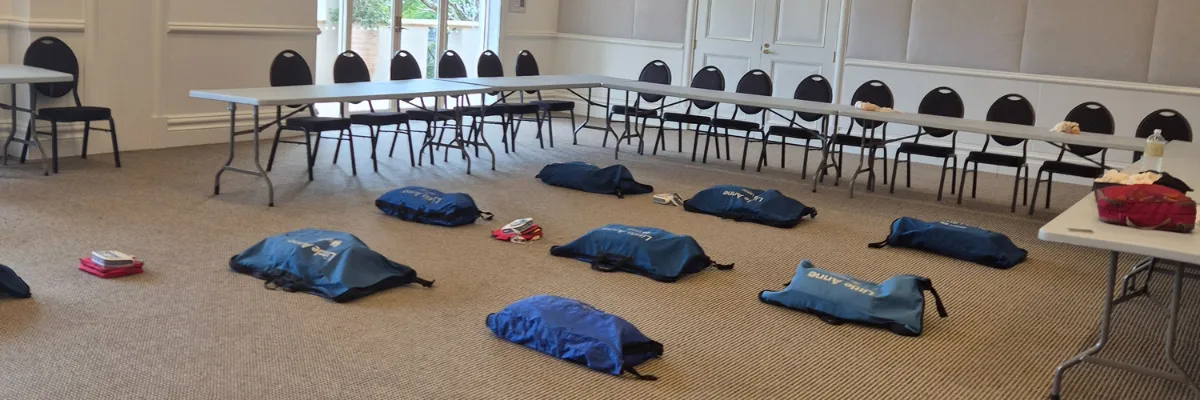
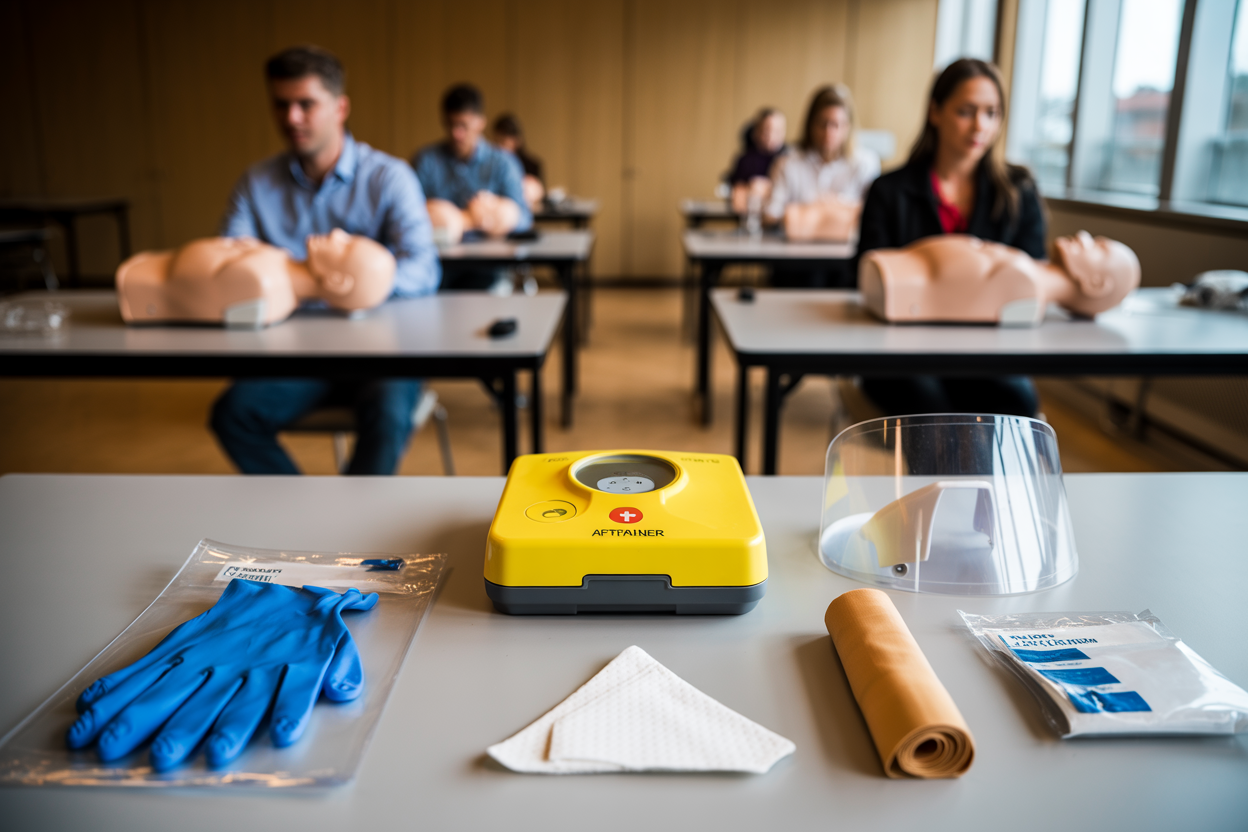
Every piece of equipment you'll use on the day is supplied by Accelerate First Aid. That includes adult and infant CPR manikins, AED trainers, and bag-valve masks. You don't need to purchase anything, hire anything, or figure out how to get a full-sized resuscitation manikin into the back of your car.
The AED trainers are non-functional devices built specifically for training — same form factor as the real thing, same audio prompts, no electrical output. Using one in the session means that if you ever face a real AED in an emergency, it won't be the first time you've held one.
For more on what's included in the course, [see the full HLTAID011 course inclusions here].
Bandages, Gloves, and Scenario Props
Bandages, triangular bandages, disposable gloves, face shields, and wound simulation props are all supplied for the practical scenarios. You won't be expected to bring your own, and disposable items are single-use and provided for each participant.
One thing worth flagging at the time of booking rather than on the day: if you have a latex allergy, let the team know in advance. Non-latex glove alternatives are available, but it's much easier to have them ready before the session starts than to sort it out at the venue.
Workbooks, Assessment Paperwork, and Pens
Assessment paperwork is managed entirely by the provider. There are no workbooks to purchase, no study guides to print, and no stationery list to work through. If you've completed your pre-course online theory and you arrive with your ID and booking confirmation, you have everything you need.
The written component of the assessment — where it exists — is straightforward. It's not an exam you need to cram for. It's a check that the theory you worked through before the day has landed.
Manikins, gloves, paperwork — all taken care of. But depending on your situation, there are a few extra details worth thinking through before the day.
Special Considerations: Kids, Dietary Needs, and Longer Courses
Attending With Dietary Requirements or Allergies
Food is worth thinking about in advance. Some venues are close to cafes or shops — your booking confirmation will usually give you a sense of what's nearby. But the safer play, especially if you have specific dietary requirements, is to bring a packed lunch.
If you're part of a group booking where the organiser has arranged catering, make sure your dietary needs are flagged with the provider at the time of booking — not on the morning of the course. A reusable water bottle is worth throwing in your bag regardless. Staying hydrated through a physically active session matters more than people expect.
Courses That Run Across Multiple Sessions or Days
Multi-day schedules are more relevant when you're combining units — for example, HLTAID011 alongside HLTAID012 — so if you've booked a combined course, clarify the full schedule at the time of booking so there are no surprises. Your identity is verified on the first day, so you don't need to bring your ID again for subsequent sessions — but keep it handy just in case.
Bringing Children or Arranging Care
Training venues are not childcare environments. There's no supervision available for children, and the practical nature of the course means you need to be fully present throughout. Arrange care before you book — not after — and factor in travel time on both ends.
With all of that covered, here's the quick-reference version — everything in one place so you can screenshot it the night before.
Quick-Reference Checklist Before You Leave Home
You've read the detail. Here's the short version — everything condensed into one place so you're not hunting back through the article at 9pm the night before your course.
Screenshot this checklist and you're ready.
Ready to Book Your First Aid Course in Brisbane or the Gold Coast?
Accelerate First Aid delivers nationally recognized HLTAID011 — Australia's standard first aid certificate — as an ASQA-registered RTO. Certificates are issued promptly after successful assessment, so you're not left waiting when you need proof of training for work, compliance, or peace of mind. Browse upcoming sessions across Brisbane and the Gold Coast and lock in a date that works for you.
Training a team? We bring the course to you. On-site HLTAID011 for groups across Brisbane and the Gold Coast means no venue hire, no staff travel, and no disruption to your operations. Get in touch and we'll put together a quote based on your group size and location.
Not sure if HLTAID011 is the right course for your situation? Our team can help in one quick call or message — no pressure, just a straight answer so you can book with confidence.
Your Next Three Steps
Start by browsing upcoming sessions in Brisbane and the Gold Coast and locking in a date that suits you. Once you're booked, complete the online theory component before your course day — your confirmation email will have everything you need to get started. Then just show up with your ID, your booking confirmation, and activewear. We'll handle everything else.