What Is the Chain of Survival in First Aid?
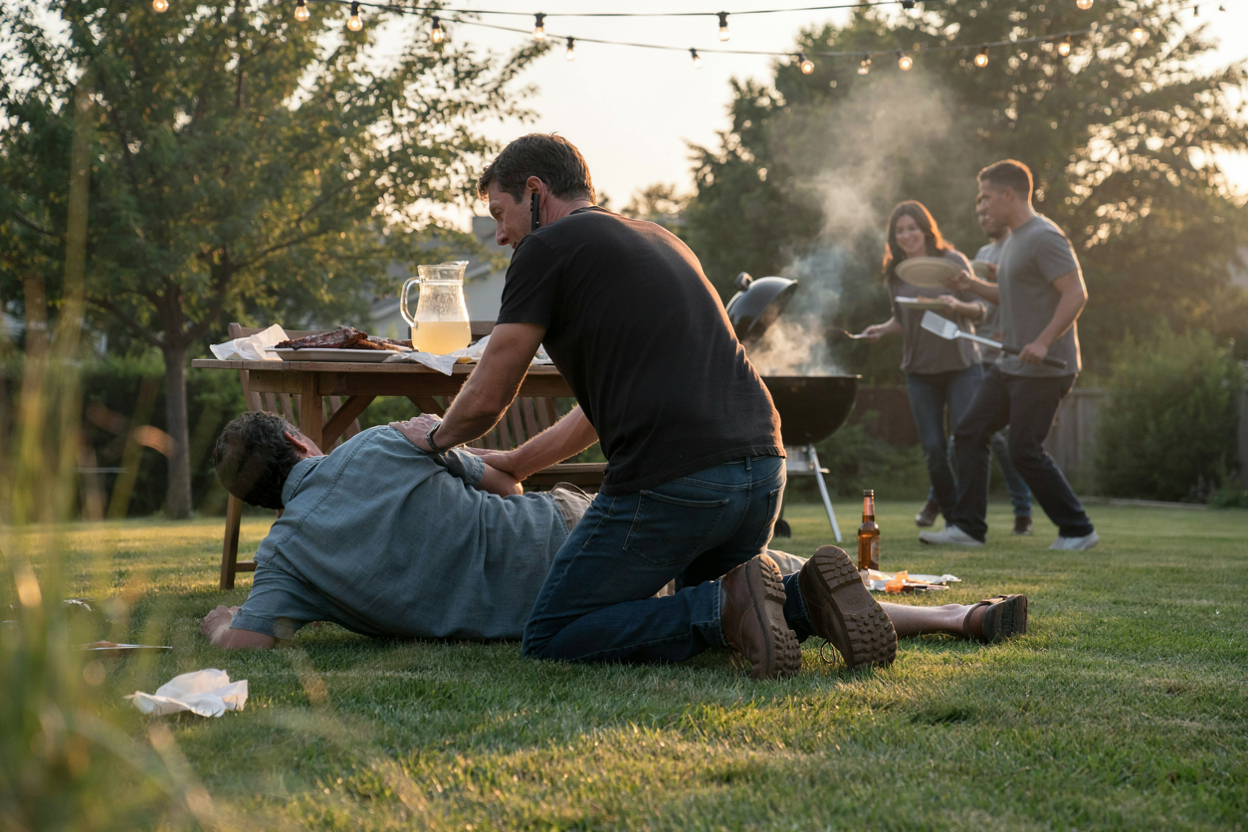
Picture someone collapsing at a barbecue, at the gym, in an office. No warning. One second they're talking, the next they're on the ground and not breathing right. The ambulance isn't there yet, and it won't be for a few minutes at least. Those minutes aren't empty time. What happens in them decides a lot, often more than anything that happens once trained help finally arrives.
That's what the chain of survival first aid training is actually built around: four linked actions that, done in the right order, give someone their best shot at getting through that moment. Miss a step or do them out of sequence and the whole thing weakens, even if every other step is done well. It's not a theory or a slogan. It's a practical sequence that's been shaped by decades of resuscitation research, and it holds up because it reflects what actually happens in the body during cardiac arrest, not just what sounds reassuring on a poster.
Here's the part most people don't expect. The first two links in that chain aren't a paramedic's job. They're yours. Recognizing what's happening and starting CPR happens before anyone in a uniform even shows up. That single fact reframes the whole idea of first aid, from something you learn "just in case a professional needs backup" to something you learn because, for a stretch of minutes, you are the response.
This article goes through what each link actually involves, why the order matters as much as the actions themselves, and where you fit into all of it, whether you've done a first aid course before or not.
The Chain of Survival: The Short Answer
The Chain of Survival is four linked actions that give someone the best chance of surviving a cardiac arrest before paramedics arrive. Each link depends on the one before it, so skipping or delaying a step weakens everything that comes after it.
Early recognition - spotting the signs something is seriously wrong and calling Triple Zero (000) straight away
Early CPR - starting chest compressions to keep blood and oxygen moving to the brain and heart
Early defibrillation - using an AED (defibrillator) as soon as one is available
Early advanced care - paramedics and hospital teams taking over with more advanced treatment
Four steps, but the first three happen before any paramedic gets near the person. That's the bit worth sitting with for a second. It also explains why so much first aid education focuses on these opening moments rather than on hospital procedure. The hospital part is important, but it's the part you have the least influence over.
Why the Chain of Survival Matters to Everyone, Not Just Paramedics
That single fact changes everything about who the Chain of Survival is actually for. It's easy to hear "chain of survival" and picture something that belongs to paramedics and hospital staff, a clinical process that happens once the ambulance arrives. It doesn't work that way. By the time trained medical help gets there, two of the four links have usually already happened, or they haven't happened at all, and that's the difference that matters most.
Think of the chain like an actual chain, made of four links. It only takes one weak link for the whole thing to fail, no matter how strong the other three are. A paramedic can do everything right in link four, but if nobody called Triple Zero in link one, or nobody started CPR in link two, there's often very little left for link four to fix. It's not a comfortable idea, but it's an honest one, and honesty is more useful here than reassurance that skips over it.
That's the uncomfortable truth underneath the Chain of Survival. It's not really a hospital process with two extra steps tacked on for the public. It's a bystander process with two steps at the end that hospitals handle. The first links belong to whoever happens to be standing there. Often that's someone with zero medical training. Often that's just an ordinary person who happened to be in the room, holding a phone, standing near a defibrillator cabinet they've walked past a hundred times without really looking at it.
This is also why the Chain of Survival gets taught the way it does, as a sequence rather than a pile of isolated facts. Learning "how to do CPR" in isolation misses the point a little. Learning where CPR sits in the bigger sequence, what comes before it and what it's buying time for, is what actually makes the skill usable under pressure.
The 4 Links of the Chain of Survival, Explained
Link 1: Early Recognition and Calling 000
This link starts before anyone touches the person. It starts with noticing.
Cardiac arrest doesn't always look like the movies. There's often no clutching at the chest, no dramatic collapse with time to say something. A lot of the time it looks like someone who's suddenly unresponsive, not breathing normally, maybe making strange gasping sounds that aren't actual breaths. People sometimes mistake this for snoring, or think the person is just having some kind of fit and will come good on their own. That hesitation, the bit where onlookers stand around trying to work out what's actually happening, is often where the most time gets lost.
The job in this link is simple even if it doesn't feel simple in the moment: check if they're responsive, check if they're breathing normally, and if either answer is no, call Triple Zero (000) immediately. Not "wait and see." Not "give it a minute." Straight away. The call itself sets off everything else, from dispatch instructions to the clock that starts ticking on every link after it.
Link 2: Early CPR
Once the call is made, the next job is to keep blood moving. That's really all CPR is doing at its core. The heart's stopped pumping on its own, so chest compressions are doing that job manually, pushing oxygenated blood to the brain and the rest of the body's organs until either the person's heart restarts or more advanced help takes over.
The reason "early" matters so much here is that the brain doesn't cope well without oxygen. Every minute without compressions is a minute the body is running on empty. CPR doesn't need to be perfect to matter. It needs to start. Plenty of people worry about getting the depth or the rhythm exactly right, and while technique does matter, an imperfect set of compressions started immediately will almost always beat a technically flawless set that starts three minutes late.
Link 3: Early Defibrillation (AED Use)
This is the link people are usually most nervous about, and it's also the one that needs the least training.
An AED, or automated external defibrillator, is built for exactly this situation. It's designed so someone with no medical background can use it safely. A few things worth clearing up:
It talks you through every step out loud, from the moment you switch it on
It analyses the person's heart rhythm itself and only allows a shock if one is actually needed
You cannot accidentally shock someone who doesn't need it
Using it wrong is far less risky than not using it at all
AEDs are turning up in more workplaces, gyms, and public buildings every year. Knowing one is nearby, and having the confidence to grab it, is half the battle. The other half is not overthinking it once it's in your hands. Every AED walks you through the same basic process, and the machine itself is doing the clinical decision-making. Your job is just to follow along.
Link 4: Early Advanced Care
This last link is the one paramedics and hospital teams own. It covers everything from advanced airway management to medications to the ongoing treatment once someone reaches hospital. It's included here for completeness, but it's not something a bystander is doing. By the time this link kicks in, the first three have already set the outcome in motion, for better or worse.
It's worth including anyway, because it closes the picture. The Chain of Survival isn't only a bystander concept, it's a full continuum from the first moment something goes wrong through to definitive treatment. Understanding where your role ends and the paramedics' role begins makes the whole sequence easier to hold in your head.
Why the Order Actually Matters
It's tempting to think of these four links as a checklist where order is a minor detail. It isn't. It's the whole point.
Delay link one, and link two starts late no matter how good the person doing CPR is. Delay link two, and by the time an AED arrives, there may be nothing left for it to correct. This is the domino effect of the Chain of Survival. Every delayed link pushes the odds down for every link after it, and there's no later step that fully makes up for lost time earlier in the sequence.
There's no shortcut version where you skip to the AED and hope for the best, and there's no version where great CPR makes up for nobody calling Triple Zero five minutes earlier. The chain works because it's sequential. Each step buys time for the next one to actually count. Think of it less like a set of independent tasks and more like a relay, where the baton has to be passed cleanly from one runner to the next for the whole race to mean anything.
This is also why training in recognition, CPR, and AED use together, rather than as separate topics, tends to produce more confident responders. Knowing all three links as one connected sequence is what makes it possible to move through them without stopping to think about what comes next.

Where You Actually Fit in the Chain
If you've read this far thinking "that's all well and good, but I'm not medically trained," that thought is exactly the point this section needs to answer.
You were never meant to be. Links one, two and three were built for people exactly like you. Not doctors. Not paramedics. Just whoever happens to be there when it matters. The entire design of the Chain of Survival assumes the first person on scene has no clinical background, and it works anyway, because recognizing a collapse, calling 000, pushing on a chest and following an AED's voice prompts don't actually require years of training. They require someone willing to act.
That flash of doubt, the one that says "what if I do it wrong" or "what if I'm the only one here and I freeze," is common. Almost everyone feels some version of it. But the honest answer is that doing something imperfectly beats doing nothing while waiting for someone more qualified to show up. Sometimes there isn't anyone more qualified in the room. Sometimes you're it.
That's not a burden. It's actually the whole reason the system works at all. Every AED cabinet mounted on a wall, every workplace first aid officer badge, every set of CPR instructions printed on a poster near a pool, is built around the same assumption: that ordinary people, given a bit of preparation, are capable of carrying the first links of this chain themselves.
Turning Knowledge Into Confidence
Understanding the Chain of Survival is the easy part, really. Reading about chest compressions and AEDs is nothing like doing them, and there's a real gap between knowing the theory and trusting yourself to act on it when someone's actually on the ground in front of you.
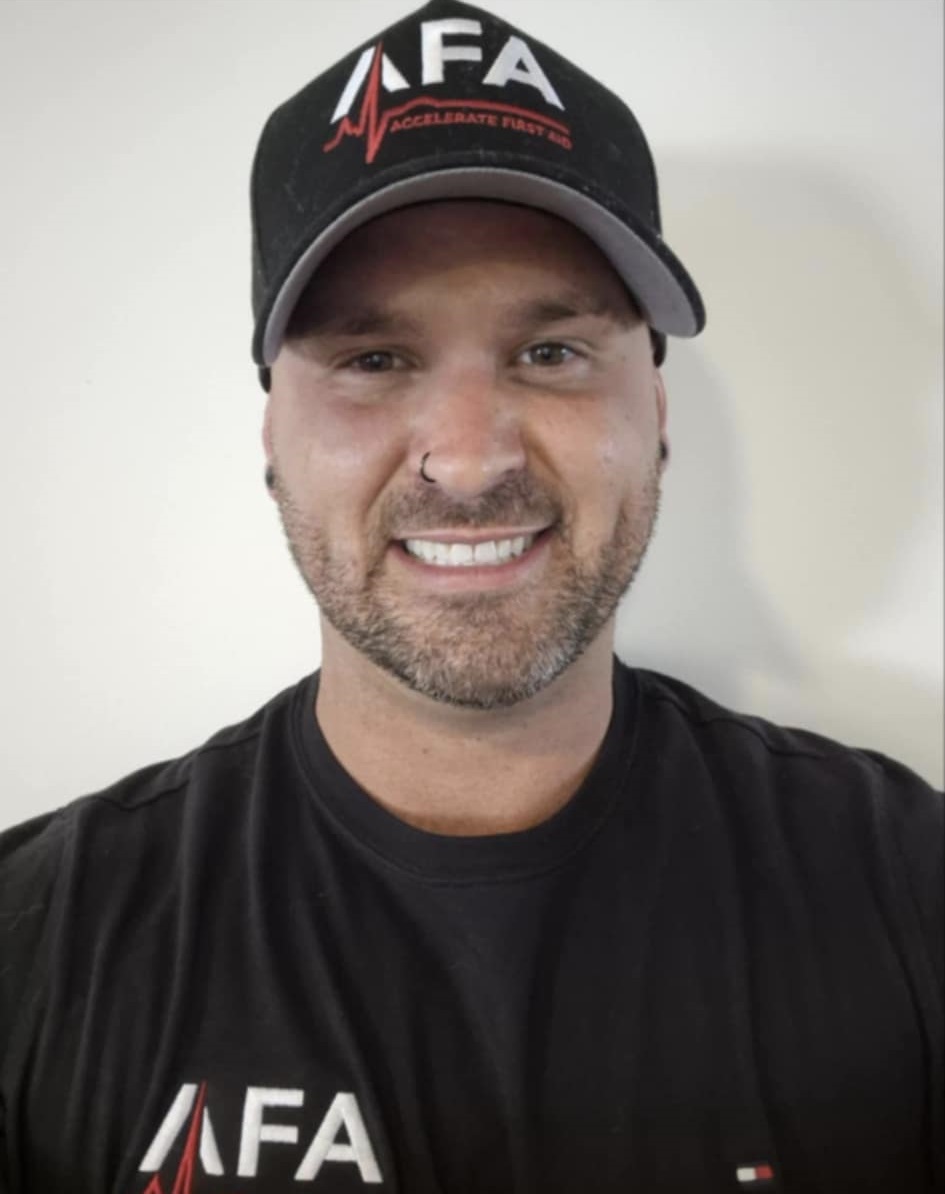
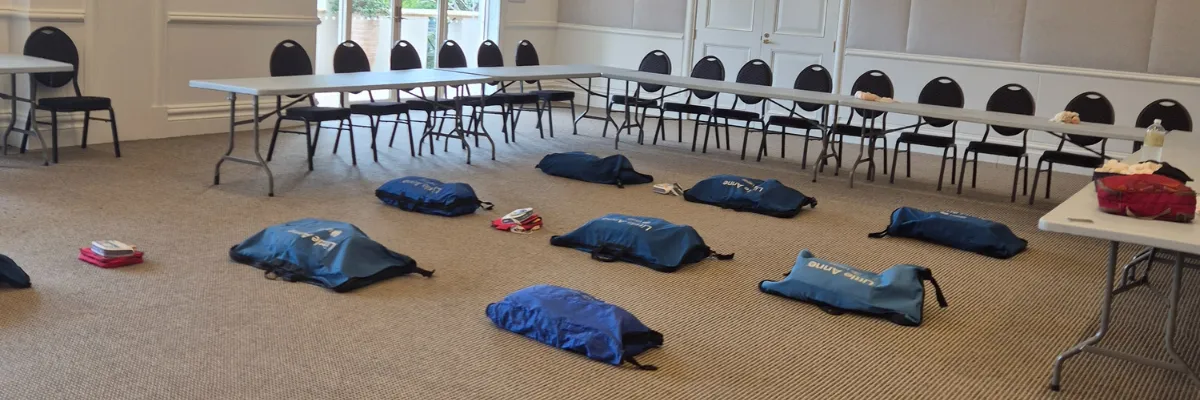
That gap is what a hands-on course closes. Our HLTAID011 course at Accelerate First Aid covers all three bystander links, recognition, CPR and AED use, in the one practical session, taught by Jarryd Hunter, a trainer with a paramedic background who has treated exactly these situations in the field. It's not a lecture. It's practicing on manikins and real AED units until the steps stop feeling foreign and start feeling automatic. The point isn't to memorize a script. It's to build the kind of muscle memory that holds up when adrenaline is working against clear thinking.
Understanding the chain is the first step. Practicing it, recognizing the signs, doing CPR, using an AED, is what actually makes you ready. Our HLTAID011 course covers all three in a single hands-on session.
Conclusion
If you want to read the source guidelines behind everything covered here, the Australian Resuscitation Council publishes the ANZCOR standards this article is based on, at resus.org.au.
Understanding this now is one thing. Being the person who could actually do something about it, next time it matters, is another thing entirely. That second part is what the course is for.
Four links, one chain, and a handful of minutes that decide more than most people ever think about until they're standing in the middle of one. That's really what this all comes down to. Not memorizing terminology, not becoming a paramedic overnight, just understanding that the first and most important part of someone's survival often happens before any ambulance is even in sight.
Recognizing the signs, calling for help, starting compressions, reaching for an AED, none of these are specialist skills locked behind years of study. They're things an ordinary person can pick up in an afternoon and carry with them for years afterward, quietly, in the background, until the one day they're actually needed.
The order matters just as much as the actions themselves. A delayed first link weakens every link that comes after it, no matter how well the later steps are done. That's not meant to add pressure. It's meant to show why acting early, even imperfectly, beats waiting for someone more qualified who might not be coming for another ten minutes.
Most people who read something like this walk away with a flicker of the same thought: what would I actually do if it happened in front of me. That flicker is normal. It doesn't mean you're unprepared, it just means you haven't had the chance yet to turn the idea into something your hands know how to do.
That's really the whole gap worth closing. Knowing the chain exists is one thing. Being the person who could work through it calmly, without freezing, without needing someone else to go first, is another thing entirely. Most people underestimate how much that confidence changes the outcome for everyone involved, not just the person on the ground.
None of this requires a medical background or a special kind of person. It just requires someone willing to notice, willing to call, and willing to act. More often than people expect, that someone turns out to be whoever's simply standing there when it counts.