What Happens If You Fail Your First Aid Assessment?
Being told you need another go at part of your first aid assessment feels like a setback. It isn't one. If you're searching for what happens if I fail a first aid assessment, here's the short version: nobody actually "fails" in the way you're picturing right now. In nationally recognized training there's no red pen, no walk of shame, no starting over from scratch. There's just a normal, built-in checkpoint called "not yet competent," and it exists precisely so people can get it right before they walk out the door.
Most people who end up on this page are mid-worry when they arrive. Maybe your trainer just used the words "not yet competent" and your stomach dropped a little. Maybe you're browsing ahead of a course, quietly dreading the practical part because you haven't done anything like this since school. That reaction is normal, and it's also based on a misunderstanding of what's actually happening. First aid training isn't built like an exam you can flunk. It's built like a driving lesson you keep practicing until you can genuinely do the maneuver, because the entire point is that you can actually do it when it counts, not that you can produce a piece of paper.
This article covers exactly what that checkpoint means, how HLTAID011 reassessment actually works, whether you're stuck redoing the whole course, why trainers structure it this way, and how Accelerate First Aid supports participants through it. By the end, the phrase "not yet competent" should sound a lot less alarming than it did when you started reading.
Below is a quick jump-to menu, followed by the short answer most people are looking for right now.
The Quick Answer
If you don't get a skill right on your first attempt, you're marked "Not Yet Competent" (NYC), not failed. That's the actual term used in Australian vocational training, and it's a completely different thing to failing. You get the chance to redo that specific skill.
Here's how it plays out:
Your trainer identifies exactly which skill needs another attempt (not your whole performance, just that one piece)
You get guided feedback and practice before you try again
You redo only that specific skill, nothing more
Once you've demonstrated it correctly, you're marked Competent and you keep moving through the course like normal
That's genuinely it. No separate booking, no extra paperwork chasing you down later, no mark against your name that follows you anywhere.
"Failing" vs "Not Yet Competent": What the Terminology Actually Means
Australian vocational training doesn't run on pass or fail. It runs on Competent or Not Yet Competent, full stop. There's no grade, no percentage, no comparing yourself to the person next to you, and nothing that reads like a school report card. NYC just means you haven't shown the skill correctly yet, and "yet" is doing a lot of work in that sentence.
Think of it less like a school exam and more like a checkpoint on the way to something you're going to get anyway. Nobody sits a driving test and walks away with 68 percent. You either demonstrate you can park the car or you have another go at parking the car. First aid training runs on that exact same logic, because the outcome that matters isn't a score, it's whether you can genuinely perform the skill on a real person who needs it.
This framework applies across every nationally recognized course, not just HLTAID011, so if you've ever done a White Card, a forklift ticket, or any other competency-based qualification, you've already been through this system without necessarily realizing it. We've covered the Competent and Not Yet Competent framework in more depth in our First Aid Course Pass or Fail article if you want the full explainer, but for now, that's the entire mindset shift you need: NYC isn't a verdict on you, it's just the system doing its job properly.

What Happens After a "Not Yet Competent" Result
Your Trainer Pinpoints the Skill, Not the Person
Nobody's judging your overall performance here. Your trainer is looking at one specific thing, maybe your compression depth, maybe the order of your DRSABCD sequence, maybe how you positioned someone in recovery position, and flagging just that one element. Everything else you did stays exactly as it was, unchanged and unaffected. It's a narrow, specific note, not a broad judgement on whether you "get" first aid as a whole.
This matters more than it might sound like, because a lot of people hear "not yet competent" and their brain fills in the rest with something much bigger than what actually happened. In reality, your trainer has run this exact conversation dozens of times before with people from every background imaginable, tradies, office workers, parents, gym instructors, and it's treated with the same low-key, matter-of-fact tone every single time. There's no dramatic pause, no clipboard being marked in a way that feels ominous. It's simply, "let's have another go at that one part."
Guided Practice Before You Try Again
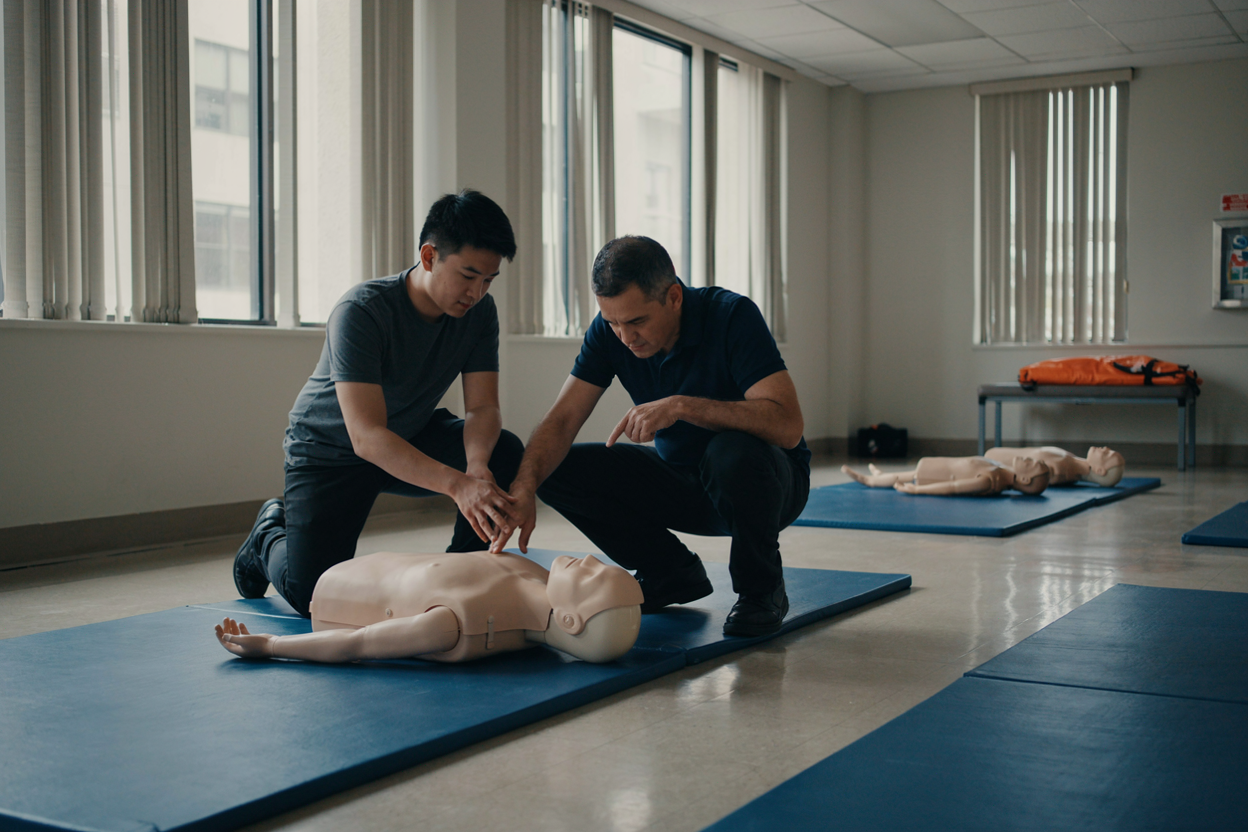
This is where the reassessment process actually feels pretty low-key in real life. There's no waiting list, no second booking to organize, no separate appointment to squeeze into your week. Your trainer talks you through what to adjust, often demonstrating the correction themselves so you can see exactly what "right" looks like, and gives you the chance to have another crack at it under their eye.
Good trainers treat this stage as coaching, not correction. If your compressions were too shallow, they'll show you the depth and let you feel the difference. If your DRSABCD order slipped, they'll walk the sequence with you out loud until it clicks. This isn't a punishment lap, it's the part of the course where the actual learning happens, arguably more than the first attempt did.
Reattempting and Getting Your Competent Result
To be concrete about it: this might mean redoing your compressions with better depth and rate, running through the DRSABCD sequence again in the right order, or repositioning someone into recovery position correctly. It's one skill, demonstrated once more, properly, not a full retest of everything you've learned across the course.
Common areas trainers ask people to revisit, based on ANZCOR guidelines, include compression depth or rate during CPR, the order of the DRSABCD sequence, and recovery position technique. None of these are unusual, and none of them mean you're bad at this. They're the exact three or four things that get double-checked closely because they're the exact things that matter most when someone's life is actually on the line, and they're just as easily corrected as they are flagged. Once you've shown the corrected version, you're marked Competent and you carry on with the rest of the course like nothing happened, because really, nothing did.
Quick take: Reassessment targets one skill at a time. It's coaching and a second attempt, not a repeat of everything you've already shown you can do.
Do You Have to Redo the Whole HLTAID011 Course?
No. This is probably the question you actually came here for, so let's get it out of the way clearly: a Not Yet Competent result on one skill does not mean redoing the whole HLTAID011 course. Reassessment targets the specific skill or knowledge gap only, nothing else you've already done gets wiped, repeated, or called into question.
Picture it like proofreading a page of writing. If someone circles one typo, you don't rewrite the entire page from scratch, you just fix that one word and move on. Your first aid assessment works the same way. Everything you demonstrated correctly the first time stays counted. The only thing that gets revisited is the specific piece flagged.
Occasionally someone needs a bit more practice to lock a skill in properly, and that's genuinely rare rather than the norm. Nerves, an unfamiliar manikin, or simply the pressure of being watched can all play a part in a shaky first attempt, and none of that reflects badly on you. In that case your trainer will simply talk you through what the next step looks like, calmly and without any drama attached to it.
Still have questions about your booking? Reach out to Accelerate First Aid, our team is happy to walk you through exactly what to expect before you arrive.
Why the System Is Built This Way
It's worth taking a step back and asking why nationally recognized training uses this Competent or Not Yet Competent structure at all, rather than a simple pass or fail. The answer comes down to what the qualification is actually meant to represent. A first aid certificate isn't there to prove you sat through a course, it's there to prove that if someone collapses in front of you, you can genuinely respond. A tick-box pass system that let people scrape through with shaky technique wouldn't serve anyone, least of all the person who might one day need your help.
That's why the emphasis sits so heavily on demonstrated ability rather than a single attempt. Nerves are common. Manikins feel different to real people. Being watched changes how anyone performs, even people who are otherwise completely capable. A system that only allowed one shot would be measuring how well someone copes with pressure in a classroom, not whether they can actually deliver compressions correctly. Building in reassessment means the qualification measures the thing it's actually supposed to measure.
There's also a quieter benefit to this structure that doesn't get talked about much: it takes the pressure off. Once you know that one imperfect attempt isn't the end of the story, you can actually relax into the practical component instead of white-knuckling your way through it. Plenty of people report performing better on their second attempt simply because the fear of "getting it wrong forever" has been removed from the equation.
This also explains why trainers don't soften the standard itself. A compression that's too shallow won't circulate blood properly on a real person, no matter how kindly it's delivered, so the bar for demonstrating it correctly stays exactly where it needs to be. What flexes is the number of attempts you get to reach that bar, not the standard those attempts are measured against. That combination, a fixed standard paired with as many respectful attempts as it takes, is what actually produces people who are ready for a real emergency rather than people who are simply good at ticking a box once.
Wrapping Up
A Not Yet Competent result is honestly one of the least dramatic things that can happen in a first aid course, even though it doesn't feel that way at the moment. It's built into the system on purpose, because the whole point of HLTAID011 is that you actually walk out able to do the thing, not just able to say you did a course once. One skill needing another go doesn't undo everything else you've already shown you can do.
The process itself is about as low friction as these things get. Your trainer flags one specific skill, talks you through the fix, and gives you the chance to practice and have another attempt right there in the room. There's no separate booking, no awkward follow-up phone call from head office, and nothing added to your plate that wasn't already part of doing the course properly. Whatever you got right the first time stays right, full stop.
The reasons people get asked to redo a skill are ordinary and specific: depth or rate on compressions, the order of DRSABCD, a small tweak to recovery position. These aren't personal failings, they're just the exact things trainers are trained to check closely, because they're the exact things that matter most in a real emergency. Getting a nudge on one of them in a classroom is a much better place to fix it than anywhere else, and it costs you nothing but a few more minutes of practice.
It's also worth remembering that this system exists for a genuinely good reason, not as an arbitrary hurdle. A certificate that anyone could get regardless of ability wouldn't mean much to you or to anyone you might one day help. The fact that trainers ask for a second attempt when something needs polishing is exactly what makes the qualification worth having in the first place.
So if you've already been through this, or you're heading into a course and quietly dreading the practical assessment, take it as a good sign rather than a bad one. It means the training is doing exactly what it's meant to do, and that a second attempt is simply part of getting there properly.
Book your HLTAID011 course when you're ready, and know that if you do need another attempt at something along the way, that's not a setback, it's just how you end up properly, genuinely competent by the time you leave.