Unconscious Breathing Casualty Training: Recovery Position
It's a hot afternoon by the backyard pool and something goes wrong. A slip on wet tiles. A faint in the heat. A close call in the water. Your child isn't responding, but their chest is still rising and falling, and for a second your mind just goes blank. Most parents know CPR is for someone who isn't breathing. Unconscious breathing casualty training covers the bit just before that: what to do when someone is unconscious but still breathing.
The answer is the recovery position. It keeps the airway open, lets fluid drain from the mouth, and protects the person until paramedics arrive after you've called Triple Zero (000). Honestly, it's one of those skills that's quick to learn and only needs a few practice runs to get right. Which is exactly why it's part of every nationally recognized CPR course (HLTAID009).
Everything here follows current Australian Resuscitation Council (ANZCOR) guidelines.
What to Do If Someone Is Unconscious but Breathing
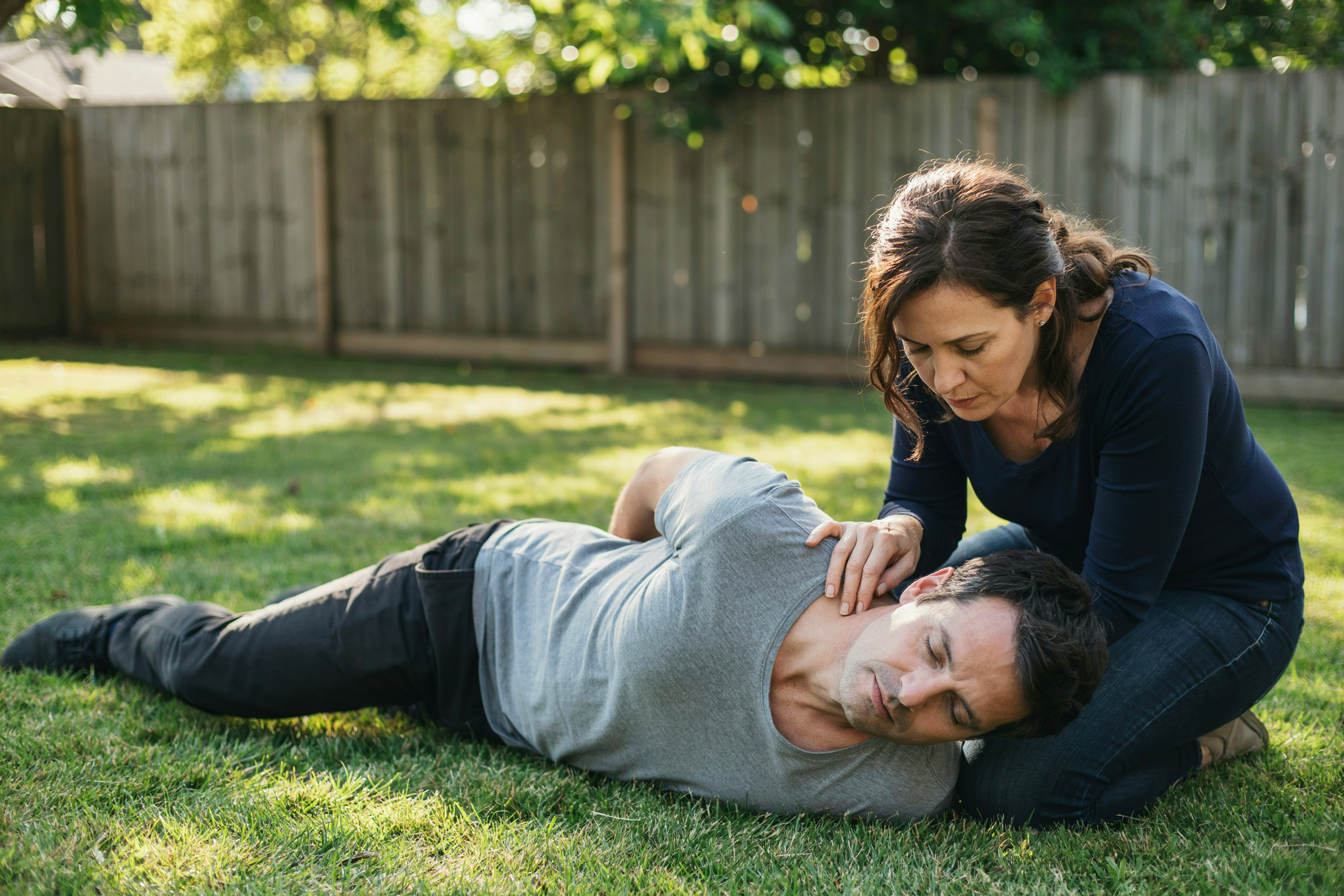
If someone is unconscious but breathing normally, place them on their side in the recovery position and call Triple Zero (000). Lying on their side keeps the airway open and lets vomit or fluid drain from the mouth. The Australian Resuscitation Council (ANZCOR) recommends this over leaving the person on their back.
Check for danger to yourself, bystanders and the casualty.
Check for a response. If there's none, call Triple Zero (000) or have someone else call.
Open the airway and check breathing. If they aren't breathing normally, start CPR instead.
Roll them gently onto their side, avoiding any twisting of the head and spine.
Angle the face slightly downward so fluid can drain and the airway stays clear.
Stay with them and keep checking their breathing until paramedics arrive.
What Is Unconscious Breathing Casualty Training?
It's the formal name for learning how to look after someone who's unresponsive but still breathing. In real life it mostly comes down to the recovery position, and doing it properly when your heart is going a hundred miles an hour.
It's Part of Your CPR Course, Not a Separate One
Good news if you've been stuck on which course to book. You don't need a separate one. HLTAID009 performance evidence requires you to manage an unconscious, breathing casualty, including positioning them to reduce the risk of their airway being compromised. So when you book a CPR course on the Gold Coast, it's already in there. HLTAID011 First Aid includes HLTAID009 as well.
What You Actually Practice
checking for a response and recognizing normal breathing
rolling a person or manikin onto their side safely
re-checking breathing, and switching to CPR if it stops
positioning a baby on an infant manikin
Why Reading About It Isn't Enough
Watching a YouTube video is a fine place to start. But the roll is a physical skill, and weight, size and wet skin all change how it feels in your hands. A grown adult is heavier than you'd expect, and a kid straight out of the pool is slippery. You only really learn that by doing it, with someone watching who can tell you what to adjust.
Knowing the skill is one thing. Knowing when to use it is what makes it work.
When to Use the Recovery Position (and When to Start CPR)
The rule itself is simple, it's the moment that makes it hard. Here's how to tell which one you need.
Unconscious and Breathing Normally → Recovery Position
Unconscious: they don't respond to your voice or a firm squeeze of the shoulder.
Breathing normally: regular, quiet, consistent breaths, like someone sleeping.
If both boxes are ticked, roll them into the recovery position.
Gasping Isn't Breathing → Start CPR
This one catches a lot of people out. Irregular gasps, gurgling, or the odd big breath now and then is called agonal breathing, and it means the person is not breathing normally. Treat it as not breathing and start CPR, following ANZCOR Guideline 8.
If you're unsure, remember this: you won't make things worse by starting CPR on someone who isn't breathing normally.
Common Situations Where You'd Use It
fainting that doesn't resolve quickly
after a seizure, once the jerking has stopped
a child pulled from the water who is breathing (more on this below)
a knock to the head, a diabetic emergency, or too much alcohol
What About a Possible Neck or Back Injury?
Plenty of us grew up hearing "don't move them if they've hurt their neck". For an unconscious person who's breathing, ANZCOR Guideline 3 says care of the airway takes precedence over any injury. Roll them gently and avoid twisting the head and spine, but don't leave them lying flat on their back. Worried about legal trouble for helping? Our guide on Good Samaritan CPR in Queensland covers what protects you.
When Not to Use It
They're conscious: let them sit or lie however they feel comfortable.
They're not breathing normally: skip the recovery position and start CPR.
Once you've confirmed they're breathing normally, here's how to roll them safely.
How to Put an Adult or Older Child in the Recovery Position
The first time you try this, it'll probably feel clumsy. That's normal.
Step by Step
Kneel beside the person.
Place the arm nearest you at a right angle to their body.
Bring the far arm across their chest and hold the back of their hand against their near cheek.
Bend the far knee up.
Roll them towards you by pulling on that knee, supporting their head as they turn.
Adjust the top leg so the hip and knee are both at right angles. This stops them rolling onto their front.
Angle the face slightly downward to keep the airway open and let fluid drain.
Call Triple Zero (000) if no one has yet, and keep watching their breathing.
Pulling on the bent knee does most of the work, so you're using leverage, not muscle. It's the step people rush, and the one that matters most when someone's heavier than you.
Adjusting for Children
For kids, it's the same technique, just scaled down to their size. Use a lot less force and keep a hand on their head as they turn, because smaller children are easy to over-roll.
Which Side?
Either side works for most people, so just roll them towards you. The exception is a woman in late pregnancy, who should be rolled onto her left side.
Babies need a different approach, and it's simpler than most parents expect.
Recovery Position for a Baby
If a baby under 12 months is unconscious but breathing, hold them on their side or face down along your forearm, with the head slightly lower than the body so fluid can drain. Support the head and jaw, keep the airway clear and call Triple Zero (000).
Hold them on their side or face down along your forearm.
Keep the head slightly lower than the body.
Support the head and jaw with your hand.
Keep the airway clear so fluid can drain.
Call Triple Zero (000) or get someone else to call.
Why Babies Are Different
Babies have a big head, a tiny airway, and you can pick them up. That last part matters. The infant recovery position lets you carry them while you wait, so you can move to the door, the phone, or out of the sun.
Keep Checking Breathing
Look for the chest moving, listen at the mouth and nose, and feel for breath on your cheek. If breathing stops, start infant CPR straight away. Our guide on infant CPR steps walks through it.
Practice on an Infant Manikin
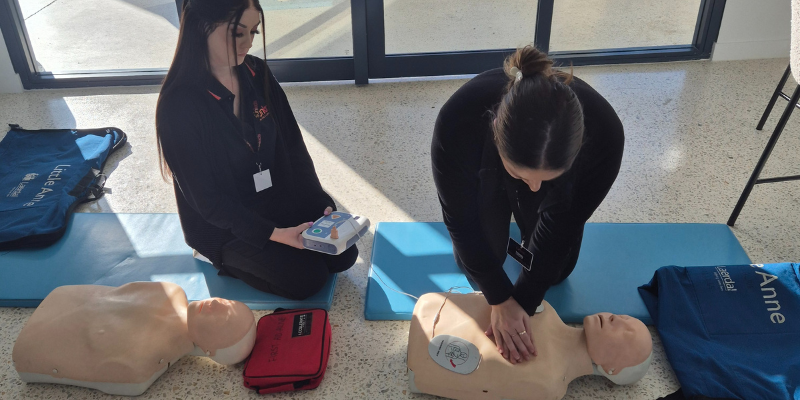
Practice this on an infant manikin. Holding a floppy baby in the right position is hard to imagine until you've done it. Every HLTAID009 session includes infant and child manikins, so you can practice the recovery position for a baby before you ever need it.
The roll is done. Your next job is to watch, wait and be ready.
What to Do While You Wait for the Ambulance
The waiting can feel like forever. The good news is you've still got a job to do.
Keep Checking Their Breathing
ANZCOR guidelines say to re-check breathing constantly, so stay with them. If someone else is around, send them to meet the ambulance out the front, or to grab an AED if there's one nearby.
If They Vomit
Keep them on their side, clear anything from their mouth with your fingers, and keep the face angled slightly down so it drains out.
If They Stop Breathing Normally
If breathing stops: roll them onto their back, start CPR, and send someone for an AED.
Use the AED as soon as it arrives and follow its voice prompts. Our guide on how to use a defibrillator breaks it down.
Keep Them Comfortable and Protected
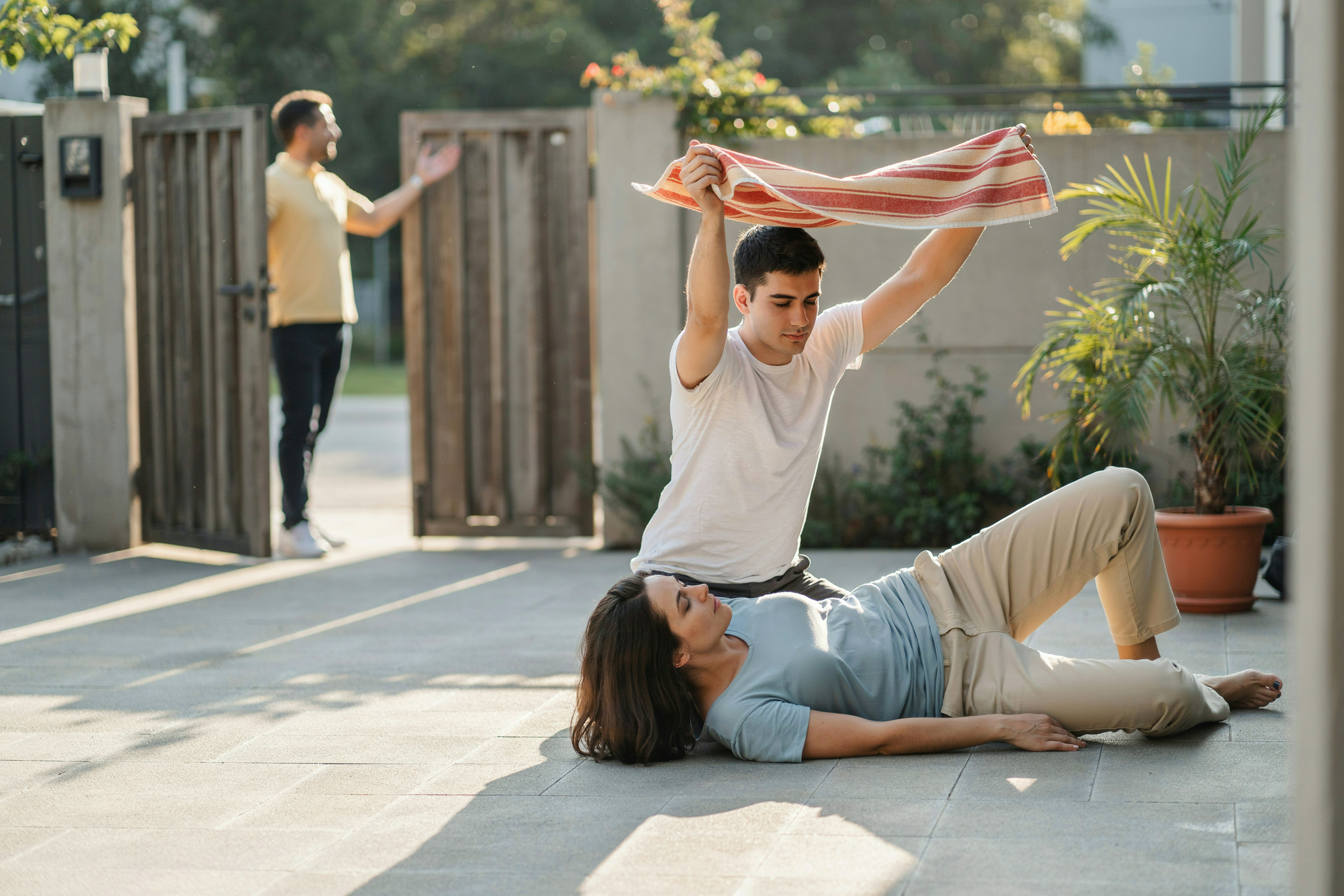
shade them from the sun
move them off hot pavers, tiles or sand if it's safe to
cover them lightly if they're cold
no food, no drink, no pillow
What to Tell the Paramedics
They'll want to know what happened, when it happened, any changes you noticed, and how long the person was unconscious. Passing this on clearly is part of what you practice in HLTAID009.
Looking After Yourself Afterwards
Even when everything goes right, it's normal to feel shaky or teary later on. Talking it through helps, and our piece on CPR debriefing explains what that can look like.
Common Recovery Position Mistakes
None of these come from people not caring.
1. Mistaking gasping for breathing. Do this instead: treat gasping as not breathing and start CPR.
2. Leaving them on their back because of a possible neck injury. Do this instead: roll them gently onto their side, keeping the head and spine from twisting. The airway comes first.
3. Walking away after the roll. Do this instead: stay with them and keep checking their breathing until paramedics take over. Breathing can change fast.
4. Rolling them away from you. Do this instead: roll them towards you, using the bent knee as a lever, so you can support the head.
5. Letting them sit up or walk off too soon. Do this instead: keep them still and resting until the paramedics have checked them over, even if they say they're fine.
6. Not practicing. Do this instead: get hands-on practice on a manikin, because reading the steps is very different to doing them with your heart racing.
On the Gold Coast, many of these moments happen near water.
Practice the Recovery Position at a Gold Coast CPR Course
Doing it with your own hands, with a trainer watching, is what makes it stick. Unconscious breathing casualty training is built into every HLTAID009 session.
What's Covered
managing an unconscious, breathing casualty, including the recovery position
CPR for adults, children and infants
using an AED
reviewing the incident afterwards
HLTAID009 is nationally recognized and meets typical workplace CPR requirements, so it's a good fit if you're heading back to work after parental leave.
Format
The course is blended: online theory first, then a hands-on practical with adult, child and infant manikins. Doing the theory at home during nap time means your class time goes into actual practice.
Bring Someone With You
Bring your partner, or the grandparents who mind the kids by the pool. Got a mothers' group? You can book a private group CPR session at a home or community hall.
Your trainer is Jarryd Hunter. Accelerate First Aid delivers training on behalf of RTO 31106.
Practice the Recovery Position Before Pool Season Hands-on CPR training with adult, child and infant manikins. Nationally recognized HLTAID009. Book Your CPR Course
Want bleeding, burns and choking too? HLTAID011 First Aid includes CPR.
Before Pool Season, Not During It
That hot afternoon by the pool doesn't have to end with you frozen on the tiles. Unconscious breathing casualty training gives you a clear answer for the moment before CPR, when someone isn't responding but is still breathing.
The core idea is simple. If they're unconscious and breathing normally, roll them onto their side, angle the face slightly down and call Triple Zero (000). If they're gasping or not breathing normally, start CPR instead.
Babies are different, but not harder. Hold them along your forearm with the head a little lower than the body, keep the airway clear and carry them while you wait.
Whoever it is, the job afterwards is the same: stay close and keep checking their breathing. Most mistakes come from old advice or never having tried it, not from not caring.
That's why hands-on practice matters more than anything you'll read online. A real roll on a heavy adult, or the right hold on an infant manikin, teaches your hands what a phone screen can't.
Once you've done the course, keep a printable steps card on the fridge or the pool gate for when your mind goes blank. And bring the people who mind the kids along with you.
Standing by the pool knowing exactly what your hands would do is real peace of mind. This guide supports, but doesn't replace, hands-on training. In an emergency, call Triple Zero (000).