Trauma Management First Aid Course: 2026 Compliance Guide
If you've been searching for a trauma management first aid course, you've probably hit a wall. There isn't one, not as a standalone qualification, and that trips a lot of people up.
Here's what's going on. Trauma management, controlling bleeding, stabilizing a fracture, managing shock, dealing with soft tissue injury, lives inside HLTAID011 Provide First Aid. It's not bolted on as an extra, it's a core component, built right into the framework every Queensland workplace, gym, and insurer points to.
And honestly, this surprises people most: trauma skills get used way more often in real life than CPR does. CPR gets all the attention, the manikins, the dramatic stuff, but in real workplaces it's the cuts, the breaks, the burns, the shock response that First Aid Officers actually use more.
So in this guide we'll walk through what trauma management training covers, why it's structured this way, what a hands-on session looks like, and how to get certified through Accelerate First Aid.
What Is Trauma Management in First Aid?
Trauma management in first aid is the set of skills you use to assess and respond to physical injuries, bleeding, fractures, soft tissue damage, shock, before professional help arrives. In Australia these skills aren't taught as their own course. They sit inside HLTAID011 Provide First Aid.
Trauma management generally covers:
Controlling bleeding, from a minor cut through to something severe
Spotting the signs of shock and knowing how to respond
Stabilizing a suspected fracture or soft tissue injury
Managing burns and crush injuries
Positioning an injured person safely until help arrives
Is "Trauma Management" a Separate Course, or Part of HLTAID011?
Why this course doesn't exist as a standalone qualification in Australia
A lot of people land here having typed something like "trauma management first aid course" into Google, expecting a dedicated booking page. It won't show up, that's just how the national training system is built. Trauma response was never carved out as its own unit of competency, it got folded into the broader first aid qualification, because nobody needs to manage bleeding and fractures in isolation, they need it alongside CPR and basic life support.
How HLTAID011 absorbed trauma response into the national first aid framework
HLTAID011 is a single certificate bundling a few skill areas together rather than splitting them into separate bookings. Worth seeing how the codes relate, since this is the bit that confuses almost everyone:
So when you do HLTAID011, you're not doing "a first aid course that also mentions trauma." Trauma management is just as central to the certificate as CPR, it's just not the part that gets shouted about in the ads.
Not sure whether HLTAID011 is the right code for you, as opposed to HLTAID009 on its own? Worth reading our breakdown on HLTAID011 vs HLTAID009 before booking.
What Trauma Management Skills Are Taught in HLTAID011
This is the practical core, the stuff you'll be doing with your hands in the room, not just reading about.
Bleeding control (minor wounds through to severe or catastrophic bleeding)
You'll learn to assess a wound and respond with the right urgency, whether that's a basic cut needing a dressing or something far more serious where every second matters. Training covers direct pressure, wound packing, and recognizing when a bleed needs an immediate emergency response rather than a bandage.
Fracture and soft tissue injury management
Recognizing a suspected fracture, immobilizing and supporting an injured limb without making things worse, and managing the soft tissue injuries (sprains, strains) that show up constantly in trades, sport, and around the house.
Recognizing and responding to shock
Shock is easy to miss if you don't know what you're looking for. You'll learn the signs, what's happening in the body, and how to keep someone stable while you wait for help.
Burns and crush injury basics
How to assess severity, what to do (and what not to do) in the first few minutes, and how to manage the person until paramedics arrive.
The four trauma skill areas, at a glance:
🩸 Bleeding control
🦴 Fracture and soft tissue care
😰 Shock response
🔥 Burns and crush injuries
Why Trauma Management Skills Matter More Than People Expect
Trauma response is statistically more commonly used than CPR in everyday workplace incidents
Here's the thing nobody really markets, because it doesn't sound as dramatic as CPR. Most First Aid Officers will go their entire working life without ever performing CPR. What they will do, probably more than once, is patch up a bad cut, support a sprained ankle, or talk someone through shock after a fall. Backs this up too, trauma-type incidents happen far more often day-to-day than cardiac events.
That's not to say CPR doesn't matter, it absolutely does. But in a typical workplace week, it's the trauma skills doing the heavy lifting.
Real-world contexts: construction sites, trades, hospitality, gyms, family settings
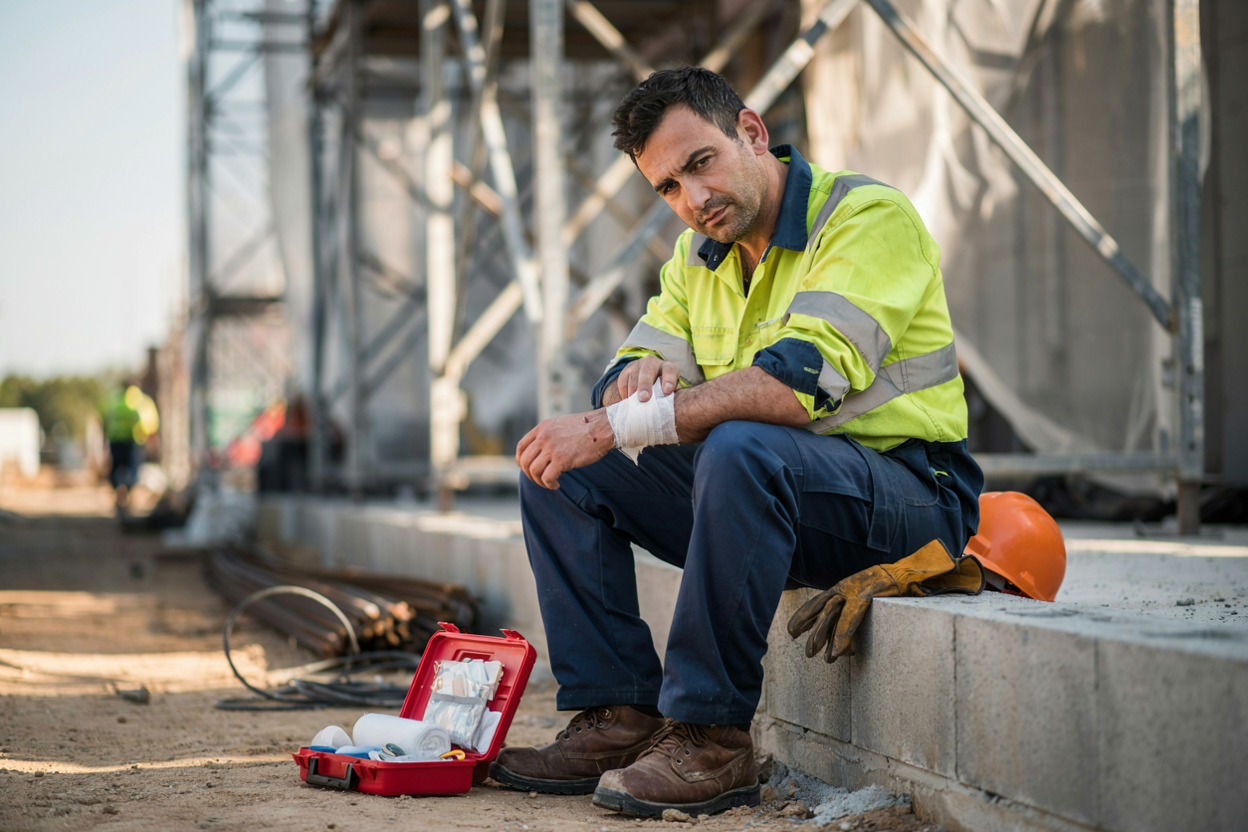
Think about where this plays out: a tradie nicking themselves on a blade on site, a chef catching a burn off a hot pan, a gym-goer rolling an ankle mid-session, a parent dealing with a kid who's come off a bike. None of these are CPR situations. All of them are trauma management situations, and they happen constantly.
For more on national standards, the Australian Resuscitation Council guidelines and Safe Work Australia are worth a look for the detail behind why training is structured this way.
What to Expect in a Trauma Management Training Session
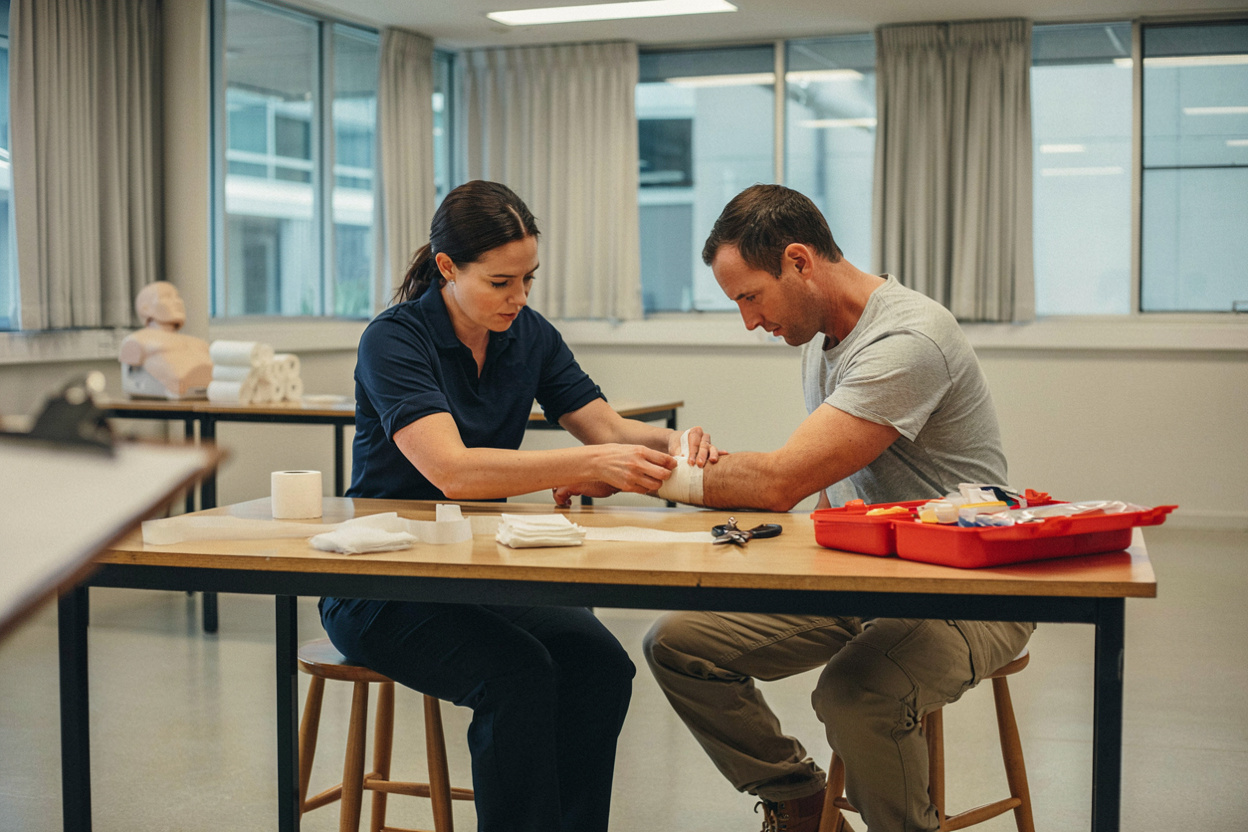
Hands-on bandaging and wound-dressing practice
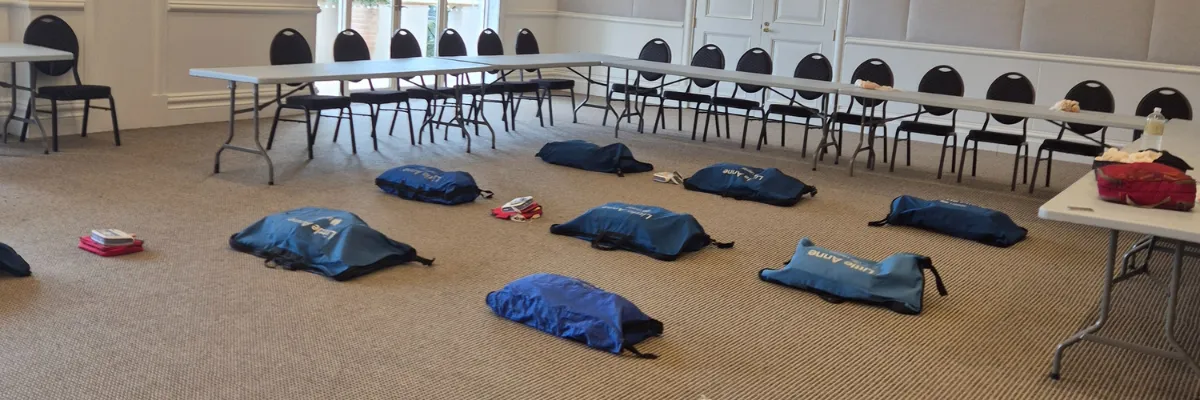
This isn't a section where you sit and watch a slideshow. You'll work with actual bandages and dressings, practicing on a partner or a training aid, until applying pressure correctly and wrapping a wound starts to feel like something your hands just know how to do.
Realistic scenario-based assessment (not just theory)
Rather than answering questions on paper, you'll be walked through scenarios that feel close to the real thing. Someone's "injured," you've got to assess what's going on, decide what to do first, and do it. More pressure than reading a textbook, sure, but that's the point, it's meant to stick.
How Long Does Trauma Management Certification Last?
HLTAID011 (including trauma management) is valid for 3 years
Once you've done the course, your HLTAID011 certificate, trauma management included, holds for 3 years. That covers the whole bundle, bleeding control, fractures, shock response, burns, under the one renewal clock.
Why the CPR component needs an annual update, while trauma skills follow the 3-year cycle
A bit confusing, fair enough, not intuitive. The CPR component (HLTAID009) inside your certificate needs updating every 12 months, even though the rest of your HLTAID011 is still sitting inside its 3-year window. Your trauma skills don't expire faster, it's specifically the CPR competency the national guidelines want kept current more often.
So if you're a workplace First Aid Officer, you might do a short annual CPR refresher in between your full 3-year HLTAID011 renewals.
Getting Certified in Trauma Management First Aid
Accelerate First Aid's HLTAID011 course format
Accelerate First Aid runs HLTAID011 sessions with a blended format if you'd rather do the theory online beforehand and just turn up for the practical. Either way, trauma management is covered properly in person, bandaging technique and scenario response aren't things you learn through a screen.
Who this course is for
This course suits a wide range of people, given how broadly trauma skills get used. Good fit if you're:
A tradie or construction worker wanting to cover the injuries you're likely to see on site
Fitness or gym staff needing HLTAID011 for registration requirements
An office worker or manager designated First Aid Officer
A parent who wants real peace of mind, not just a certificate in a drawer
Whichever one of these is you, the trauma management component is the part you'll probably lean on most, since it comes up more often than the dramatic CPR scenario does.
Either way, your Statement of Attainment for the full certificate, CPR, BELS, and trauma management together, gets issued the same day.
Final Thoughts
Most people don't think much about first aid until the moment they actually need it, and by then it's a bit late to start figuring things out. That's really the case for trauma management. It's not flashy, it doesn't get the same airtime as CPR in the ads or the training videos, but it's the stuff that ends up mattering in the ordinary run of a week, not just in some rare emergency.
A cut that won't stop bleeding, a twisted ankle, a burn from a hot surface, these aren't dramatic scenarios reserved for worst-case thinking. They're the kind of thing that happens on a job site, in a kitchen, at a gym, or at home with a kid who's come off a bike. Having the skills to actually respond, calmly and correctly, changes what that moment looks like for everyone involved.
What tends to surprise people once they've gone through proper training is how much of it comes down to knowing the right first move. Bleeding control, recognizing shock, supporting an injury until help arrives, none of it is complicated once it's been shown properly and practiced with your own hands. The nerves before a practical session are normal, but they tend to settle fast once the content turns out to be far more manageable than expected.
There's also something worth sitting with here: a certificate is one thing, but actual capability is another. The goal of trauma management training isn't to tick a compliance box and forget about it, it's to walk away genuinely able to help if something happens in front of you. That distinction matters more than people realize until they're standing in a moment where it counts.
If any of this has struck a chord, whether it's a workplace requirement creeping up, a flicker of "what would I actually do," or just a sense that it's time, that's usually the right moment to act on it. These skills don't take long to learn properly, and once they're in place, they tend to sit quietly in the background until the day they're needed, at which point they're worth far more than the time it took to learn them.