Toddler First Aid Emergency Course: Top 10 Skills
It's 2:15pm at your center. Nap time is just wrapped up, snacks are out on the table, and then it happens - a toddler in your care starts gagging on a piece of apple. Every educator in that room has got a certificate sitting in the file. But certificates don't stop an airway closing. In the four seconds it takes to work out what's going on, the only thing standing between a scare and something far worse is whether your team has drilled this exact scenario before, not just ticked a box on a first aid module years ago.
That's really what this article is about. A toddler first aid emergency course builds on the HLTAID012 compliance baseline your center already runs on, but toddler-specific emergencies need drilled, scenario-specific skill on top of that paperwork. ACECQA and the NQF set your minimum ratios, sure, but ratios don't save a child's life on their own. So below we walk through the 10 essential emergency skills, why each one matters for the toddlers in your rooms specifically, and how Gold Coast centers just like yours are building real, lived-in team confidence rather than another laminated certificate for the staff room wall.
What Is a Toddler First Aid Emergency Course?
A toddler first aid emergency course is a nationally recognized training program that teaches parents, educators and careers how to respond to medical emergencies specific to children aged one to three years. It's different to standard adult first aid training - it focuses on pediatric-specific technique, because toddlers have smaller airways, need a different CPR compression depth, and require age-appropriate responses to choking, anaphylaxis, seizures and burns.
A course like this generally covers:
Pediatric CPR using infant/toddler technique
Toddler-specific choking response
Anaphylaxis recognition and EpiPen use in young children
Febrile seizure management
Asthma first aid for toddlers
Burns, poisoning and bleeding response for young children
Let's get into each one properly.
Skill #1: Recognizing and Responding to Choking in Toddlers
Choking is one of the leading causes of accidental injury in young children, and toddlers are especially at risk because they're mobile enough to grab things, but not yet great at chewing properly before they swallow. A toddler's airway is smaller and sits differently to an adult's or an infant's, which is why back blows and chest thrusts for a child aged one to three look different to what you'd do for a baby, or an adult choking on their lunch.
We won't run through the clinical step-by-step here - that's what the hands-on training is for, and honestly, it needs to be practiced on your body, not read off a page. But the recognition piece is something every educator needs drilled into instinct.
Quick recognition signs:
Sudden coughing that isn't clearing on its own
Grabbing at the throat or chest
No sound coming out, or a high-pitched wheeze
Lips or face starting to change color
If you want your whole team confident on this, our HLTAID012 course covers it properly, hands-on, not just in a slideshow.
Skill #2: Pediatric CPR: Compression Depth and Rate for Toddlers
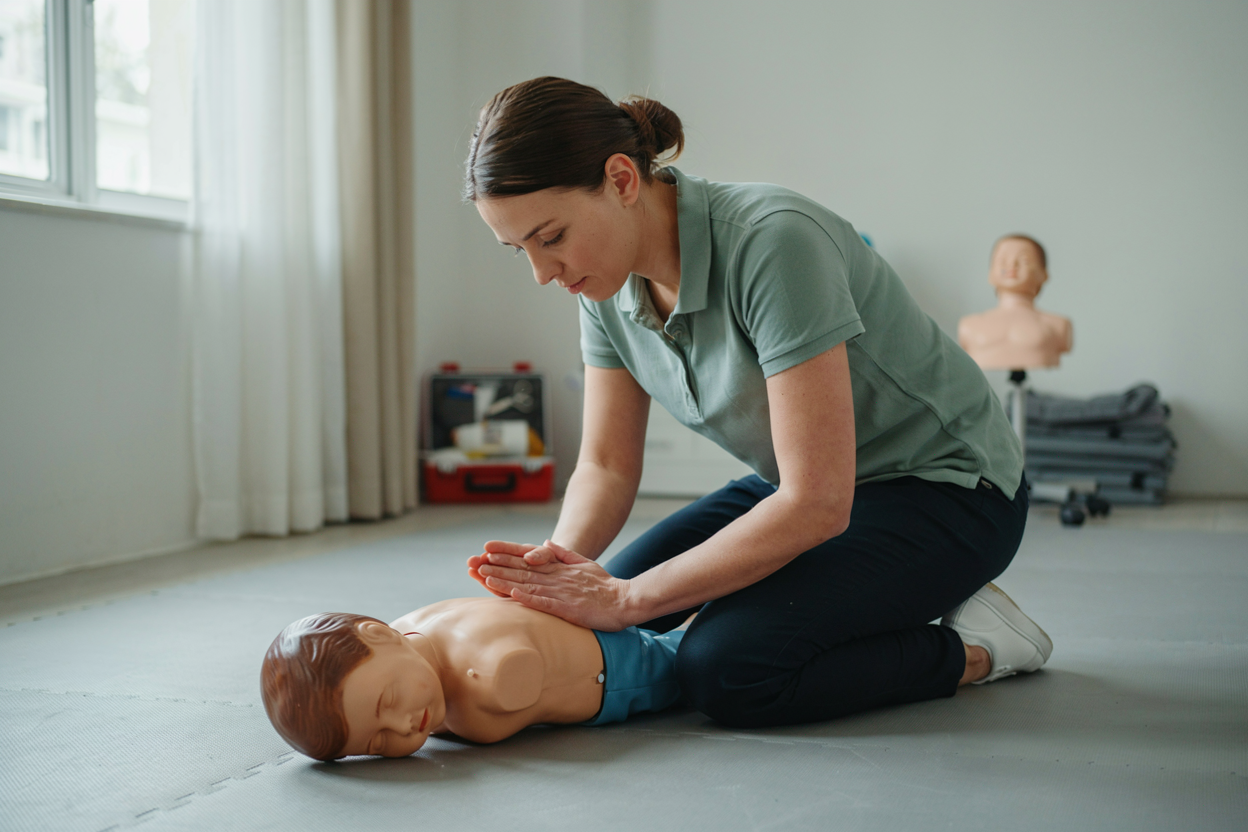
CPR on a toddler isn't just "adult CPR but smaller." Compression depth is roughly a third of chest depth, the rate follows ARC guidelines, and whether you use two fingers or the heel of one hand depends on the child's age and size. Get any of that wrong and you're either not doing enough, or doing damage on top of an already frightening situation.
Knowing when to start is just as important as knowing how. A toddler who's gone unresponsive and isn't breathing normally needs CPR started immediately - there's no "wait and see" window here.
Quick recognition signs:
No response to voice or touch
Not breathing, or only gasping
Skin color changing, especially around lips
Adult vs Toddler CPR: Quick Comparison
This is exactly the kind of thing that fades from memory fast if it's not refreshed. That's what our HLTAID009 CPR refresher is built for - a quick top-up so your team's skills stay sharp between full renewal cycles, not a full day off the floor.
Skill #3: Recognizing Anaphylaxis and Using an EpiPen on a Toddler
Here's something a lot of people don't realize until they've seen it - hives don't always show up before a toddler's airway starts to close. You can't wait for the "textbook" reaction, because in a young child anaphylaxis can move fast, skipping straight to the dangerous part without much warning.
EpiPen thigh placement for a toddler needs to be shown properly rather than told about in the abstract, and individual medical action plans matter more than generic training ever will. Every child with a known allergy has their own plan, their own triggers, their own dose. Generic knowledge isn't enough when Sarah in room 3 has a peanut allergy and Jack in room 2 reacts to eggs.
Quick recognition signs:
Swelling of lips, face or eyes
Difficulty breathing or persistent coughing
Sudden paleness and floppiness in a toddler
Vomiting alongside any of the above
If your center's still figuring out who needs what training on this front, our Asthma & Anaphylaxis units (22300VIC/22556VIC) are built specifically around this scenario, not bolted on as an afterthought.
Skill #4: Managing a Febrile Seizure
Febrile seizures affect somewhere between 2 and 5% of children aged six months to five years, so if you've been in early childhood education for any length of time, there's a fair chance you've seen one, or you will. They're frightening to watch, but something your team needs to recognize quickly and respond to calmly.
The main things to know: recovery position, keep the child safe from anything they could knock into, and time the seizure. Most pass within a few minutes on their own. But there's a clear line for when you call 000 rather than just monitor and reassure, and that's exactly the kind of judgement call we drill into staff during training.
Quick recognition signs:
Sudden stiffening or jerking movements
Loss of consciousness
High temperature preceding the episode
Eyes rolling back
Skill #5: Asthma First Aid During Outdoor or Active Play
Toddlers with asthma often have their symptoms triggered by things you wouldn't necessarily expect - running around outside on a cold morning, pollen during certain seasons, even excitement during a group game. It's not always the obvious culprits.
Puffer and spacer technique for a young child looks nothing like what most adults picture when they think "asthma puffer." The spacer matters because toddlers can't coordinate breath and puffer activation the way an older child or adult can. Getting your team confident and unhurried with this equipment, rather than fumbling while a child's distressed, is half the battle.
Quick recognition signs:
Persistent coughing, especially after activity
Wheezing or a whistling sound when breathing
Visible difficulty breathing or gasping between words
Anxious or distressed behavior alongside breathing changes
Skill #6: Treating Burns Safely in a Childcare Setting
Burns in a childcare setting happen in ways that catch people out - a hot cup of tea left within reach on a bench, a hot car seat buckle on a sunny afternoon, sun exposure during a long outdoor session nobody tracked the time on. None of these are dramatic kitchen-fire scenarios. They're everyday moments where a few seconds of inattention meets a curious toddler.
The core action here is simple to say and easy to get wrong under pressure: cool running water for 20 minutes. Not ice, not butter, not a quick rinse and a band aid - a full 20 minutes under cool running water. That's the single most important thing your team needs to have burned into memory (no pun intended, but it works).
Quick recognition signs:
Redness or visible blistering on skin
Toddler pulling away from or crying about a specific spot
Skin that looks shiny or wet without an obvious cause
Skill #7: Poisoning Response and the Poisons Information Line
Toddlers explore the world with their mouths, which makes poisoning a real risk in a center environment. Cleaning products left in a cupboard that wasn't quite latched, small button batteries out of a toy, even plants in the outdoor area - toddlers don't know what's dangerous, they just know what's interesting.
Every educator should have the Poisons Information Line number close at hand, not buried in a folder somewhere: 13 11 26. This line operates around the clock, and they'll talk you through what to do based on what's actually been ingested, which is far better than guessing.
Quick recognition signs:
Chemical smell on breath or around the mouth
Vomiting with no other obvious cause
Open or empty containers found near the child
Unusual drowsiness or agitation
Skill #8: Bleeding Control and Wound Management for Young Children
Most bleeding you'll see in a childcare setting is minor - grazed knees, small cuts, the odd bump that breaks skin. Direct pressure with a clean cloth handles the vast majority of it, and most toddlers are more upset about the drama than the injury itself.
But knowing when a graze needs more than a band aid is the actual skill here. Bleeding that won't stop after a few minutes of firm pressure, a wound that's deep or gaping, or anything involving the head or face needs a different level of response than the scraped knee you deal with three times a week.
Quick recognition signs:
Bleeding that continues after 5-10 minutes of firm pressure
Wound edges that are gaping rather than a simple graze
Any injury near the eyes or involving significant swelling

Skill #9: Recognizing When a Toddler Needs Emergency Transport vs On-Site Care
This is the skill that keeps a lot of educators up at night - the "what if I freeze" fear. What if something happens and you genuinely don't know whether to call the parent, call 000, or just manage it on-site?
This is one of the hardest judgement calls a toddler first aid emergency course actually teaches, and it's exactly what good training builds. There are clear escalation criteria your team can lean on: loss of consciousness, breathing difficulty that isn't resolving, a seizure over five minutes, any suspected anaphylaxis - these call 000, every time, no debate. Lower-level scenarios, a graze, a minor bump, get managed on-site with a parent notified after.
Never Miss a Certificate Renewal Again. The same anxious "what if" thinking that keeps you up over emergency response also applies to expiry dates. Sign up for renewal reminders and take one thing off your mental load.
Quick recognition signs (call 000):
Loss of consciousness or unresponsiveness
Breathing difficulty not improving
Seizure lasting more than five minutes
Any suspected anaphylaxis
Skill #10: Keeping Your Whole Team Ready, Not Just One Certified Educator
Here's the thing about a "ratio-safe" center a lot of providers don't talk about honestly: one brilliant, fully-certified educator on shift isn't the same as a genuinely ready team. If that person's on a break, in another room, or resigned last month while you're mid-onboarding their replacement, your center isn't actually covered, it just looks covered on paper.
The NQF sets a minimum number of currently-certified first aiders who must be on-site at all times. Breach that, even accidentally, even for twenty minutes over lunch, and you're looking at closing a room or turning children away for the day. Nobody wants that phone call to parents.
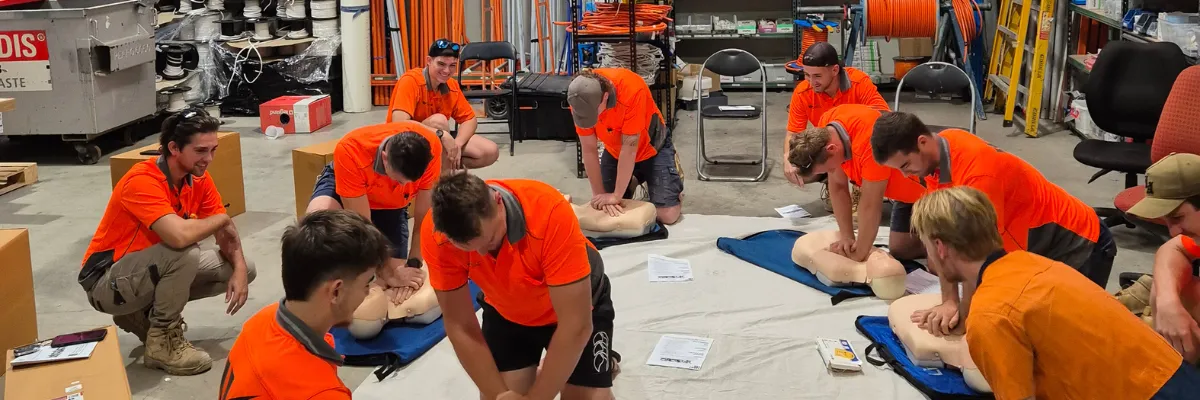
This is where staggered, small-group training earns its keep. Instead of pulling your entire staff off the floor for one disruptive all-day session, Accelerate First Aid runs sessions in smaller groups, on-site, around your actual roster, so you're never left short-staffed and never breaching ratio just to get people trained.
Quick recognition signs your center might be at risk:
Only one certified educator rostered per shift, with no backup
Certificates you haven't checked expiry dates on recently
New hires waiting weeks to get certified while ratio gaps sit open
If your center's ready for a genuinely ratio-safe, mobile, on-site toddler first aid emergency course, book in with Accelerate First Aid and we'll work around your roster, not the other way around.
Final Thoughts
None of the ten skills above are complicated on their own. That's actually the whole point. A calm educator who knows how to cool a burn for the full twenty minutes, or who's practiced where to place their fingers on a toddler's chest, isn't relying on some rare gift. They're relying on repetition, and on having done it before the day it matters.
What separates a room that handles an emergency well from a room that panics usually isn't knowledge. It's whether that knowledge has been drilled into muscle memory, rather than read once off a slide and filed away. Toddlers don't wait for you to remember the theory. They need someone whose hands already know what to do.
That's the gap between a certificate and genuine readiness. A certificate proves you sat through a course. Readiness is what happens four seconds after a child starts choking, when there's no time to think it through, only instinct built through practice.
The ratio side of this matters just as much as the clinical side, even though it gets talked about less. A brilliant educator who happens to be on their lunch break when something goes wrong isn't much help to the room next door. Genuine coverage means every educator on the floor carries these ten skills with the same confidence, not just one standout.
Turnover and renewal cycles never really stop in early childhood education. The centers that stay ahead of it treat training as something ongoing, not a box ticked once a year and forgotten until the next audit.
Every toddler in your care deserves adults who won't freeze. Every parent dropping their child off deserves to trust the room is ready, not just certified. Building that readiness takes work, but it pays for itself the moment it's needed most.
Your team doesn't need another certificate on the wall - they need the confidence to act in the first ten seconds. Book a toddler-focused first aid session today, staggered around your ratios, with same-day certificates the moment training's done.