Severe Allergic Reaction First Aid Course: What to Expect
A new enrolment form lands on your desk, EpiPen action plan stapled to the front. You're halfway through reading it when you remember, two of your educators' certificates lapsed months back. Before you can even confirm the placement, you've got a team to get trained, certified, and ready to actually respond if something goes wrong.
If you've never sat a severe allergic reaction first aid course before, you're probably wondering what you're actually signing your team up for. How long does it run? Is it hands-on or just another slideshow and a quiz at the end? And the question that matters most for your center, does it tick the box for ACECQA?
This guide walks through exactly what happens in a severe allergic reaction first aid course covering asthma and anaphylaxis management (22300VIC and 22556VIC), the format, the time it'll take out of your roster, the skills your team walks away with, and how you confirm it's recognized by your regulator. By the end you'll know what to look for when booking, and what "compliant" actually looks like once the certificates land in your inbox.
What Is a Severe Allergic Reaction First Aid Course?
A severe allergic reaction first aid course is training built around two nationally recognized units, 22300VIC (Provide First Aid for Anaphylaxis) and 22556VIC (Provide First Aid for Asthma). Most centers book them together, as one combined session, because in a real emergency the two conditions often overlap and your staff need to be confident with both, not just one.
Here's the stakes in one line: anaphylaxis can turn from first symptoms to life-threatening in minutes, which is exactly why regulators don't treat this training as optional for anyone working around kids with a diagnosed allergy. We won't re-teach the clinical detail here, if you want the deeper breakdown of what separates a mild reaction from full anaphylaxis, that's covered properly in our Mild Allergic Reactions vs Anaphylaxis article. This page is about the course itself: what's in it, how it runs, and what you get at the end.
Compliance snapshot: This course satisfies ACECQA's training requirement for services caring for children with diagnosed allergies or asthma, and it's delivered through the nationally recognized units 22300VIC and 22556VIC.
What Units Make Up This Course? (22300VIC and 22556VIC)
22300VIC, Provide First Aid for Anaphylaxis. Covers recognizing a severe allergic reaction and responding with an adrenaline autoinjector.
22556VIC, Provide First Aid for Asthma. Covers recognizing an asthma attack and responding correctly, including reliever medication.
Booked separately they're two different courses. Booked together, which is how most centers do it, they're one session, one time slot pulled out of your roster, and one set of certificates at the end.
Who Needs This Training?
This one's for anyone who could realistically be the person standing there when it happens:
Childcare educators and Approved Providers
OSHC and vacation care staff
Primary school teachers and admin staff
Sports club coaches and committee members
Café, restaurant, and venue staff working around kids
If it's a casual or relief educator picking up the odd shift, they need it too. An allergic reaction doesn't check the roster to see who's certified before it happens.

What Does the Course Actually Cover?
So what does that actually look like in the training room? Here's the run-down.
Recognizing a Severe Allergic Reaction
Your team learns to spot the difference between a mild reaction and one that's turning serious, fast. This isn't about memorizing a textbook list, it's about pattern recognition under pressure, because the person reacting isn't going to wait for you to look it up.
Using an Adrenaline Autoinjector
This is the part everyone's actually there for. Participants practice with training devices (EpiPen or Anapen style) until using one stops feeling like a foreign, scary object and starts feeling like something they could do without thinking twice, even with shaking hands.
Reading and Following an ASCIA Action Plan
Every child with a diagnosed allergy should have one of these on file, a one-page plan written by their doctor telling staff exactly what to do. The course walks through how to actually read and follow one under pressure, not just glance at it and hope for the best.
Asthma First Aid (Why It's Often Bundled In)
Here's why 22300VIC and 22556VIC get bundled together so often: a severe allergic reaction can trigger asthma-like symptoms, and plenty of kids managing a food allergy are also managing asthma. Training your team in both at once means nobody's left guessing which emergency they're actually looking at.
Quick checklist of what you'll walk out knowing:
Recognizing a reaction before it escalates
Using an autoinjector correctly and confidently
Following an ASCIA Action Plan step by step
Responding to an asthma attack
Knowing when and how to call emergency services
How Is the Course Delivered, and How Long Does It Take?
Straight up: this isn't training you can knock over online in your lunch break. ACECQA-relevant anaphylaxis and asthma training needs a face-to-face, hands-on component, you can't properly practice with an autoinjector or run through a scenario through a webcam. If a provider's offering this as fully online with no in-person practical, that's worth a second look before you book.
Face-to-Face vs Blended Delivery
Some providers run a blended model, a bit of pre-reading or theory done online beforehand, followed by the practical session in person. Others run the whole thing face-to-face in one sitting. Either way, the hands-on component isn't skippable, and it shouldn't be.
Typical Course Duration
The combined 22300VIC and 22556VIC session is built to be short enough that you're not losing a full day of rostering, but long enough that your team actually gets proper hands-on time with the equipment. Ask your provider for the exact session length when you enquire, so you can plan around nap times, staff breaks, or after-hours slots.
Group Bookings for Centers
This is the part that actually saves you time as a director. Instead of chasing individual staff to book themselves one by one, a group booking lets you enter your whole staff list once, in a single transaction, and each person still walks away with their own individual certificate. If you're trying to get your whole center, permanent, part-time, and casual educators, compliant before an assessment window, this is the option built for exactly that.
Ready to lock in a date for your team? Head to our group booking page to see what's available.
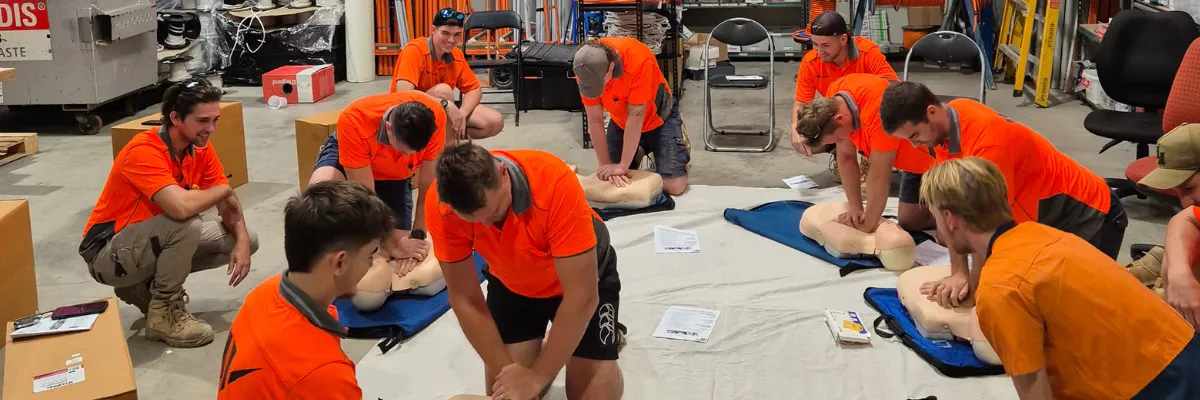
What Happens in the Practical / Hands-On Component?
Reading about it is one thing, here's what you'll physically do.
Practicing with Training Autoinjectors
You'll get hands-on with a training autoinjector device, same size, same feel as the real thing, just without the needle or medication. Participants practice the actual motion of using it against a mock limb or training pad, over and over, until it stops being an unfamiliar object in a box and starts being something their hands just know how to do. This matters more than it sounds, in a real emergency, muscle memory is what kicks in when your brain's racing.
Scenario-Based Assessment
Toward the end, participants work through a simulated scenario, something as close to a real emergency as a classroom can get. It's not a written exam. It's "here's a situation, what do you do," and your team has to talk and act it through, start to finish.
No prior medical background needed for any of this. Nobody's expected to walk in already knowing how to do it, that's the whole point of the course.

What Certification Do You Walk Away With?
Once the course wraps up, what do you actually leave with?
Statement of Attainment: What It Confirms
Each participant is issued a nationally recognized Statement of Attainment for 22300VIC and 22556VIC. This isn't a generic "attended" certificate, it's formal proof, tied to accredited unit codes, that the person named on it has been assessed as competent in anaphylaxis and asthma first aid.
Does This Satisfy ACECQA Requirements?
This course satisfies ACECQA's training requirement for services caring for children with diagnosed allergies or asthma.
That's the plain answer, and it's the one directors are actually googling for. Ask your provider for the specific regulation reference to keep in your compliance file, worth having on hand for when an assessor asks you to point to it directly rather than just take your word for it.
Certificate Validity and Renewal Timing
Certificates aren't good forever, and this is where a lot of centers get caught out, someone gets trained, the certificate goes in a drawer, and eighteen months later nobody's tracking that it's about to lapse. Know your renewal window, put a reminder in your calendar the day the certificate lands, and don't wait for an assessment visit to find out where everyone actually stands.
Choosing the Right Course for Your Centre
Not every provider running this course is equal, and given what's at stake, it's worth a bit of due diligence before you hand over your booking details.
Questions to Ask Before You Book
Is the RTO's accreditation current, can they confirm it, not just claim it?
Can you book multiple staff in one transaction, or is it one-by-one?
Do certificates get issued same-day, or are you waiting days for them to land?
Does the provider offer renewal reminders, or is that on you to track?
Is the practical component actually hands-on, in person, with real training devices?
If a provider can't give you a straight answer on any of these, that's a sign to keep looking.
Why Group Bookings Work Better for Centers
Chasing individual educators to book their own training, on their own time, is a losing game, someone always falls through the cracks, usually a casual or relief staff member who wasn't even in the building when you sent the reminder. A group booking flips that: you enter your staff list once, everyone's booked into the same session, and every single person still gets their own individual certificate for your compliance file.
Quick case in point: one center discovered mid-ACECQA-visit that two educators' certificates had lapsed without anyone noticing. A same-day group booking had the whole team re-certified and documented before the follow-up visit, no scramble, no gap in coverage.
Conclusion
A severe allergic reaction first aid course isn't really about ticking a compliance box, even though that's often what brings a director to the booking page in the first place. It's about knowing that if a child in your care has a reaction on a Tuesday afternoon, the educator standing next to them isn't freezing up or fumbling with an autoinjector they've never actually held before. That's the real thing you're buying, and it's worth remembering when you're weighing up whether to book now or push it to next month.
The format matters more than people expect going in. Face-to-face, hands-on practice with a training autoinjector isn't a nice extra, it's the part that actually builds the muscle memory your team needs when their hands are shaking and the clock's running. Anyone offering this fully online without a practical component isn't giving your staff what they need, no matter how good the theory content looks on screen.
Group bookings solve a problem most centers don't realize they have until they're chasing the third casual educator who missed the reminder email. Enter your staff list once, get everyone into the same session, and walk away with individual certificates for every single person, filed and ready before anyone asks to see them.
Certification and renewal are where a lot of centers slip, not because they don't care, but because a certificate goes in a drawer and eighteen months later nobody's watching the clock. Building a simple system, even just a calendar reminder set the day the certificates arrive, is the difference between scrambling before an assessment visit and calmly pulling up your compliance file when someone asks.
None of this needs to be complicated. Confirm the units are 22300VIC and 22556VIC, confirm the RTO is currently accredited, book your whole team in one go, and get the renewal date locked in before you forget about it. That's a fully compliant, properly trained team, and one less thing keeping you up at night wondering if your center is actually ready for the thing you hope never happens.