
Safety Course Prerequisites Explained (2026)
You're halfway through a contractor induction pack, coffee's gone cold, and there it is again: "current WH&S competency required prior to site access." No further explanation. No list of exactly what that means for your crew. Just a line that could hold up a start date if you get it wrong.
Sound familiar? You're not alone in staring at that sentence wondering if it means White Card, a site specific induction, UEECD0007, or all three at once. A lot of business owners on the Gold Coast end up googling this the night before a job kicks off, which is about the worst time to be figuring out prerequisites.
Here's the good news, the actual requirements are simpler than the paperwork makes them sound. No prior quals needed, no mystery entry test, nothing that should cost you unnecessary lost time on the job if you book it right. This guide from Accelerate First Aid walks you through exactly who on your team needs what, what you need in hand before you book, and how to walk onto site with paperwork that actually holds up if someone checks it.
What Are the Prerequisites for a Safety Course?
There aren't really any formal entry requirements for most WHS courses, including UEECD0007. What you actually need is the right unit for the role, UEECD0007 for electrical and trade work, a photo ID, a USI, and to meet the minimum age requirement. You don't need White Card or any other prior qualification before booking. No entry test, no pre-course assessment, no locked gate behind another course. Book it, show up with your ID and USI sorted, and you're covered.
UEECD0007 vs. White Card: What's the Difference?
This is the mix up that trips up almost every crew at some point, and honestly, it's not your fault. The names don't exactly explain themselves.
What White Card (CPCCWHS1001) covers
White Card is your general construction induction. It's the baseline. It tells you the broad strokes of working safely on any construction site, hazard awareness, basic rights and duties, general site conduct. Every single person stepping onto a construction site in Australia needs one, full stop, regardless of trade.
But that's all it is, general. It doesn't touch anything specific to electrical work.
What UEECD0007 covers that White Card doesn't
UEECD0007 goes into the WH&S requirements specific to electrical work. Think isolation procedures, safe work practices around live and de-energized systems, the specific risks that come with the trade rather than the site in general. White Card gets you through the gate. UEECD0007 covers what happens once you're actually working on the tools.
Do you need both?
Yes, for most electrical and trade site work, you need both. White Card gets you site access. UEECD0007 covers the electrical specific competency a principal contractor or regulator is actually looking for when they ask about "current WH&S competency." One doesn't replace the other, and turning up with only one when the job needs both is exactly the kind of thing that stalls a start date.
Worth bookmarking our UEECD0007 Explained page if you want the full breakdown of scope and renewal timing, this section's just the quick comparison so you know what you're dealing with before you book anyone in.

Who on Your Crew Actually Needs UEECD0007?
Once you know which unit applies, the next question is who on your team actually needs it. This is where a lot of business owners get caught out, not because they're careless, but because it's genuinely not obvious from the job title alone.
Licensed electricians and leading hands
Straightforward one. If they're licensed and doing electrical work, they need it. Not up for debate, not a grey area.
Apprentices, yes, and why it's often overlooked
This is the one that catches people out the most. Apprentices need UEECD0007 too, and it gets missed constantly because owners assume the training happens "later," once they're more senior, or that supervision covers it in the meantime. It doesn't. If an apprentice is on site doing electrical work, the competency requirement applies to them the same as anyone else. Skipping this one is probably the single most common gap we see when we ask a business to run through their crew.
Labourers and site adjacent roles
This one depends on what they're actually doing. A labourer who's purely general site work, not touching anything electrical, is more of a White Card situation. But if they're working alongside the electrical team in a way that puts them near live or de-energized systems, it's worth having the conversation rather than assuming they're covered.
Office/compliance managers (optional)
Not mandatory if they're desk based and never set foot on site. But plenty of the compliance managers and office based operations people we deal with choose to do it anyway, mostly so they actually understand what they're signing off on and can speak to it if a principal contractor asks questions.
Quick self-check for your crew:
Licensed electrician or leading hand doing electrical work? Needs it
Apprentice doing electrical work, even under supervision? Needs it
Labourer working near electrical systems? Probably needs it, worth checking
Labourer on general site duties only? White Card is the priority, UEECD0007 optional
Office based, never on site? Optional, some do it for compliance literacy
Run your crew list against that and you'll usually know within a couple of minutes who's covered and who isn't, which beats finding out on the morning of a site start.
What You Actually Need Before Booking (Prerequisites Checklist)
With the crew sorted out, here's the bit that actually stops people from booking, not because it's hard, but because nobody tells you upfront what "prerequisites" even means for this course. Short answer: not much.
Documentation
You need two things in hand before you book:
Photo ID, standard stuff, driver's license or similar
USI (Unique Student Identifier), every student in Australia needs one for any nationally recognized training. If your apprentices or new hires don't already have theirs, it takes a few minutes on the government USI portal to sort.
That's genuinely it for documentation.
No prior qualifications required, myth-busting
Here's the bit that trips people up the most: there is no formal entry requirement for this course. Not White Card first, not a prior safety qualification, not years of trade experience. UEECD0007 doesn't sit behind some other course as a locked gate, you can book it straight up, no prerequisite training needed.
Minimum age and literacy requirements
There's a minimum age requirement, and a basic literacy requirement, enough to follow written course material and complete assessment. Nothing beyond what anyone working in the trade already has.
What NOT to worry about (misconceptions)
Myth: You need White Card before you can do UEECD0007. Fact: No, they're separate requirements. You can do either first, or both at once.
Myth: There's an entry test or pre course assessment. Fact: No entry test. You show up, you do the course.
Myth: Apprentices need extra sign off from their supervisor before booking. Fact: No special approval process, same booking, same prerequisites as anyone else.
For the full official wording on unit requirements, training.gov.au is the source of truth if you want to check it yourself rather than take our word for it.
Prerequisites checklist, summarized:
Photo ID
USI
Meets minimum age requirement
Basic literacy to follow course material
Nothing else, no prior course, no entry test, no special approval
Scheduling Around Live Jobs: Group Booking Options
With the paperwork sorted, the real logistical question is fitting training around live jobs, because none of this matters if it means pulling your whole crew off site for longer than the job can spare.
Group vs. individual booking
Booking your crew in as a group beats sending people through one at a time, almost every time. One session, everyone ticked off together instead of you chasing separate bookings across separate weeks. It's also just easier to plan around, you pick one date that works for the job schedule instead of trying to find gaps for each person individually.
On-site/mobile training options
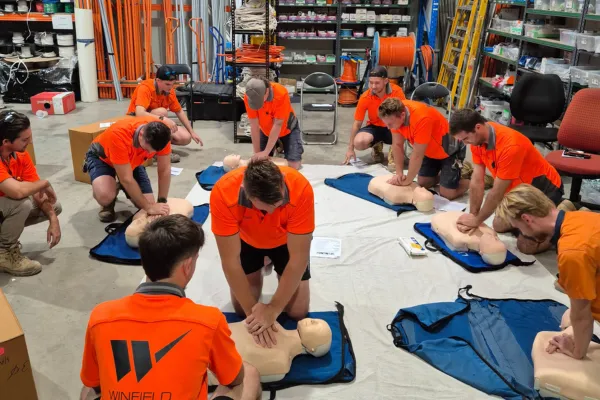
We can also come to you. Rather than sending the crew to a venue, training happens on your site, working around the job itself. For a lot of Gold Coast trade businesses, this is the difference between losing meaningful site time and barely noticing the training happened.
Minimizing lost billable hours
This is really what it comes down to for most business owners, not the cost of the course itself, but the cost it takes out of the job. Group and on site bookings are built around cutting that down as much as possible.
Head to our group booking page to check the next available dates for your crew, it's the fastest way to see what fits around your current job without playing phone tag.
Certificate Turnaround: Getting Proof to Your Principal Contractor Fast
Fast certificate turnaround solves today's deadline, but there's a bigger opportunity in how you use it, which we'll get to in a minute. First, the practical bit.
Digital vs. physical certificate delivery
Digital certificates are the standard now, and for good reason, they land in your inbox, you can forward them straight to a site supervisor or principal contractor without waiting on the post, and you've always got a copy on your phone if someone asks on site. Physical certificates are still available if that's what a particular contractor wants on file, but digital is what most people reach for first.
Fast turnaround, without the wait
Turnaround is quick, quick enough that you're not left sitting on a start date waiting for something to arrive. When you've got a deadline breathing down your neck, that matters more than almost anything else in this process.
What to hand your site supervisor or PC on day one
Realistically, you want the certificate itself, digital copy is fine, plus confirmation of the unit code (UEECD0007) clearly visible on it, since that's what a PC is usually cross checking against their induction pack requirements. Nothing fancier than that. A clear, correctly coded certificate is what holds up.

Tender-Ready Compliance: Turning Prerequisites Into a Competitive Edge
Fast certificates get you through today's deadline. But there's a bigger play here if you start thinking about compliance differently, not as something you scramble for when a tender lands, but as something that's already sorted before anyone asks.
What principal contractors actually check for
PCs aren't just ticking a box when they ask for current WH&S competency, they're checking that the paperwork will actually hold up if it's ever questioned. Correct unit code, current dates, the right people covered. Businesses that turn up with this already sorted stand out, because a lot of businesses don't.
Staying ahead of renewal cycles instead of scrambling
The businesses that treat this well aren't the ones scrambling every time a tender comes in, they're the ones who know their renewal cycle and stay ahead of it. That's the real difference between compliance being a stress point every few months and it just being handled.
Compliance as a competitive edge
Winning or keeping principal contractor work often comes down to exactly this kind of thing. A crew whose WH&S paperwork is already sorted, with no gaps and nothing out of date, stands out against businesses that are still scrambling when the tender lands. It's a small thing on paper that ends up mattering a lot in practice.
For the official guidance behind all this, Safe Work Australia and QBCC both publish compliance requirements worth having a look at if you want the regulator's own wording rather than ours.
Getting Your Crew Sorted
Prerequisites for UEECD0007 aren't really the hard part once you strip away the paperwork confusion. Photo ID, a USI, meeting the minimum age requirement, that's the whole list. No White Card required first, no prior qualification, no entry test standing between you and booking day. A lot of business owners spend more time worrying about this than the actual requirements deserve.
The harder part is knowing exactly who on your crew needs it. Licensed electricians and leading hands, no question. Apprentices too, even under supervision, which is the one that catches people out more than anything else on this list. Labourers depend on what they're actually doing day to day, and office based staff can take it or leave it depending on how hands-on they want to be with the compliance side of things. Running your crew list against those categories takes a few minutes and saves a lot of second guessing later.
Fitting the training in without losing site time is where group and on site bookings earn their keep. One date, the whole crew covered at once, worked around a live job rather than the training provider's calendar. That's the difference between losing real ground on a job and barely noticing the training happened at all.
Once the course is done, getting the certificate into the right hands quickly matters just as much as the training itself. A fast digital certificate means you're not sitting on a start date waiting for something to arrive, and a clearly coded certificate with UEECD0007 visible is exactly what a site supervisor or principal contractor is checking for.
Where this really pays off is in how you treat it going forward. Businesses that stay ahead of their renewal cycle, rather than scrambling every time a tender or induction pack lands, tend to walk into those conversations with paperwork that already holds up. It stops being a stress point every few months and starts being one less thing to think about.
Getting there is a short list, not a long one. Check the next available date, confirm who on your crew actually needs it, and book in knowing the certificate will be sorted well before anyone asks for it.