
Safe Work Australia CPR Requirements Explained Simply
Most people on Australian worksites know they need a CPR certificate. What they're less sure about is why, how often it needs renewing, and what actually happens if someone on their crew doesn't have one. Safe Work Australia sets the framework but the actual requirements can feel buried in legislation. This article cuts through that and gives you the plain-English version.
Around 25,000 cardiac arrests happen outside of hospitals in Australia every year. When one happens on a worksite, the difference between life and death often comes down to whether the closest person actually knows what to do and whether they've practiced it recently enough to do it under pressure. Bystander CPR doubles or even triples survival rates, according to Australian Resuscitation Council data. That's not a small margin.
Safe Work Australia's model WHS laws require employers to make sure workers have the skills to respond to a medical emergency and CPR training is central to that. But the specific rules around who needs it, which unit of competency counts, and how frequently it must be renewed aren't always obvious. This article covers what's actually required, which accredited training unit satisfies the requirement, how often certification needs to be renewed, and what the consequences are for letting it lapse.
What Are Safe Work Australia's CPR Requirements?
Safe Work Australia's model Work Health and Safety (WHS) laws require employers to ensure workers can respond effectively to a medical emergency in the workplace. For CPR, this means:
Trained personnel must be present at all times when workers are on site
Training must be delivered by a Registered Training Organisation (RTO) accredited by ASQA
The accepted unit of competency is HLTAID009 Provide Cardiopulmonary Resuscitation
Renewal is required every 12 months to maintain a current, site-accepted certificate
The number of trained workers required depends on workplace size, hazard level, and proximity of emergency services
Employers carry the primary duty of care under the WHS Act to ensure compliance is maintained
A current HLTAID009 certificate from an ASQA-accredited RTO satisfies Safe Work Australia's CPR training requirement in all Australian states and territories.
What Safe Work Australia Actually Says About CPR
Safe Work Australia doesn't mandate a specific headcount in the WHS Act itself, it places a legal duty on employers to be prepared, and CPR training is a core part of meeting that duty.
The Employer's Duty of Care
Under the Work Health and Safety Act 2011, employers have a primary duty to ensure the health and safety of workers so far as is reasonably practicable, a phrase that does a lot of heavy lifting in Australian workplace law. In practice, it means:
Having trained personnel on site, including CPR-trained workers, available whenever people are working
The obligation sits with the employer, not just the individual worker. If your crew isn't compliant, that's on you as much as it's on them
Individual workers still carry responsibility to maintain current certification. An expired cert is your problem at the gate, regardless of who's meant to manage it
What "Reasonably Practicable" Means on a Construction Site
Construction is classified as a high-risk industry under Safe Work Australia's model regulations. That classification matters, because higher hazard environments carry a higher expectation of trained personnel being present on site at all times.
Safe Work Australia's First Aid in the Workplace Code of Practice spells this out. It takes into account the nature of the work, the number of workers, and how quickly emergency services can actually reach you. On a remote or sprawling construction site, "the ambulance is ten minutes away" is not a compliance strategy.
Safe Work Australia's CPR requirements aren't a box-tick exercise. They're a genuine baseline, and the expectation is that someone on your site can perform CPR right now, not just someone who did a course two years ago and hasn't thought about it since.

Which CPR Certification Satisfies the Requirement?
HLTAID009 Provide Cardiopulmonary Resuscitation is the nationally recognized unit of competency that satisfies Safe Work Australia's CPR training requirement on Australian worksites.
HLTAID009 Provide Cardiopulmonary Resuscitation
If you've ever been handed an induction form that asks for "HLTAID009", this is what it's referring to: a specific, nationally standardized unit of competency under the Australian Skills Quality Authority (ASQA) framework.
A few things worth knowing about it:
It must be delivered by an accredited RTO. Certificates from non-RTO providers, online-only platforms, or unregistered trainers are not accepted at site inductions, full stop
It covers compression-only CPR, rescue breathing, AED operation, and infant and child CPR
It's aligned with Australian Resuscitation Council (ARC) guidelines, not American Heart Association guidelines, which some online providers follow. The ARC sets the standard for Australia, and your training should reflect that
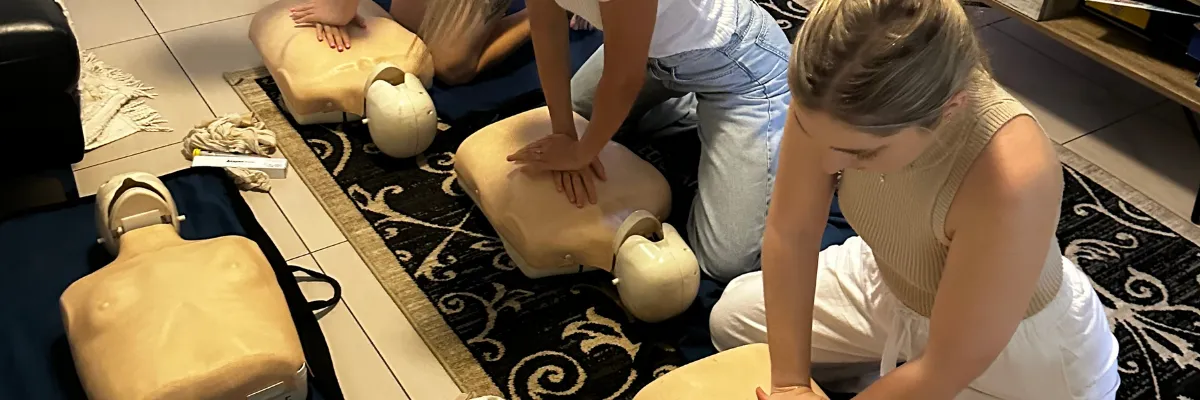
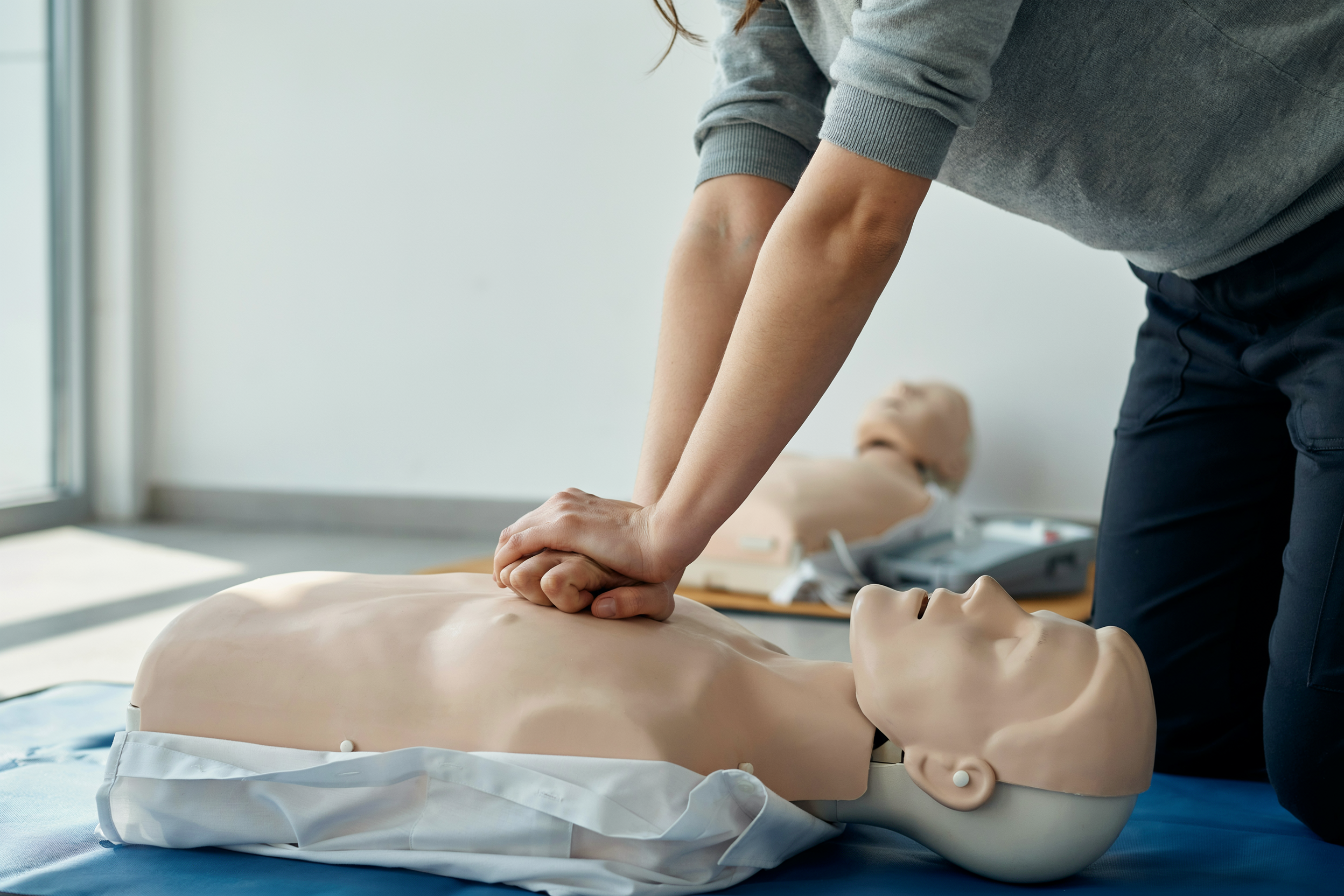
The practical component is non-negotiable. You need hands-on time on a mannequin, assessed by a qualified trainer, to be issued a valid certificate
HLTAID009 vs HLTAID011: What's the Difference?
This is one of the most common points of confusion, especially for workers who've held both at different points in their career.
HLTAID009 is the CPR-only course and what most workers need for annual renewal and standard site induction compliance. HLTAID011 covers everything in HLTAID009 plus a broader first aid response: bleeding, fractures, asthma, anaphylaxis, and more. Some principal contractors now specify HLTAID011 for supervisory roles, so it's worth checking your contract before you book.
If you're not sure which one applies to your situation, [HLTAID009 vs HLTAID011: Which Course Do You Actually Need?] breaks it down in full.
Now that you know which certification counts, the next question most workers ask is: how long does it actually last?
How Often Does CPR Certification Need to Be Renewed?
CPR certification needs to be renewed every 12 months. That's the recommendation in Safe Work Australia's First Aid in the Workplace Code of Practice, and it's the standard most site inductions enforce.
The 12-Month Rule
Twelve months sounds like a long time until you're standing at a site gate with a certificate that expired three weeks ago. It goes faster than people expect, especially when you're juggling work, family, and everything else.
The 12-month rule isn't arbitrary. Australian Resuscitation Council research shows that CPR skill retention drops significantly after 12 months without practice. The compression rate, the depth, the sequence, these things fade. A certificate that's 18 months old doesn't just create a compliance problem. It means the person holding it probably can't perform CPR as well as they could the day they walked out of training.
A few things worth being clear on:
Most site inductions will not accept a certificate older than 12 months. Some contracts are even stricter
The HLTAID011 First Aid certificate is recommended for renewal every 3 years, but the CPR component within it must still be renewed annually, separately
Current ARC 2025 guidelines reinforce annual CPR renewal as the baseline for maintaining effective skill retention
What Happens If Your Certificate Lapses?
An expired CPR certificate creates problems at two levels: for the individual worker and for the employer.
For the worker: you get turned away at induction. No current cert, no site access, that means lost shifts, awkward conversations with your employer, and a scramble to find a course at short notice.
For the site supervisor: an expired cert on your crew is your compliance problem, not just theirs. If something happens on site and it comes out that a worker's certification had lapsed, and you knew, or should have known, that exposure sits with you under the WHS duty of care.
The fix is simple enough: set a calendar reminder six weeks before expiry and book as soon as the reminder fires.
Keeping your own cert current is step one. But if you're responsible for a crew, the obligation goes further than your own wallet card.
How Many CPR-Trained Workers Does a Worksite Need?
The number of CPR-trained workers required on a worksite depends on the size of the crew, the hazard level of the work, and how far away emergency services are. Safe Work Australia's First Aid in the Workplace Code of Practice sets out the recommended ratios.
Safe Work Australia's Recommended Ratios
There's no single magic number that applies to every site. What the Code of Practice does is give a framework based on risk level, and construction sits firmly in the high-risk column.
Construction-Specific Considerations
Construction accounts for a disproportionate share of Australian workplace fatalities every year. Falls, crush injuries, heat stroke, cardiac events, the risk profile on a construction site is not comparable to an office environment, and Safe Work Australia's expectations reflect that.
A few things that apply specifically to construction:
Construction is explicitly identified by Safe Work Australia as requiring higher first aid preparedness than general low-risk workplaces
Site supervisors are typically expected to hold current CPR or First Aid certification as a baseline, not just one person somewhere on the crew
Many principal contractors now specify HLTAID011, not just HLTAID009, for anyone in a supervisory role. If your contract requires it and you only hold HLTAID009, you may have a gap worth closing
The honest reality for most site supervisors is this: one trained person per ten workers is a floor, not a target. If you're running a crew and you're the only one with a current cert, you're one sick day away from a compliance problem and one cardiac event away from something much worse.
Once you know how many trained workers your site needs, the final piece is making sure the training itself actually meets the standard.
Choosing an RTO That Satisfies Safe Work Australia's Requirements
Not all CPR training is equal, and on a worksite, a certificate from the wrong provider is worth exactly nothing.
What to Look for in a CPR Training Provider
Safe Work Australia's requirements aren't just about holding a certificate. They're about holding the right certificate, from the right provider, with the right training behind it. Here's what actually matters when choosing a CPR course:
Must be a Registered Training Organisation. Verify the provider's RTO number on training.gov.au before you book. If they're not listed, walk away
The certificate must reference HLTAID009 and carry the RTO's national registration number. If either of those things is missing, it won't be accepted at site inductions
Hands-on mannequin practice is non-negotiable. A course that's purely online or theory-heavy does not meet the standard. You need to physically perform CPR, assessed by a qualified trainer, to get a valid cert
Check Google reviews specifically for comments about trainer experience, not just star ratings. You're looking for reviewers who mention that the trainer had real-world experience, or that they left feeling genuinely prepared
Online CPR Courses: Do They Count?
Fully online CPR courses do not satisfy Safe Work Australia's requirements. Full stop.
HLTAID009 requires a face-to-face practical assessment component. You cannot demonstrate CPR competency through a multiple choice quiz and a video. Blended delivery, online theory followed by a face-to-face practical, is acceptable, but only when it's delivered through an accredited RTO and the practical component is properly assessed.
There are platforms out there selling CPR certificates that look legitimate at a glance. They're not. The worker who books one without checking the RTO number is the one getting turned away at induction on Monday morning. The standard is clear. The training has to be real.
Book Your CPR Course
Safe Work Australia's CPR requirements aren't complicated once you strip away the legislation and read what they're actually asking for. Have trained people on site. Make sure they're trained by a real RTO. Make sure that training is current. And in a high-risk environment like construction, make sure there's more than one of them. That's the framework and HLTAID009 is how you meet it.
The 12-month renewal rule catches more workers off guard than it should. Not because people don't care, but because a year goes faster than expected when you're heads-down on a job. The workers who stay consistently compliant are the ones who treat their CPR renewal like a rego check; it goes in the calendar before the last one expires, not after the gate turns them away.
If you're a site supervisor, the compliance picture is bigger than your own wallet card. You're responsible for knowing who on your crew is current, who's coming up for renewal, and who's never been trained at all. That's not a paperwork exercise. That's the difference between a site that's prepared and one that's hoping nothing goes wrong on the wrong day.
The other thing worth sitting with is this: CPR training isn't really about compliance. Compliance is just the mechanism that gets people through the door. What you actually leave with when the training is done properly, with real practice time and a trainer who knows what they're talking about is the ability to keep someone alive until the ambos arrive. That's worth more than any certificate.