Don't Risk Compliance: RTO Childcare First Aid Course
Choosing a first aid provider for your childcare center feels simple, right up until you find out the hard way that not every course actually meets ACECQA and National Regulations requirements. One wrong choice, and the staff you thought were "certified" might not count toward your ratios at all.
That's the bit nobody tells you when you're Googling "childcare first aid course" late at night after a long day at the center. A provider's website can look polished, professional, the works. Nice logo, glowing testimonials, a booking calendar that actually works. None of that tells you whether they're a genuine RTO delivering a nationally recognized HLTAID012 unit, or something that just looks the part.
If you're a Centre Director, you already know the stakes here aren't abstract. A staffing gap isn't a hypothetical, it's a room you might have to close, or a phone call to a parent you really don't want to make.
This guide walks you through what "RTO" actually means, how to verify a provider is the real deal before you book, and the exact red flags that separate a compliant course from one that's going to cause you problems down the track. Let's start with the question most directors are quietly Googling right now.
What Is an RTO for Childcare First Aid?
An RTO (Registered Training Organisation) is a provider officially registered with ASQA to deliver nationally recognized qualifications. For childcare first aid, this means your HLTAID012 course needs to be delivered by a genuine RTO, under its actual registration number. Otherwise, that certificate might not meet ACECQA staffing and ratio requirements, even if it looks legit on paper.
So how do you actually check this before you hand over your booking details? It comes down to four things.
How to check if a childcare first aid provider is a genuine RTO:
Ask for their RTO number and look it up yourself on training.gov.au
Confirm the course is listed as HLTAID012, not a similarly-named course that isn't actually accredited
Check that the Statement of Attainment references the correct national unit code
Confirm the certificate is recognized by ACECQA for ratio and staffing purposes
None of this takes long. But skipping it is exactly how directors end up with a room full of "trained" staff who technically don't count toward anything.
What Does "RTO" Actually Mean, And Why It Matters for Your Childcare Centre
Let's slow down for a second on that word "RTO," because it gets thrown around a lot and not everyone selling first aid training actually is one.
The legal definition (and why it's not just a fancy title)
A Registered Training Organisation is a provider that's been assessed and approved by ASQA, the Australian Skills Quality Authority, to deliver specific nationally recognized units of competency. It's not a marketing badge someone can slap on their homepage. It's a formal, audited status, tied to a specific RTO number, and that number is tied to specific courses they're allowed to deliver. If a provider isn't registered to deliver HLTAID012 specifically, they can't legally issue a Statement of Attainment for it, no matter how good their training actually is on the day.
"RTO-delivered" and "first aid certified" aren't the same thing
Here's the compliance gap that catches a lot of directors off guard: a course can be genuinely useful, well taught, even run by someone with real first aid experience, and still not count for ACECQA purposes. Why? Because ACECQA doesn't just want "first aid trained" staff. Under the Education and Care Services National Regulations, specifically Regulations 136 and 137, they want staff holding a nationally recognized unit, delivered by a genuine RTO, under the right unit code.
So you can have a room full of educators who've done a first aid course, sat through the content, got a certificate at the end, and still not be compliant. That's the trap. It's not about whether the training was good. It's about whether it was delivered by the right kind of provider, under the right registration.
If you want to check any provider's registration status yourself, training.gov.au has a public search tool where you can look up an RTO number and see exactly what units they're approved to deliver.

How to Verify a Provider Is a Genuine RTO (Before You Book)
Right, so now you know what an RTO actually is. Here's how you personally confirm one, before you've committed staff time to it.
Checking a provider's RTO number on training.gov.au
It's genuinely a quick job. You go to training.gov.au, search either the provider's name or their RTO number, and the site will show you exactly what they're registered to deliver. If HLTAID012 isn't listed against their registration, that's your answer, straight away, no guessing needed.
Don't just take a provider's word for it that they're "accredited." Ask for the number. A genuine RTO will give it to you without hesitation, because they've got nothing to hide.
Red flags to watch for
Some of these are subtle, and honestly pretty easy to miss when you're busy running a center and just need a course booked.
Vague language like "fully accredited" or "government approved" with no actual RTO number attached anywhere
No unit code listed at all, or a course name that sounds similar to HLTAID012 but isn't quite it
A Statement of Attainment (or promise of one) that doesn't clearly reference the national unit code
Reluctance to answer directly when you ask for their RTO number
If a provider gets cagey when you ask a straightforward question like that, take it as your answer.
Why the Statement of Attainment wording actually matters
This is the bit that trips people up the most. The certificate your staff walk away with needs to reference HLTAID012 specifically, word for word, unit code and all. Not a "rebadged" internal course that covers similar content. Not an equivalent. ACECQA is checking for the actual nationally recognized unit, and a Statement of Attainment that's missing this wording isn't going to help you at your next assessment, even if the training itself was genuinely good.
What ACECQA Actually Requires for Your First-Aid-to-Child Ratios
This is the part that keeps directors up at night, and fair enough, because it's not just a paperwork issue. It's a staffing issue that can shut a room down with almost no warning.
Regulation 136: qualified first aid, anaphylaxis and asthma management
Under Regulation 136 of the Education and Care Services National Regulations, centers need to have staff on-site who hold current, valid first aid qualifications, along with anaphylaxis and asthma management training. This isn't a "nice to have" or something you sort out when you get around to it. It's baked into the regulations, and it's one of the first things checked at assessment.
Regulation 137: what happens if certificates don't count
Here's where it gets real. Regulation 137 is about the practical staffing implications, meaning if a staff member's certificate doesn't actually meet the requirements (because it wasn't delivered by a genuine RTO, or the unit code is wrong, or it's simply expired), that person doesn't count toward your required ratio. Not partially. Not "close enough." They just don't count.
So imagine this scenario: you've got what you think is a fully ratio-compliant room, and then it turns out one of your "certified" educators actually holds a certificate from a provider that wasn't a genuine RTO. You're not compliant anymore, and you might not find out until an assessor is standing in your foyer.
Common compliance traps
HLTAID011 vs HLTAID012 confusion. These are different units, and HLTAID011 (the general provided first aid course) isn't the same as HLTAID012, which is specifically designed for childcare settings. Booking the wrong one is more common than you'd think.
Expired certificates not caught until assessment day. Turnover and busy rosters mean expiry dates slip through, and the first time anyone notices is when it's already a problem.
Booking a Course That Works Around Your Ratios, Not Against You
Knowing all this is one thing. Actually booking training without breaching your ratios in the process is a whole different problem, and it's the one that causes the most day-to-day stress.
Why on-site, small-group, staggered training protects your ratio coverage
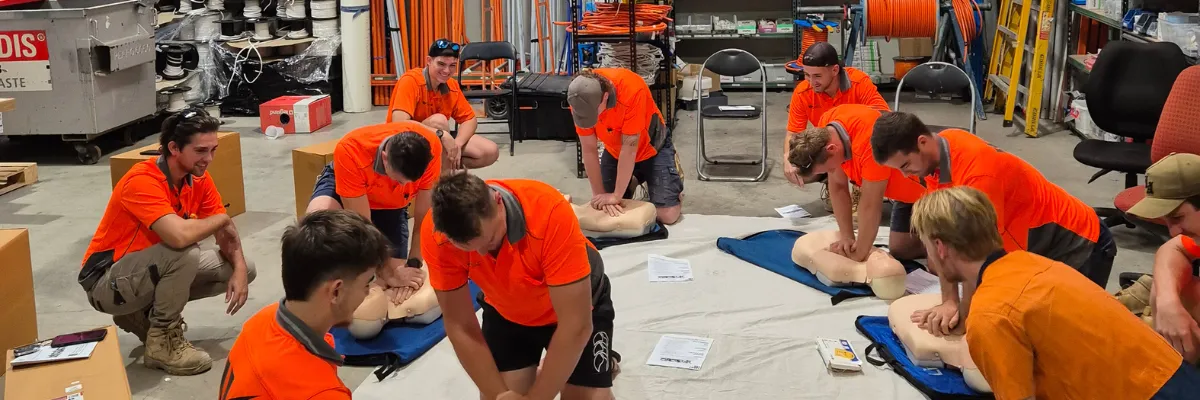
The old model of "everyone stops for training at once" just doesn't work for a center that has to maintain ratios every single hour it's open. A genuine provider should be able to run small-group sessions on-site, staggered so you're never pulling too many certified staff off the floor at once. That's the whole point, training that fits around your roster, not one that forces you to close a room or scramble for cover just to get people trained.
How a genuine RTO handles high-turnover onboarding
Early childhood education has one of the highest turnover rates going around, so the moment your team is fully certified, someone resigns and the clock starts again on a new hire. A provider who actually understands this won't make you re-explain your center's situation every time. They'll have a process built for exactly this kind of ongoing, rolling need, not a one-off "book it, tick a box" approach.
What "fast-tracked" HLTAID012 should (and shouldn't) look like
Fast-tracked doesn't mean cutting corners on the actual unit content, it just means getting a new hire through the process quickly enough that they can count toward ratio without unnecessary delay. What it shouldn't look like is a shortcut version that skips practical assessment or waters down the unit just to get a certificate out the door faster. If a provider's "fast-track" sounds too good to be true, it's worth asking exactly what's being cut to make it quick.

Choosing the Right RTO Partner for Your Centre
By now you've got the framework, what an RTO actually is, how to verify one, what ACECQA needs from you, and how booking should work around your ratios instead of against them. This last piece is about picking the actual partner.
Why the right fit matters
More enrolments across the sector mean more competition for training slots, especially with providers who can't turn around a last-minute onboarding session when you actually need one. A provider genuinely committed to servicing your center, rather than just listing it as an area they cover, is going to be faster to get on-site, faster to respond when a new hire starts and needs to be ratio-counted quickly.
What to ask a provider before you commit
Before you book anything, it's worth having a short list ready:
What's your RTO number, and can I verify it myself on training.gov.au?
Is this course listed and delivered as HLTAID012 specifically?
Do you offer on-site, small-group sessions that work around our ratios?
Do you provide any kind of renewal tracking or reminder support, so certificates don't lapse without us noticing?
How quickly can you get a new hire trained and ratio-counted?
A provider who answers all five without hesitation is one worth trusting. A provider who dodges even one of them is worth a second look before you sign anything.
Conclusion
Choosing a childcare first aid provider shouldn't feel like a gamble, but for a lot of directors it quietly is, right up until the moment a certificate turns out not to count. The good news is that none of this is actually complicated once you know what you're looking for. It comes down to a handful of checks: a real RTO number, the correct HLTAID012 unit code, a Statement of Attainment that references it properly, and confirmation the training is recognized by ACECQA. A quick search on training.gov.au is all it takes to know for certain, rather than hoping a provider's website is telling you the truth.
What makes this decision feel so heavy is the ratio pressure sitting underneath it. Every Centre director knows the feeling of watching a roster and wondering if today's the day someone calls in sick and the numbers don't add up. Add a compliance gap on top of that, a certificate that doesn't actually count, and suddenly a normal day turns into a room closure or an awkward call to a parent. That pressure is exactly why the vetting step matters so much, not because the paperwork itself is hard, but because getting it wrong has real consequences for a real day at a real center.
The turnover reality in early childhood education makes this an ongoing job, not a one-off box to tick. New hires start, someone resigns, certificates lapse quietly in the background while everyone's focused on the actual kids in the actual rooms. A provider who understands this rhythm, who can run small-group sessions without shutting a room down, who tracks renewals before they become an emergency, turns this from a recurring headache into something that mostly runs itself in the background.
None of this needs to be a dramatic decision made under pressure. It's a one-time vetting process, done properly, that then lets a director stop thinking about it and get back to the parts of the job that actually drew her to early childhood education in the first place. Verify the RTO, confirm the unit code, ask the right questions before booking, and the whole compliance question stops being something that keeps anyone up at night.
At the end of the day, the centers that feel calm walking into an ACECQA assessment aren't the ones that got lucky. They're the ones where someone took a bit of time early on to ask the right questions and check the right number on the right website. That's really all this comes down to, a small bit of diligence upfront, in exchange for not having to think about it again for a long while.