Resuscitation Skills for Emergency Responders: Training Guide
You already know how to do compressions. You've done the course, ticked the box, maybe even used it for real once or twice. But here's the question that actually matters: if a client crashed in your chair right now, mid-filler, mid-treatment, poolside, would your training carry you past the first sixty seconds? Or would you be standing there doing the only thing you know how to do, waiting for someone else to arrive and take over?
That's not a dig. Most people in clinical and allied health roles are in exactly that position, and most don't realize it until they're actually in the moment. For clinicians, nurses, dental staff and allied health professionals, that's the real question sitting behind resuscitation skills for emergency responders: not whether you can start CPR, because you already can, but whether you can manage an airway, get oxygen into a deteriorating patient, and hold the situation together until paramedics take over. That's a genuinely different skill set, and it's the exact gap between HLTAID011 and HLTAID015.
This guide walks through what advanced resuscitation skills actually involve, why they matter specifically in cosmetic, dental and allied health settings, and how you close that gap without burning a full day of clinic revenue to do it. Whether you're the senior nurse your team looks to when something goes wrong, or a practice owner making sure your clinical staff are properly covered, you'll get a clear picture of what's required.
Basic First Aid vs. Advanced Resuscitation Skills: Where the Real Gap Sits
A lot of people assume HLTAID015 is just HLTAID011 with an oxygen mask bolted on. It's not, and that misunderstanding is exactly why so many clinical teams end up under-covered without realizing it. The honest way to think about it isn't "better version of the same course." It's a scope gap. HLTAID011 stops at a certain point, and HLTAID015 picks up from exactly there.
What HLTAID011 Covers (and Where It Stops)
HLTAID011 gives you the fundamentals, and they matter. Compressions, defibrillation, basic first aid response, the stuff every workplace needs someone certified in. It's genuinely solid training for a general workplace setting where the expectation is: start CPR, call an ambulance, keep going until someone more qualified shows up.
But that's also where it stops. HLTAID011 doesn't train you to manage an airway. It doesn't cover oxygen therapy. And it doesn't put you through the kind of advanced, multi-factor scenarios that clinical and allied health settings actually produce. If your role only ever needs "start CPR and wait," HLTAID011 does the job. If your role involves clients under sedation, under local anesthetic, in the water, or in any situation where things can escalate fast and in more than one direction, it doesn't.
What HLTAID015 Adds: Airway, Oxygen Therapy and Advanced Scenarios
This is where the real scope sits. HLTAID015 adds airway management, oxygen therapy administration, and advanced resuscitation scenarios that reflect clinical practice, not a generic workplace incident. It's built for people who are often the most senior clinical presence in the room when something goes wrong, and who need to do more than hold the fort until help arrives.
So what does that added scope actually involve, day to day? Let's get into it.
The Core Resuscitation Skills Covered in Advanced Training
This is the part that actually changes what you can do in the room. Three areas sit at the center of HLTAID015, and each one solves a specific gap that basic first aid training leaves wide open.
Airway Management and Obstruction Clearance
An airway problem doesn't always look dramatic. Sometimes it's subtle, a change in breathing sound, a color change, someone who's gone quiet in a way that should worry you. Advanced training teaches you to recognize airway compromise early and actually clear it, using adjuncts where appropriate rather than just repositioning someone and hoping for the best. This is the skill that most clearly separates "I know CPR" from "I can manage an airway."
Oxygen Therapy: Equipment, Dosing Awareness and Administration Under Pressure
Oxygen therapy sounds simple until you're the one holding the mask with someone's hands shaking, yours included. HLTAID015 covers the equipment itself, how to set it up, how to actually operate it when adrenaline is doing its best to make your fingers uncooperative, and the dosing awareness that goes with safe administration. According to ANZCOR guidelines, oxygen delivery is a core component of advanced life support response, and it's treated that way in this training, not as an add-on extra tacked onto the end of a CPR refresher.
Team-Based Resuscitation and Leadership During a Code
A code is rarely a solo effort. If nobody's coordinating, you end up with three people doing compressions and nobody managing the airway, or the reverse. Advanced training covers how to lead and coordinate a team response, compressions, airway, oxygen, all moving together instead of everyone reacting independently. For the senior clinician in the room, this is often the skill that matters most, because in a real event, you're not just performing a task. You're the one other people are looking at for direction.
Skills on their own aren't worth much if you can't apply them to the actual situation you're facing, and the situations clinical and allied health professionals face are rarely generic. So who actually needs this level of training?

Who Actually Needs These Skills? (It's Broader Than You Think)
If you're picturing paramedics and ICU nurses as the only people who need this, that's narrower than reality. HLTAID015 sits in plenty of workplaces that don't look like emergency departments on the surface, but carry a similar level of risk the moment something goes wrong.
Cosmetic and Aesthetic Clinics: Occlusion and Anaphylaxis-Adjacent Risk
Cosmetic injecting carries real, specific risks. A vascular occlusion from dermal filler, an anaphylactic reaction to a local anesthetic, these aren't hypothetical scenarios dreamed up for a training brochure, they're things that happen in clinics on this coast. If you're the nurse in the room when it does, "start CPR and call an ambulance" isn't enough. You need to recognize what's happening early and respond to it properly.
Cosmetic and aesthetic nurse injectors
Recovery nurses in cosmetic settings
Clinic owners responsible for staff coverage
Dental Practices: Chairside Collapse Scenarios
A patient can deteriorate mid-procedure, under local anesthetic, in a chair that isn't exactly built for emergency response. Dental teams need to be ready for a chairside collapse in a way that basic first aid training simply doesn't prepare them for.
Dental practice clinical leads
Dental nurses and chairside assistants
Practice owners managing team-wide compliance
Allied Health and Aquatic/Fitness Settings: Near-Drowning, Cardiac Events During Exertion
It's not just clinics. Physiotherapists and exercise physiologists working with high-risk clients, lifeguards, aquatic center supervisors, and fitness industry medical liaisons all face a version of the same problem, someone deteriorating during exertion, or a near-drowning event where airway management and oxygen therapy are the difference between a scare and a tragedy.
Physiotherapists and exercise physiologists with high-risk clients
Lifeguards and aquatic center supervisors
Fitness industry medical liaisons
What does all of this actually look like when it's happening in front of you, rather than written out as a list? That's next.
What These Skills Look Like in a Real Emergency
Theory is one thing. Knowing what to actually do when it's happening in front of you is another thing entirely, and that gap is exactly what advanced training is built to close.
A Vascular Occlusion Scenario in a Cosmetic Clinic
A filler treatment is underway, routine, the kind of appointment that happens a dozen times a week. Then the skin around the injection site starts to blanch, the client reports pain that doesn't match what should be a straightforward procedure, and it becomes clear something has gone wrong with blood flow. This is a vascular occlusion, and recognizing it early, understanding what's happening and responding appropriately, is a specific skill. It's not something a general first aid course touches on, because it's not a general workplace scenario. It's a clinical one.
A Cardiac Event Mid-Treatment
A client is mid-treatment, whether that's a cosmetic procedure, a dental appointment, or an allied health session, and something changes. Chest pain, a change in color, a collapse. This is where airway management, oxygen therapy and team coordination all come together at once, and where the difference between HLTAID011 and HLTAID015 training stops being theoretical and becomes the actual difference in outcome.
A Poolside or Aquatic-Facility Collapse
Someone's pulled from the water. Near-drowning events move fast, and airway management combined with oxygen therapy is central to the response, well before paramedics arrive. For lifeguards and aquatic center staff, this isn't a rare hypothetical, it's the exact scenario their role exists to be ready for.
These aren't edge cases dreamed up to sell a course. They're the situations this training exists for. So how does the training itself actually work, and how do you fit it around a full clinic diary?

How HLTAID015 Training Works on the Gold Coast
Knowing you need advanced resuscitation training is one thing. Actually finding a day to do it without gutting your appointment book is another problem entirely, and it's one we've built the course around solving.
Course Structure
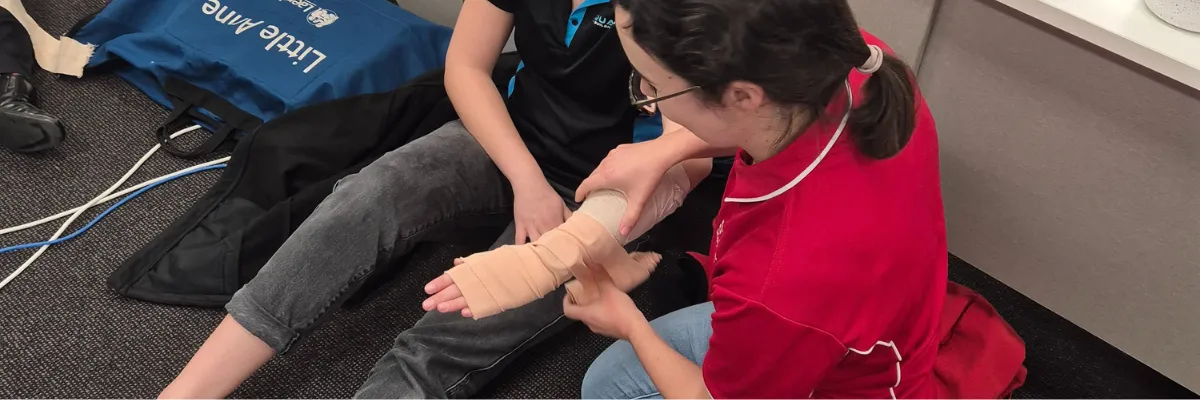
HLTAID015 combines theory and hands-on practical scenario work, with an assessment component. It's not a passive sit-and-watch course. The practical component is where the airway management and oxygen therapy skills actually get built, through repetition, not through a slideshow.
What's included:
Pre-course theory component
Hands-on practical training, including airway and oxygen equipment
Scenario-based assessment
Digital certificate on completion
Weekend and Evening Options
Clinic hours don't leave much room to disappear for a full weekday, which is why weekend and evening sessions are run as a genuine, named option, not something you have to ask about apologetically.
Certificate for CPD and Compliance Filing
Once you've completed the course, you get a digital certificate that goes straight into your AHPRA CPD records or your practice's compliance file. No chasing paperwork, and nothing to wait weeks for.
Getting the logistics right is only half the equation, though. The other half is making sure the provider you choose is actually equipped to teach this properly.
Choosing the Right Advanced Resuscitation Provider
Not every course calling itself "advanced resuscitation training" is built the same way, and who's actually teaching it matters more than the certificate at the end.
Why Trainer Clinical Background Matters
Airway management and oxygen therapy aren't skills you can teach convincingly from a textbook alone. They need to come from someone who's actually done it under pressure, not just someone who's read the unit of competency and put together a slide deck. Jarryd Hunter, who leads HLTAID015 training at Accelerate First Aid, brings a paramedic background to the room, which means the scenarios you run aren't theoretical constructs. They're built from what actually happens in the field.
Questions to Ask Before Booking
Before you commit to a provider, it's worth asking a few direct questions:
Does the trainer have a genuine clinical or paramedic background, or just a training qualification?
Is the course delivered under a recognized RTO, and can they confirm the RTO number?
Does the scenario training reflect your actual work setting, cosmetic, dental, aquatic, or otherwise?
What does the certificate actually cover for CPD or compliance purposes?
Wrapping Up
There's a real gap between knowing CPR and knowing what to do when a client's airway closes, or when oxygen becomes the thing standing between a scare and a tragedy. Compressions buy time. They don't manage an airway, they don't get oxygen into someone who needs it, and they don't give you the judgment to run a proper response when more than one thing is going wrong at once. That's the actual gap, and it's wider than most people realize until they're standing in the middle of it.
Most clinicians and allied health professionals are one near-miss away from finding out exactly where that gap sits in their own training. A vascular occlusion mid-filler. A cardiac event mid-treatment. Someone pulled from a pool who wasn't breathing properly. None of these are rare hypotheticals dreamed up to sell a course, they're the situations advanced resuscitation training exists for, and they tend to arrive without warning on a day that otherwise looked completely routine.
Closing this gap doesn't have to cost you a full week of clinic revenue or months of scheduling headaches. Advanced resuscitation and oxygen therapy training is built to fit around the diaries of people who genuinely can't disappear for a full weekday, with weekend and evening options that treat time-poor clinicians as the norm, not the exception.
If you've read this far, there's a reasonable chance you already suspect where you or your team stand on this. The honest move is to confirm it rather than assume your current certificate covers more than it does. Have a look at whether your role genuinely sits within the scope of HLTAID011, or whether the day-to-day reality of your work has quietly outgrown it.