Complete Respiratory Emergency Training Gold Coast: Empowering Childcare Professionals to Save Lives
Picture this - you're halfway through snack time when 4-year-old Emma suddenly starts coughing. Not her usual giggle-induced cough, but something different. Her face is getting red, she's making that wheeze sound you've heard before, and now all the other kids are staring. Your heart starts racing because you know this could be serious. That split second where you're frozen between action and uncertainty? That's when proper respiratory emergency training either saves the day or leaves you wishing you'd been better prepared.
For Gold Coast childcare professionals, this scenario isn't hypothetical - it's a reality that keeps many educators awake at night, wondering "Am I really prepared if a child's life depends on my response?"
Complete respiratory emergency training goes beyond ticking boxes for ACECQA requirements. When a child can't breathe properly, you need skills that actually work under pressure. Real training that transforms stomach-dropping panic into calm, competent action.
Understanding Respiratory Emergencies in Gold Coast Childcare Settings
Let's get real about what we're dealing with here on the Gold Coast. Our subtropical climate creates unique challenges for children with respiratory conditions that generic training manuals don't address.
The humidity alone can turn a manageable asthma day into a nightmare. When it's 85% humidity and 28 degrees at 9am, kids with asthma are already working harder to breathe before they've started running around. Add flowering bottlebrush trees, grass pollen from parks, and salt air drifting inland, and you've got a perfect storm of respiratory triggers.
Common Respiratory Triggers in Subtropical Climates
Then there's our outdoor lifestyle. Gold Coast families spend more time outside than families in other cities, meaning more exposure to bee stings, ant bites, and plant allergens. That beautiful outdoor play area surrounded by native plants? Those same plants trigger reactions in sensitive children.
Age-Specific Risk Factors (0-12 years)
Different ages present completely different challenges. Toddlers can't tell you "my chest feels tight" - they just get cranky, clingy, or start that persistent cough that makes your heart sink. You're looking for behavioral changes, not verbal complaints.
Preschoolers feel scared when they can't breathe properly, which makes everything worse. They might hide symptoms because they don't want to miss activities, or panic and make breathing difficulties more severe.
School-age kids think they know how to manage their medication, forget to mention they're feeling wheezy, or push themselves too hard during activities because they don't want to look different.

ACECQA Compliance Requirements: What You Must Know
Here's where things get confusing, and honestly, ACECQA doesn't make it easy to understand. You've probably heard about 22300VIC and 22556VIC courses, but do you know which one you need? Getting this wrong doesn't just mean a failed audit - it can mean your center loses its license.
If you have children with diagnosed anaphylaxis in your care, you need 22300VIC. Non-negotiable. This course covers recognizing anaphylaxis, using EpiPens correctly, and managing chaos when a child's having a severe allergic reaction while you're supervising fifteen other kids.
Here's where it gets tricky - 22556VIC covers asthma management, and many educators think "we don't have kids with severe asthma, so we don't need it." Wrong. You need 22556VIC if you care for ANY children with asthma, regardless of severity.
22300VIC vs 22556VIC: Which Course Do You Need?
This is the most common question from childcare directors, and the answer is usually "both."
22300VIC is specifically about anaphylaxis - life-threatening allergic reactions that happen in minutes. If you've got children with severe food allergies, bee sting allergies, or other anaphylaxis triggers, this training is mandatory.
22556VIC covers asthma emergencies, which are more common than most realize. Asthma affects about 1 in 9 Australian children, so you've probably got multiple kids with asthma right now.
Reality check - most Gold Coast childcare centers need staff trained in both courses. Our climate means higher rates of both asthma and environmental allergies.
Certification Renewal and Documentation
Your certificates don't last forever, and ACECQA doesn't send reminder notices. Both 22300VIC and 22556VIC certificates are valid for three years from issue date. Renewal starts from course completion, not from when you started working with children who have these conditions.
Every child with asthma or anaphylaxis needs individual action plans, signed by doctors and updated regularly. But action plans aren't forms you file away. Trained staff need to know exactly where each child's plan is located, their specific triggers, and medication storage locations.
Recognizing Respiratory Distress: Signs Every Educator Must Know
When a child's breathing is compromised, you've got minutes to make the right call. Respiratory distress in children doesn't look like movies. There's no dramatic gasping and throat clutching. Instead, you get subtle changes that are easy to miss if you don't know what you're looking for.
Early Warning Signs vs Emergency Symptoms
Early warning signs are your golden opportunity. Watch behavior changes first. That chatty kid who goes quiet? The active child who suddenly wants to sit down? These aren't necessarily respiratory problems, but they're worth attention.
Breathing changes come next. You might notice faster breathing or working harder to breathe. Nostrils might flare slightly with each breath, or you might see their chest moving more dramatically.
Emergency symptoms require immediate action. If you see skin color changes - blue lips, pale face, or grayish tone around their mouth - you're looking at severe oxygen deprivation. When they struggle to speak full sentences because they can't catch their breath, when they're using shoulder muscles to help breathe, or when they seem confused or agitated for no reason - these are red alerts.
Age-Specific Presentation Differences
Babies and toddlers can't tell you "I can't breathe," so you're looking for different clues. Infants might become unusually fussy, refuse feeding, or seem sleepier than normal.
Toddlers might become clingy when they normally aren't, or get cranky for seemingly no reason. They might ask for pickup more often because standing or walking feels harder when breathing is compromised.
Preschoolers can usually tell you something's wrong, but don't always have words to describe breathing problems accurately. They might say their "tummy hurts" when they mean chest tightness.
School-age children are your best communicators about respiratory symptoms, but most likely to downplay problems because they don't want to miss activities or look different.
Practical Emergency Response Protocols
Here's where training meets reality. You're not dealing with one cooperative child in a quiet room - you've got twenty kids watching, maybe some crying because they're scared, and you need to manage a medical emergency while making sure nobody else gets hurt.
Step-by-Step Response for Asthma Attacks
When a child starts having breathing difficulties, your first priority is staying calm. Kids pick up on adult panic instantly, and scared children have worse asthma symptoms than calm ones.
Your immediate assessment takes about ten seconds. Can they speak full sentences? Are they able to walk normally? What color is their face? If they can talk normally and their color is good, you're probably dealing with mild symptoms that will respond to medication.
Get their reliever medication immediately. Position matters - sitting upright is usually best. Give medication according to their action plan - usually 4 puffs through a spacer, with 4 breaths between each puff.
Wait and assess. Most reliever medications start working within 5 minutes. If you're not seeing improvement by then, or if symptoms are worsening, you're moving into emergency territory.
Anaphylaxis Management While Supervising Multiple Children
The moment you suspect anaphylaxis - suspect, not wait until you're certain - you need help. If you're alone, your priority is the child having the reaction, but you need to manage other children quickly.
Move other children away from the emergency if possible. A simple "everyone needs to sit on the mat while I help Emma" is enough. EpiPen administration needs to be automatic: remove the blue safety cap, hold it like you're gripping a tennis ball, press firmly into their outer thigh until you hear the click, hold for 10 seconds, then remove.
Call 000 immediately after using the EpiPen, even if the child seems improving. This isn't optional. Anaphylaxis can return hours later, often more severely.
When to Call 000 vs Manage In-House
If a child cannot speak full sentences because of breathing difficulty, if their color is changing, if they seem confused or agitated, or if prescribed medications aren't providing relief within expected timeframes, you call 000. Don't wait, don't call parents first, don't try one more intervention.
For anaphylaxis, if you've administered an EpiPen, call 000 immediately - even if the child seems improving.

Gold Coast Training Providers and Course Options
Not all training providers are created equal. You need training that actually prepares you for real emergencies, not just helps you pass a written test.
What Makes Quality Training
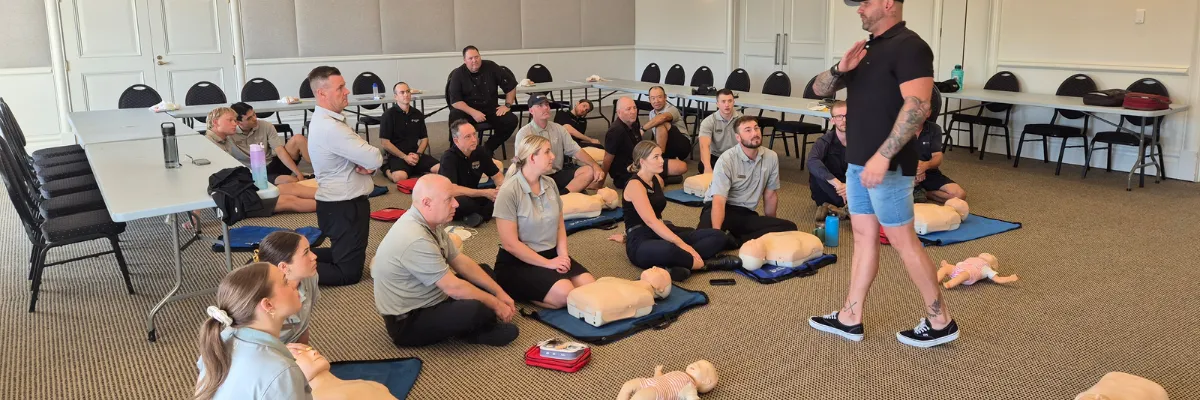
Look for providers who employ trainers with real emergency response experience - paramedics, emergency nurses, people who've actually managed respiratory emergencies in high-pressure situations. The best providers use realistic scenarios during training with actual EpiPen trainers, not just pictures.
Online vs Face-to-Face Training
Online training works for theoretical components, but practical skills absolutely must be face-to-face. You need to practice physical skills until they become automatic. In real emergencies, your hands need to know instinctively what to do.
Blended learning can work well - online modules for theory, followed by face-to-face practical sessions where you actually practice emergency scenarios.
Building Confidence Beyond Certification
Getting your certificate is just the starting line. Real confidence comes from practice, experience, and ongoing learning.
Practice Scenarios for Real-World Preparation
Regular scenario practice is what separates confident educators from anxious ones. Set up scenarios that match your actual environment. Practice using EpiPens in your outdoor play area. Run through asthma emergencies during meal times. Make practice sessions as realistic as possible.
Creating Support Networks
Connect with other Gold Coast educators who understand exactly what you're dealing with. Look for local early childhood education networks where you can share experiences and learn from others who've managed real respiratory emergencies.
Ongoing Professional Development
Respiratory emergency management evolves constantly. New medications come on the market, emergency protocols get updated, and research provides better understanding. Subscribe to updates from relevant professional organizations and build relationships with local pediatric health professionals.
The most confident educators treat professional development as an ongoing journey rather than a series of compliance requirements. They actively seek opportunities to improve their skills and view every experience as a learning opportunity that makes them better prepared to protect the children in their care.
Real confidence comes from knowing you're genuinely prepared to handle whatever respiratory emergencies might arise, with the skills, knowledge, and support systems to protect every child under your care.