Provide First Aid Practical: 2026 Assessment Guide
If the words "practical assessment" make your stomach drop, you're not alone. Almost everyone booking a Provide First Aid course feels some version of this: worrying about technique on the manikin, performing CPR in front of strangers, or "getting it wrong." There's actually a name for this, manikin anxiety, and it's far more common than you'd think.
Here's the good news: this is not a test designed to catch you out. It's built to be supportive. Trainers want you to walk out capable, not catch you slipping up.
In this guide, we'll cover what's in the provide first aid practical assessment, how long it takes, what trainers are genuinely looking for, and why nearly every candidate leaves with their certificate the same day. Whether you're renewing an old HLTAID003 or doing this for the first time, by the end you'll know exactly what to expect, and that takes most of the nerves out of it.
What's Actually Covered in the Provide First Aid Practical Assessment
So what's actually in this thing? A lot of the anxiety comes from not knowing what you're walking into. The assessment covers four areas, all mapping back to real situations you might face one day.
CPR and basic life support (compressions, rescue breaths, AED use)
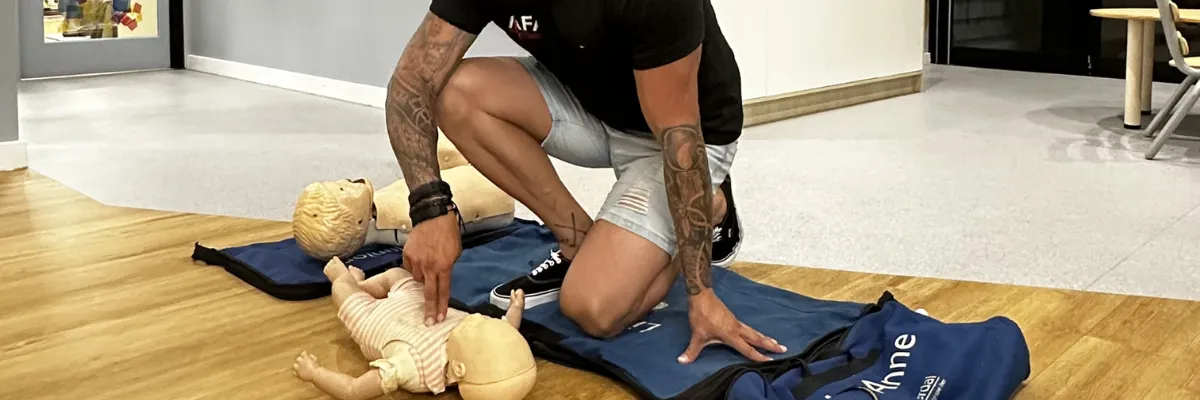
This is the big one in most people's minds, and probably what's causing most of that manikin anxiety. You'll be assessed on chest compressions (depth, rate, hand placement), rescue breaths, and using an AED safely. Trainers walk you through this step by step before you're expected to demonstrate it solo.
Wound management and bleeding control
This covers managing cuts, wounds, and bleeding, including more serious bleeds where pressure and positioning matter. It's hands-on, not just "here's a bandage, good luck."
Asthma and anaphylaxis response
You'll need to show you can respond to an asthma attack and an anaphylactic reaction, including inhaler technique and how an adrenaline autoinjector works. This trips people up in theory but clicks fast once you've physically held one and practiced the motion.
Recovery position and unconscious patient management
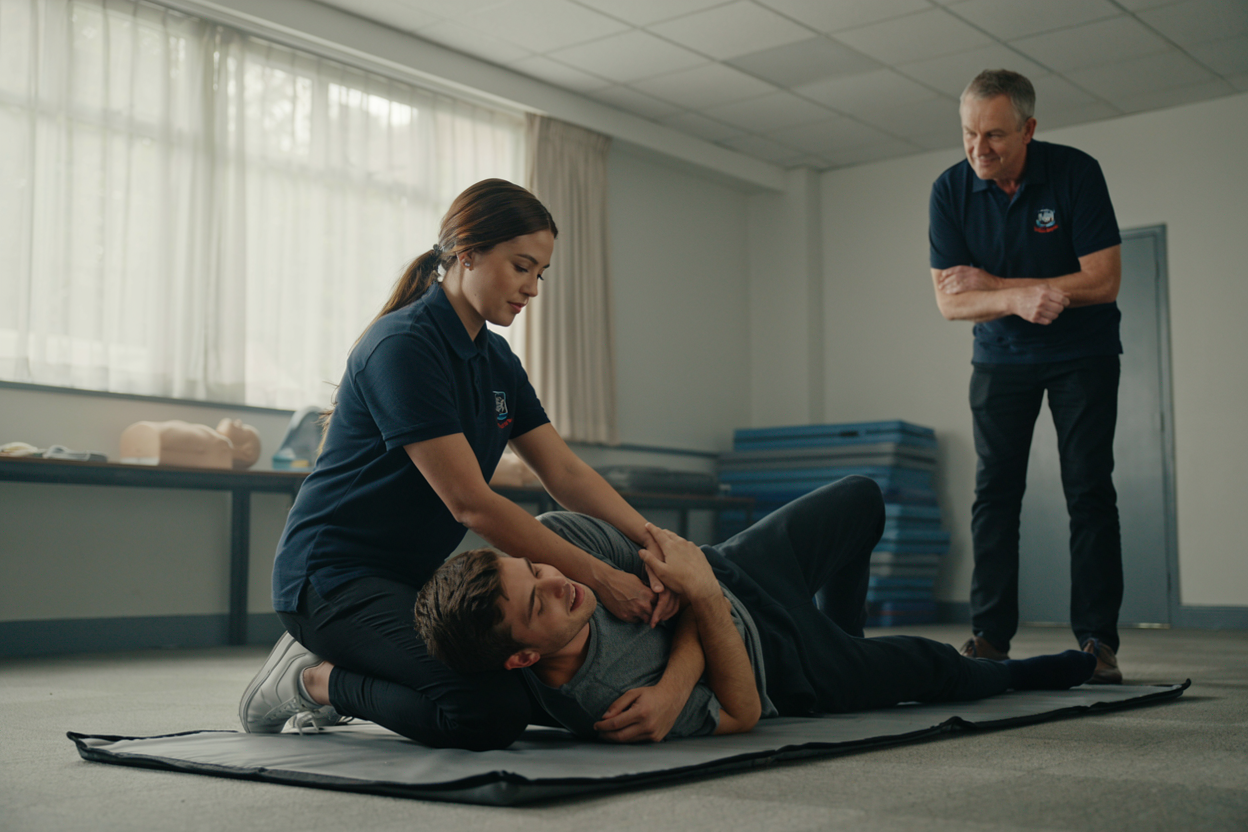
Putting someone in the recovery position sounds simple until you're doing it under pressure. You'll practice managing an unconscious patient: checking responsiveness and getting them into a safe position while you wait for help.
How Long Does the Practical Assessment Take?
This is one of the most common questions people ask before they book, and fair enough: nobody wants to clear out their day for something that should take a few hours.
Typical timing breakdown (theory vs. practical split)
A Provide First Aid course generally runs as a half-day session, with the practical sitting inside that timeframe, not tacked on separately. There's a theory component first, covering the "why," then the practical, demonstrating skills on the manikin and equipment.
The practical part itself takes most candidates 20 to 40 minutes, depending on group size and any re-attempts needed. It's not a marathon. It's also not rushed.
"Manikin Anxiety" Is Real, and Completely Normal
Knowing the timing helps, but for most people, the bigger question isn't "how long," it's "what if I mess up in front of everyone." Let's sit with this one, it's the part that matters most.
Why almost everyone feels nervous before the practical
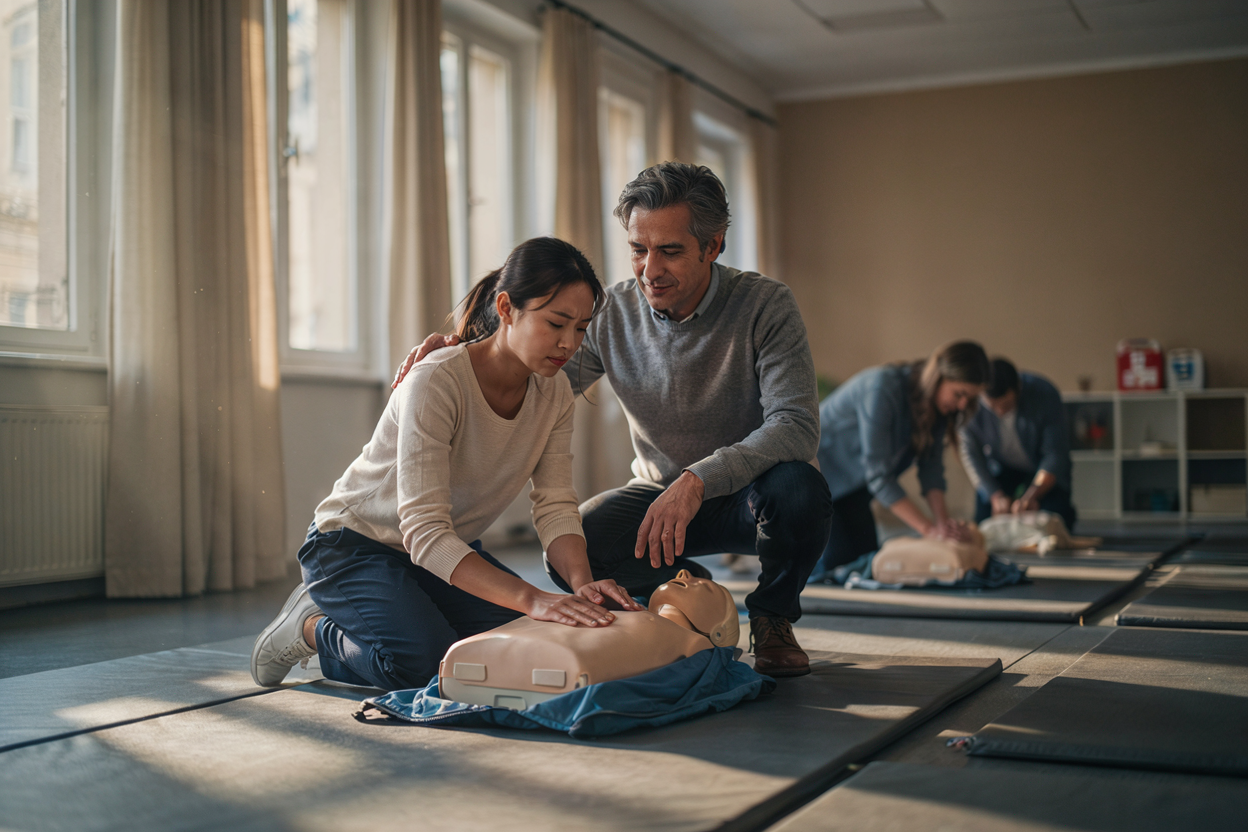
Manikin anxiety is the nervousness people feel performing CPR on a manikin in front of others, and it's remarkably common. Most people haven't done compressions since high school, or ever. You're demonstrating something you've only seen in a video, surrounded by people who might be just as nervous.
There's also a strange thing where people worry about "hurting" the manikin, or that their technique looks wrong even when it's not, or just feel self-conscious being watched. None of that is silly. It's a normal reaction to performing under perceived observation, even in a low-pressure room.
What trainers are actually trained to do about it
Good trainers know this anxiety exists before you walk in, because they see it in nearly every session. Jarryd Hunter, a paramedic for over 20 years before training, has said the goal isn't catching people out, it's getting everyone competent and confident by the time they leave.
That means trainers actively watch for nerves and adjust on the fly. They'll demonstrate first, break a skill into smaller steps, offer encouragement over criticism, and make it normal to ask "wait, can you show me that again?"
What Trainers Are Actually Looking For (and What They're Not)
This is where a lot of the mystery clears up. Once you know what's actually assessed, the whole thing stops feeling like a black box.
Competency, not perfection: how assessment criteria really work
Trainers are checking for competency, not perfection. That distinction matters more than people realize. Competency means demonstrating you understand the skill and can perform it to a safe standard, not textbook-perfect compressions.
This lines up with ARC (Australian Resuscitation Council) guidelines, which set the standard for "competent" in CPR and basic life support. Trainers work within that framework, not an arbitrary bar they've made up. They're checking whether you'd genuinely help someone in a real emergency, not whether you look practiced.
Common, totally fixable mistakes (hand position, depth, rhythm)
The mistakes trainers see most often: hand position drifting off-center, compressions too shallow or too deep, or rhythm a bit too fast or slow. Every one is fixable on the spot, usually within a minute or two.
Jarryd Hunter's approach, drawing on his paramedic background, leans on this: these aren't abstract errors to penalize, they're the same small corrections he'd have coached real first responders through on the job. Muscle memory built in real time, not a final judgement.
What Happens If You Don't Get a Skill Right the First Time
So what actually happens if a skill isn't quite there yet? Here's the honest answer: very few candidates "fail" a Provide First Aid practical assessment outright. That's not a marketing line, it's genuinely how this works.
On-the-spot coaching and re-attempts
If a trainer notices a skill isn't quite right, they'll pause you, coach the correction, and let you try again right there. Most issues get sorted within the session, often within minutes.
If a skill genuinely isn't competent by end of day, here's what you're typically offered:
A short, free re-attempt on the same skill
A revised assessment date at no extra cost
One-on-one guidance from the trainer beforehand, so you walk into the re-attempt more prepared
When (rarely) a follow-up session is needed
A full follow-up session is genuinely rare. It tends to come up only if someone's had an off day entirely, maybe unwell, rather than one shaky compression sequence. Even then, it's framed as "let's get you there properly," not "you failed, start again."
Providers focused on real competency, not just compliance, treat all of this as training, not a pass/fail cliff edge.
How to Prepare Before Your Practical Assessment Day
Once you know it's not some terrifying pass/fail moment, let's talk about walking in feeling ready.
What to wear / physical comfort tips
Wear something comfortable you can move in freely, since you'll be kneeling, bending, and reaching. Closed-in shoes are a good idea too. Nothing fancy required, just clothes you wouldn't think twice about getting active in.
Reviewing pre-course online modules beforehand
If your course includes pre-course online modules, even a quick skim beforehand makes a real difference. You don't need to memorize anything word for word. Having the concepts loosely in your head means the practical feels like reinforcing something familiar, not learning it cold.
Simple breathing/mindset tips for nervous candidates
If nerves are getting to you beforehand, a few slow breaths genuinely help more than people expect. Remind yourself the trainer has seen hundreds of people feel exactly this way, and every one got through it. You're not the first to feel shaky walking up to that manikin.
Quick self-check: Am I ready?
Reviewed any pre-course materials, even briefly?
Wearing something you can move comfortably in?
Know roughly what to expect from the day?
Reminded yourself that nerves are normal and trainers expect them?
If you answered yes to most, you're in better shape than you think.
Same-Day Certification: What Happens Right After You Pass
Here's the part everyone's waiting for: what happens the moment you're done.
Digital Statement of Attainment turnaround
Once you've completed the practical and demonstrated competency, your Statement of Attainment is processed digitally, and most candidates receive it the same day. No waiting weeks wondering if it's lost in the post, no chasing emails a fortnight later. Your certificate is already in your inbox, or close behind it.
What to do with it (employer, insurer, licensing body)
That Statement of Attainment goes to whoever needs proof: your employer, your insurer, a licensing body, or a fitness industry registration requirement. It's nationally recognized, tied to RTO 31106, and verifiable through training.gov.au. No follow-up admin. You're done.
Accelerate First Aid runs sessions across Brisbane and the Gold Coast, with fixed venues plus mobile and workplace delivery, so finding a session that fits your week isn't the hurdle it might be with other providers.
Still nervous? Read about what our trainers do differently, or call 0434 778 243 to ask any question before you even book.
UP NEXT
The practical assessment isn't the obstacle most people build it up to be. It's a few skills, demonstrated in a supportive room, with someone who genuinely wants you to succeed. The nerves beforehand are almost always worse than the experience.
What matters most isn't nailing every compression first try. It's walking out knowing what to do if someone needs help, at work, at home, or somewhere unexpected. That's why the assessment is built around coaching, not catching people out.
If you've been putting this off because of an old certificate or a workplace requirement, the practical side shouldn't be holding you back. You now know what the day looks like and what happens if something doesn't click straight away.
Most people leave feeling more capable than expected, and more than a few wonder why they were so nervous in the first place.