Oxygen Therapy Training Course vs Full HLTAID015
You've been told you need oxygen therapy training. So you search, and straight away you're looking at two very different things: standalone oxygen therapy courses on one side, and the full HLTAID015 qualification on the other. They sound like they're covering the same ground. They're not and booking the wrong one could mean your cert doesn't satisfy your employer, your regulator, or your next audit.
This is one of the more common sources of confusion in first aid training right now. The search term "oxygen therapy training course" returns results ranging from narrow single-skill modules to the full Provide Advanced Resuscitation and Oxygen Therapy qualification. Some providers don't make the distinction clear. Some don't make it clear deliberately.
The stakes are real. Get it wrong and you could be non-compliant with AHPRA registration standards, Aged Care Quality Standards, or SafeWork QLD obligations. You could hold a certificate of attendance that counts for nothing in an audit, or that your hospital HR system simply won't accept.
This article gives you a plain-English breakdown of what each option includes, who it's designed for, and how to confirm which cert your role requires.
What Is the Difference Between an Oxygen Therapy Training Course and HLTAID015?
A standalone oxygen therapy training course covers the administration of supplemental oxygen as a single skill unit. HLTAID015 Provide Advanced Resuscitation and Oxygen Therapy is a nationally accredited qualification that includes oxygen therapy plus advanced resuscitation techniques, airway management, and the use of resuscitation equipment. HLTAID015 is the cert required by most employers, regulators, and industry standards in Queensland.
Key differences at a glance:
Scope: HLTAID015 covers advanced resuscitation, airway management, and oxygen therapy together; a standalone module covers oxygen delivery only
Accreditation: HLTAID015 is a nationally accredited unit on training.gov.au; standalone modules may not be
Regulatory recognition: HLTAID015 satisfies AHPRA CPD requirements, Aged Care Quality Standards, and SafeWork QLD obligations; standalone modules generally do not
Who it's for: HLTAID015 is for healthcare workers, aged care staff, NDIS workers, and workplace first aid officers; standalone modules suit narrow top-up scenarios only
Certificate issued: HLTAID015 produces a nationally recognized Statement of Attainment; standalone courses may issue a certificate of attendance only
What Does HLTAID015 Actually Cover?
HLTAID015 Provide Advanced Resuscitation and Oxygen Therapy is a nationally accredited unit registered on training.gov.au. It sits at the top of the standard first aid qualification hierarchy, above both HLTAID009 (Perform CPR) and HLTAID011 (Provide First Aid). HLTAID015 is the next level up and it's meaningfully different, not just a refresher with extra paperwork.
The qualification covers four core competency areas:
Advanced CPR high-performance resuscitation technique, two-rescuer CPR, compression depth and rate to ARC/ANZCOR 2021 guideline standard
Oxygen therapy administration supplemental oxygen delivery using appropriate equipment and flow rates for adult and pediatric presentations
Airway management devices bag-valve-mask (BVM) ventilation, oropharyngeal airway (OPA) insertion, and suction techniques
AED use automated external defibrillator operation integrated into a resuscitation sequence
The clinical benchmark throughout is the ANZCOR Guidelines. Any provider delivering HLTAID015 should be able to confirm their course content is aligned to the 2021 ANZCOR guidelines without hesitation. If they can't answer that question directly, that's worth noting before you book. ARC research consistently shows resuscitation skill retention drops significantly within months without practice, which is part of why annual updates are recommended for clinical staff, not just the standard renewal cycle.
What Is a Standalone Oxygen Therapy Training Course?
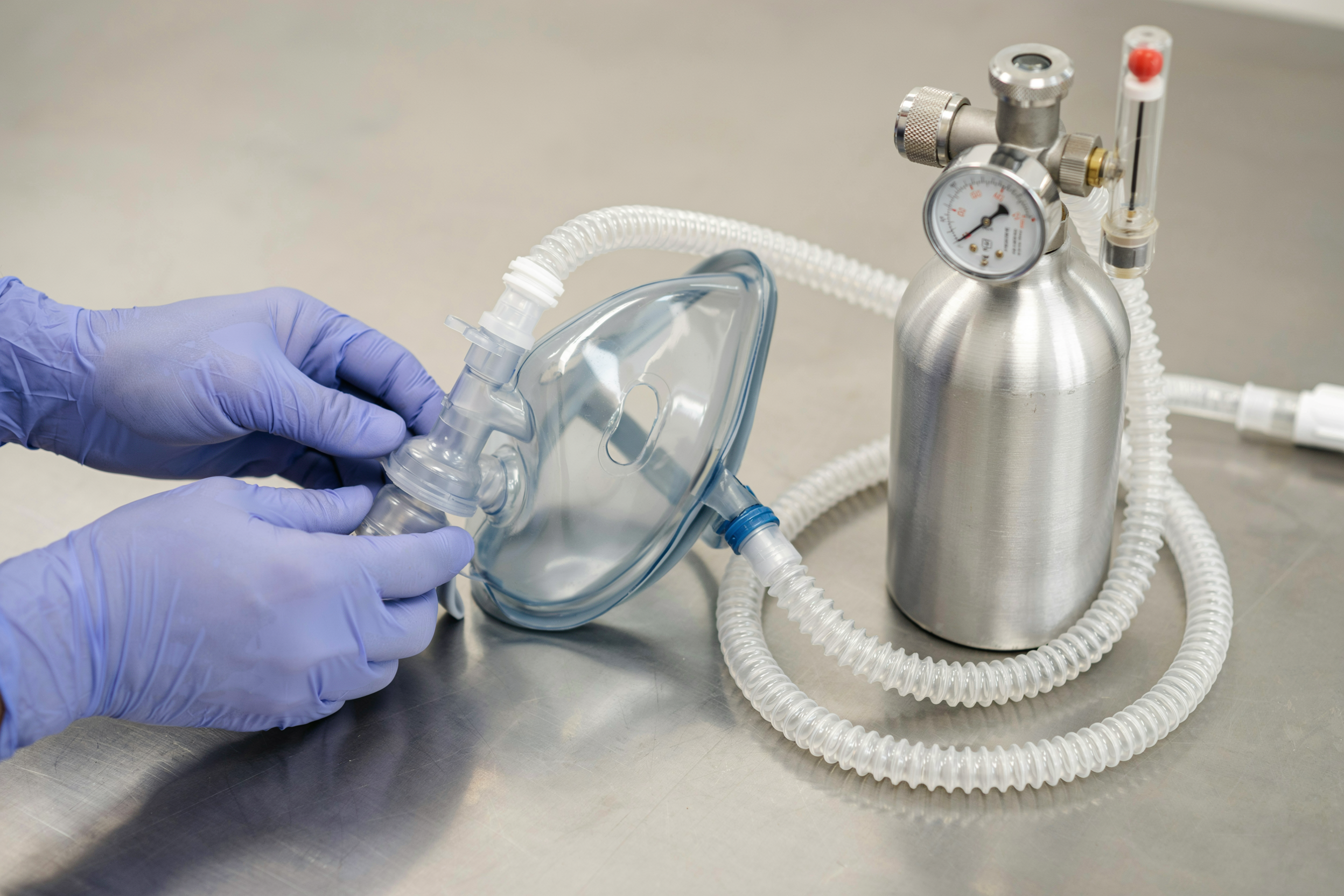
A standalone oxygen therapy training course is a single-skill unit. It covers supplemental oxygen delivery: how to set up and operate oxygen equipment, select appropriate flow rates, and administer oxygen to a patient in a clinical or workplace setting. That's the scope. That's where it ends.
What it does not include is equally important to understand. There's no advanced resuscitation component. No airway management. No BVM technique, no OPA insertion, no two-rescuer CPR sequence. And in most cases, no nationally accredited Statement of Attainment, just a certificate of attendance.
Standalone oxygen modules have a legitimate place as workplace top-up training or skill refreshers for workers who already hold a full qualification. What they're not is a replacement for HLTAID015 and that distinction matters enormously when your employer, your regulator, or an auditor asks to see your cert. Some providers market standalone oxygen courses in a way that implies equivalence to HLTAID015. If the course doesn't produce a nationally accredited Statement of Attainment with the HLTAID015 unit code, it isn't HLTAID015. Check before you book.
HLTAID015 vs Oxygen Therapy Training Course Side-by-Side Comparison
Put the two options next to each other and the compliance gap becomes hard to miss. For any regulated role in Queensland, HLTAID015 is the required standard. A standalone oxygen therapy training course doesn't come close to meeting the same bar.
The one column where a standalone oxygen therapy training course ticks a box is oxygen delivery itself. Everything else: accreditation, regulatory recognition, resuscitation competency, airway management, sits with HLTAID015 alone. If your role requires you to be a designated first aid officer, if you work in healthcare or aged care, or if your employer has to produce training records that hold up in an audit, a standalone module isn't going to get you there.
Who Needs HLTAID015 in Queensland?
Anyone whose role puts them first on scene in a cardiac or respiratory emergency, works with a high-risk client group, or operates in an industry where resuscitation capability is specified by a regulator or contract. Here's how that breaks down.
Healthcare Professionals: Nurses, Paramedics, and Allied Health
AHPRA-registered workers across ICU, emergency, cardiac care, and general ward settings are increasingly required to hold HLTAID015 rather than HLTAID011. Major hospitals have moved in this direction for nursing staff in higher-acuity settings. Beyond the employer mandate, HLTAID015 counts toward your AHPRA CPD hours. The Nursing and Midwifery Board requires 20 CPD hours per year for registered nurses, 30 for enrolled nurses, and 35 for midwives. First aid and resuscitation training qualifies as CPD when it's nationally accredited, clinically relevant, and properly documented. HLTAID015 meets all three criteria.
Aged Care and NDIS Workers
The Aged Care Quality Standards require all direct care staff to hold current resuscitation training. The Aged Care Quality & Safety Commission audits facilities on this and lapsed or insufficient training records are a standard audit finding, not an edge case. NDIS registered providers carry a parallel obligation under the NDIS Practice Standards. For support workers who may be first on scene with a participant experiencing a cardiac or respiratory event, resuscitation competency is a core expectation and HLTAID015 is what satisfies it.
Workplace First Aid Officers in High-Risk Industries
Under the WHS Act 2011 (QLD), designated first aid officers in high-risk environments carry a higher standard of responsibility than general workers. In industries like mining services, utilities, emergency response, and oil and gas, HLTAID015 is increasingly specified in contracts and tender requirements, not just internally recommended. Getting the cert level right before a SafeWork QLD audit rather than scrambling to fix it afterward is always the better outcome.
Can You Upgrade from HLTAID011 to HLTAID015?
Yes and this is one of the questions that causes the most unnecessary friction at the booking stage. Workers holding a current HLTAID011 do not need to start from scratch to achieve HLTAID015. A pathway exists, and it's designed precisely for this situation.
The upgrade covers the gap units: the oxygen therapy administration component and the advanced airway management skills that HLTAID015 includes but HLTAID011 does not. If your HLTAID011 is current, your RTO can apply credit transfer for the overlapping units and focus your training on what's genuinely new. You're not repeating content you've already been assessed on, you're building on it.
If your HLTAID011 has lapsed, the pathway changes. A lapsed cert means credit transfer may no longer apply and you could be looking at completing HLTAID015 in full. The earlier you act on a renewal, the more options you retain. Contact your RTO before booking, confirm your current certification status, and let them identify the right entry point for you.
For WHS managers coordinating upgrades across a team, the same principle applies at scale. A group holding current HLTAID011 certs can pathway into HLTAID015 together and onsite delivery keeps your team operational throughout.
How Does HLTAID015 Satisfy AHPRA CPD Requirements?
For healthcare professionals, the AHPRA CPD question is often what clinches the booking decision or what stalls it when the answer isn't clear. So here it is directly: yes, HLTAID015 satisfies AHPRA CPD requirements.
HLTAID015 is a nationally accredited qualification. It meets the three criteria AHPRA's Nursing and Midwifery Board applies when determining whether an activity counts toward CPD hours: it's accredited, it's clinically relevant to practice, and it's documentable. A standalone oxygen therapy training course is not nationally accredited in most cases, which means it doesn't satisfy AHPRA CPD requirements regardless of how it's marketed.
What you do with your documentation matters as much as completing the course. Retain your Statement of Attainment and log it in your AHPRA CPD portfolio with the unit code, your RTO's registration number, and your completion date. A certificate of attendance from a non-accredited course won't hold up in an AHPRA CPD review. Your Statement of Attainment from a registered RTO will.

Where to Do Your HLTAID015 Course in Brisbane
Once you've confirmed HLTAID015 is the right cert for your role, finding the right provider is the next step. Not all advanced resuscitation training is equivalent and for a qualification this specific, the provider matters.
Here's what to look for:
Nationally accredited RTO verifies the provider is registered on training.gov.au before booking. Only a registered RTO can issue a nationally recognized Statement of Attainment for HLTAID015
ARC/ANZCOR 2021 aligned the course content should reflect current ANZCOR guidelines, not an older iteration. Ask directly if you're not sure
Weekend and evening availability for healthcare and aged care workers on rotating rosters, weekday-only scheduling is a dealbreaker
Fast certificate turnaround employer records, AHPRA CPD portfolios, and compliance files all have deadlines. Certificates issued promptly after course completion make that straightforward
Onsite group delivery for WHS managers coordinating training across a team or multiple sites, onsite delivery removes travel logistics and minimizes operational disruption
Practical, scenario-based format a course that's heavy on slides and light on practical assessment isn't preparing anyone to manage a real resuscitation event
Ready to Get the Right Cert?
The difference between an oxygen therapy training course and HLTAID015 comes down to scope, accreditation, and regulatory recognition. A standalone module covers one skill. HLTAID015 covers the full picture: advanced resuscitation, airway management, oxygen therapy, and AED use, and it produces the only cert that actually satisfies the regulators, employers, and audit bodies that matter. If your role puts you anywhere near a cardiac or respiratory emergency, that distinction is worth getting right before you book.
For healthcare professionals, the stakes run in two directions at once. There's the employer mandate pushing toward HLTAID015 over HLTAID011, and there's the AHPRA CPD cycle ticking in the background every year. Getting both resolved with a single nationally accredited qualification, documented properly and lodged the same week, is the kind of outcome that makes the next registration renewal straightforward rather than stressful.
For aged care and NDIS workers, the compliance pressure is real and the audits are scheduled. Facilities and registered providers don't get to choose whether their training records are reviewed. They just get to choose whether those records are in order when it happens. Workers who hold a current, properly documented HLTAID015 cert aren't just covering a box on a checklist. They're the ones who actually know what to do when a resident stops breathing on a night shift and the ambulance is twelve minutes away.
For WHS managers and safety officers coordinating training across a team, the pathway from here is operational. Group delivery, upgrade pathways for existing HLTAID011 holders, and fast certificate turnaround are the logistics that make compliance achievable at scale without disrupting the business.
Whatever your role and whatever brought you to this comparison, the answer to the core question is consistent: for any regulated position that carries resuscitation responsibility, HLTAID015 is the standard. A standalone oxygen therapy training course has its place but that place isn't as a substitute for the full qualification when your employer, your regulator, or the person in front of you actually needs you to know what you're doing.