Nationally Recognized First Aid Course Brisbane | $110
If you've started searching for a nationally recognized first aid course in Brisbane, you've probably already hit the same wall everyone else does. Dozens of providers, all sounding roughly the same, and a dozen different course codes that all look vaguely similar on the page.
Here's the thing though, you don't need to become a first aid expert overnight. You just want to walk away properly certified, without burning a whole weekend trying to work out if you're even booking the right course.
That's what this guide is for. We'll explain what "nationally recognized" actually means under Australia's VET framework, which course code you actually need (spoiler, for most people it's HLTAID011), and how fast you can walk out with a certificate in hand. By the end you'll know exactly what to book, and why Accelerate First Aid's HLTAID011 course, delivered under RTO 31106, is built to remove every one of those frustrations before they even start.
Bystander CPR roughly doubles someone's chance of surviving a cardiac arrest. Australia records around 26,000 out-of-hospital cardiac arrests every year, and only about 12% of people treated by paramedics survive to hospital discharge. That gap between those two numbers is exactly why this course exists, and it's the kind of stat that's easy to skim past until you're the person standing there when it happens.
What Does "Nationally Recognized" Mean for a First Aid Course?
In Australia, a nationally recognized first aid course is training that sits inside the official Vocational Education and Training (VET) system. That's not just marketing language, it actually means something specific. To count as nationally recognized, a course has to:
Be listed on the national training register at training.gov.au
Be delivered and assessed by a Registered Training Organisation (RTO), like RTO 31106
Lead to a Statement of Attainment for a specific unit code, for example HLTAID011 Provide First Aid
Be valid in every Australian state and territory, with no extra paperwork needed if you move cities or change jobs
A nationally recognized certificate is the only kind that employers, ASQA, ACECQA, and Safe Work Australia will actually accept for compliance purposes. Anything else might look the part, but it won't hold up if anyone ever checks.
What Makes a First Aid Course "Nationally Recognized" in Australia
Not every course calling itself "accredited" or "certified" actually carries any weight with an employer, a regulator, or a licensing body. Some of it's just words on a page. In Australia, "nationally recognized" has a specific, legal meaning, and it's worth understanding before you hand over your money.
A nationally recognized first aid course sits inside Australia's formal VET system. That means it's built around a defined unit of competency, a nationally standardized skill set with its own code, like HLTAID011, rather than some generic in-house curriculum a provider cooked up themselves. The content, the assessment requirements, and the certification rules are all set at a national level. Not by whoever happens to be running the course that day.
The Role of ASQA and Registered Training Organizations (RTOs)
The Australian Skills Quality Authority, or ASQA, is the national regulator that authorizes providers to deliver this training in the first place. Only an organisation holding active Registered Training Organisation status can legally issue a nationally recognized Statement of Attainment. Accelerate First Aid delivers its courses as a co-provider under RTO 31106, which means every certificate that gets issued is backed by an actual registered, audited training provider. Not a private business just printing its own paperwork.
How to Check a Provider's RTO Status on training.gov.au
Before you book with anyone, it genuinely takes thirty seconds to check they're legit:
Go to training.gov.au, the official national register
Search the provider's RTO number or business name
Confirm the RTO is currently registered, not expired or cancelled
Check that the specific unit code you need, like HLTAID011, is actually listed under their scope of registration
Check Your RTO: Search any provider's RTO number directly at training.gov.au before you book. It takes less time than reading this paragraph.
If a provider can't give you an RTO number, or their number doesn't show up on the register, then the certificate they hand you has no standing with employers, ASQA, or any government regulator. Doesn't matter how official it looks on the page.
Red Flags: Courses That Aren't Actually Nationally Recognized
No RTO number displayed anywhere on the website or marketing material
A claim that the whole course, including the practical component, can be done 100% online
A certificate that doesn't list a specific unit code (just says "First Aid Certificate" with no HLTAID number anywhere)
A provider who can't or won't confirm their training.gov.au listing when you ask them directly
Any nationally recognized first aid qualification, including HLTAID011, legally requires a hands-on practical assessment. If a provider skips that step entirely, what you end up with isn't a recognized qualification. No matter what the certificate itself says.
Which First Aid Course Code Do You Actually Need?
This is the question almost everyone searching for first aid training in Brisbane gets stuck on. And it's usually not their fault, it's because course codes have changed over the years, and old certificates, like the now-superseded HLTAID003, don't map cleanly onto what's required today.
HLTAID011: Provide First Aid (the answer for most people)
If you're an office worker, tradesperson, fitness professional, hospitality staff member, support worker, or small business owner, HLTAID011 is almost certainly your course. It's the general workplace first aid standard that most employers, insurers, and licensing bodies point to by default. It covers CPR, basic life support, wound and injury management, and emergency response for breathing, bleeding, fractures, and medical emergencies like heart attack, stroke, and anaphylaxis.
HLTAID009: CPR Only (for refreshers)
HLTAID009 is a stand-alone CPR-only unit. You don't book this instead of HLTAID011, you book it when you already hold HLTAID011 and just need your annual CPR refresher, since the CPR component needs updating every 12 months even though the full certificate itself lasts three years.
HLTAID012: Childcare-Specific (who this is actually for, and who it isn't)
HLTAID012 is built specifically for early childhood educators and outside-school-hours-care staff, and includes extra training in managing asthma and anaphylaxis in children. If you don't work in education or childcare, this isn't your course. And if you do work in childcare, HLTAID011 on its own won't satisfy your ACECQA compliance requirement under Regulations 136 and 137.
Quick Self-Check: "Which Code Is Right for Me?"
What's Included in a Nationally Recognized HLTAID011 Course
Units of Competency You'll Be Awarded
On successful completion, you get Statements of Attainment for two separate nationally recognized units, not just one:
HLTAID009: Provide Cardiopulmonary Resuscitation (CPR)
HLTAID011: Provide First Aid
This matters more than it sounds like it should for compliance paperwork. Both unit codes need to appear on your certificate, not just a generic course title that doesn't actually say anything.
Topics Covered
A compliant HLTAID011 course covers:
CPR and use of an Automated External Defibrillator (AED)
DRSABCD action plan and the chain of survival
Breathing emergencies, including asthma
Bleeding control, wound care, and trauma management
Fracture, sprain, and soft-tissue injury management
Burns and poisoning response
Medical emergencies: heart attack, stroke, diabetes-related events
Anaphylaxis recognition and EpiPen use
Bites, stings, and choking response
Online Theory + Face-to-Face Practical: How the Blended Format Works
Most providers, Accelerate First Aid included, deliver this as a blended course. An online theory component you complete at your own pace, followed by a face-to-face practical assessment where you actually demonstrate CPR technique, bandaging, and emergency scenarios under a qualified trainer's eye. This format is allowed under national standards. Full online-only delivery isn't, because practical competency has to be physically assessed by an actual person watching you do it.
HLTAID011: Valid for 3 Years
Your HLTAID011 Statement of Attainment stays valid for three years from the issue date, under current Australian Resuscitation Council (ARC) guidelines.
HLTAID009 (CPR): Refresh Every 12 Months
The CPR component gets treated differently though. Even though your broader HLTAID011 certificate runs for three years, Safe Work Australia and the ARC recommend you update your CPR competency every 12 months, because hands-on resuscitation skill genuinely fades faster than the rest of your first aid knowledge does. This is the single most common point of confusion for certificate holders, and honestly, it's the most common reason an employer rejects a certificate the person assumed was still current.
Setting a Reminder So You're Never Caught Out
Because these two timelines run on completely different clocks, it's worth writing down your CPR renewal date separately from your full HLTAID011 expiry date the moment you get your certificate. Most people who get caught out aren't ignoring the rule on purpose, they just never realized there were two dates to track instead of one.

What to Expect on the Day
A Supportive, Low-Pressure Classroom Environment
Nervousness about the practical assessment is one of the biggest reasons people put off booking in the first place. A properly run classroom is built around patient trainers and an honest understanding that most people in the room haven't done this kind of training in years. Nobody's expecting you to walk in already knowing what to do. That's the whole point of being there.
What the CPR Practical Assessment Actually Involves
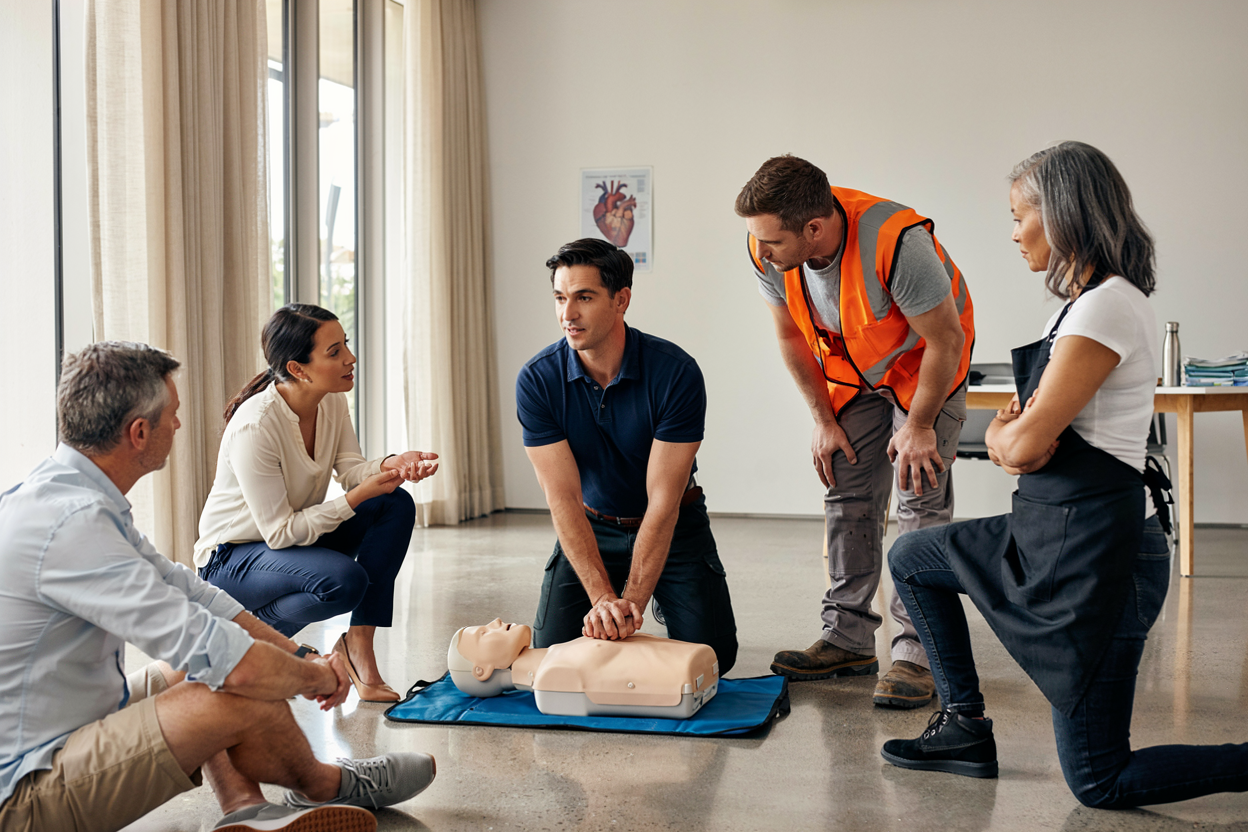
The practical component requires demonstrating continuous, correctly-paced compressions on a floor-level training manikin, along with basic bandaging and patient positioning. Trainers work with people across all fitness levels, and the physical requirements are reasonable. This isn't a fitness test, and nobody's measuring you against an athlete.
What Happens If You Don't Pass First Time
If you don't demonstrate competency on your first go, you're not just failed and shown the door. Reputable RTOs, Accelerate First Aid included, offer free reassessment with extra guidance until you reach the standard you need to reach.
Once your practical assessment wraps up, your certificate gets issued the same day. No waiting around for days while paperwork shuffles through someone's inbox, no chasing up an email a week later wondering if it ever went through. You walk out of the room already holding proof that you're qualified.
That same-day turnaround matters more than people expect going in. A piece of paper that takes two weeks to arrive is a piece of paper that's easy to forget about, easy to lose track of, easy to leave as an open item on a to-do list that never quite closes. Getting it the same day means the whole thing is actually finished, not half-finished with an asterisk next to it.
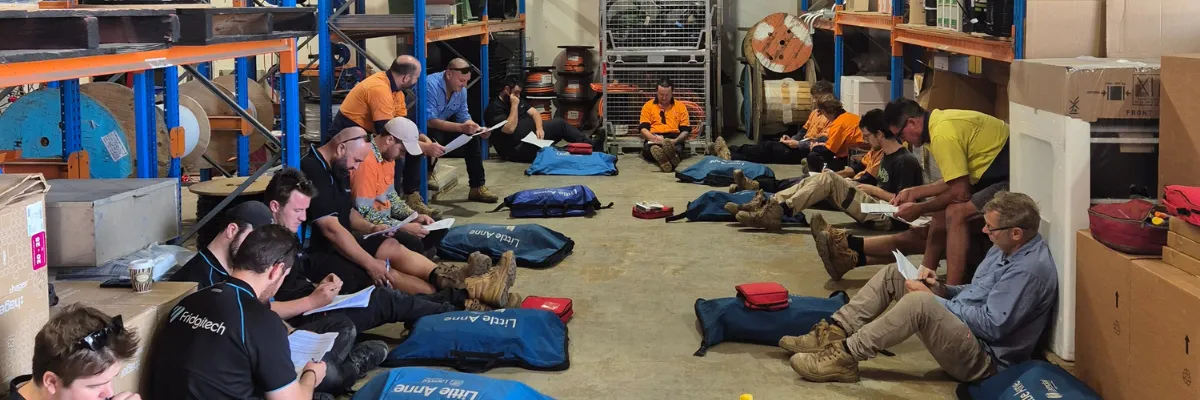
For workplaces needing to get several people qualified at once, sessions can be run directly on-site rather than sending staff off individually to whatever date happens to be available. It's a small logistical shift, but it tends to be the difference between training actually happening this quarter or quietly sliding into "we'll get to it eventually."
Most people who put this off aren't doing it because they don't care. They're doing it because the process felt murky, the codes were confusing, and nobody explained which certificate they actually needed before today. Once that fog clears, the decision becomes a lot less complicated than it felt an hour ago.
There's a version of this where someone never gets around to it, and a version where they do. The only real difference between the two is whether the friction got removed early enough. Clear that friction, and the booking itself is the easy part.
Getting Started Is Simple
Book your spot online
Complete your online theory at your own pace
Attend your practical session and walk out with your certificate the same day
A nationally recognized first aid course isn't really about the piece of paper at the end of it, even though that paper matters for compliance. It's about being the person who actually knows what to do when it counts. With a same-day certificate and a course built around removing every bit of friction between you and getting trained, there's no real reason left to put it off.
Book Your HLTAID011 Course Today: Same-Day Certificate acceleratefirstaid.com.au/book-type