
Nationally Recognized CPR Course: What to Look For
There's a lot of noise in the CPR training market. Short courses, online-only options, cheap weekend sessions — some are legitimate, some aren't worth the paper the certificate is printed on.
I hear a version of the same story more than you'd think. Someone books a CPR course, pays the fee, turns up on a Saturday morning, and walks out feeling good about it. Then they submit their certificate for a job application, a childcare compliance audit, or an NDIS onboarding check — and it comes back rejected. The course wasn't delivered by a registered training organisation. The certificate means nothing.
If you're booking CPR training for work compliance, a childcare registration, an NDIS role, or simply your own peace of mind, whether a course is a nationally recognised CPR course is not a technicality. It's the difference between a certificate your employer accepts and one they don't.
By the end of this post, you'll know what national recognition actually requires, what HLTAID009 means and whether it's what you need, how to verify a provider before you hand over your money, and what red flags to walk away from.
What Does a Nationally Recognised CPR Course Mean?
A nationally recognised CPR course is one delivered by a Registered Training Organisation (RTO) registered with the Australian Skills Quality Authority (ASQA). It must assess the unit of competency HLTAID009 — Perform CPR — against the national standard set by the Australian Resuscitation Council (ARC).
A nationally recognised CPR course must meet all of the following:
Delivered by an ASQA-registered RTO with a valid RTO number
Assesses the unit of competency HLTAID009 (Perform CPR)
Follows ARC guidelines for compression rate, depth, and sequence
Includes a hands-on practical assessment — online-only does not qualify
Issues a Statement of Attainment upon successful completion
Accepted by employers, licensing bodies, and regulators across all Australian states and territories
A certificate from a non-RTO provider — regardless of course content — is not nationally recognised and will not satisfy workplace compliance, childcare licensing, or NDIS registration requirements.
Why "Nationally Recognised" Actually Matters for Your Certificate
Most people assume that if a course exists and someone's selling it, it must be legit. That's not how it works in Australia's vocational training system — and that gap costs people real time and money every year.
What Happens if Your Certificate Isn't Nationally Recognised
Employer HR systems flag certificates from non-RTO providers during compliance audits. If the issuing organisation doesn't have an RTO number, the certificate doesn't meet the standard — full stop. The credential carries no regulatory weight, regardless of how the course was run.
Who Actually Checks — Employers, ACECQA, NDIS, and Licensing Bodies
Childcare and early education: ACECQA requires HLTAID009 from an ASQA-registered RTO for staff to count toward required first aid ratios. A non-RTO certificate doesn't satisfy that requirement — the staff member won't count toward ratios on the day of an audit.
NDIS support workers: NDIS worker screening requirements include nationally recognised first aid qualifications. A non-compliant certificate won't satisfy NDIS registration or the onboarding requirements of most registered NDIS providers.
Workplace compliance generally: Most employer HR systems specify HLTAID009 by unit code. If your certificate doesn't reference that code and an ASQA-registered RTO, it'll be rejected at the compliance review stage.
The Difference Between a Statement of Attainment and a Participation Certificate
A Statement of Attainment is issued when a student is formally assessed as competent against a nationally recognised unit of competency. It's the document employers, licensing bodies, and regulators accept.
A certificate of participation simply confirms someone attended a session. It has zero regulatory standing and won't pass an audit.
Here's a scenario that plays out more often than it should. A childcare worker books a cheap online CPR course — no practical required, certificate available as soon as she finishes the modules. She submits it with her job application. The HR manager can't find an RTO number because there isn't one, and the certificate comes back rejected. She has to rebook, delay her start date, and pay again. Booking a nationally recognized course from the start costs less time and money than fixing a mistake after the fact.
Now that you understand why national recognition matters, let's get specific about the unit of competency your employer or licensing body is actually looking for.
HLTAID009 | The Unit of Competency You Need to Know
If you've seen "HLTAID009" on a job application or compliance checklist and weren't sure what it meant — you're not alone. Here's what it actually covers.
What HLTAID009 Covers
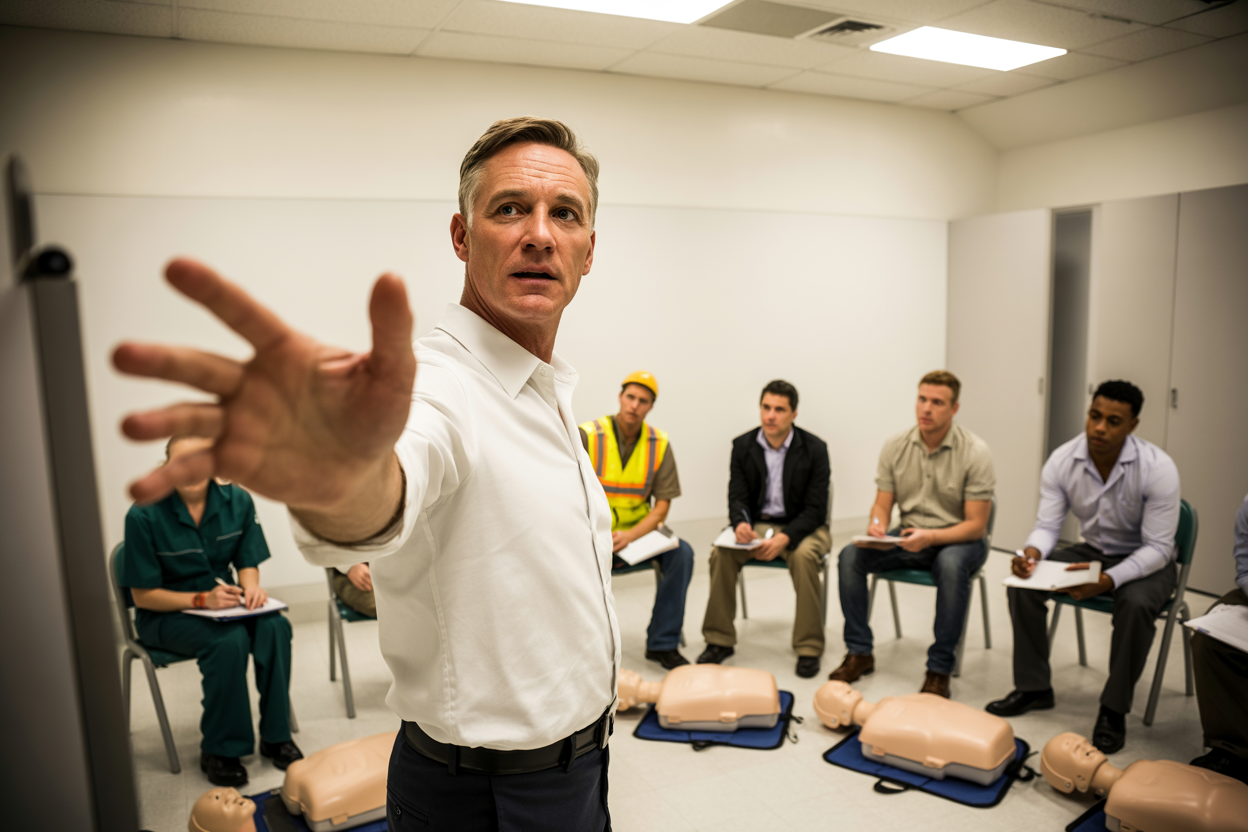
HLTAID009 is the standalone CPR unit within Australia's national vocational training framework. It certifies you to perform cardiopulmonary resuscitation on adults, children, and infants, and to operate an automated external defibrillator (AED).
The practical assessment covers:
Recognising an unresponsive casualty and calling for help
Performing adult, child, and infant CPR to current ARC standards
Operating an AED trainer unit
Managing the casualty until emergency services arrive
It's a formal competency assessment — which is exactly why employers and licensing bodies accept it.
When HLTAID009 Expires
Annual renewal is recommended under Australian Resuscitation Council guidelines — not just for compliance, but because CPR is a perishable skill. Compression quality degrades significantly after initial training without refresher exposure. The renewal process is the same as the initial course — attend, get assessed, receive your updated Statement of Attainment.
HLTAID009 vs HLTAID011 | What's the Difference
HLTAID009 is the standalone CPR unit only. HLTAID011 is the full first aid unit and includes HLTAID009 within it — if your employer requires HLTAID011, you don't need to book both. If you're a childcare worker, most ACECQA requirements will specify HLTAID012, the childcare-specific first aid unit, which also includes the CPR component. Check your specific requirement before you book.
If you already know HLTAID009 is what you need, you can check available course dates and book here.
What the Australian Resuscitation Council (ARC) Guidelines Actually Require
The Australian Resuscitation Council is the peak body setting CPR standards in Australia. Every ASQA-registered RTO delivering HLTAID009 is required to teach to the current ARC standard.
Current ARC Standards
Compression rate: 100–120 compressions per minute
Compression depth: 5–6 centimetres for adults
Ratio: 30 compressions to 2 rescue breaths
CPR-only protocol: acceptable when a rescuer is unwilling or unable to perform rescue breaths
For infant and child CPR, depth and technique differ — a quality course covers all three age groups, not just adult manikin work. AED operation is also assessed as part of HLTAID009; knowing how to turn one on, follow the prompts, and keep compressions going between shocks is a skill that matters in the first minutes of a cardiac arrest.
Why Your Old Training May Be Outdated
ARC guidelines are updated periodically as new clinical evidence emerges. Someone who trained a few years ago and hasn't renewed may be working from an outdated mental model. Annual renewal isn't a compliance formality — it's a mechanism for making sure the technique you'd use in an emergency reflects current evidence, not what you half-remember from a course you did when your youngest was in kindy.
A quality ASQA-registered RTO keeps its materials current. When you're evaluating a provider, ask directly: "Is your course content aligned to the current ARC guidelines?" A quality provider answers that confidently. One that gives you a vague response is worth being sceptical of.
The Online CPR Course Problem | What You Need to Know Before You Book
Online CPR courses are everywhere. They're cheap, convenient, and the certificates look legitimate enough at a glance. The problem is that for a significant portion of what's being sold online, the certificate at the end is not nationally recognized.
Can You Do CPR Training Fully Online?
No. HLTAID009 cannot be completed 100% online. A hands-on practical assessment is mandatory under ARC guidelines — CPR is a physical skill. Compression depth, hand placement, and technique can't be assessed through a screen. Competency requires someone to watch you do it, correct your technique in real time, and sign off that you've met the standard. Any provider claiming otherwise is either misinformed or misleading you.
What Blended Delivery Looks Like
Online learning does have a legitimate role — the compliant model is blended delivery. You complete an online theory component in your own time, then attend a face-to-face practical session where your technique is assessed. You arrive already across the theory, which means more time on the manikins. You leave with a nationally recognised Statement of Attainment. Online theory plus face-to-face practical. Not online only.
Red Flags to Watch For
No RTO number listed anywhere on the website or course page
No practical session required — entire course completed online
Certificate issued immediately on finishing the online modules
No mention of HLTAID009 by unit code — generic "CPR certificate" language only
Online-only CPR isn't a shortcut. It's a dead end. You end up needing to redo it with a compliant provider anyway — usually under deadline pressure after the non-compliant certificate has already been rejected.
How to Check if a CPR Provider Is a Registered RTO
Verifying a CPR provider's legitimacy is straightforward. There's a public register, it's free, and it gives you a definitive answer.
ASQA and the National Register
ASQA is the national regulator for vocational education and training. Every RTO is audited against quality standards covering trainer qualifications, course materials, and assessment practices. If they fall below standard, ASQA can suspend or cancel registration. A provider without RTO registration has none of that oversight — you're taking their word for it entirely.
What to Look For on Course Day
There's a real difference between a course that ticks the regulatory boxes and one where you walk out actually feeling like you could do it. For a lot of people doing CPR training for the first time, there's quiet anxiety about the day — will I look incompetent, will I do it wrong in front of everyone? Those are fair concerns, and they're worth addressing directly.
Manikins and AED Equipment
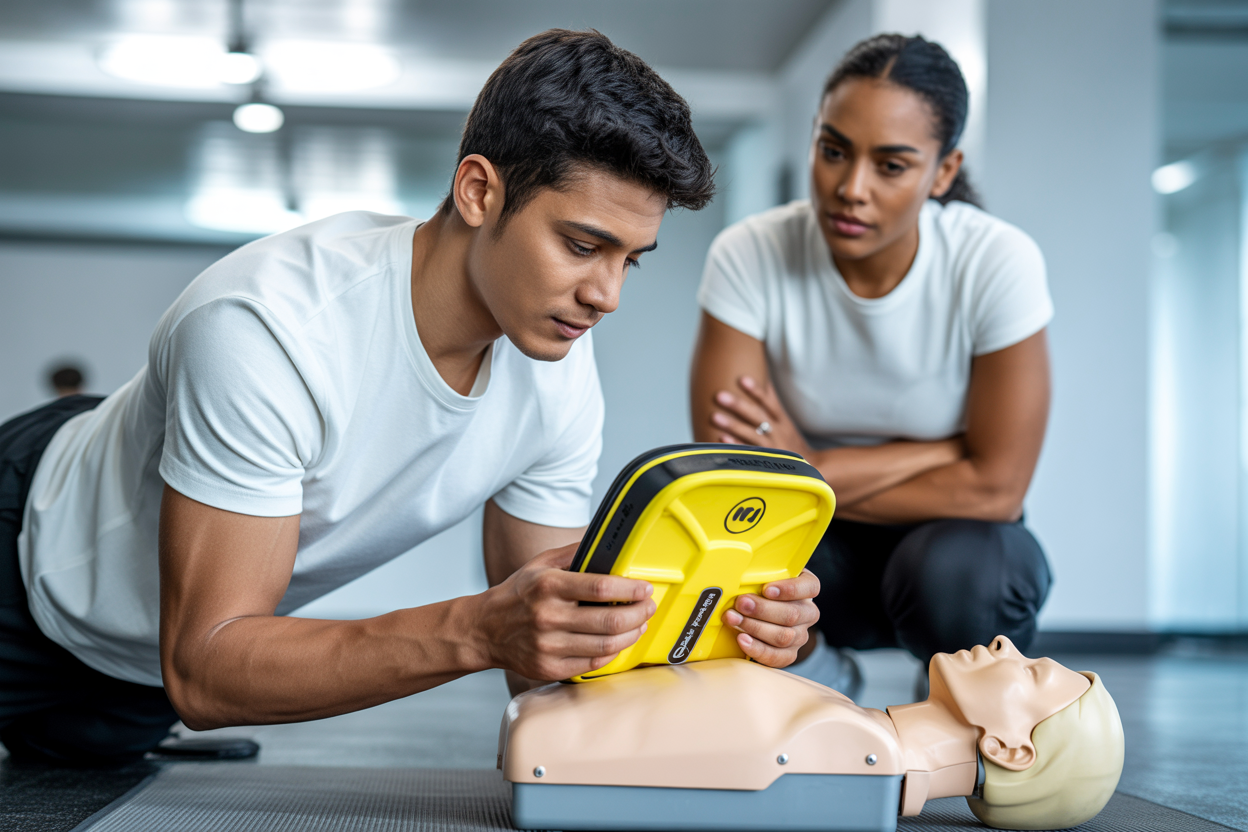
Every student should have individual manikin time — not shared, not watch-then-try. Infant and child manikins should be available alongside adult ones, because the technique differs enough between age groups that you need to practice each one. AED trainer units should be part of the session. Running through the AED steps on a trainer unit is far more useful than having the process described to you.
What a Legitimate Assessment Looks Like
A nationally recognized HLTAID009 assessment isn't just attendance. The trainer observes each student performing CPR and makes a formal competency decision based on what they see — your rate, depth, hand placement, and sequence assessed against the ARC standard. If a course never formally watches your technique, it's not a legitimate assessment and the certificate it issues isn't a legitimate Statement of Attainment.
A quality RTO issues your Statement of Attainment the same day. If a provider says it'll take significantly longer, that's worth questioning.
Finding a Nationally Recognized CPR Provider
The CPR training market includes national providers, local independents, community organizations, and online-only operators outside the regulated system. Knowing what you're looking for makes the difference between booking once and booking right.
The buyer pool for HLTAID009 is diverse — childcare workers, NDIS support workers, trades staff with workplace compliance requirements, new parents who've decided they're not going to be the person who stands there and doesn't know what to do. Each of them needs the same thing: a nationally recognized CPR course that produces a Statement of Attainment their employer or licensing body will accept.
Here's what separates a good provider from an adequate one: weekend and early morning availability for buyers who can't make weekday sessions; same-day Statement of Attainment; Google reviews that specifically reference genuine confidence and employer acceptance — not just star ratings; and an RTO number that's easy to find on the website.
How Advanced Resuscitation Training Delivers Nationally Recognised HLTAID009
Advanced Resuscitation Training is an ASQA-registered RTO delivering HLTAID009 aligned to current ARC guidelines. Every student receives a Statement of Attainment on the day — accepted by employers, ACECQA, and the NDIS across all Australian states and territories.
The Bottom Line
The CPR training market has a lot of options — and the gap between a legitimate course and a non-compliant one isn't always obvious until a certificate gets rejected.
What you know now is how to tell the difference. A nationally recognised CPR course comes from an ASQA-registered RTO, assesses HLTAID009, includes a mandatory hands-on practical component, and issues a Statement of Attainment. That's the standard. Anything that doesn't meet it isn't worth your time or money, regardless of how official it looks.
The practical side matters too. A compliance checkbox and a genuine skill are not the same thing. The best HLTAID009 courses produce both — students who leave with a certificate their employer accepts and the hands-on confidence to actually use what they've learned.
If you're still unsure about a provider, the process is simple: find their RTO number, search it on training.gov.au, confirm HLTAID009 is in their scope. No guesswork, no assumptions. Booking the right course once is always easier than discovering you booked the wrong one after the fact.