Minimum Age for CPR Course: What Parents Should Know
"Can my 13-year-old actually do a CPR course?"
That's one of the two questions we get asked more than almost anything else. The other one comes from the other end of the age spectrum: "I'm not exactly young anymore, is there an age I age out at?"
Fair questions, both of them. And the short answer to both is the same: age isn't really the gatekeeper you think it is.
There's no upper limit on HLTAID009 at all. And on the younger end, Accelerate First Aid can generally take participants from around 12 to 14 years old, so long as they're physically capable of doing the work the certification actually requires.
That's the quick version. If you're trying to book a course for yourself, your team, or a teenager who needs a ticket for a coaching gig, a lifeguard shift, or a part-time job, you want the full picture before you commit. It's a question we hear from two very different types of people. On one end, a parent wondering if their kid's old enough to sit alongside them in a session. On the other, someone renewing for the fourth or fifth time, half-joking about whether there's a point where they'll be told they're past it. Neither group needs to worry, but both deserve a proper answer instead of a guess.
So here's what we'll cover: the official guidelines around age and CPR training, why there's a minimum in the first place, what it actually looks like booking a teen in, what younger children can do in the meantime, and how to lock in a Gold Coast session once you know where you stand.
What Is the Minimum Age for a CPR Course? The Quick Answer
Here's the straight answer, no runaround.
There isn't one single legal minimum age for a CPR course in Australia. It comes down to the provider and whether the participant can physically perform the skills involved, not a number written into legislation somewhere. Most Registered Training Organizations, Accelerate First Aid included, will take students from around 12 to 14 years old for nationally recognized CPR certification, that's HLTAID009, as long as they can:
Physically perform chest compressions to the correct depth and rate
Understand and follow safety instructions on their own, without someone standing over them
Get through the practical skills assessment unsupervised
Younger kids can still pick up CPR awareness through non-certified youth programs, school incursions and the like, but they won't walk away with a nationally recognized Statement of Attainment until they hit the provider's age and physical capability bar.
It's worth sitting with why this distinction matters so much, because a lot of the confusion we see actually starts here. People assume "learning CPR" and "being certified in CPR" are the same thing, and they're not. A ten year old can absolutely learn the theory, the DRSABCD sequence, when to call for help, how compressions work in principle. What they generally can't do yet is generate the physical force needed to compress a chest to the depth an assessor is required to verify. That's not a judgement on the kid, it's just biomechanics.
Is There a Legal Minimum Age for CPR Certification in Australia?
Short version: no. There's no single piece of legislation anywhere that says "you must be X years old to hold a CPR certificate." What actually happens is each RTO sets its own minimum, and that minimum is built around physical skill capability, not a fixed number on a page.
Worth separating two things people mix up constantly:
Certification (HLTAID009) | Awareness Training | |
Nationally recognized | Yes | No |
Statement of Attainment issued | Yes | No |
Typical minimum age | Around 12 to 14, capability-based | No set minimum |
Assessment required | Yes, written and practical | No |
Accepted by employers/clubs as proof of ticket | Yes | No |
ANZCOR guidelines, which is who the industry actually looks to on this, are built around demonstrating competency, not age brackets. So a provider isn't checking a birth certificate and stopping there, they're checking whether someone can actually do the thing. That's genuinely a better system than a flat age cutoff, even if it feels less clean on paper. A fixed number would either lock out capable younger kids or wave through someone who technically qualifies by age but isn't yet ready physically. Competency-based assessment avoids both problems.
If you're weighing this up against the full first aid unit rather than CPR alone, our piece on minimum age for a first aid course breaks down how HLTAID011 compares.
Why Age Isn't the Real Barrier: Physical Capability Is
Here's the bit that actually matters more than the number: chest compressions need to hit a depth of 5 to 6cm at a rate of 100 to 120 per minute. That's the real gate, not a birthday.
Most 12 to 14 year old's of average build can meet that without much trouble. Smaller-framed kids sometimes need another year or so before the depth and consistency comes naturally, and that's completely normal, not a failure on anyone's part. We've had plenty of thirteen year old's who nail it first go, and we've had bigger, stronger looking adults who need a bit of coaching to get the rhythm consistent. Body size matters more than age here, and frankly, so does whether someone's nervous. A calm, focused twelve year old will often out-perform an anxious adult on the manikin, simply because compressions reward steady, repeated technique over raw strength.
The other thing worth knowing is that our trainers aren't looking for perfection on the first attempt. They're looking for a trajectory, can this person get there with a bit of guidance over the course of the session. That's true for every participant regardless of age, but it matters especially for younger students who might just need a confidence boost rather than more physical development.

Minimum Age for HLTAID009 at Accelerate First Aid, Gold Coast
So what does this actually look like for us specifically?
Accelerate First Aid accepts participants from around 12 to 14 years old for HLTAID009, physical capability permitting. That's the working range, not a hard cutoff, some kids are ready earlier, some need a bit longer, and our trainers make that call on the day based on what they're actually seeing, not just a date of birth on a form.
For anyone under 18 booking in, there's a parental or guardian consent requirement to sort out before the session. Straightforward paperwork, but it needs to be done ahead of time so it's not holding up the room on the day.
Quick eligibility checklist, can they book this course?
Around 12 to 14 years or older
Can physically perform compressions to the correct depth and rate
Can follow safety instructions independently
Parental or guardian consent sorted, if under 18
Comfortable completing the practical assessment unsupervised
One thing that comes up a lot with this avatar specifically: booking a teenager alongside an adult, say a parent and their teen, or a coach bringing a young assistant coach through. That's completely fine and actually pretty common, we can run family or small group bookings with a mixed age range in the one session, no need to split it into two separate bookings.
It's also worth mentioning that a lot of families book this way on purpose, not by accident. A parent renewing their own ticket will bring a teenager along at the same time, partly for convenience, partly because there's something reassuring about doing it together. We hear this a lot from parents of kids involved in surf lifesaving or junior sport, where a coaching or lifeguard pathway means the teenager needs their own certificate anyway, so the family just knocks both out at once rather than treating it as two separate errands months apart.
What About Younger Kids? Awareness Training vs Certification
Fair question if you've got a younger one, an eight or nine year old who's keen, maybe after seeing a parent do a course, or after something happened at school that got them curious. What then?
For kids under 12, certification isn't really on the table yet, but that doesn't mean CPR has to be off the table entirely. Non-certified youth CPR awareness options exist for exactly this, school incursions, community programs, that kind of thing. No Statement of Attainment at the end of it, but real exposure to the basics, and honestly for a lot of kids that early exposure is what makes them keen to come back and do the real course a few years later.
There's a genuine upside to this early exposure too. Kids who've had some awareness training tend to walk into their eventual certification course with less nervousness, they've already seen a manikin, already heard the terminology, already know roughly what to expect.
When to Come Back
If you've got a younger child who's not quite there yet, the general guide is to circle back once they're in that 12 to 14 range and check in with a provider directly. Capability varies a fair bit kid to kid at that age, so there's no harm asking earlier than you think you should. Some parents assume there's a strict rule they'd be breaking by asking too soon, there isn't, a quick conversation costs nothing and it means you're not left guessing when the moment actually comes.
Worth popping a reminder in for yourself, this is exactly the kind of thing that's easy to mean to do and then forget about until the next birthday rolls around. If your child's involved in something with an age-linked requirement, junior coaching, lifeguard pathways, that kind of thing, it's worth checking in with the relevant club or organisation too, since some of them have their own preferred timing on top of the certification requirement itself.
Booking a Teen for CPR Certification on the Gold Coast: What to Expect
Right, so you've decided your teen's ready. What does the day actually look like?
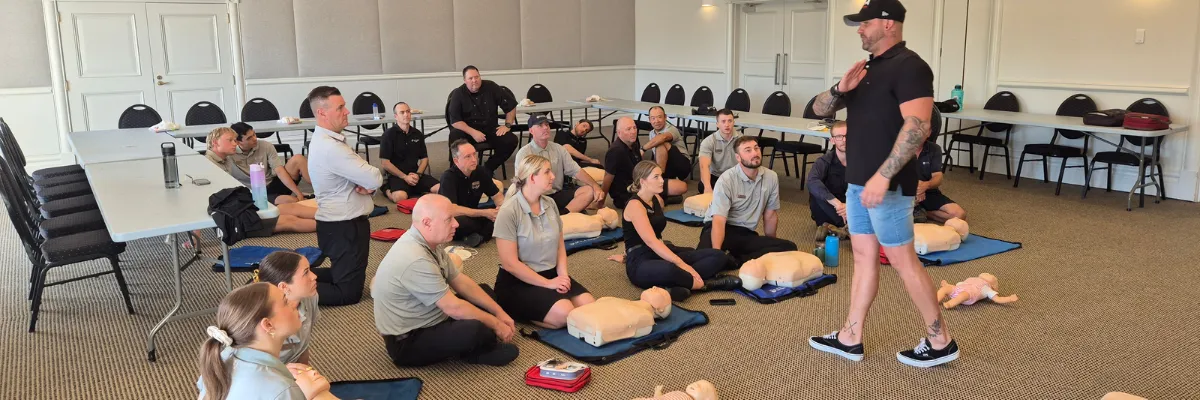
The course itself runs both a written and a practical component, structured to move at a decent pace and get through the material properly. That matters for this crowd especially, nobody wants a course that feels like it's dragging on, and teenagers in particular tend to switch off if the pace lags. Our trainers are used to working with a mixed-age room, adults renewing alongside a teenager doing it for the first time, and the pace is set to keep everyone engaged rather than pitched purely at one end of the age range.
What to bring:
Photo ID, or another form of ID if they don't have one yet
Signed parental or guardian consent form
Comfortable clothing, they'll be down on the floor working on the manikin
Sessions run across our Gold Coast venues, so there's a decent chance one of them is a short drive rather than a trek across the Coast. If you're ready to see what's actually available, check live availability and book your HLTAID009 session, no long forms, no account creation required.
One thing worth setting expectations on: teenagers doing this for the first time are often more nervous about the assessment than the actual compressions. Parents sometimes assume the physical side will be the sticking point, and it can be, but more often it's the idea of being watched and evaluated that causes the hesitation. Our trainers are well practiced at putting younger students at ease before that part starts, plenty of encouragement, plenty of practice runs before anything counts toward the actual assessment.
Is There an Upper Age Limit for CPR Training?
No. Straightforward as that.
Whatever age you're renewing your certificate at, there's no cutoff waiting for you. We get grandparents through the door regularly, people who want to know they could actually help if something happened to a grandchild, and there's zero age ceiling stopping that.
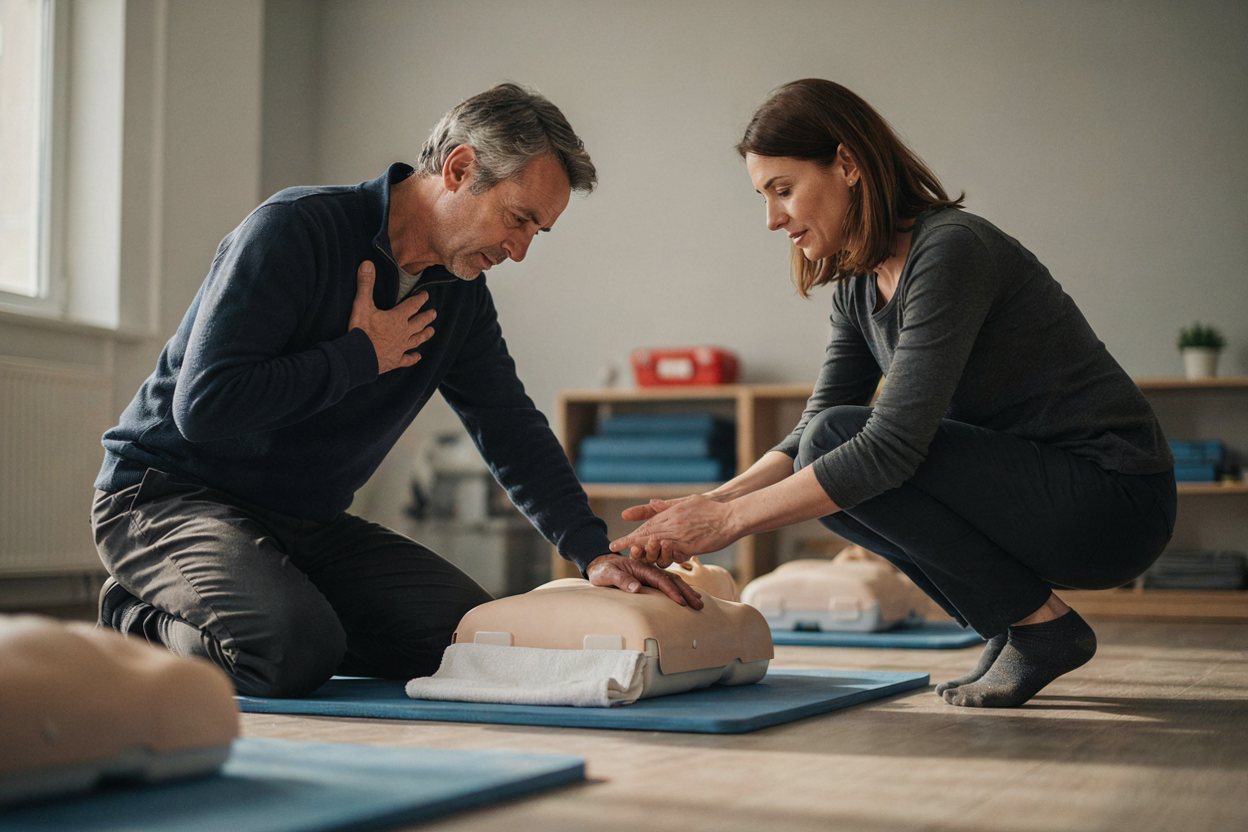
What does sometimes change with age isn't eligibility, it's technique. If someone's dealing with a shoulder issue, reduced grip strength, or anything else physical that makes standard compressions harder, our trainers work through adjustments on the day. That's a conversation about how you perform the skill, not whether you're allowed to be in the room. Nobody's turned away for being older, full stop.
This actually comes up more often than people expect, usually framed apologetically, someone worried they'll hold the group back. That's rarely how it plays out. Trainers work with people of every fitness level constantly, and adjusting technique for a bad shoulder or a dodgy knee is a normal part of the job, not a special accommodation. Mentioning it when you book just means the trainer can plan for it ahead of time.
Wrapping Up
So if you came here worried your teenager was too young, or you were quietly wondering whether you'd aged out of getting your ticket renewed, hopefully that's settled now. Age was never really the wall people think it is. What matters is whether someone can physically do the work, follow instructions, and get through the assessment on their own steam, and that's true whether you're 13 or 73.
There's something worth sitting with here too. A lot of the anxiety around this topic isn't really about eligibility at all, it's about not wanting to find out the hard way that you booked the wrong thing, or turned up somewhere only to be told your kid's too young. That's a fair worry. Nobody wants to burn goodwill chasing down the right course, and nobody wants a teenager turning up keen only to be sent home disappointed.
The good news is the actual barrier is smaller than most people expect. Twelve to fourteen for younger participants, no ceiling at all on the other end, and adjustments made on the day for anyone dealing with physical limitations rather than a flat no. It's a more forgiving system than the internet sometimes makes it sound, and honestly, that's by design. Competency matters more than a number on a birth certificate, and that's true whether the person in question is a nervous twelve year old or a grandparent with a stiff shoulder.
If there's a teenager in your life who needs a ticket for a coaching role, a lifeguard shift, or a part-time job, or if you're a parent who just wants your own peace of mind, the path forward is the same either way. Check what's actually available near you, get the consent paperwork sorted ahead of time if it's needed, and book a session that fits around your schedule rather than the other way around.
None of this needs to be a research project. The questions people arrive with, can my kid do this, am I too old, are almost always answered the same way: probably yes, and here's what to expect. The rest is just logistics, which venue's closer, what to bring on the day, whether you're bringing the whole family along at once.
So if a certificate's about to expire, or a teenager's asked whether they can come along too, that's really all there is to it. Check the next available session, bring the right paperwork, and get it ticked off, together if that works better for your family, or separately if that suits your schedule instead.