Mild Allergic Reaction vs Anaphylaxis: Do You Know the Difference?
It's a Tuesday morning. A four-year-old in your room starts scratching his arm. His face looks a little flushed. You check his allergy action plan. No EpiPen indicated yet, you think. It's probably just hives.
Five minutes later, he can't stop coughing. His lips are swelling.
You reached for the EpiPen but in those five minutes, you hesitated. And in anaphylaxis, hesitation costs time you don't have.
For childcare educators, knowing the difference between a mild allergic reaction and anaphylaxis isn't a theoretical exercise. It's a decision you may need to make in real time, alone, with a frightened child in front of you.
This article breaks down the key signs of each, explains exactly when the EpiPen should be used, and covers what every educator working under an anaphylaxis action plan needs to understand before an emergency happens, not during it. By the end, you'll know precisely where the line is and why being clear on that line before you ever need it is the only preparation that actually counts.
What Is the Difference Between a Mild Allergic Reaction and Anaphylaxis?
A mild allergic reaction affects one area of the body, typically the skin, and does not threaten breathing or circulation. Anaphylaxis is a severe, potentially life-threatening reaction that affects two or more body systems simultaneously, or causes a dangerous drop in blood pressure or airway compromise.
Signs of a mild allergic reaction include:
Hives, redness, or itching in one localized area
Swelling limited to the contact site (e.g. lips after food contact)
Watery eyes or a runny nose
No breathing difficulty
No vomiting or collapse
Signs of anaphylaxis include:
Swelling of the tongue, throat, or airway
Difficulty breathing, wheezing, or persistent cough
Vomiting, abdominal pain, or diarrhea
Pale, floppy appearance or collapse
Symptoms affecting two or more body systems at once
If you are unsure whether a reaction is mild or severe, treat it as anaphylaxis and administer the EpiPen.
How to Recognize a Mild Allergic Reaction
What Does a Mild Allergic Reaction Look Like?
The word that matters most here is localized. A mild allergic reaction stays in one part of the body. It doesn't touch the airway. It doesn't affect breathing. It doesn't cause the gut to react or the blood pressure to drop.
That's your mental model for mild: one body system, one area.
Symptoms you might see:
Hives or welts, red, raised, itchy patches on the skin
Localized swelling, like slight lip swelling after food contact
Redness or a rash confined to one area of the body
Itchy or watery eyes
Mild runny nose or sneezing
None of those symptoms, on their own, indicate anaphylaxis. They're uncomfortable and need monitoring but they don't mean reach for the EpiPen. Not yet. What they do mean is: stay close, keep watching, and know exactly what you're looking for next.
Common Triggers in a Childcare Setting
Food allergens are the most common cause. Peanuts, tree nuts, dairy, egg, wheat, sesame, and shellfish are responsible for the majority of reactions in children. Cross-contamination at meal times remains one of the most common exposure routes.
Insect stings are an underestimated risk in outdoor play areas. Bees and wasps are present year-round, and sting reactions can escalate faster than food-triggered reactions.
Contact allergens including craft materials, latex gloves, and certain outdoor plants can cause localized skin reactions that are easy to underestimate if you're not watching closely.
Airborne allergens spike during spring. Children with existing allergic conditions are more vulnerable during high pollen periods, and wheezy kids in your room during that stretch of the year are not a coincidence.

How to Recognize Anaphylaxis
What Does Anaphylaxis Look Like in a Child?
Anaphylaxis is severe, systemic, and fast. Unlike a mild reaction that stays in one place, anaphylaxis moves through the body within minutes of exposure. The signs are best understood by body system, because that's how the ASCIA clinical framework approaches it.
Respiratory: Noisy or labored breathing, wheezing, persistent cough, difficulty breathing, hoarse voice, swelling of the tongue or throat.
Cardiovascular: Pale, grey, or floppy appearance, collapse, weak or rapid pulse.
Gastrointestinal: Sudden vomiting, diarrhea, severe abdominal cramping.
Skin (when present): Widespread hives or flushing, facial or lip swelling.
Skin symptoms are listed last deliberately. Skin involvement is not what defines anaphylaxis.
The Two-System Rule
The ASCIA clinical definition is precise: anaphylaxis means two or more body systems are affected simultaneously, or any single sign of airway, breathing, or circulatory compromise, regardless of whether skin symptoms are present at all.
In practice:
Hives + vomiting = anaphylaxis
Hives + wheeze = anaphylaxis
Collapse alone = anaphylaxis
Airway swelling alone = anaphylaxis
The rule is not about the severity of a single symptom. It is about how many systems are involved. An educator waiting for the reaction to "look bad enough" before acting may already be too late.
You can read more at ascia.org.au/anaphylaxis.
Anaphylaxis Without Skin Symptoms
Up to 20% of anaphylaxis cases present without any visible skin symptoms. No hives. No redness. Nothing on the surface. What you might see instead:
Sudden onset of vomiting after known allergen exposure
Unexplained collapse or loss of consciousness
Sudden difficulty breathing or a persistent cough after eating
Dramatic behavior change, sudden distress, inconsolable crying, or unusual limpness
A child who suddenly goes very quiet, or becomes limp in a way that feels different from tiredness, may be showing the first sign of cardiovascular compromise. If a child has a known allergen, has been exposed to it, and presents with any of those signs, even without hives, treat it as anaphylaxis.
The Grey Zone: When Mild Becomes Life-Threatening
How Quickly Can a Mild Reaction Escalate?
A reaction that looks mild can escalate into anaphylaxis within minutes. Even after a reaction appears to settle, it can return. This is called a biphasic reaction, a second wave of symptoms occurring hours after the initial reaction, without further allergen exposure.
Most reactions begin within 5 to 30 minutes of allergen exposure
Insect sting reactions escalate faster than food-triggered reactions
Biphasic reactions can occur up to 8 hours after the initial reaction
Any child who has had a reaction, even mild, should be monitored for a minimum of 4 hours
That last point gets skipped in centers operating under time pressure. A child who seemed fine after a mild reaction at morning tea is not necessarily fine by lunch. The biphasic window is real, it is documented, and "seemed okay after" is never a reason to stop watching. You keep monitoring until the four hours are up.
Warning Signs That a Reaction Is Progressing
Hives spreading rapidly beyond the initial contact area
New symptoms appearing in a second body system
Any change in breathing, wheeze, cough, or increased effort
Voice change, hoarseness, or difficulty speaking
Child becomes suddenly pale, limp, or unresponsive
Child complains of throat tightness or a "funny feeling" in their throat
Marked behavior change, sudden distress, agitation, or unusual quietness
Children aged three to five will sometimes tell you what's happening before the visible signs catch up. "It feels funny in my throat" is a child telling you their airway is involved. That's anaphylaxis until proven otherwise.
The One Rule That Removes the Guesswork
You do not need to be certain before you act. ASCIA's guideline is explicit: when in doubt, treat as anaphylaxis.
Your job is not to diagnose. It is to follow the child's ASCIA action plan and act when uncertain. Four things to remember:
You do not need to be certain before acting
Acting early is always the safer clinical decision
Your role is to respond according to the child's ASCIA action plan
After administering the EpiPen, call 000 immediately. Adrenaline buys time, it does not end the emergency
The ASCIA Action Plan: What Childcare Educators Must Follow
What Is an ASCIA Action Plan?
An ASCIA action plan is a physician-authorized, child-specific document. Every at-risk child in your care should have one, signed by their treating doctor or specialist. It includes the child's name, photo, and known allergens, a description of their mild and anaphylaxis symptoms, step-by-step management instructions, and the prescribed adrenaline auto-injector device and dosage for that child. You follow the plan for that child, not a general protocol.
What the Regulations Require
HLTAID012 does NOT satisfy Regulations 136 or 137. Both 22300VIC and 22556VIC are required as separate accredited qualifications. These course codes must appear on the certificate for ACECQA audit acceptance.
Your Responsibilities as the Educator in the Room
Retrieve the child's ASCIA action plan immediately, it must be accessible in the room at all times
Assess symptoms against the plan for that specific child
Follow the plan exactly, if uncertain, administer the EpiPen and call 000
Do not leave the child, use speaker phone if you are alone
Document everything under Regulation 87, completed the same day
When to Use the EpiPen and When Not To
The EpiPen Is Not a Last Resort
The instinct to wait, try the antihistamine first, see if things settle is understandable. But it can cost a child their life. Antihistamines act over one to two hours. Anaphylaxis can kill in minutes. Adrenaline via EpiPen is the first-line treatment. Not antihistamine. Not waiting. Adrenaline first.
When anaphylaxis is indicated:
Administer the EpiPen
Call 000
Lay the child flat with legs raised, unless breathing difficulty, then sit them up
Administer a second EpiPen after 5 minutes if no improvement
Continue monitoring until paramedics arrive
How to Administer an EpiPen Correctly
Pull the blue safety cap straight up
Hold firmly in dominant hand, thumb closest to the orange tip
Place other hand flat on the child's outer mid-thigh
Push orange tip against outer thigh at 90 degrees, through clothing if necessary
Hold for 3 seconds until you hear a click
Remove and massage the injection site for 10 seconds
Note the time and keep the used EpiPen for paramedics
EpiPen Jr vs EpiPen
The prescribed device is stated in the child's ASCIA action plan. If the correct device is unavailable and a reaction is occurring, any dose of adrenaline is better than none.

Why Knowing the Difference Isn't Enough Without the Right Training
Under acute stress, fine motor skills degrade and memory retrieval slows. The difference between someone who performs well in an emergency and someone who freezes is not how much they've read. It's how many times they've physically rehearsed the response until it became automatic. That's what hands-on, face-to-face training builds. It's also why ACECQA requires practical training, not because of bureaucracy, but because the research is clear on what actually works under pressure.
HLTAID012 vs 22300VIC:
When evaluating any RTO delivering 22300VIC and 22556VIC, look for:
✓ ASQA-registered RTO, ask for their RTO number and verify it
✓ 22300VIC and 22556VIC delivered as accredited units, course codes on the certificate
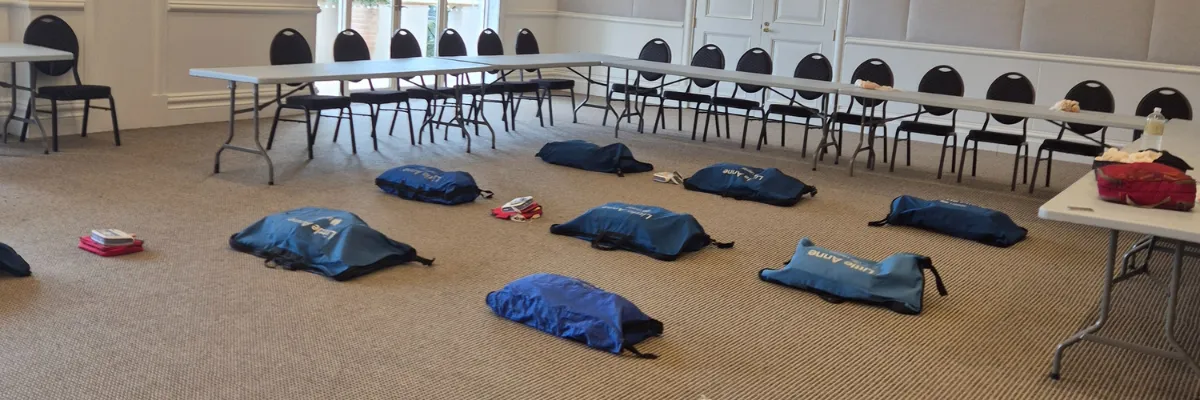
✓ Hands-on practice with EpiPen and Anapen trainer devices in every session
✓ ASCIA-aligned curriculum
✓ Same-day digital certificate delivery, coded correctly, in your inbox before you leave
✓ Childcare-specific scenarios from trainers who understand the ECE environment
Next Steps: Anaphylaxis Training in Brisbane
Anaphylaxis doesn't announce itself with a warning. It starts with a scratch, a flush, a cough and the window between mild and life-threatening can close faster than most people expect. The educators who respond well in those moments aren't the ones who read the most. They're the ones who trained properly, practiced with their own hands, and built the kind of automatic response that holds up when a frightened child is depending on them.
If you're a childcare educator who isn't certain your current training covers what ACECQA requires, that uncertainty is worth acting on before it matters. The regulation is clear. The course codes are specific. The next ACECQA visit won't be the right time to discover the certificate in your file doesn't say what it needs to say.
Accelerate First Aid runs accredited 22300VIC and 22556VIC training face-to-face, with hands-on EpiPen and Anapen trainer device practice and same-day digital certificate delivery. Every session is designed for educators working in real childcare environments. Your certificate will carry the course codes an ACECQA auditor needs to see, and it will be in your inbox before you leave the room.
Book a session, complete the training, and walk back into your center knowing exactly what you'd do if a four-year-old in your room started scratching his arm on a Tuesday morning. That's the standard worth holding yourself to. And it starts with getting the right training from a provider who actually understands what your job requires