
LVR Refresher Course Brisbane: Book Today
You know that feeling when you're halfway through a job and you suddenly remember something you were meant to sort weeks ago? For a lot of Brisbane electricians, that "something" is their Low Voltage Rescue ticket. It sits there in the back of your mind, easy to forget about right up until a site supervisor asks for proof of currency, or you catch yourself doing the math's on when it actually expired.
Here's the thing though, an LVR refresher in Brisbane doesn't have to eat your whole day or turn into a drama. If your ticket has lapsed, or it's about to, you're not in trouble yet, but every shift you spend on live low voltage panels without a current certification is a shift where your license, your site compliance, and honestly your crew's safety are all a bit exposed.
That's exactly what an LVR refresher is built for. It's a quick, hands on way to requalify without losing a full billable day on site. Doesn't matter if your ticket lapsed last month or you're just getting ahead of a WHS audit, this guide walks through what a Brisbane LVR refresher actually involves and how to book a session, including group bookings, that fits around your actual site schedule, not the other way round.
By the time you're through it you'll know whether you need the full initial course or just the refresher, what the day looks like, and how to get yourself or your crew current again without the back and forth.
What Is an LVR Refresher Course?
An LVR refresher course is a requalification session for tradies who already hold a Low Voltage Rescue certification but need to renew it before it lapses. It's not the same as starting from scratch. A refresher assumes you already know your stuff, it's there to confirm you can still do it under pressure, and to bring you up to speed on anything that's changed. Specifically, it covers:
Reconfirming safe isolation and rescue procedures on live low voltage panels
Going back over your CPR and emergency response skills in an electrical context
Any updates to Electrical Safety Act or WHS requirements since your last ticket
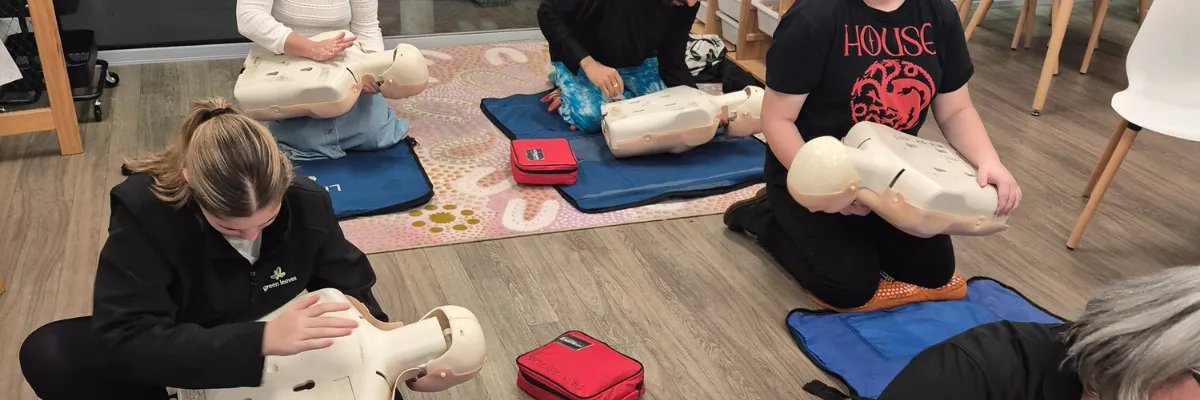
A practical rescue simulation to reassess your hands on competency, not just a tick and flick
You walk away with a new certificate, so your currency is sorted without you having to sit through a full initial course again.
Do You Need a Full LVR Course or Just a Refresher?
This is the bit that trips people up the most, and honestly it's an easy mistake to make. Book the wrong one and you either waste money or waste a whole day you didn't need to lose. So let's sort it out properly.
How to Tell if Your Certification Has Lapsed
First thing, go check the date on your actual certificate. Sounds obvious but you'd be surprised how many blokes are going off memory, or going off what they think the date was. If it's expired, or it's expiring in the next few weeks, that's your trigger to book. If you're not sure where your certificate even is anymore, your RTO should be able to look it up for you, so give them a call rather than guessing.
What Happens If You Book the Wrong Course
If you book a refresher but your ticket has actually lapsed too long ago, you can turn up on the day and get told you need the full course instead. That's a wasted trip, a wasted booking fee in some cases, and now you're back to square one trying to find another date that works. Same goes the other way, booking the full initial course when a refresher would've done the job just means you've spent more time than you needed to.
If you're not sure which camp you fall into, it's worth checking our full LVR initial course page before you book anything, just so you're not guessing.
Quick decision guide:
Once you know which course you actually need, here's exactly what the refresher covers on the day.

What's Covered in an LVR Refresher Course
Right, so you know you need the refresher. Here's what actually happens once you're in the room (or more accurately, once you're standing in front of a switchboard).
Safe Isolation and Switchboard Rescue Procedures
This is the core of it. You'll be going back through the proper steps for isolating a live low voltage panel safely, and then working through rescue procedures if someone does get caught up in a fault. It's not a slideshow thing, you're actually working through it on training equipment set up to mimic a real switchboard. The idea is muscle memory, not just theory you nod along to.
CPR and Emergency Response Refresh
Because if a rescue does happen, what comes straight after matters just as much as the rescue itself. You'll go back over CPR and emergency response in the specific context of an electrical incident, which is a bit different to generic first aid, there's extra considerations around when it's actually safe to approach and treat someone.
Updated WHS and Electrical Safety Act Changes
Regulations move. Something that was standard practice a couple of years ago might've been updated since your last ticket. This part of the refresher brings you up to date on anything that's changed with WHS requirements or the Electrical Safety Act, so you're not caught out not knowing something you're actually expected to know.
Practical Rescue Simulation Assessment
The last part of the day is a practical simulation where you actually demonstrate the rescue, start to finish, under a bit of realistic pressure. This is the part that separates a genuine refresher from a box ticking exercise. You're not just sitting through content, you're proving you can still do it.
If there's one objection we hear a lot, it's blokes assuming a refresher is going to be a slideshow and a signature. It's not. It's scenario based, hands on, and built around real switchboard and live fault rescue simulation, because that's what actually protects you and your crew on site, not a certificate that just says you sat in a room for a few hours.
For anyone wanting the official detail, the Electrical Safety Office Queensland and Safe Work Australia both publish guidance on LVR requirements worth a look.
Once you know what the day actually covers, the next thing worth sorting is how to get your whole crew through it without it turning into a scheduling headache.
Booking Your Crew's LVR Refresher Without Losing a Full Day on Site
If you're a leading hand or supervisor, this is probably the part you actually care about most. Getting one person's ticket sorted is easy enough. Getting three, four, five crew members all sorted without it turning into a scheduling headache is a different story.
Single Group Booking Process for Multiple Crew Members
Rather than booking each crew member individually, one at a time, through separate forms or separate calls, a group booking lets you sort the whole crew in one transaction with one point of contact. You tell us who needs to be there, we sort a session that suits the group, and you're not spending your morning on the phone five separate times chasing five separate confirmations.
Sessions are also available outside standard working hours, so you're not forced to pull yourself or a crew member off a live site during the middle of a work day. If you're trying to fit this in around handover deadlines or site access windows, that flexibility is usually the difference between it actually happening this month or getting pushed back again.
Book your whole crew and get everyone sorted in one go.
Tracking Renewal Dates So You're Never Caught Out Again
Here's the part most supervisors are actually doing wrong, not through any fault of their own, there's just no good system for it. Most are tracking who's current and who isn't "in their head" or on a wall calendar back at the depot. That works fine until it doesn't, and it doesn't take much for a ticket to slip through the cracks when you're juggling live sites and deadlines on top of it.
Never miss your next LVR renewal. Sign up and we'll remind you before anyone's ticket lapses, so you're never the one explaining to head office why someone wasn't current.
If organizing individual bookings for everyone was your biggest hold up, this is exactly the objection a group booking process solves. One conversation, one session, the whole crew sorted.
Once your crew's booked in, the last thing to sort is what to actually bring and what to expect once you walk in the door on the day.

What to Bring and What to Expect on the Day
Last thing to cover, and it's a practical one. No point having the session booked in if you turn up without the right paperwork or you're not sure what happens if the practical part doesn't go your way first time.
Documents and ID Required
You'll need to bring photo identification along on the day, along with any details of your existing certification if you have them handy. Worth sorting this the night before rather than trying to find it in the ute at 6am.
What Happens If You Fail the Practical Component
This one worries a few people more than it needs to. If the practical rescue simulation doesn't go smoothly the first time, it's not a failure and you're out the door. Trainers work with you on the spot to go back over what needs tightening up, and you get another go at it. The whole point of the day is that you leave competent and confident, not just ticked off a list.
Book Your LVR Refresher Now
Once you're booked in, you'll get a confirmation with everything you need, a reminder on what to bring, and your new certificate on the day itself so there's no waiting around wondering if it'll come through.
A lapsed ticket has a way of sitting quietly in the back of your mind until it suddenly isn't quiet anymore. Maybe it's a supervisor asking for proof of currency on a Monday morning, or a WHS audit landing sooner than expected. Either way, the fix doesn't need to be complicated, and it definitely doesn't need to cost you a full day away from billable work.
What matters most is treating it as routine rather than a crisis. Tradies who stay on top of their certification aren't doing anything special, they've just stopped letting renewal dates catch them by surprise. That shift in mindset, from reactive to routine, is really the difference between chasing paperwork under pressure and simply ticking a box you saw coming.
There's also something to be said for taking the practical side seriously rather than treating it as a formality. Live low voltage work doesn't get less risky because you've done it a hundred times before, if anything, familiarity is exactly when shortcuts creep in. A proper refresher, one built around real scenarios rather than a slideshow, is what keeps that instinct sharp when it actually matters.
For anyone supervising a crew, the responsibility runs a bit deeper too. It's not just your own currency on the line, it's everyone under you, and questions about compliance tend to land on your desk first, not head office's. Getting ahead of renewals for the whole team, rather than chasing them one at a time, takes that weight off your shoulders long before it ever becomes a problem.
None of this needs to be difficult. A ticket about to lapse is simply a task to sort, not a reason to lose sleep. Sort it early, sort it properly, and get back to the job at hand knowing your compliance, and your crew's safety, are both exactly where they need to be