LVR Kit Components: What Must Be in Your Kit in 2026
You've got your UETDRRF004 ticket. You're on site, ready to go. First day of a new job, decent money, good crew. Then the WHS coordinator pulls you up at induction and asks to see your LVR kit. She checks the cuff on your Class 0 gloves. Checks the bag. Looks back at you.
"These gloves haven't been tested in over a year. Kit's non-compliant. You'll need to come back when it's sorted."
Job stopped before it starts.
That's the reality a lot of Brisbane sparkies don't see coming. Tier 1 sites and a growing number of principal contractors are now auditing the kit itself, not just the certificate. And if even one component is expired, missing, or doesn't meet spec, the outcome is the same as rocking up with no ticket at all.
What Must Be in an LVR Kit? (2026 Requirements)
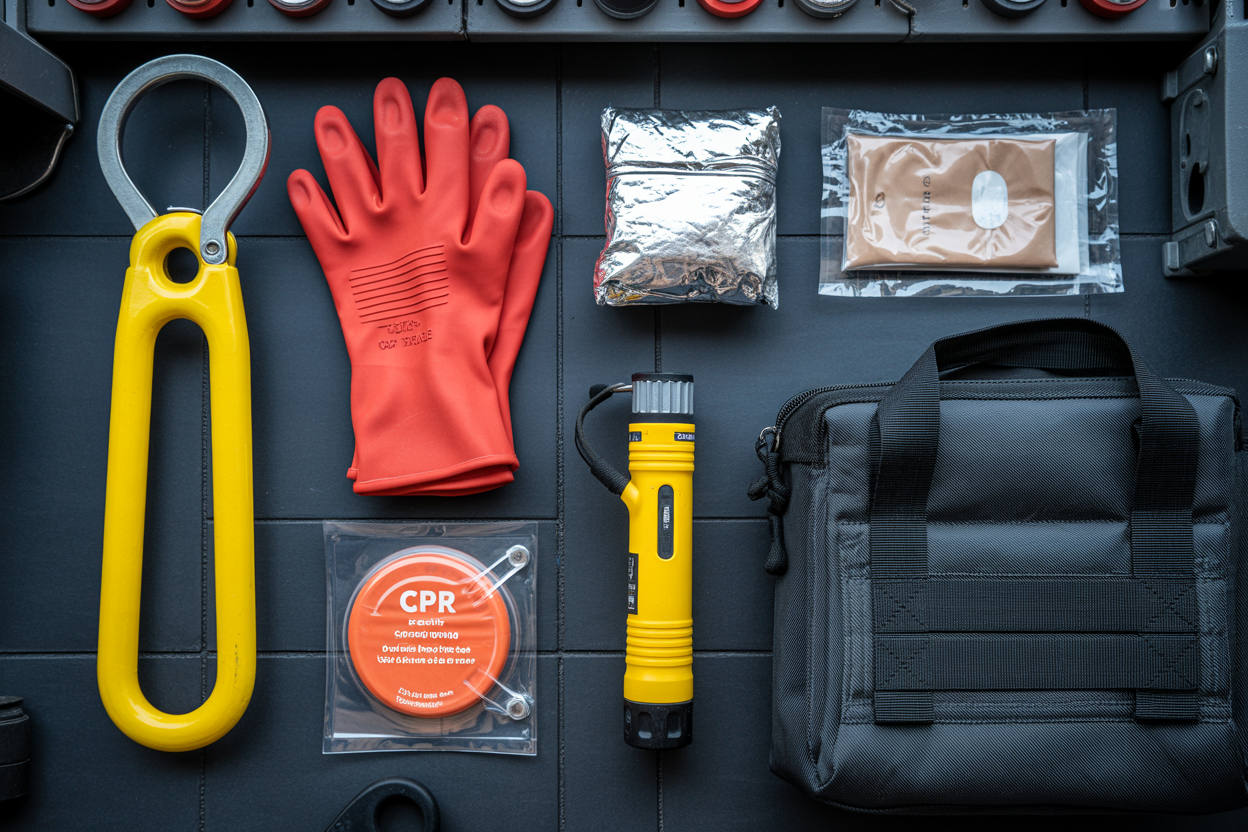
An LVR kit is a dedicated set of rescue and emergency equipment required under the UET training package for anyone performing work on or near live low voltage electrical panels. Under current Australian requirements, a compliant LVR kit must contain all of the following items, and each must be in serviceable condition at the time of use.
Insulated rescue hook (crook) - non-conductive, rated to 1000V minimum, used to separate a casualty from a live source without contact
Class 0 insulated gloves - tested within the last 6 months; expired test dates will be rejected on Tier 1 sites
Fire blanket - minimum 1.2m x 1.8m; used for smothering electrical burns or flame
"Isolate Here" sign - mandatory site isolation marker; absence is a common site audit fail
Trauma dressing / burn dressing - for post-rescue wound management pending paramedic arrival
Non-conductive torch - for working in switchboard environments with limited visibility
CPR barrier device (face shield or pocket mask) - required for rescue breathing component of the LVR response sequence
Durable, labelled carry bag - weatherproof preferred; must be clearly identified as LVR rescue equipment
Why Your LVR Kit Is Just as Important as Your Ticket
The certificate gets you through the gate the kit is what keeps you there.
Principal contractors across Brisbane are increasingly auditing LVR kit contents at site induction, not just asking to see the certificate. You can have a current ticket, show up on time, and still get sent home because one component is expired or missing. The outcome is identical to having no ticket at all.
A low voltage rescue kit isn't a one-time purchase you throw in the back of the UTE and forget about. It's a living compliance item. Gloves have an electrical test cycle. Dressings have expiry dates. Bags get damaged. Signs go missing. A kit that was fully compliant 14 months ago might have two or three issues on it today without you realizing.
What Happens If Your Kit Gets Rejected on Site
Brisbane, 2025. A subcontractor arrived at a Tier 1 construction site.
UETDRRF004 certificate: current. LVR kit: present. Problem the Class 0 gloves hadn't been electrically tested since purchase, 14 months earlier. The site WHS coordinator checked the cuff stamp during induction. Kit rejected. Tradie off site for two days while replacement gloves were sourced and tested. Two days of lost income for a glove test that takes under an hour.
Regular kit inspection isn't paperwork for the sake of it. It's the difference between being on the tools and sitting at home. Here's the full breakdown item by item.
LVR Kit Components: Full Breakdown
Every item in a compliant low voltage rescue kit has a job to do. None of them are filler. Here's what each one is, what to look for when you inspect it, and the mistakes that get kits knocked back.
Insulated Rescue Hook (Crook)
The rescue hook is the first thing you reach for when someone is in contact with a live source. Its job is to break that contact without you becoming the next casualty. It needs to be genuinely non-conductive -- rated to a minimum of 1000V under AS/NZS 4836:2011.
The common mistake is using a standard fiberglass rod that isn't actually rated. Without a manufacturer label confirming the 1000V rating, it won't pass a site audit -- and it might not protect you when it counts. Check the insulation coating for cracks, chips, or UV degradation before every job, and confirm the handle grip has no exposed conductive material.
Class 0 Insulated Gloves
If there's one item that causes the most site rejections, it's the gloves. Class 0 insulated gloves need to be electrically tested every 6 months. The test date is stamped on the cuff, and WHS coordinators on Tier 1 sites know exactly where to look.
Before you even get to the test date, do a pinhole check every time you use them. Hold the glove up, roll the cuff down to trap air inside, and squeeze -- any air escaping through a pinhole means the glove is compromised and needs replacing. Store them in a dry, sealed bag away from UV exposure.
Fire Blanket
The fire blanket needs to be a minimum of 1.2m x 1.8m. Size matters a blanket that's too small can't do its job in an LV panel rescue scenario where you may need to smother flames or wrap a casualty with electrical burns. Check it's been repackaged correctly after any previous inspection. A fire blanket shoved back in loosely isn't ready for use under pressure.
"Isolate Here" Sign
Simple item. Frequently missing. The "Isolate Here" sign marks the isolation point so incoming emergency services and co-workers know exactly where power has been cut. Without it, you're creating confusion at the worst possible moment. It's one of the most common findings during Queensland site WHS audits not because tradies think it's optional, but because it's small and easy to lose when you're restocking the bag in a hurry. Check it's legible and in the correct format before every job.
Trauma / Burn Dressing
Electrical burns are deep tissue injuries that standard first aid dressings aren't designed to handle. A compliant burn dressing needs to be appropriate for electrical burn wound management -- check the packaging to confirm. Dressings have a shelf life, so check the expiry date every time you do a kit audit and replace anything out of date before you go near a site.
Non-Conductive Torch
A switchboard environment often has limited visibility. You need a torch but a standard metal torch in a live electrical environment is a risk. Non-conductive means fully plastic housing with no exposed metal contacts. LED is the right choice brighter and more reliable in confined spaces. Check batteries are fresh before every job.
CPR Barrier Device
Ventricular fibrillation is a known consequence of electrical shock -- cardiac arrest is a real and immediate risk in any LV panel incident. Your CPR barrier device needs to be in the kit, in date, and sealed. A pocket mask is preferred over a face shield for LVR scenarios -- it gives a better seal and makes rescue breathing more effective under pressure.
Carry Bag
The bag needs to be clearly labelled "LOW VOLTAGE RESCUE KIT" so anyone on site can identify it instantly. Weatherproof construction is the standard -- site conditions aren't kind to gear that isn't built for them. Everything inside needs to be accessible quickly. If you're digging around for the rescue hook while someone's in contact with a live panel, the bag isn't set up right.
Component Reference Table

How Often Does an LVR Kit Need to Be Inspected?
Getting your kit right once isn't enough. A compliant low voltage rescue kit needs a regular inspection rhythm if you're not following one, you're one site induction away from getting knocked back.
Before every use run a visual check across all items. Hook, gloves, blanket, sign, dressing, torch, barrier device, bag. Two minutes. Get in the habit of doing it the night before a job.
Every 6 months get your Class 0 gloves electrically tested. Non-negotiable. As of 2026, glove testing intervals remain at 6 months under the current UET training package requirements -- check with your RTO if requirements are updated mid-year.
Annually full kit audit. Replace any expired dressings, check the bag for damage, verify the "Isolate Here" sign is legible and still in the kit, confirm the torch batteries are fresh, and check your rescue hook for UV degradation or cracks.
After any rescue event replace the entire kit before returning to service. Full replacement, no shortcuts.
The easiest system? Tie your kit inspection to your LVR certificate renewal. When it's time to renew your UETDRRF004, audit the kit at the same time. Two compliance items, one reminder, sorted together.
Keeping a Kit Inspection Log
Some principal contractors require a documented inspection record alongside the kit. It doesn't need to be complicated a simple log with the date, what was checked, and a sign-off is sufficient. Keep it with the kit so it's ready if anyone asks.
Can You Build Your Own LVR Kit or Do You Have to Buy One?
There's no regulatory requirement to purchase a pre-assembled kit. As long as every component meets spec, how you source it is up to you.
But it's surprisingly easy to buy something that looks right but isn't. Gloves that are insulated but not Class 0. A fire blanket that's undersized. A rescue hook carrying no 1000V rating. Each of those is a compliant-looking item that will get your kit knocked back and you won't know until you're standing in front of a WHS coordinator at induction.
Pre-assembled kits from reputable suppliers take that guesswork out. The components are selected to meet the relevant standards, the bag is already labelled, and a good supplier will include the glove test certificate. When evaluating any kit pre-assembled or DIY confirm AS/NZS compliance markings on the rescue hook and gloves, check the glove test certificate, verify bag labelling, and confirm fire blanket dimensions and dressing expiry dates on the packaging.
LVR Kit Requirements for Employers and Electrical Contractors
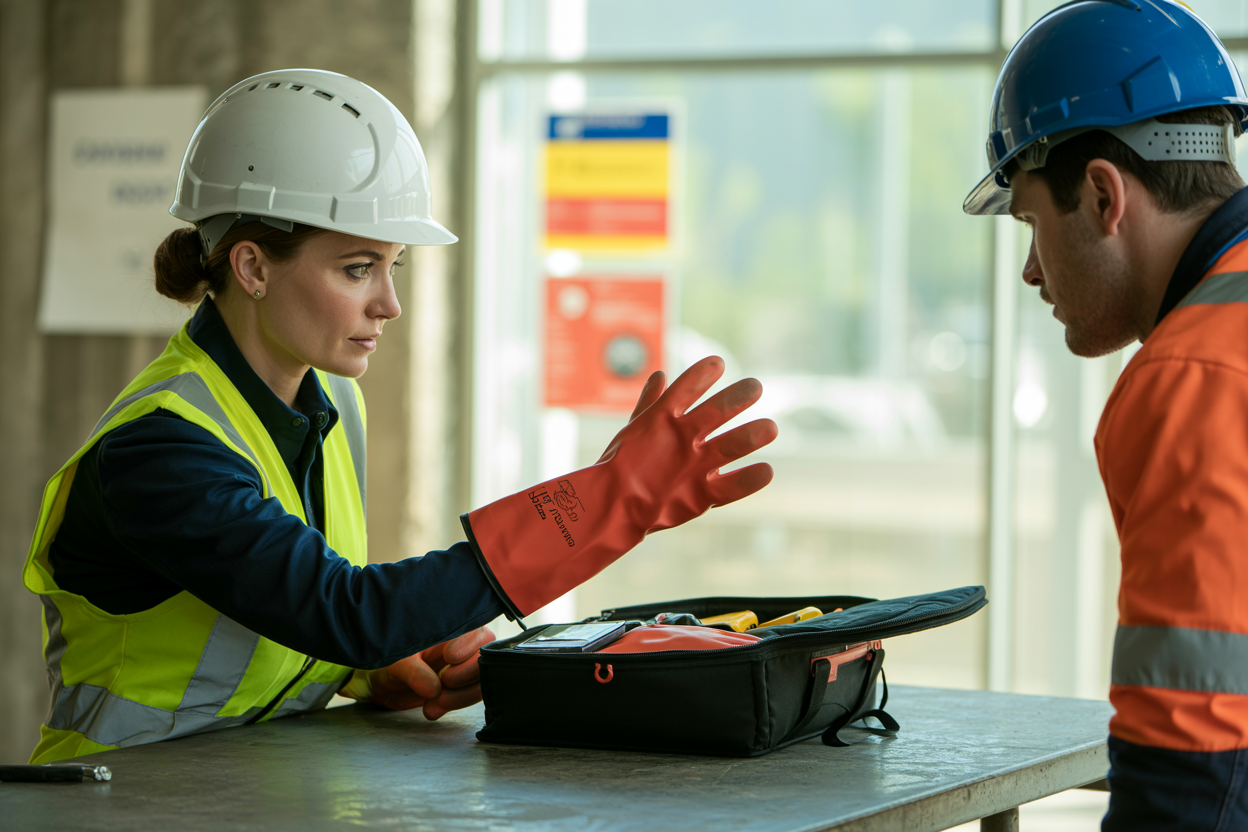
If you're running a team of sparkies, the kit compliance obligation doesn't sit entirely with your workers. It sits with you too.
Under the Work Health and Safety Act 2011 (Qld), PCBUs have a duty to provide adequate emergency equipment for workers performing live electrical work. That includes access to a compliant low voltage rescue kit. You can't rely on individual workers to self-supply and call it done.
A few things to get clear on if you're managing a team:
One kit per work crew minimum - not one per site. Two crews on different jobs the same day means two compliant kits in the field.
Kit compliance is a shared responsibility - buying the kit is step one. Keeping it inspected and restocked after use is an ongoing obligation.
Document it - keep records of kit inspections, glove test certificates, and component replacement dates.
The kit and the ticket need to be current across your whole crew. [BUSINESS NAME] delivers UETDRRF004 onsite for electrical teams across Brisbane. For further reading on your PCBU obligations, the Electrical Safety Office Queensland and Safe Work Australia are the authoritative sources.
Where to Get Your UETDRRF004 in Brisbane
If your UETDRRF004 is due for renewal or you've just realized your kit needs attention [BUSINESS NAME] runs regular low voltage rescue sessions across Brisbane. Experienced trainers. Practical delivery. Certificate issued same day.
Got a Team That Needs LVR? We deliver UETDRRF004 onsite for electrical teams across Brisbane. Get in touch for a same-day group quote.
If there's one thing worth taking away from all of this, it's that the kit isn't an afterthought. It's part of the job. Your UETDRRF004 certificate tells a principal contractor you know how to respond to an electrical emergency your kit tells them you're actually ready to. Both need to be current, both need to be right, and neither one covers for the other if it's not up to scratch.
The items themselves aren't complicated. Eight components, clear specs, straightforward inspection criteria. What catches people out isn't ignorance it's neglect. A glove test that got pushed back a month, then another month. A dressing that went out of date while the kit sat in the back of the UTE. A sign that went missing on a job six months ago and never got replaced. Small things that add up to a site rejection at the worst possible time.
Get into a routine with it. Check the kit before every job. Test the gloves every six months. Do a full audit when your UETDRRF004 comes up for renewal. Keep a log if your principal contractors require one. It doesn't take long -- and compared to the cost of a day off site, it's one of the better investments of your time you'll make all year.
And if your ticket is due alongside the kit or you've just realized both need attention at the same time that's exactly what the UETDRRF004 course in Brisbane is there for. Get them both sorted in one hit. Show up to your next job with a current certificate and a compliant kit, and the only thing standing between you and the work is the work itself.