
LVR Course for Electricians: What You Need to Know
It's Monday morning. You're on site early, ready to go, coffee half-finished. The WHS coordinator runs through site induction and asks for your tickets. White card: done. First aid: done. LVR: expired three weeks ago.
Just like that, you're not starting work today. The job and the day rate walk out the door without you.
It happens more than anyone admits. An LVR course for electricians isn't the kind of thing that stays front of mind, not when you're juggling jobs, invoices, and half a dozen other tickets. But the UETDRRF004, that's the formal unit code for your Low Voltage Rescue certificate, is one of those non-negotiables on any construction site, commercial fit-out, or industrial job.
This post covers everything you actually need to know: what the course covers, who has to hold it, how long the certificate stays valid, and how to get booked without wasting half your day trying to work it out.
Practical, trade-level information. No fluff. Let's get into it.
What Is an LVR Course?
An LVR course, formally known as UETDRRF004 Perform Rescue from a Live LV Panel, trains electricians to safely rescue a person in contact with a live low-voltage electrical panel and perform emergency first aid including CPR. It's a nationally recognized unit delivered by a registered RTO, and it's valid for 12 months from the date you complete it.
Here's what you need to know at a glance:
Who must hold it: Licensed electricians, apprentices in their final years, solar installers, and facilities maintenance electricians
Where it's required: Construction sites, commercial fit-outs, industrial facilities, and solar installations
How often you renew: Every 12 months, no exceptions
What Is an LVR Course and Why Do Electricians Need It?
What "Low Voltage Rescue" Actually Means on Site
Low voltage panels are everywhere on a commercial job site. Switchboards, distribution boards, sub-boards in commercial fit-outs, rooftop solar systems. The voltage range covered under UETDRRF004 is up to 1000V AC or 1500V DC, which sounds technical, but in plain terms, it's the kind of electrical infrastructure you're working on or around every single day.
Low voltage doesn't mean low risk. A contact incident at these voltage levels can cause ventricular fibrillation, that's cardiac arrest, in seconds. The "rescue" part of the course isn't theoretical. It's the practical sequence of steps you take to get someone off a live panel without becoming the second casualty.
Why a Separate LVR Ticket Exists (Not Covered by First Aid)
This comes up constantly in trade Facebook groups: "Can't I just use my first aid certificate?" Short answer: no.
Your HLTAID011 is a solid course. But it doesn't cover what happens when someone is still in contact with a live LV panel. Standard first aid training doesn't teach you how to isolate the panel, the correct approach sequence, or how to remove a casualty from an energized environment without getting hurt yourself.
That's exactly why UETDRRF004 exists as a separate unit. It fills the gap between general first aid and what actually happens during an electrical rescue scenario on a worksite.
If you want to make sure your first aid is also sorted, check out our [first aid course] page.
So now you know what the course is and why it exists separately. Next up, let's get specific about who actually needs to hold it.

Who Needs an LVR Certificate in Queensland?
Licensed Electricians and Electrical Contractors
If you're a licensed electrician working on construction sites, a current UETDRRF004 is basically table stakes. Principal contractors include it on their subcontractor compliance checklists right alongside your white card and first aid. It's not a maybe, it's a gate.
The trigger is almost always the site induction. You turn up, the WHS coordinator runs through the checklist, and if your LVR isn't current, you don't get past reception. It doesn't matter how long you've been in the trade or how good your relationship is with the foreman. The ticket's expired, you're going home.
For sole traders and subcontractors especially, this is a real Monday morning problem. There's no employer chasing renewals on your behalf. That responsibility sits entirely with you.
Apprentice Electricians: When Does the Requirement Apply?
Third and fourth year apprentices are increasingly being asked to hold a current LVR certificate before they can work unsupervised on certain sites. It's not universal across every job, but it's becoming more common, particularly on larger commercial projects where the principal contractor's WHS requirements flow down to every person on site.
Most of the time, the employer arranges group training for their apprentices. If that's you, the business owner or site supervisor trying to get a few people sorted at once, there's a group booking option that makes a lot more sense than sending them off individually. More on that in a minute.
Solar Installers, Data/Comms Technicians, and Facilities Maintenance
Brisbane's residential solar belt is booming, and increasingly, the principal contractors and commercial building managers overseeing these installations are requiring a current UETDRRF004 as a condition of site access.
Same goes for data and comms technicians working in commercial buildings, and facilities maintenance electricians managing LV infrastructure. If your work puts you on or near live low-voltage panels, the expectation is shifting. It's not just construction sites anymore.
For WorkSafe Queensland guidance on electrical safety requirements, visit the [WorkSafe Queensland electrical safety page].
Now you know who needs it. Let's talk about what actually happens on the day.
What Does the UETDRRF004 Course Actually Cover?
The Practical Rescue Sequence
This is the part most electricians actually want to know before they book. Not the compliance stuff, the practical stuff. What are you going to be doing on the day?
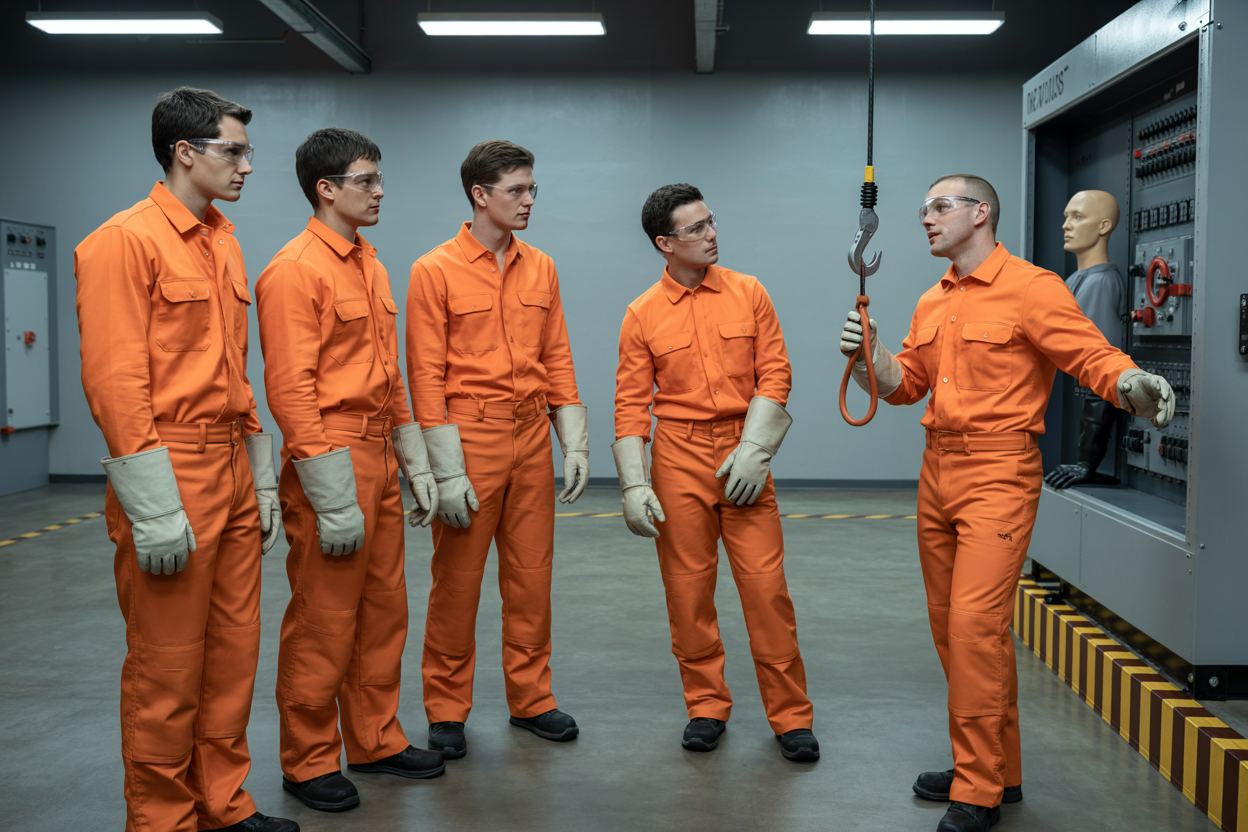
The course walks you through the full low voltage rescue sequence in a hands-on environment:
Danger assessment: reading the scene before you do anything
Panel isolation: shutting down the source safely before making contact
Safe approach: the correct sequence for approaching a casualty in an energized environment
Casualty removal: getting the person away from the panel without making contact with the energized source yourself
CPR: performing chest compressions and rescue breaths to the current ANZCOR guidelines
AED use: deploying a defibrillator, which is directly relevant here because electrical shock is a known cause of ventricular fibrillation
It's scenario-based. You're not sitting in a classroom watching a PowerPoint. You're working through a realistic rescue sequence on equipment that reflects what you'd actually encounter on a job site.
Assessment Format: What You'll Be Tested On
Here's the thing that puts some people off: the word "assessment." Relax. This isn't a written exam. UETDRRF004 uses a competency-based practical assessment, meaning you demonstrate what you'd actually do in a real rescue situation, and a qualified assessor observes and signs off.
There are no trick questions. No academic theory to memorize. You're being assessed on whether you can follow the rescue sequence correctly and perform CPR to an acceptable standard. If you've been paying attention during the course and you've had a go at the practical scenarios, you'll be right.
You're not being tested like a student. You're being assessed like a tradesperson, and there's a big difference.
What to Bring on the Day
Keep it simple. Show up prepared and you won't have any dramas:
Closed-toe footwear: steel caps preferred, non-negotiable on safety grounds
Appropriate PPE: [SPECIFIC PPE REQUIREMENTS: placeholder for RTO to confirm]
Photo ID
Any pre-course theory if blended delivery applies
Showing up without the right gear is the easiest way to create a problem that didn't need to exist. Check with Brisbane First Aid Training when you book if you're unsure what's required for your specific session.
For the official UETDRRF004 unit listing, see [training.gov.au: UETDRRF004]. CPR and AED components follow [ANZCOR Guidelines].
How Long Is the LVR Certificate Valid?
Your certificate is valid for 12 months from the date you complete the course. That's the number that matters most.
The 12-month validity is the one that catches people out. It's easy to lose track of when you're holding five or six different tickets and none of them expire at the same time. Unlike your first aid which runs for three years, the LVR ticks over every 12 months without much fanfare, and before you know it you're turning up to site induction with an expired ticket.
Blended delivery may be available, meaning you complete the theory component online before the face-to-face practical session. Either way, the practical assessment component has to be done in person. There's no fully online pathway for UETDRRF004.
How to Book an LVR Course: What to Expect
Individual Booking: Book in Under 3 Minutes
If you're booking for yourself, the process should take you less time than ordering lunch. Here's how it works at Brisbane First Aid Training:
Head to the course page:
Pick your date from the upcoming sessions listed
Enter your details and pay by card or bank transfer
Get an immediate confirmation email with everything you need: date, time, and what to bring
That's it. No enquiry form. No waiting for a callback. No quote request that takes two days to come back. You see the dates, you book, on your phone, on site, in between jobs.
Ready to Get Your LVR Ticket Sorted?
Certificates issued the same day. Individual and group bookings available. Trainers with real electrical trade backgrounds, not generalists who've never been on a job site.
Getting your LVR sorted isn't complicated, but it does require you to actually stay on top of it. The UETDRRF004 is a 12-month ticket, and the gap between "I'll do it next week" and "I can't start the job today" is shorter than most people realize. Construction sites don't make exceptions at induction, and no foreman relationship is going to override a WHS coordinator with a compliance checklist.
The good news is the course itself is straightforward. It's practical, it's trade-relevant, and it's assessed on what you'd actually do on site, not what you can recall from a textbook. If you've spent any time working around LV panels, the content is going to make sense. You'll walk out knowing the rescue sequence, knowing how to use an AED in an electrical incident, and knowing your certificate is recognized across every major principal contractor's site.
If you're booking for yourself, you can be done in under three minutes. If you're an employer trying to get a team sorted, the onsite group option exists specifically so you're not pulling everyone off the tools for a full day. Either way, Brisbane First Aid Training has sessions running regularly, and certificates go out the same day you complete the course.
Don't be the bloke who finds out his LVR expired at 7am on a Monday. Get it booked, get it done, and set that phone reminder for 11 months so you're not back here scrambling again next year.