
LVR Course for Construction Workers: Is It Required in Qld?
An LVR course for construction workers isn't a blanket rule for every trade on a Queensland site. But try telling that to the sparky standing at the gate first thing in the morning, because his ticket ran out nine days ago and the induction bloke won't let him through. For a small Brisbane electrical crew, that's a lost day, an unhappy builder and a job that gets pushed back.
Part of the problem is nobody's working off the same page. There's what the law says. There's what's on the builder's induction checklist. And then there's whatever gets said at the wholesaler counter while you're waiting on your order. The Electrical Safety Regulation 2013 sets the legal minimum for people doing electrical work and for safety observers on live work. Principal contractors often go further, and they're the ones who decide who gets through the gate.
So here's how it actually breaks down. We'll go role by role, from electricians and apprentices to safety observers and the other trades on site. Then where the law stops and the builder's rules start, and how renewal works. And last, how to get the whole crew current in one early LVR and CPR session without losing a day of billable work.
Do Construction Workers Need LVR Training in Queensland?
Not every construction worker needs LVR training in Queensland. Under the Electrical Safety Regulation 2013, it applies to workers doing electrical work and to anyone acting as a safety observer while live work is going on. For everyone else on site, it's usually only needed when the principal contractor makes it a site condition.
Here's the quick version, role by role:
Licensed electricians: required, kept current every 12 months
Electrical apprentices: expected to hold it, and need it to be a safety observer
Safety observers: assessed as competent in rescue and resuscitation within the last 12 months
Supervisors of electrical work: often required by the builder at induction
Other trades (plumbers, carpenters, laborer's): not legally required, unless the site rules say so
If you're a sparky and want the full rundown on your own obligations, that's covered in our guide to mandatory LVR training for electricians.
What Queensland Law Says About LVR on Construction Sites
So, is LVR training mandatory in Qld? For electrical work, yes. But the detail matters, because the law puts the duty on more than one person. And it's not always the person you'd expect.
Rescue and resuscitation training (Electrical Safety Regulation 2013, s28)
Section 28 of the Electrical Safety Regulation 2013 says the business owner has to make sure workers doing electrical work are trained in rescue and resuscitation.
If you run a crew, read that again. The duty sits with you as the employer, not just with each worker sorting out his own ticket. If one of your sparkies turns up to a job with a lapsed LVR, it's your name attached to the problem too.
The 12-month rule and license renewal
Evidence of current training is tied into electrical license renewal. So it isn't only a site thing. It follows your license around.
On site, there's no grace period. A ticket that expired yesterday is treated exactly the same as no ticket at all.
Safety observers and the "Rule of Two"
Live work needs a second person, and that's the safety observer. They have to be assessed as competent in rescue and resuscitation within the previous 12 months. The supporting standard is AS/NZS 4836:2023, and the Electrical Safety Office has guidance on working live that's worth a read.
Think of the observer as the bloke holding the rope. If he doesn't know what to do when it goes wrong, he's only watching.
Where WHS law fits in
On top of the electrical rules, the Work Health and Safety Act 2011 (Qld) gives every employer a general duty to train workers and plan for emergencies. It's broader than LVR, but it backs up everything above.
That's the legal baseline. On a real site, what matters is which of your crew it applies to.

Who on a Construction Site Needs an LVR Course (Role by Role)
Here's where it gets practical. An LVR course for construction workers means different things depending on who's holding the screwdriver, who's standing next to them, and whose site it is.
Role | Legally required? | Site-dependent? | Notes |
Licensed electricians | Yes | n/a | Annual, tied to license |
Electrical apprentices | Expected | Often | Needed to act as safety observer |
Safety observers | Yes (for live work) | n/a | Assessed within 12 months |
Leading hands / supervisors of electrical work | Depends on role | Often | Builders frequently require it |
Solar and battery installers | If doing electrical work | Often | Mixed AC and DC risks |
Other trades (plumbers, HVAC, carpenters, laborer's) | Generally no | Sometimes | Usually only when site rules say so |
Licensed electricians
This one's the baseline, and it includes you. Plenty of contractors are so busy chasing everyone else's tickets that their own quietly runs out. If you're on the tools, you're in the count, same as your crew.
Apprentices
LVR requirements for apprentices are the part a lot of bosses think about more than they say out loud. Your apprentice might be 20, keen, a bit too confident, and he reminds you of yourself at that age. That's exactly why he should be trained.
Getting him through LVR protects him. It also makes him genuinely useful on the job, because a trained apprentice can stand in as a safety observer. So he's not just carrying gear from the ute.
Leading hands and supervisors
It depends on the role. If they're supervising electrical work, builders frequently ask for it at induction anyway.
Safety observers
Anyone can fill this role, as long as they're trained and current. It comes down to competency, not a license. What counts is whether that person could actually get someone off a live board if they had to.
Solar and battery installers
Solar and battery work has pulled a lot of sparkies into DC and mixed AC/DC installations. The rescue and isolation risks look a bit different on these systems. If you're doing the electrical work, LVR applies.
Other trades
Plumbers, carpenters and laborer's usually aren't legally required to hold LVR. Some principal contractors ask for it anyway. Air-con and refrigeration techs who work near switchboards should check with the builder before they turn up, rather than finding out at the gate.
Some trades aren't covered by the law, but that doesn't mean the builder will let them through the gate.
Why Builders Ask for LVR Even When the Law Doesn't
The law sets the floor. The builder sets the gate. And on most commercial jobs, the gate is where you actually get stopped.
Site inductions and principal contractor conditions
Tier 1 and Tier 2 builders often treat LVR and CPR as a condition of entry for anyone working near live boards. It's written into the site induction, and there's not much point arguing it with the person holding the clipboard.
What happens at the gate when a ticket lapses
A typical scenario goes like this. One of your sparkies rolls up to a commercial job. His LVR lapsed nine days ago. He didn't notice and neither did you. The induction check picks it up and he's refused entry.
Now the job gets rescheduled. The builder's annoyed, because his program just slipped. And you've lost a full day of billable work for one bloke, over a ticket that was easy to renew.
Incidents, investigations and insurance
If something goes wrong on a live board, the Electrical Safety Office can ask for training records as part of an investigation. Insurers and builders check currency too.
Current tickets on file mean one less thing to worry about when someone starts asking questions. A lapsed one means your contractor license, your insurance and your reputation are all in the conversation.
Getting someone off a live board is only half the job. The next few minutes decide the outcome.
LVR and CPR: Why They're Booked Together
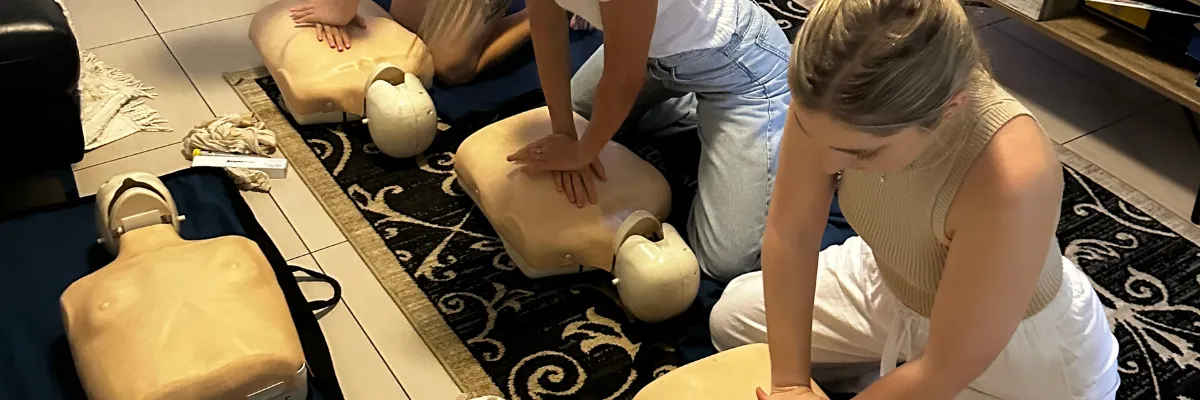
LVR gets the casualty safely off the live source. CPR covers what happens next. You really need both, because pulling someone clear of a board and then standing there not knowing what to do doesn't help anyone.
"Do we have to do CPR every time with LVR?"
Short answer: both are part of the annual rescue and resuscitation requirement. So yes, CPR needs to stay current alongside your LVR. The good news is you don't need two separate sessions. Book LVR and CPR together and it's one booking, done. It saves you pulling the boys off the tools twice in the same year.
The CPR component is HLTAID009 Provide CPR, delivered in line with ANZCOR guidelines from the Australian Resuscitation Council.
How Often Construction Workers Need to Renew LVR
If you're wondering how often you need to do LVR in Queensland, the answer's simple. Every 12 months. The tricky part is keeping a whole crew on top of it.
Every 12 months, no grace period
LVR expiry is a hard line. Twelve months from your last assessment, the ticket's done. There's no buffer week and no "close enough". Expired by one day is treated the same as no ticket.
Getting the whole crew onto one renewal date
This is where most small contractors come unstuck. Everyone did their LVR at different times. One bloke did it when he started in March, another before a big job in July, and the apprentice did his in October. So someone's always about to expire, and you're always chasing.
The fix is to line everyone up on one date. Here's how that works for a small crew:
Worker | Current expiry | Aligned renewal |
Owner | February | February |
Sparky 1 | April | February |
Sparky 2 | July | February |
Sparky 3 | September | February |
Apprentice | November | February |
Pick the earliest expiry and book the whole crew in together. A few of the boys renew a couple of months early this one time. After that, it's one booking a year and one date to remember.
Keeping track of expiries
Even with one date, you still want it written down somewhere other than your head. A simple tracker spreadsheet with LVR, CPR and license expiry dates for each worker does the job. Set it to highlight anyone at 60 days and again at 30.
If you're booking the whole crew anyway, it helps to know what they'll actually do on the day.
What an LVR Course for Construction Workers Covers
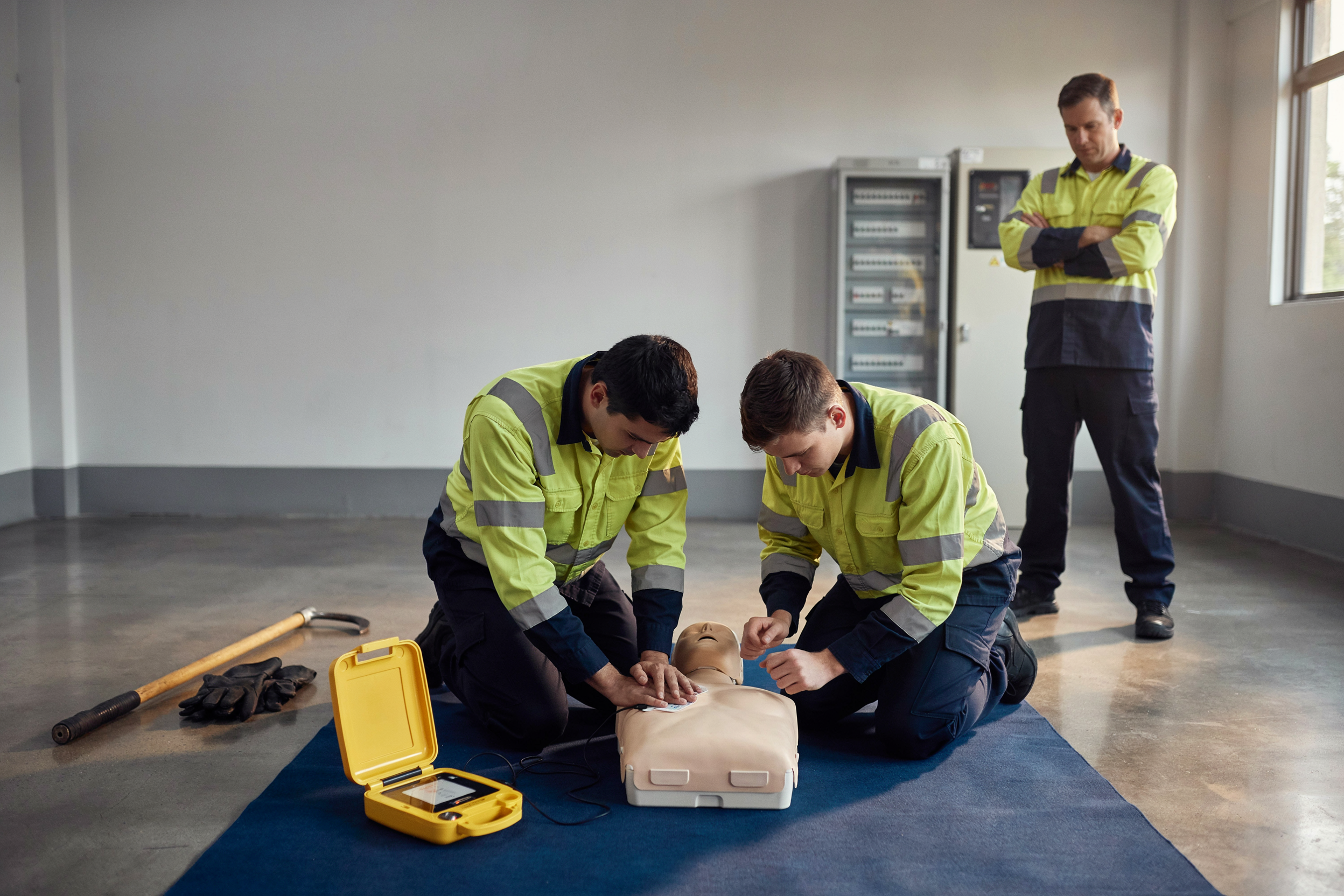
The unit is UETDRRF004 Perform rescue from a live LV panel. On paper that sounds dry. In the room, it's pretty hands-on.
Here's what the day covers:
Scene assessment before anyone goes near the board
Isolating the supply safely
Using the LV rescue kit: insulated crook, gloves and mat
Safely removing the casualty from the live source
CPR once they're clear
Using an AED
Not a tick-box session
If you've done LVR every year for 15 years, you've probably sat through at least one session that felt like a formality. Slides read out loud, a quick demo, sign here, off you go.
That's not much use when it counts. The point of UETDRRF004 is that everyone on your crew could actually do the rescue, not just produce a certificate. So the practice is realistic, with a proper LV rescue kit and switchboard mock-ups. You're physically doing it, not watching someone else.
Here's how to get it done without losing a day of billable work.
Getting Your Crew Trained Without Losing a Day
Every hour your crew spends in a training room is an hour they're not billing. For a small contractor, that lost time on the tools is what really hurts.
Early-start public courses
If you're booking yourself or a couple of workers, a public course is the easy option. An early start means the boys are done and back on site before the day's half gone.
Onsite training at your workshop or site
For the whole crew, onsite LVR training in Brisbane is usually the better deal. The trainer comes to you with the gear, the crew does the session in your own workshop, and everyone's back on the tools sooner.
Public course | Onsite at your workshop | |
Travel | Crew travels to the venue | Trainer comes to you |
Scheduling | Set public dates | A date that suits your jobs |
Certificates
Certificates matter more than people think. Everyone needs one they can upload to the builder's induction portal before they turn up to the next job.
Before the day
A bit of prep saves a lot of mucking around on the morning:
Collect USIs from everyone, especially apprentices and new starters
Make sure any pre-course work is done
Check what each worker needs to bring
An LVR course for construction workers isn't a rule for everyone on site. But for the people it does cover, there's no wiggle room. Licensed electricians need it. Safety observers need it. Apprentices should have it. And whoever runs the business carries the duty to make sure it's current.
Then there's the builder. The law sets the minimum, but the principal contractor decides who gets through the gate. Plenty of sites want LVR and CPR from anyone working near live boards, whether the law asks for it or not. A ticket that's one day over gets treated like no ticket at all.
The easiest fix is to stop chasing staggered dates. Line the whole crew up on one renewal date, book LVR and CPR together, and keep a simple tracker so you're not relying on memory. One booking a year beats finding out at the induction.
It doesn't have to cost you a day of billable work either. An early start, or a trainer who comes to your workshop, means the boys get the practical rescue practice they need and get back on the tools.
Now imagine next year going the other way. The whole crew renews together, the certificates are sorted, and nobody gets turned away at the gate for the next 12 months. That's one less thing to worry about, and a crew that could actually get someone off a live board if it ever came to it.