
Low Voltage Safety Workplace Training: What Does It Cover?
Your team works around low voltage equipment every day. But if a worker makes contact with a live conductor and the person next to them doesn't know what to do, the outcome can be fatal. Low voltage safety workplace training exists specifically to prevent that outcome, and in Queensland, it's not optional.
Whether you manage an electrical crew, run a construction site, or oversee a warehouse where workers regularly interact with switchboards, machinery, or temporary power, understanding what this training covers and who needs it is the first step to getting your compliance sorted.
What Is Low Voltage Safety Training?
Low voltage safety training is structured workplace instruction that teaches workers and supervisors how to identify, manage, and respond to electrical hazards involving systems operating at or below 1,000 volts AC or 1,500 volts DC, the voltage range found in the majority of Australian worksite environments.
In Queensland, this training is commonly delivered as the nationally recognized unit UEECD0007 - Apply Work Health and Safety Regulations, Codes and Practices in the Workplace, a mandatory component of several electrical and construction licensing pathways.
A nationally recognized low voltage safety training program typically covers:
The legal duties of employers and workers under the Work Health and Safety Act 2011 (Qld)
How to identify low voltage electrical hazards on a worksite
Safe work practices around live electrical equipment and switchboards
Lockout/tagout (LOTO) and isolation procedures
Emergency response procedures, including what to do if a worker receives an electric shock
Relevant Safe Work Australia codes of practice and Australian Standards
Documentation and record-keeping obligations for WH&S compliance
Why Low Voltage Safety Training Is a Legal Requirement in Queensland
Most site managers don't set out to ignore their WH&S obligations. What usually happens is the training side of things gets pushed down the list until something forces it back up, a near-miss, an audit notice, a contract requirement they didn't see coming.
Queensland law doesn't care how busy you were.
What the WH&S Act 2011 (Qld) Requires of Employers
The Work Health and Safety Act 2011 (Qld) places a primary duty of care on anyone who is a PCBU, a person conducting a business or undertaking. The Act requires PCBUs to eliminate risks to health and safety, or where that's not reasonably practicable, to minimize them.
"Reasonably practicable" is the standard you're held to. It means doing what a reasonable business in your position would do, given what you know about the risks. When your workers are operating around live electrical equipment, switchboards, or temporary power, providing documented WH&S training is absolutely within that standard.
WorkSafe QLD is the enforcement body in Queensland. They issue improvement notices, penalty infringement notices, and can prosecute.
What the Electrical Safety Act 2002 Adds for Trades and Construction Sites
The Electrical Safety Act 2002 (Qld) sets specific obligations for electrical work environments and operates alongside the WH&S Act, not instead of it. The Safe Work Australia Code of Practice: Managing Electrical Risks in the Workplace gives you the practical guidance that sits under both pieces of legislation, outlining what hazard identification, risk controls, and safe work systems are expected to look like in practice.
What the law requires, and what happens without it:

What Low Voltage Safety Workplace Training Actually Covers
"WH&S training" can mean a lot of things depending on who's delivering it and what unit code is on the certificate. When it comes to low voltage safety, there's a specific body of knowledge your workers need to walk away with, and a quality UEECD0007 program will cover all of it.
Hazard Identification and Risk Assessment
This module covers how to identify low voltage hazards in a worksite environment, including switchboards, temporary power supplies, portable electrical equipment, and overhead lines. Workers learn how to prepare and interpret Safe Work Method Statements (SWMS) for electrical risk. The relevant Australian Standards, AS/NZS 3000 (Wiring Rules) and AS/NZS 4836 (Safe Working on or Near Low-Voltage Electrical Installations), underpin this content and set the benchmark for what "working safely" actually means.
Isolation, Lockout and Tagout Procedures
Lockout/tagout, or LOTO, gets workers killed when it's done wrong or skipped entirely. This module covers isolation procedures for low voltage electrical systems: how to de-energize equipment correctly, how to apply locks and tags, and how to verify isolation before work begins. PPE requirements for low voltage environments are also covered. UEECD0007 gives workers a structured, nationally recognized framework for LOTO rather than just site-specific habit.
Emergency Response, What Workers Must Know
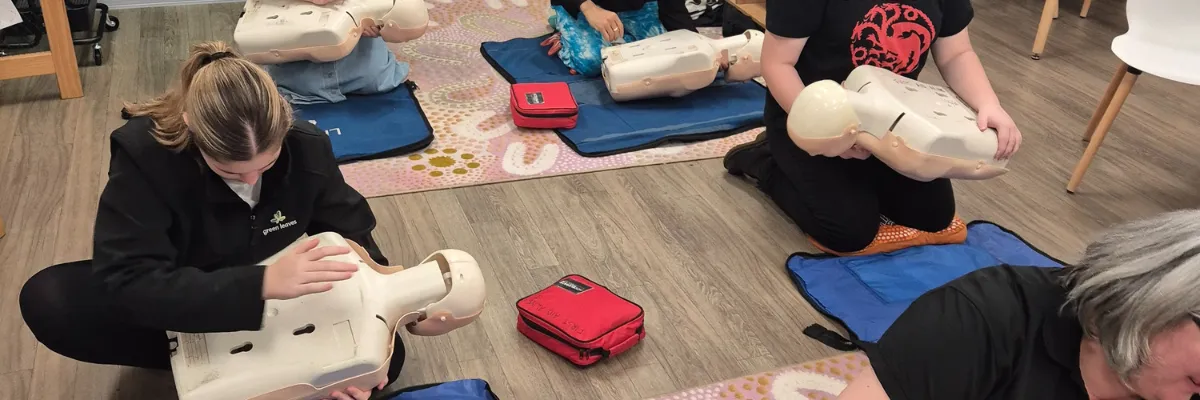
If a worker receives an electric shock, the instinct of an untrained bystander is often to grab them, which can result in two casualties instead of one. Trained workers know the correct sequence: don't touch, isolate the power source if it's safe to do so, call emergency services, and be ready to perform CPR if the worker becomes unresponsive. This module gives every worker on site a clear, rehearsed plan for the moments that count.
Documentation and Record-Keeping Requirements
Workers and supervisors learn what incident reporting looks like under the WH&S Act, what needs to be reported, to whom, and within what timeframe. They also learn what a compliant training and safety record looks like, and how to maintain documentation that satisfies an inspector on the spot.
Who Needs Low Voltage Safety Training in Queensland
The obligation is broader than most people realize. You don't have to be a licensed electrician to need this training.
Electrical Workers and Apprentices
For licensed electricians and apprentices, UEECD0007 is embedded in the licensing pathway as a standard component of the Certificate III in Electrotechnology Electrician. But certificates expire, workers change employers, and documentation gets lost. If you've taken on electricians or apprentices and can't produce their training records, that gap is yours to close.
Construction, Civil and Trades Workers
A white card gets a worker onto a construction site. It doesn't cover site-specific electrical hazards, and it doesn't satisfy the obligations under the Electrical Safety Act 2002 (Qld) for workers with regular exposure to low voltage systems. Principal contractors are increasingly requiring documented WH&S training as a condition of site access, separate from white card. If your crew can't produce the right paperwork, they're not getting through the gate.
Site Managers and WH&S Officers
Your duty of care obligation under the WH&S Act runs deeper than anyone else's on site. You can't delegate that liability without documented training to back it up. A site manager who hasn't completed recognized WH&S training, and can't demonstrate that the workers under their supervision have either, is personally exposed if something goes wrong.
Warehouse, Logistics and Manufacturing Workers
Any worker who regularly operates near switchboards, powered machinery, or electrical distribution equipment has a level of exposure that triggers a training obligation. In manufacturing environments particularly, machinery isolation and LOTO requirements apply to operators and maintenance staff, not just the people who do the electrical work.
Role and industry eligibility at a glance:
UEECD0007, The Nationally Recognized Unit Behind This Training
If you've been burned by a dodgy training provider before, you're not alone. A business books a course, pays for it, sends their crew, gets a certificate back, and then finds out the provider wasn't a registered RTO and the unit code doesn't match what SafeWork QLD actually requires. The whole thing has to be done again from scratch.
What "Nationally Recognized" Actually Means for Your Business
The full unit name is UEECD0007 - Apply Work Health and Safety Regulations, Codes and Practices in the Workplace, sitting within the UEE Electrotechnology Training Package, the nationally endorsed framework for electrical and electrotechnology training in Australia.
"Nationally recognized" means the unit is registered on the Australian Qualifications Framework (AQF) and accepted across every state and territory. A Statement of Attainment issued by a registered RTO for UEECD0007 is the same document regardless of where it's issued. Principal contractors accept it. SafeWork QLD accepts it. Tender evaluators accept it.
How to Check Your Training Provider Is a Registered RTO
Every legitimate RTO in Australia is listed on training.gov.au{:target="_blank" rel="noopener"}. Before you book, search for the provider by name or RTO number and confirm two things: that they're currently registered, and that UEECD0007 is on their scope of registration. If a provider can't give you an RTO number when you ask, walk away.
What Happens If Your Team Isn't Trained, SafeWork QLD Enforcement
A SafeWork QLD inspector shows up, sometimes in response to a complaint, sometimes as part of a proactive inspection program, sometimes completely out of the blue. They ask to see training records. The site manager scrambles. The records are incomplete, out of date, or don't exist. What follows is an improvement notice at best, and a penalty infringement notice or prosecution at worst.
What SafeWork QLD Inspectors Look For On Site
Inspectors conduct routine site visits, and when they do, training records are at the top of the list. For sites with low voltage electrical exposure, that means UEECD0007 on each worker's record, not a general induction, not a toolbox talk sign-off sheet, but a nationally recognised Statement of Attainment from a registered RTO. They'll also look at your Safe Work Method Statements and whether your SWMS reflect the actual hazards on your site.
Tender Compliance, Why Clients Are Now Asking for Training Records
Principal contractors and building owners are now requiring documented WH&S training as a pre-qualification condition, a hard requirement that determines whether your business gets on the approved supplier list. If your crew can't produce Statements of Attainment when a tender evaluation asks for them, you're out of the running before the price is even considered.
How to Get Your Team's Low Voltage Safety Training Sorted
What to Ask Your Training Provider Before You Book
Are you a registered RTO? Ask for the RTO number and verify it on training.gov.au{:target="_blank" rel="noopener"}. Non-negotiable.
Is UEECD0007 the unit code that will appear on the certificate? Get confirmation in writing. The unit code on the Statement of Attainment is what SafeWork QLD will check, not the course name.
Is on-site group delivery available? Confirm the provider can come to your location.
How quickly are certificates issued after training? Same day or next business day is the standard.
What You'll Receive After Training
Each worker who completes the training receives a Statement of Attainment with the unit code UEECD0007 clearly printed on it. You'll also receive training records formatted for your WH&S register, so the documentation side of your compliance obligation is handled at the same time as the training itself. That Statement of Attainment is accepted by SafeWork QLD inspectors, principal contractors, and tender evaluators.
Get Your Team's Low Voltage Safety Training Sorted
Low voltage safety workplace training isn't a box-ticking exercise. It's the difference between a workforce that knows what to do when something goes wrong and one that doesn't, and in a low voltage environment, that difference can be the difference between a near-miss and a fatality. The training exists because the hazard is real, the legal obligation is real, and the consequences of ignoring both are real.
The businesses that get this right are the ones that made a straightforward decision: get the right training, from a registered provider, with the right unit code on the certificate, and kept their records up to date. The barrier to getting this done is lower than most site managers expect, and the risk of not doing it is higher than most realize until it's too late.