Low Voltage Rescue Skills: What You'll Learn
You've probably sat through one of these courses before. Someone clicks through forty slides, you sign a sheet at the end, and you walk out the door with a certificate and not much else. That's not low voltage rescue skills. That's a box being ticked, and if you've spent any time on a Gold Coast site with live boards and half-finished switchboards, you know the difference matters more than most training providers let on. You can tell within the first ten minutes of a course whether the person running it has actually pulled someone off a live source before, or whether they're just reading from a script written by someone who hasn't.
So what do you actually learn in a UETDRRF004 course? Real question, and one worth answering properly. A proper low voltage rescue course covers isolating a power source safely, approaching a casualty and checking it's safe to move in without turning into a second victim yourself, physically getting someone off a live source with the right gear, and then CPR and defibrillation if it comes to that. None of that is abstract. It's the exact sequence of decisions someone has to make correctly, under pressure, when a mate's down.
This is hands-on stuff, not theory you forget by smoking. Below we'll walk through exactly what's covered, what a training day looks like, and how it plays out on the kind of sites you're actually working on around the Gold Coast.
What Skills Do You Learn in a Low Voltage Rescue Course?
Quick answer, because you're probably reading this on your phone between jobs. A UETDRRF004 course teaches you five things:
Isolate a low voltage source safely before you go anywhere near the casualty
Approach and assess the casualty without becoming a second person who needs rescuing
Remove the casualty from live contact using insulated rescue equipment, not your bare hands and hope
Perform CPR and use a defibrillator if the shock's stopped their heart
Report and document the incident properly, because WHS will want the paperwork
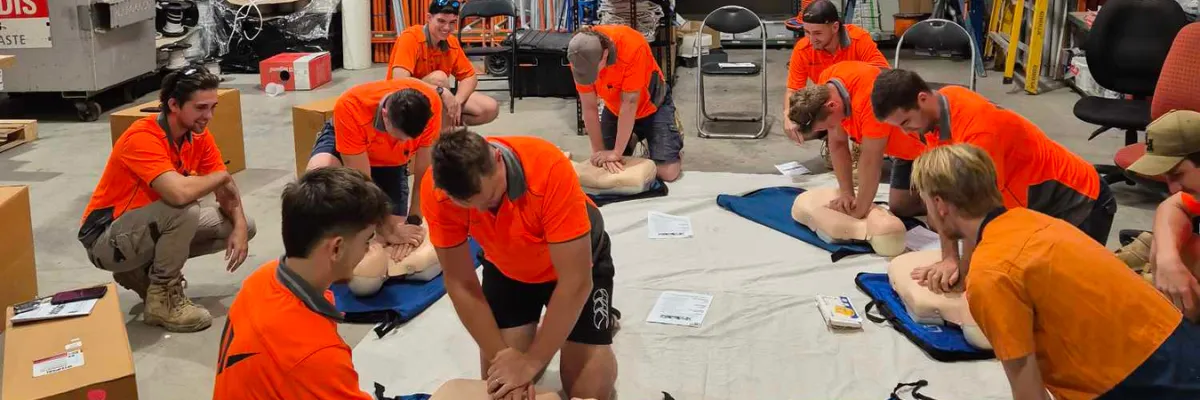
That's the run-down. But every one of those five points gets practiced, not just talked about. It's simulation-based training on real switchboard setups, not a classroom where someone reads slides at you for three hours. There's a real difference between hearing the steps and doing them with your hands shaking slightly because the scenario feels genuinely urgent, even though everyone knows it's a drill.
What Is Low Voltage Rescue Training, Exactly?
Right, let's clear something up first. Low voltage rescue and high voltage rescue are not the same course, and they're not interchangeable. Low voltage rescue covers rescue from sources under 1000V AC or 1500V DC, which is the bulk of what you're dealing with on a standard commercial or residential job. High voltage is its own separate world with its own training, different equipment, different everything. If someone tries to sell you one course as covering both, that's a red flag worth pushing back on.
That's why UETDRRF004 exists as its own standalone unit. It's not folded into a broader electrical course or bundled in as an afterthought. It's built specifically around the scenario where someone's come into contact with a live low voltage source and needs to be rescued, stabilized, and handed over to paramedics. The unit exists because this exact situation happens often enough, and is serious enough, that it needed its own dedicated training rather than a paragraph tacked onto something else.
Who actually needs this ticket? Not just licensed electricians. Apprentices working near live boards need it. Spotters on site need it. Maintenance workers who might be first on the scene need it too. Basically, anyone who could reasonably be the closest person when something goes wrong. If you've ever looked around a site and realized the only person qualified to respond was standing on the other side of the building, you already understand why this matters.
If you're not sure when your crew's tickets are due for renewal, we've got a separate article that breaks down the timing. And if you're ready to get your crew booked in, you can jump straight to that further down.

The 5 Core Skills You'll Learn
This is the guts of the course, so let's go through it properly.
Isolating the power source safely. Before anyone touches a casualty, the power's got to be cut off or made safe. Sounds obvious. It's not always simple at the moment, especially if you're not sure which board controls which circuit, or the isolation point isn't where you'd expect. On a real site, boards get modified, relabeled, or extended over the life of a job, and the switch you think controls a circuit sometimes doesn't. You'll practice this on real switchboard setups, not a diagram on a whiteboard, and you'll practice it more than once, because getting it right the first time under pressure is the whole point.
Approaching the casualty and checking it's safe. This is the step people underestimate. Your instinct is to run straight in and grab your mate. That instinct gets people killed. You need to know how to check if the scene is actually safe before you get close, because a second casualty doesn't help anyone, it just doubles the problem. This step is deliberately trained as a pause, not a sprint. You're taught to slow down for a few seconds even when every part of you wants to move immediately, because those few seconds are what stop the rescue from turning into two rescues.
Safe removal using insulated rescue equipment. Once it's safe to move in, you're using a rescue crook, insulated gloves, sometimes a fire blanket, to physically get the person clear of the contact point. This is a hands-on skill. You practice the actual movements, not just watch someone else do it once. There's technique involved, how you hold the crook, the angle you approach from, how you keep your own body clear while you're moving someone else, and none of that comes naturally the first time you try it.
CPR and defibrillation. Electrical shock can stop a heart, and if that's happened, you need to know CPR and how to use a defibrillator without hesitating. This ties directly into first aid skills, and if you haven't got your crew's HLTAID009 current alongside their LVR ticket, that's worth sorting too. Electrical shock CPR has its own considerations compared to other cardiac events, and the training reflects that rather than treating it as identical to a generic first aid scenario.
Incident reporting and WHS documentation. Not the exciting bit, but it matters. What happened, when, how it was handled, who was involved. Get this wrong or skip it and you're the one answering awkward questions later, not head office. Good documentation also protects the person who did the rescuing, because a clear, accurate record of what happened and what was done is what backs you up if anyone ever questions the response.
One of our trainers puts it simply: the difference between someone who's sat through a slideshow and someone who's actually practiced a live-fault rescue is the difference between freezing and acting when it counts.
For the official guidance behind all this, Safe Work Australia and WorkSafe QLD both publish detailed electrical safety standards worth a look if you want the regulatory side of it.
So no, this isn't box-ticking. You can't fake your way through a live simulation the way you can fake paying attention during a slideshow. The instructors running these sessions can tell within minutes who's actually absorbed the sequence and who's just going through motions, and that's the whole reason the format is built around doing, not listening.
What a Typical Training Day Actually Looks Like
Here's what you're actually signing your crew up for, time-wise. The day's split between theory and practical, but the practical side gets the bulk of the hours. You're not sitting through hours of talking before you get your hands on any gear. The theory's kept tight, enough to cover the why behind each step, then it's straight into the hands-on drills. That structure is deliberate. Theory gives you context, but it's the repetition of the physical steps that actually builds the reflex you need when it counts.
That's the whole point of asking about the day's structure up front before you book. You need to know exactly how much of your crew's day this is eating into before you commit, not find out on the morning. A provider who can walk you through the structure clearly, without dodging the question, is usually a decent sign of how the rest of the day will run too.
Group and crew bookings are handled as one process. One point of contact, one booking, your whole crew sorted in a single transaction instead of you chasing individual sign-ups across separate schedules. That's how it should work when you've got a crew who all need the same ticket around the same time. It also means everyone's training together, running the same scenarios side by side, which tends to build a shared understanding of how the crew would actually respond as a group rather than as individuals who happened to sit the same course separately.
If you're weighing up whether you can afford to pull the crew off site for this, that's a fair concern, and it's worth looking at the group booking options directly rather than assuming it's a full lost day per person.

How This Applies to Real Gold Coast Job Sites
None of this is theoretical for you. Switchboard and live-fault scenarios aren't hypothetical when you're working commercial and residential builds where boards are live and site conditions change week to week. One day a board's fully isolated and locked out, the next day it's been reconnected for testing and someone forgot to flag it. That's the reality of a live build, and it's exactly the kind of situation this training is built around.
The Gold Coast's light rail expansion and the high-rise residential boom are only pushing more crews onto sites with exactly this kind of exposure. More live sites means more electricians, apprentices, and spotters who genuinely need this ticket now, not just filed away from three years back. The pace of development isn't slowing down either, which means the number of people who could reasonably be first on the scene during an incident keeps growing right alongside it.
If you're running crews through job sites across the Gold Coast, this isn't an abstract compliance exercise. It's the same kind of live-fault situation your crew could realistically walk into on a Tuesday morning. It's worth having that conversation with your crew honestly, not as a scare tactic, but as a straightforward acknowledgment of the environment they're working in every day.
How Often You Need to Refresh These Skills
Short version: an annual practical refresher keeps these skills current, not just the certificate. Skills like this fade if they're never revisited, the same way any physical technique gets rusty without practice, and a year is roughly the window where that starts to show. If you want the full breakdown on renewal timing and what triggers it, that's covered in a separate article so we won't repeat it all here.
WRAPPING UP
Getting a ticket is one thing. Actually knowing what to do when someone's frozen against a live board with three seconds before it matters is another thing entirely. That's the gap this training is meant to close, and it's why the difference between a slideshow course and a proper hands-on one isn't a small detail. It's the whole point. A certificate on a wall doesn't do anything in the moment. What matters is whether the person standing there actually knows what their hands need to do next.
Think about the moment this actually gets used. Nobody pulls out a certificate and reads it before acting. What kicks in is muscle memory, the isolation sequence you've physically run through, the approach you've practiced enough times that it's not a decision anymore, it's just what your hands do. That only comes from training that puts you through the real motions, not training that tells you about them. There's a reason flight crews run physical drills instead of just reading manuals, and the same logic applies here. Under real pressure, people fall back on what they've rehearsed, not what they once read.
There's a particular kind of confidence that comes from knowing your crew has actually rehearsed this, not just sat in a room and nodded along. It changes how a leading hand sleeps at night, knowing that if something does go wrong on site, the people standing closest aren't going to freeze. They're going to move. That confidence isn't something you can fake or shortcut. It's built one practical session at a time, and it shows the moment it's actually needed.
Sites keep getting busier and boards keep getting more live, not less. That trend isn't reversing anytime soon, and every crew working commercial or residential builds on the Gold Coast is going to keep running into exactly the kind of exposure this training is built for. Staying current isn't a formality tacked onto the job, it's part of the job. The crews who treat it that way tend to be the ones who never have a bad story to tell, and that's not luck.
The five skills covered here, isolation, safe approach, safe removal, CPR and defibrillation, and proper reporting, aren't separate boxes to check off one by one. They work as a sequence, each one setting up the next, and missing or rushing any single step undoes the value of the rest. That's the whole reason this needs to be practiced as a full scenario, not memorized as five disconnected facts. Skip the pause before approaching, and the isolation step you nailed earlier stops mattering. Rush the removal, and the CPR that follows starts from a worse position than it needed to.
None of this is about fear-mongering or padding out a compliance requirement. It's about a genuinely simple idea: the people on your crew who are most likely to be first on the scene deserve to know exactly what to do, without hesitation, without guessing. That's what separates a crew that's ticketed from a crew that's actually ready. And on a site where the stakes are someone's life, that difference is worth taking seriously.