Low Voltage Rescue Qualification: UETDRRF004 Explained
Your low voltage rescue qualification gets about one glance at the site gate. The ute's still ticking over, and the bloke with the induction tablet isn't reading your certificate. He's matching the unit code. For most Queensland sparkies that code is UETDRRF004, Perform Rescue from a Live LV Panel, and it's usually sitting on the same statement as HLTAID009 CPR. If it doesn't match what the portal's after, you're back in the ute and the day's gone. Funny thing is, plenty of sparkies have held that ticket for 10, 15 years and never actually read what the unit covers. Not properly anyway.
So that's what this guide is for. There's a few things we'll work through: what the unit actually assesses, the prerequisites you need before you book, how it fits with CPR and UEECD0007, what the code means when you hit an induction, who needs it here in Queensland, and how to get your whole crew onto one renewal date. By the end you'll know exactly what's on your crew's statements, what the builder's checking for, and you won't be chasing expiry dates in a spreadsheet late at night.
What Does the UETDRRF004 Unit Cover?
UETDRRF004 is the nationally recognized unit that trains you to perform rescue from a live LV panel. It covers how to make the scene safe, free someone who's stuck to a live low voltage switchboard using insulated rescue gear, and start CPR straight away if they need it. It's the unit most people just call LVR.
Here's how the rescue plays out, in order:
Assess the scene for electrical and site hazards
Select and check the LV rescue kit and PPE
Isolate the supply where it is safe to do so
Release the casualty using insulated rescue equipment
Move the casualty clear and start CPR if required
Call emergency services and report the incident
Worth being clear on the scope too. This unit is about live LV panels. It doesn't cover rescue from overhead lines, underground cables or high voltage gear, that's a different set of units altogether.
Those steps sit inside a unit with a code, and that code is the part a builder actually checks.
What the Code on Your Low Voltage Rescue Qualification Means
How to read an LVR unit code
That string of letters and numbers on your statement isn't random. The first bit, UET, tells you the training package it comes from, the one that covers the electricity supply industry's transmission, distribution and rail side of things. The rest is the unit identifier, which pins it down to one specific skill: in this case, perform rescue from a live LV panel.
Here's the part that matters on a Monday morning. Induction portals don't read the course title, they match the code. So if the code on your statement isn't the one the builder's system is set up to accept, you can be the best rescuer on the job and it won't matter. The screen says no.
Current, superseded and equivalent: what the terms mean
Training units get reviewed and updated every so often, and ASQA uses a few terms for where a unit sits:
Current: the version that's live in the training package right now
Superseded: replaced by a newer version
Equivalent: the newer unit has the same outcomes as the old one, so it's treated the same
Does an older UETDRRF004 certificate still count?
The simple habit is this: when you renew, check if the new statement shows the current code. It's a quick check and saves a lot of grief.
If you want to look it up yourself, the unit details are on training.gov.au (UETDRRF004), and ASQA explains the terms in its guide When training products change.
Knowing the code tells you what's on paper. Here's what it looks like on the day.

Inside the Qualification: Skills, Rescue Kit and Assessment
The three stages of the unit
Strip it back and the whole unit comes down to three stages.
Prepare. Read the scene, spot the hazards, check your kit and PPE before you go anywhere near the board.
Rescue. Isolate if you safely can, then release the casualty with insulated gear and get them clear.
Hand over. Start CPR if they need it, get triple zero on the way, and report the incident.
Most people only think about the middle bit, the hook and the pull. Truth is the first and last stages are where rescues tend to go wrong. Rush the prep and you've got two casualties instead of one. Skip the hand over and the person you just pulled off the board still isn't breathing.
What's in an LV rescue kit
The kit is the gear you'd actually grab in a real emergency, not a prop. On the day you'll practice on a switchboard mock-up, so you're working at the right height and reach, not waving a hook around in the middle of a room.
It's one thing to know where the rescue kit hangs in the plant room. It's another to have picked it up, put the gloves on and used it against the clock. That feel is what sticks when it counts.
How you're assessed on the day
There's two parts to the assessment:
Practical: you carry out the rescue and CPR in a realistic scenario, in front of the trainer
Knowledge: questions on hazards, isolation, the kit and what to do after
There's also a pre-course module. Do the pre-work before you rock up. It's the thing that holds up a session more than anything, and it's easy to knock over the night before on your phone.
If you want more detail on what the hands-on side involves, have a read of our practical low voltage rescue training guide.
Before any of that happens, a few things need to be in place.
Prerequisites for a Low Voltage Rescue Qualification
LVR isn't a course you just rock up to cold. There's a few boxes that need ticking first, and it's much easier to sort them before you book than to find out in the morning that someone on the crew can't sit the assessment.
Before you book, check you have:
CPR currency (HLTAID009). The rescue ends with CPR, so you need to be current in it.
A WHS unit (UEECD0007 or UETDREL006). This is the workplace health and safety base the rescue skills build on.
The physical ability to do the rescue and CPR on the floor. You'll be kneeling, pulling a casualty clear and doing compressions at ground level.
A USI. Every participant needs one before a statement can be issued.
The one that catches people out most is the USI. The apprentice usually has one from TAFE, but a new starter who came across from another trade or who's never done nationally recognized training might not. Get it off them early, not in the car park.
If someone on the crew hasn't got the WHS unit yet, you can knock that over with a UEECD0007 course first.
LVR rarely gets booked on its own, so it helps to see how it lines up with your other tickets.
How UETDRRF004 Fits With HLTAID009 and UEECD0007
These three get mixed up all the time, mostly because they tend to show up on the same induction checklist. Here's how they line up side by side.
UETDRRF004 (LVR) | HLTAID009 (CPR) | UEECD0007 (WHS) | |
What it covers | Perform rescue from a live LV panel: scene safety, isolation, releasing the casualty, handover | Cardiopulmonary resuscitation and defib use | Applying work health and safety regulations, codes and practices in electrical work |
Who needs it | Electricians, apprentices, solar and battery installers, and workers near live LV gear | Anyone doing LVR, plus most site workers | Electrical workers, as the WHS base before LVR |
Booked as | LVR and CPR combo | Standalone or with LVR | Before LVR, as a prerequisite |
The bit people underestimate is how tightly LVR and CPR are tied together. Rescue without CPR is only half the job. You can get someone off a live board perfectly and they can still be in cardiac arrest on the floor at your feet. The compressions that come next is what gives them a chance, and that's why the rescue unit finishes where CPR starts. The CPR side follows the ANZCOR guidelines, the same ones every first aid course in Australia works to.
That's also why most crews just book the two together. One session, both tickets sorted. You can do HLTAID009 CPR on its own if you need to, but the LVR and CPR combo saves you a second trip.
Which of those your crew needs depends on the work they do.
Who Needs an LVR Qualification in Queensland
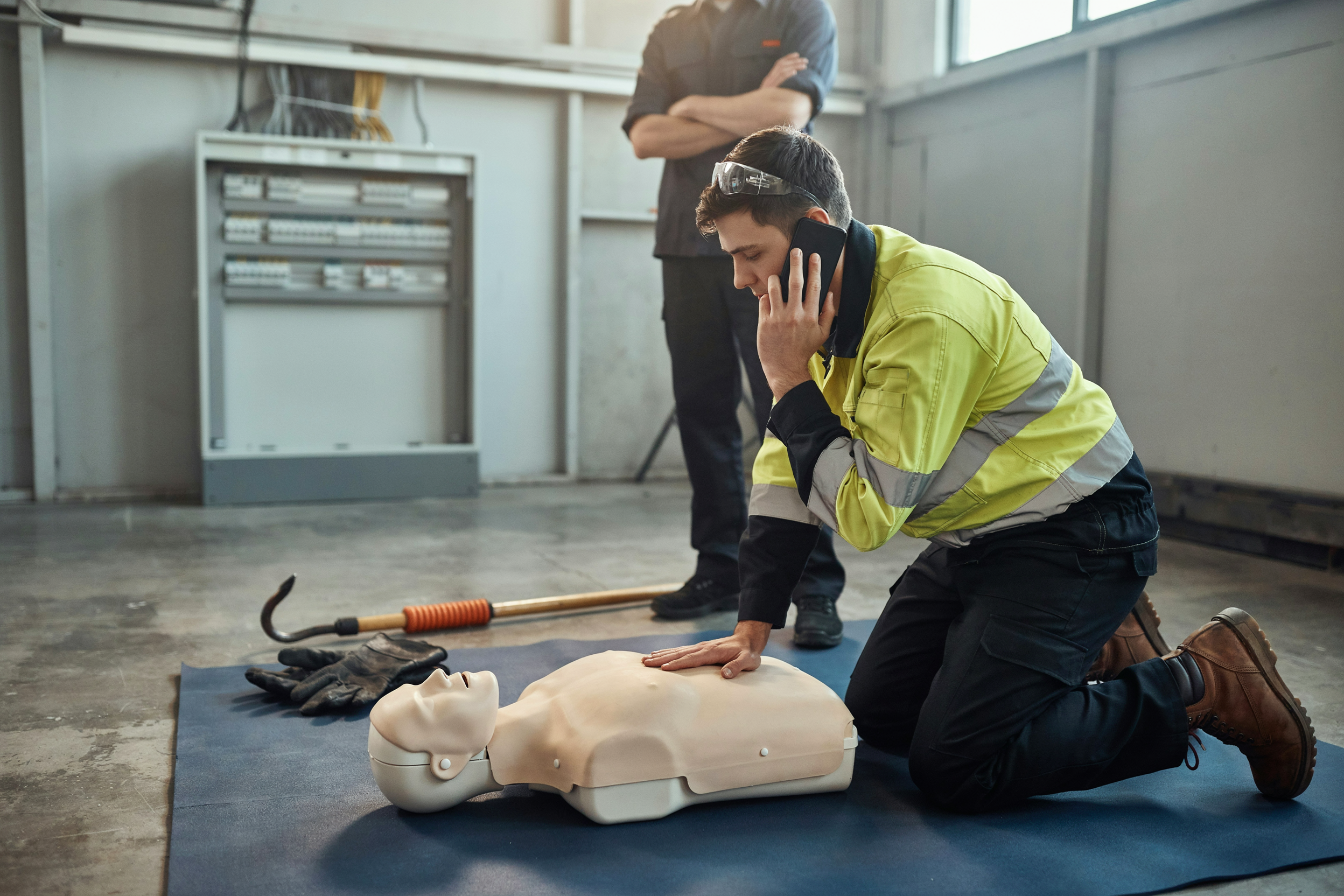
In Queensland, the requirement comes from the Electrical Safety Regulation 2013. In plain English, if you're doing electrical work, or working near it, you need to be trained in rescue and resuscitation, and you need to keep it current. The Electrical Safety Office, builders and insurers all look for it. Where it gets fuzzy is who else it catches.
Licensed electricians and contractors
This is the obvious one. If you're working on or near live LV gear, LVR is part of the deal. And if you're the contractor, it's on you twice. Once for your own ticket, and again for making sure everyone you send onto a site has theirs. An expired one on your crew is your problem at the gate, and a much bigger one if the ESO comes asking for training records after an incident.
Apprentices
Apprentices need it too. They're often the ones standing closest to the qualified sparky when something goes wrong, which makes them the person most likely to have to do the rescue. A first or second year who freezes because they've never touched a rescue hook isn't any use to anyone. Get them trained early.
Solar and battery installers
More sparkies are doing solar and home battery work than ever, and that brings mixed AC and DC setups into the picture. If that's a big chunk of your work, it's worth asking your trainer how the rescue principles apply on those installs.
Maintenance technicians and non-electrical workers
This is the group that gets missed. Maintenance techs, plant operators and people who work near switchboards without being licensed sparkies can still need LVR, depending on the work they do and what the site requires. If they're the person likely to be standing next to an electrician when something goes wrong, they're worth training.
For the official word on LVR in Queensland, check the Electrical Safety Office guidance and the Electrical Safety Regulation 2013.
Getting everyone qualified is one job. Keeping them current is the one that catches most contractors out.
Keeping Your Crew's LVR Qualification Current
How long the qualification stays current
The date that matters is the one on each person's statement of attainment. Builders go by that date, not by when you think the crew last did it.
Line the whole crew up on one renewal date
Here's the trap most small contractors fall into. Everyone did LVR at a different time, so someone's always about to expire. You end up tracking it in a spreadsheet you only open when you remember, usually after someone's already been turned away.
The fix is simple. Book everyone in together once, and from then on the whole crew renews on the same date. One booking, one session, one reminder.
What happens if a ticket lapses
Short version: a lapsed ticket usually means the person can't sign in on site until it's renewed, and you wear the lost day.
If getting the whole crew to a venue is the hard part, bring the training to them instead. Onsite sessions at your workshop or a client site mean nobody's driving across town before work.
Get Your Crew's Low Voltage Rescue Qualification Sorted
It all comes back to that one glance at the site gate. The bloke with the induction tablet isn't going to ask how many years you've been on the tools or how many boards you've worked on. He's matching a code. If your low voltage rescue qualification lines up, you're in and on the job. If it doesn't, you're back in the ute and the day's gone, for you and probably for whoever was relying on you being there.
But the code's only the paperwork. What sits behind it is six steps and three stages: prepare, rescue, hand over. Reading them off a screen is easy. Being able to do them with the gloves on and your heart going is a different thing altogether, and that's what the practical side of the unit is there for. Real kit, a proper switchboard mock-up, and a scenario that feels close enough to the real thing that it sticks.
Before any of that, get the basics lined up. CPR current, the WHS unit done, and a USI for everyone, especially the new starters. And when the new statements come through, take a quick look to check they show the current code. It's a small habit that saves a lot of phone calls from the car park.
LVR and CPR belong together, because rescue without CPR is only half the job. Getting someone off a live board means nothing if nobody starts compressions after. That goes for the licensed sparkies, the apprentices, the solar and battery installers, and the maintenance blokes who work near switchboards without a license. If they could be the one standing closest when it goes wrong, they need to be ready.
Then there's keeping it all current, which is where most contractors come unstuck. Staggered expiry dates and a spreadsheet you check when you remember is how someone gets turned away. Put the whole crew on one renewal date and it becomes one booking, once a year.
So here's what to do this week. Pull out your crew's statements and check the codes. Work out when everyone's due and line them up on one date. Then book a public LVR and CPR session or get an onsite quote so nobody's driving across town before work. The payoff is knowing that if your apprentice ever gets hit on a live board, the person next to him knows exactly what to do.