
LVR for Electrical Contractors: Compliance Guide
You're on site, one of your apprentices is about to open up a switchboard that's still live. Somebody yells out "hang on, is everyone's ticket current?" and for a second nobody answers. That silence is the worst few seconds of any leading hand's week, because you already know if something goes wrong here, it's not the head office who gets the phone call first. It's you.
That's the reality behind LVR for electrical contractors on the Gold Coast right now. Sites are getting busier, especially with the light rail work and the high-rise builds stacking up, and the margin for a lapsed ticket or a half-remembered training date keeps getting thinner. Most contractors aren't struggling with the concept of low voltage rescue certification, they're struggling with the logistics of it. Booking around a live site, tracking who's about to lapse across the crew, and losing a full billable day every time someone needs to get ticketed.
Here's what we're going to walk through: what LVR (UETDRRF004) actually covers, how often you really need to renew it, how to get your whole crew certified without gutting the week, and what separates a genuinely practical course from a box-ticking exercise.
What Is LVR Certification for Electricians?
LVR stands for low voltage rescue, and the unit code is UETDRRF004, "Perform Rescue from a Live Low Voltage Panel." In plain terms, it's the training that gets you and your crew qualified to safely respond if someone gets caught in contact with live low voltage equipment, isolate the danger, pull them clear, and start CPR if it's needed. It's built for anyone working near switchboards and live LV panels, not just the licensed electrician holding the ticket.
If you're weighing up what it actually gets you, here's the short version:
Who needs it: licensed electricians, apprentices, and anyone working near live low voltage equipment on site
What it covers: safe isolation, rescue technique, and CPR/AED response specific to an electrical incident
How it's different from HLTAID009/HLTAID011: general first aid and CPR courses don't cover live electrical rescue at all. LVR is the electrical-specific layer on top
That last point trips a lot of contractors up. Holding a current HLTAID011 doesn't cover you for a live panel rescue, and holding LVR doesn't replace general first aid. Sites increasingly want both.
What LVR Certification Actually Covers (UETDRRF004)
The Rescue Sequence: Isolating Power, Safe Approach, Casualty Removal
This is the part that actually matters when it counts. The training walks through the full sequence step by step, and it's worth knowing it cold rather than half-remembering it under pressure:
Recognize the danger, don't touch the casualty while the panel's still live
Isolate the power source safely, without putting yourself in the same position
Approach the casualty only once it's confirmed safe
Remove the casualty from danger using the correct technique
Assess and begin CPR if required
Every one of those steps has a wrong way to do it fast, and a right way that's barely any slower. That's the whole point of proper LVR training, it drills the right way until it's automatic, not something you're working out on the fly with someone's life on the line.
CPR and AED Response as Part of the Unit
LVR doesn't stop at getting someone clear of the panel. The unit includes CPR and AED response as a core part of the training, because in a live electrical incident, cardiac arrest is one of the outcomes you're training to respond to. This isn't a separate add-on bolted onto the course, it's built into the sequence.
How This Differs From General First Aid (HLTAID009/HLTAID011)
Worth being blunt about this one. General first aid and CPR courses (HLTAID009, HLTAID011) are good, solid courses, but they're not written for a live electrical scenario. They don't cover isolation procedures, they don't cover the specific risks of approaching a casualty still in contact with a live source. LVR is the course built specifically for that situation, and if your crew works anywhere near live LV panels, general first aid alone leaves a real gap.
Who Needs It and Why It's Non-Negotiable on Gold Coast Sites
Licensed Electricians, Apprentices, Anyone Near Live LV Equipment
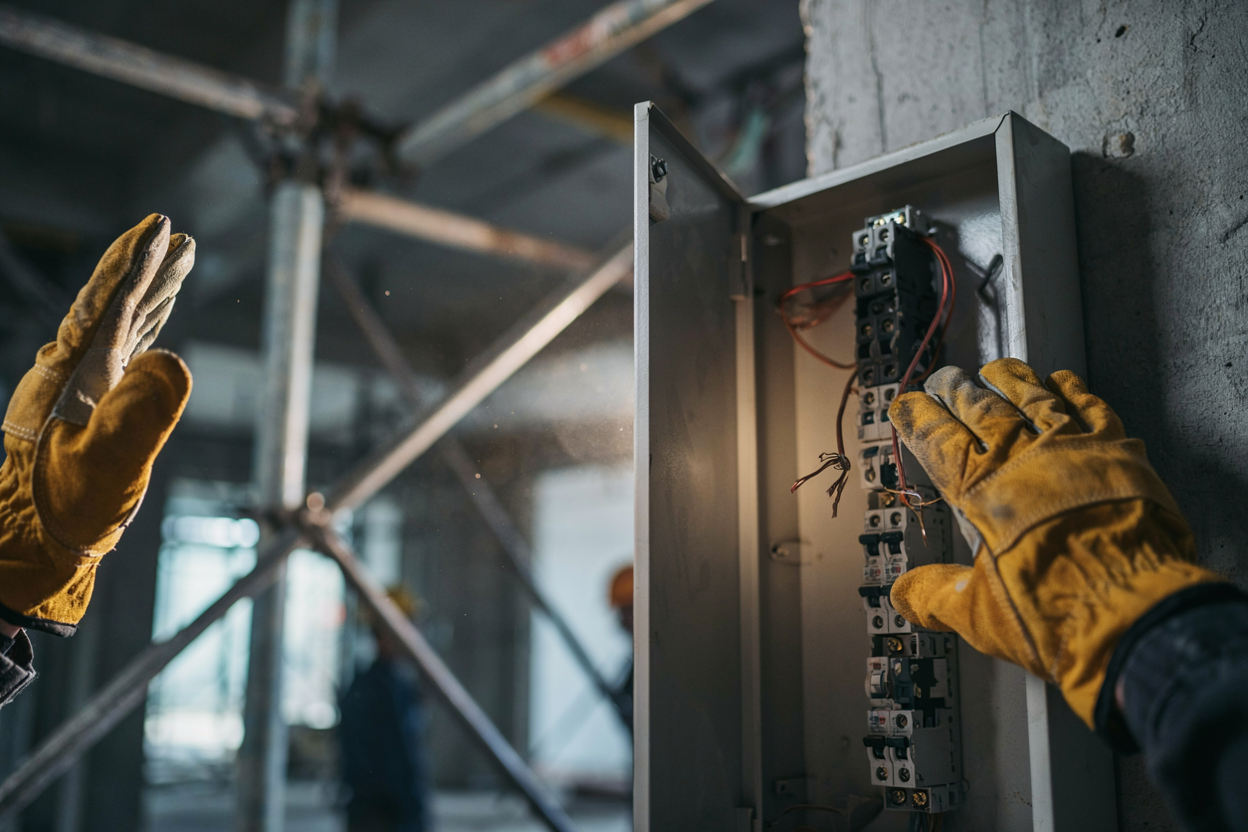
This one's not really up for debate on a modern Gold Coast site. It's not just the licensed electrician holding the ticket, it's every apprentice, every leading hand, anyone whose job puts them within reach of a live low voltage panel. If they're working near it, they need to be trained to respond to it.
Site Induction Reality: Expired Ticket, No Entry
Here's where most contractors get caught out. Site inductions on bigger jobs, especially the ones tied to the light rail expansion or high-rise builds, are checking certification currency at the gate now. An expired LVR ticket doesn't mean a warning or a note in a file, it means that person doesn't get on site. That's a crew member standing around instead of billing, and it's a scheduling headache that lands on you at the worst possible moment, usually the morning of a handover.
Personal Liability for Leading Hands and Supervisors
This is the part that keeps leading hands up at night, and fair enough. If something goes wrong on site and it turns out someone's ticket had lapsed, the questions don't start at head office. They start with whoever was supervising the crew. As a leading hand, protecting your crew's certification currency isn't paperwork, it's protecting your own name and your own license.
How Often You Need to Renew (And How to Stop Tracking It Manually)
Standard Renewal Cycle
Get your renewal cycle locked in and diarized, because it's the single easiest thing to lose track of across a crew with different start dates.
Why Tradies Track This "In Their Head", No Formal System
To be honest, most leading hands aren't running a spreadsheet for this. It's in their head, or it's a note stuck to the wall calendar at the depot, or it's "I think Macca's due sometime soon." That works fine right up until it doesn't, usually on the exact morning a site induction officer asks to see everyone's ticket and one of them's expired.
A Simpler System: Reminder Tracking as a Differentiator
This is genuinely one of the easier problems to fix. A provider who tracks renewal dates for your whole crew and reminds you before anything lapses takes this off your plate completely. No more relying on memory, no more scrambling the week a job comes up that needs proof of current tickets. You get a heads up with enough runway to book before it becomes a problem.
If you want to get ahead of this properly, this is exactly what a renewal tracker is built for, you punch in your crew's cert dates once and let the reminders do the chasing instead of you.
Getting Your Whole Crew Certified Without Losing a Full Day on Site
This is the objection every leading hand raises first, and fair enough, because time off the job is money out of the business.
Group and Crew Booking: One Transaction, Not Individual Chases
Instead of booking each crew member individually and chasing separate confirmations, a group booking gets your whole crew sorted in one transaction. One point of contact, one session, one less thing on your plate.
Flexible Scheduling Around Site Access
Jobs don't pause for training, so the session needs to work around the job, not the other way around. Whatever actually fits around your handover deadlines and access windows, that's the scheduling this should be built around.
What Practical Training Actually Looks Like
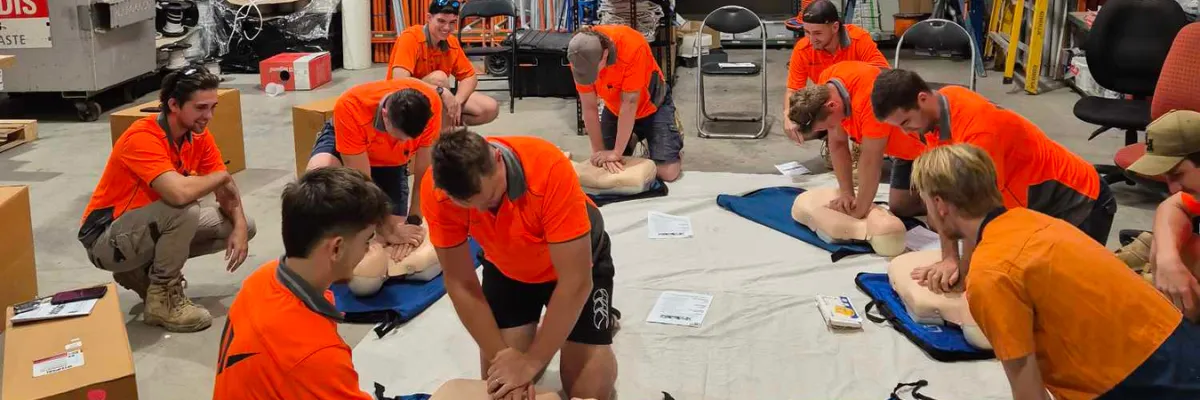
Here's where most contractors get caught out with the wrong provider. A classroom-only course with a slideshow and a multiple-choice quiz might tick the compliance box, but it doesn't build the muscle memory your crew actually needs on a live site. Look for training built around real switchboard and live-fault rescue simulation, hands-on scenarios that mirror what your crew will actually face, not theory disconnected from the job.
Reviews from other electrical contractors specifically are worth more here than a generic five-star badge. Anyone can leave a good review for a first aid course. What you want to know is whether other tradies rate the LVR training specifically.

Choosing an LVR Provider on the Gold Coast
ASQA/RTO Accreditation: What to Check
Before you book anyone in, check if the provider is actually ASQA registered and holds current RTO status for UETDRRF004. This isn't a box-tick for the sake of it, it's what makes the certificate worth anything on a site induction.
Trade-Specific Trainer Experience vs Generalist Providers
There's a real difference between a trainer who's spent a career around live electrical work and one running a generic first-aid-plus-add-on course. Ask who's actually delivering the session and what their background is. A trainer who's worked the trade understands the real risks your crew faces, not just the textbook version.
Availability Across the Gold Coast
Worth having a provider with sessions running across the areas your crew's actually working. Less travel time for your crew means less of that billable day lost getting to and from a venue.
While you're sorting LVR, it's worth checking whether your crew's first aid and CPR certification (HLTAID011/HLTAID009) is current too. Sites are increasingly expecting both, and bundling them together saves you booking twice.
Next Steps: Getting Your Crew Sorted
Three things to do this week, in order:
Check renewal dates across your whole crew, don't rely on memory or the wall calendar at the depot
Book your crew's session in one group booking, timed around your actual site access windows
Get your certificates sorted so you've got proof in hand before the next site induction asks for it
Want the renewal dates handled for you going forward instead of tracked in your head? The Crew LVR Renewal Tracker is a simple checklist that keeps every crew member's expiry date in one place, so the next lapse doesn't catch you the morning of a handover.
Conclusion
A live low voltage panel doesn't care how experienced your crew is or how many jobs you've knocked over without incident. It only takes one morning, one apprentice, one ticket that lapsed without anyone noticing, and the whole crew's day turns into something nobody wants to explain afterwards. That's the weight sitting behind LVR certification for electrical contractors, and it's why treating it as a scheduling afterthought rather than a genuine priority is the kind of decision that only looks fine until it isn't.
The good news is that most of what makes this feel hard isn't actually hard, it's just been managed badly for years. Tracking renewal dates in your head or on a wall calendar at the depot was never a system, it was a habit that worked until it didn't. Swapping that for something that reminds you before a ticket lapses turns this from a recurring stress into a five-minute task a few times a year.
The same goes for booking. Chasing crew members through separate bookings was never necessary, it was just the only option anyone offered. A single group booking, timed around an actual site access window instead of a training provider's convenience, gets the whole crew sorted without anyone losing a full day's pay or a full day's work.
What actually matters most, though, is what happens in the room. A certificate is only as good as the training behind it, and a slideshow with a multiple-choice quiz at the end teaches almost nothing about what it feels like to isolate a live panel under pressure. Real switchboard simulation and live-fault scenarios build the kind of instinct that shows up automatically when it's needed, not something half-remembered from a PowerPoint months earlier.
None of this is about ticking a box for an auditor. It's about a leading hand being able to sleep at night knowing that if something does go wrong on site, his crew knows exactly what to do in the first thirty seconds, and that those thirty seconds were drilled properly rather than assumed. That's the difference between a compliance formality and training that actually protects somebody's life.
Renewal dates, group bookings, and practical training all sound like logistics until the moment they're not. Sorting them out now, before a site induction officer flags a gap or a light rail deadline forces a rushed booking, is the kind of decision that costs almost nothing today and saves a genuinely bad week somewhere down the line.