
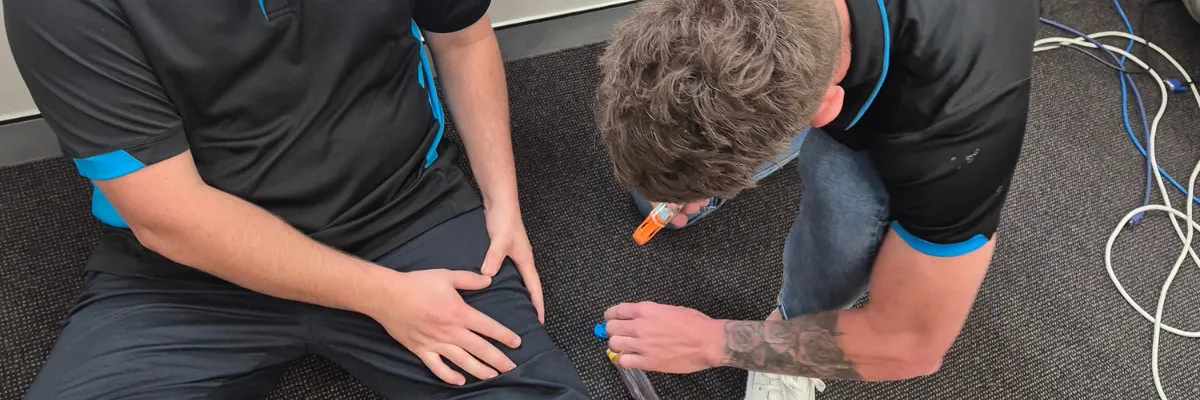
Low Voltage Rescue Competency: Are You Qualified?
Ask any leading hand on a Gold Coast site this question and watch what happens. "Is your crew still competent in low voltage rescue, or did they just do the course once and forget about it?" Half of them go quiet. Not because they're hiding something. Because they genuinely don't know.
That's the gap nobody talks about. A ticket sitting in a filing cabinet feels like proof. It isn't, not on its own. Low voltage rescue competency isn't a box you tick once and move on from, it's tied to a current statement of attainment under UETDRRF004, and it has a shelf life like anything else that matters on a live site.
With the light rail expansion and high-rise builds stacking up across the Gold Coast right now, more crews are working closer to live electrical hazards than ever before. So the real question isn't whether your team did the course at some point. It's whether they could actually prove it, today, if someone asked.
This one walks through what competency actually means, how to check where your crew stands, how often it needs renewing, and what happens if a ticket quietly lapses without anyone noticing.
What Is Low Voltage Rescue Competency?
Low voltage rescue competency means holding a current statement of attainment in UETDRRF004, plus actually being able to perform the rescue sequence under pressure, not just recognize it on a slide. A certificate proves you sat the course. Competency proves you'd still get it right on a bad day.
What it actually covers, at a minimum:
Identifying and isolating a live low voltage hazard before anyone goes near the casualty
Removing the casualty safely using insulated rescue equipment
Performing CPR and first aid immediately after the rescue
Reporting the incident and securing the site properly afterward
The general standard is a 12-month refresher, though it's worth checking this against your specific site or contract requirements, since some principal contractors set their own timeframes.
What "Low Voltage Rescue Competency" Actually Means
The Unit of Competency Behind the Ticket
UETDRRF004 is the unit sitting behind every valid low voltage rescue ticket. It's not just a course code stamped on a certificate, it's the actual national standard that defines what you need to know and do before anyone can call you competent. If a training provider isn't issuing against this unit, question what you're actually getting.
Competency vs. Having a Certificate
Here's where a lot of crews get caught out. A certificate on the wall says you attended. Competency says you'd actually perform under pressure, with a real casualty, in a real switchboard, with everyone watching to see if you freeze or if you move.
This is the difference between box-ticking and the real thing. A classroom-only session that never puts you through a proper live-fault rescue scenario might tick a compliance box, but it won't tell you what you'd actually do when it counts. That gap is exactly what gets exposed on the worst possible day, not in a classroom.
If your crew's last session was slides and a quiz, it might be worth booking a proper hands-on refresher that actually simulates the rescue.
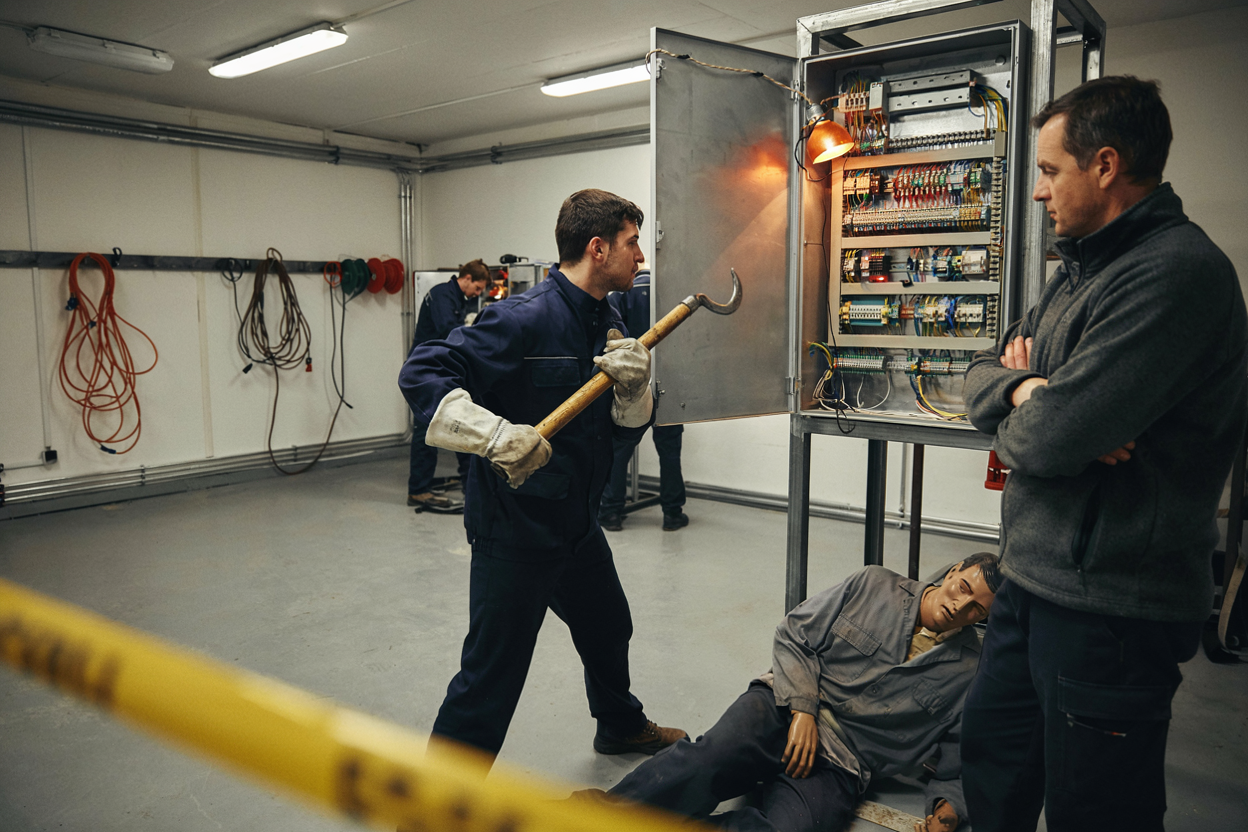
The Skills That Make Up LVR Competency
There are four skills that make up the actual rescue sequence. Miss one and the whole thing falls apart, because each step depends on the one before it.
Hazard Identification and Safe Isolation
Before anyone touches a casualty, the hazard has to be identified and isolated. This sounds obvious written down. Under pressure, with someone down and seconds ticking, it's the step people rush past, and it's the one that gets a second person hurt.
Casualty Removal Using Insulated Rescue Equipment
Once the area's safe, the casualty gets removed using proper insulated rescue equipment, not whatever's closest to hand. Knowing where that equipment is kept and how to use it without hesitating is part of actual competency, not a footnote.
CPR and First Aid Immediately Post-Rescue
The moment the casualty is clear, first aid and CPR start straight away. This is where low voltage rescue training and first aid training overlap, and it's exactly why the two are usually taught as a connected skill set rather than separate boxes to tick.
Incident Reporting and Site Security
Last step, and the one people forget under adrenaline: the site gets secured and the incident gets reported properly. Skipping this doesn't just create a paperwork headache, it can leave a live hazard unaddressed for the next person who walks past.
[4-step rescue process graphic: isolate → remove → resuscitate → report]
For the official regulatory framing behind managing electrical risks on site, the Safe Work Australia Model Code of Practice is worth a read if you want the source document rather than a summary.
How Long Does LVR Competency Last?
The 12-Month Refresher Standard and Why It Exists
Low voltage rescue competency runs on a 12-month refresher cycle. Not because RTOs like paperwork, but because rescue skills fade fast when they're not practiced. A crew member who nailed the assessment a year ago might genuinely freeze today if they haven't touched an insulated rescue kit since.
Queensland Electrical Safety Act Context
Queensland's Electrical Safety Act sets the broader legal backdrop for this, and it's worth checking the current requirements against your specific site or contract rather than assuming last year's timeframe still applies everywhere.
The Quiet Lapse Problem
Here's the part that actually catches leading hands out. Tickets don't lapse with a bang, they lapse quietly. No alarm goes off. No email lands in the inbox saying "hey, Dave's ticket expired three weeks ago." It just sits there, expired, until someone asks for proof and there isn't any.
If you've got a crew and no real system for tracking who's current and who isn't, get in touch and we'll check your team's status for you.
How to Check If Your Crew Is Still Compliant
What to Look for on a Statement of Attainment
A valid statement of attainment has a few things on it that actually matter, not just a logo and a signature:
The issue date (this is what tells you when the 12-month clock started)
The unit code, UETDRRF004, not an old or superseded code
The RTO number issuing it, so you know it's a real accredited provider
Why "Everyone Did It Together Last Year" Isn't a Safe Assumption
This one trips up more leading hands than anything else. A crew doesn't all start on the same day and stay in sync forever. Someone joined three months after the group session. Someone was on leave and did a makeup date. Someone got transferred in from another crew with a ticket that expires on a completely different cycle.
Assuming the whole crew is current because "we all did it together" is exactly how a lapse slips through unnoticed. Everyone's dates drift apart eventually, and the only way to know for sure is to actually check, not remember.
Not sure when your crew's tickets expire? Get in touch and we'll check for you, rather than trying to keep it all straight in your head or on a wall calendar.

What Happens If a Ticket Lapses on Site
WHS/Audit Exposure for the Leading Hand Personally
This is the part that keeps leading hands up at night, and for good reason. If something goes wrong on site and someone's ticket has lapsed, the questions don't go to head office first. They come to the leading hand. That's on me, not head office, and every leading hand running a crew knows it, even if they don't say it out loud.
A WHS audit doesn't care that the lapse was an oversight or that everyone meant to book the refresher last month. It cares whether the paperwork was current on the day. And if it wasn't, that's a personal exposure, not just a company one.
Consequence Framing Tied to the Construction Boom
With the light rail expansion and high-rise residential builds ramping up across the Gold Coast, sites are only getting busier and more electrically live. More crews, more live switchboards, more moving parts, and less room for a quiet lapse to slide through unnoticed.
Here's a scenario worth sitting with, purely illustrative, not a real incident: a crew has been together a long while, and most of them are current. One transferred in from another site a while back and nobody checked his dates against the rest of the group. If something happens on his shift and he's the only one there, the fact that everyone else had valid tickets doesn't help him, or the leading hand who's now explaining the gap to an auditor.
That's the scenario nobody wants to be in. Not because the training is hard to organize, but because nobody thought to check.
Getting Your Crew Competent Without Losing a Day on Site
Group/Crew Booking as the Practical Fix
Pulling an entire crew off a live site for a full day isn't really an option for most leading hands, and it shouldn't have to be. A group or crew booking handled in one transaction means one point of contact, one schedule to coordinate, instead of chasing five separate bookings around five separate shifts.
Session Formats That Fit Live Site Schedules
Early morning, evening, or weekend sessions exist for exactly this reason, so training fits around handover deadlines and site access windows instead of the other way round. This directly answers the objection every leading hand has before they even ask it out loud: I can't afford to pull my whole crew off site for a day. You shouldn't have to.
Book your crew's LVR training at a time that actually works around your site, not despite it.
Getting a crew's low voltage rescue tickets sorted shouldn't mean a full lost day, a spreadsheet nobody updates, or a quiet lapse that only gets noticed when it's too late. Competency under UETDRRF004 has a shelf life, the 12-month cycle exists for a real reason, and checking a statement of attainment properly takes a few minutes, not a guessing game based on who remembers doing the course together.
The Gold Coast's light rail and high-rise boom isn't slowing down, and neither is the pressure on crews working closer to live electrical hazards than ever. Knowing exactly where your team stands, rather than assuming everyone's covered, is the difference between heading into an audit with confidence and explaining a gap after the fact.