Is First Aid Training Compulsory at Work? Answered
Most Queensland business owners find out the hard way. A WorkSafe inspector turns up, or someone actually collapses at work and there's nobody in the room who knows what to do about it, and that's when the question finally gets asked properly: is first aid training compulsory at work? Up until that moment, a lot of employers just assumed it was a "nice to have," filed somewhere between the fruit bowl in the lunchroom and the office Christmas party.
It's not optional. Under the Work Health and Safety Regulation, every Queensland employer has a legal duty to provide adequate first aid arrangements for their workplace, and that includes trained people on site, not just a kit bolted to the wall. HLTAID011 is the course that satisfies this requirement for most general workplaces, and it's worth understanding properly before an audit or an incident forces the issue.
This one covers what the law actually says, who needs to be trained, how many first aiders your workplace needs, and how to get compliant without the whole thing turning into a headache.
The Quick Answer
Yes, first aid training is compulsory at work in Queensland, but it's compulsory for the business to provide, not necessarily for every single individual to hold personally. Under the WHS Regulation, an employer has a duty to make sure there's adequate first aid arrangements in place for their workplace, which usually means a minimum number of staff trained and current, plus a properly stocked kit. Exactly how many people that means depends on your workplace size, risk classification, and how far you sit from emergency medical help.
A few things that trigger the obligation, no matter what industry you're in:
You've got a fixed workplace, regardless of how small it is
Your headcount goes over the low-risk threshold for your industry
Your work falls into a higher-risk category like trades, warehousing, or manufacturing
You're not within reasonable reach of a hospital or medical center
If any of those apply to you, and honestly most Queensland workplaces tick at least one box, you've got an obligation to sort out.
What the Law Actually Says About First Aid at Work
The WHS Act and Regulation, the employer's duty of care
The Work Health and Safety Act 2011 (Qld) sets out the broad duty, and the WHS Regulation 2011 (Qld) gets specific about what that looks like in practice. As a person conducting a business or undertaking, you're responsible for making sure workers and anyone else at your workplace have access to first aid equipment, and to people who actually know how to use it.
This isn't a suggestion buried in some guidance document nobody reads. It's a legislated duty of care, and Safe Work Australia's Code of Practice on First Aid in the Workplace spells out how employers are expected to meet it.
What "adequate first aid arrangements" means in practice
A lot of business owners get tripped up here, because "adequate" isn't a single number written into the law. It's a judgement call based on your specific workplace, and it usually comes down to three things working together:
Enough trained first aiders for your headcount and shift patterns
A first aid kit that's stocked properly and actually accessible, not locked in a cupboard nobody has the key to
A realistic plan for getting someone urgent medical help if things go beyond what first aid can manage
A small cafe looks very different to a busy warehouse running multiple shifts, and the law expects your arrangements to reflect that difference.
Compulsory for the business vs compulsory for the individual
This is the bit that causes most of the confusion, so it's worth being blunt about it. The business has the legal obligation. Individual workers don't automatically need a first aid certificate just because they turn up to work each day. What the law requires is that enough of the right people are trained, so the obligation sits with the employer to organize and maintain that coverage, not with every single staff member to hold a certificate off their own back.
That said, plenty of individual workers end up needing HLTAID011 anyway, either because their employer's nominated them as a first aid officer, or because their industry has its own separate registration requirement on top of the general WHS duty.

How Many First Aid Officers Does a Queensland Workplace Need?
Low-risk vs high-risk workplace classifications
Not every workplace is treated the same under the WHS Regulation, and that's actually fair enough when you think about it. An office full of people typing away at desks carries a very different risk profile to a construction site or a commercial kitchen. Safe Work Australia's Code of Practice splits workplaces into low-risk and high-risk categories, and which one you fall into changes how many trained first aiders you need on hand.
Low-risk generally covers office environments, retail, and hospitality where the chance of a serious injury is lower. High-risk covers things like construction, manufacturing, warehousing, and anywhere with heavy machinery, working at heights, or exposure to hazardous substances.
How the numbers scale
As a general rule, the bigger your team and the riskier your industry, the more trained people you need, spread across your shifts rather than concentrated in one person who happens to be rostered on the same day every week.
What counts as "reasonable access" to emergency services
Distance matters too. A workplace close to a major hospital carries a different risk calculation to one that's genuinely isolated from medical care. The further you are from help, the more trained people and better-equipped kits you're expected to have on hand to cover that gap.
If your team is spread across a few different sites, it's worth working out these numbers separately for each one rather than treating the whole business as a single headcount, since risk and access can vary from site to site.
Not sure exactly how many first aiders that puts you at? That's genuinely one of the more common questions we get asked, and it's worth a quick chat rather than guessing.
Which Industries and Roles Make It Compulsory
Fitness and gym staff
If you work in the fitness industry in Queensland, first aid isn't just a WHS box to tick, it's tied directly to your professional registration. Fitness Australia requires HLTAID011 as part of registering as an instructor or trainer, which means it's compulsory in a much more personal sense than the general workplace duty. No current certificate, no registration, and no registration usually means no work.
Childcare and education
Childcare and education settings sit in their own category entirely, driven by ACECQA requirements rather than the general WHS framework. The units required here are distinct from HLTAID011, and it's a genuinely different compliance pathway with its own rules around anaphylaxis and asthma management specifically. If you're in childcare, that's worth looking into separately rather than assuming HLTAID011 covers you off.
Construction and trades
Construction and trades workplaces get classified as higher-risk under the WHS Regulation, which means the ratio of trained first aiders to headcount is stricter than a standard office environment. Between working at heights, heavy equipment, and the general physical nature of the work, it makes sense that the law expects more coverage here, and most sites end up needing multiple people trained rather than relying on one nominated officer.
Hospitality, retail, and office environments
Here's where a lot of business owners assume they're exempt, and they're not. Hospitality, retail, and office environments are generally classified as lower-risk, but lower-risk doesn't mean no risk. Kitchens involve burns and cuts, retail involves manual handling and slips, and offices involve everything from choking incidents in the lunchroom to a customer having a medical episode on the floor. The obligation still applies, just against a lower baseline.
Whatever industry you're in, nobody gets a free pass just because their workplace feels low-key. The classification changes the numbers, not whether the duty exists.
HLTAID011, The Course That Satisfies Most Workplace Requirements
What HLTAID011 covers
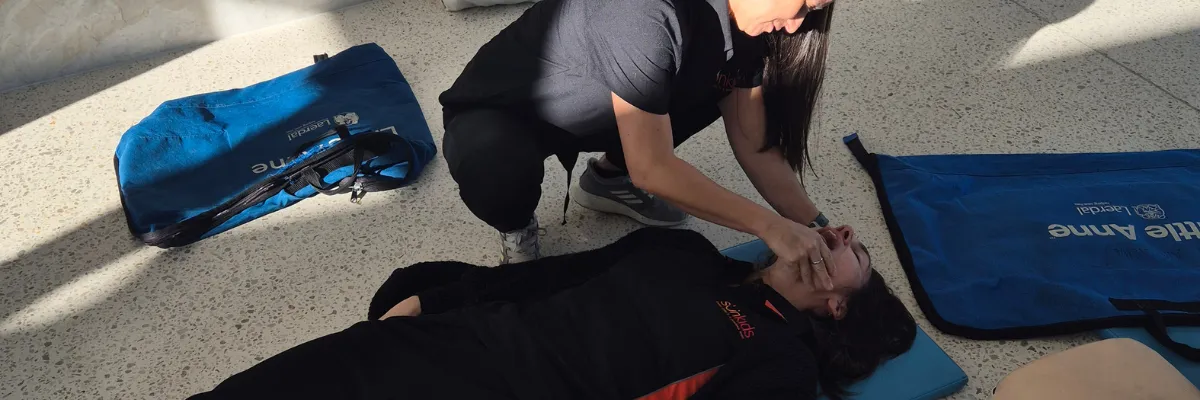
HLTAID011 is built around the practical stuff you'd actually need in a real emergency at work. It covers CPR, basic life support, wound and injury management, and how to respond to asthma and anaphylaxis, which between them account for the vast majority of workplace first aid incidents. It's not a course built around rare, dramatic scenarios, it's built around the things that genuinely happen in offices, warehouses, kitchens, and worksites.
Why it's the default general workplace minimum
There's a reason almost every Queensland employer, insurer, and industry body points to this exact course code. HLTAID011 was designed as the broad, general workplace standard, which means it satisfies the WHS obligation for the vast majority of businesses without needing a more specialized, industry-specific unit on top of it. If your workplace isn't childcare, education, or a specialized clinical setting, HLTAID011 is almost certainly the course you're after.
HLTAID011 vs other codes
This is where a lot of confusion creeps in, so it's worth clearing up plainly.
Course Code | What It Is |
HLTAID011 | Full "Provide First Aid" course, general workplace standard |
HLTAID009 | CPR-only component, included inside HLTAID011 |
HLTAID010 | Basic emergency life support, included inside HLTAID011 |
HLTAID003 | Superseded code, replaced by HLTAID011 |
HLTAID011 actually contains HLTAID009 and HLTAID010 as component units, so it's not a competing option, it's the fuller course that includes them both. If you're still holding an old HLTAID003 certificate, that's the superseded version, and HLTAID011 is what replaced it.
Getting your team booked into HLTAID011 is the most direct way to satisfy the general workplace requirement in one hit, whether that's one nominated first aid officer or a whole group needing their certificates sorted at once.

What Happens If a Workplace Isn't Compliant
WorkSafe Queensland enforcement and penalties
WorkSafe Queensland does actually enforce this, and it's not just theoretical. Inspections happen, sometimes routine and sometimes triggered by a complaint or an incident, and a workplace found without adequate first aid arrangements is in breach of the WHS Regulation, with real penalties attached. Non-compliance is treated seriously, not as a paperwork technicality.
Insurance and liability exposure
Beyond WorkSafe itself, there's the insurance side of things. If an incident happens and it comes out afterwards that adequate first aid arrangements weren't in place, that gap can affect how a claim is handled and where liability lands. Easy to overlook when things are running smoothly, and hard to undo once something's already gone wrong.
Why "we didn't know" isn't a valid defense
This one comes up a lot, so it's worth being straight about it. The duty sits with the employer regardless of whether anyone told them about it directly. Not knowing the requirement existed doesn't change the obligation, and it's not treated as a valid defense if WorkSafe comes knocking, the same way ignorance doesn't excuse missed tax or employment law obligations.
None of this is about scaring anyone into booking a course. It's simply the reality of what's expected, and a genuinely easy gap to close once you know what you're looking for.
How to Get Your Workplace Compliant Fast
What same-day certification means for compliance records
Same-day certification isn't just a nice convenience, it actually matters for your compliance paperwork. The moment your team finishes the course, you've got a Statement of Attainment in hand to file straight away, rather than chasing it up later or leaving a gap on your records. If WorkSafe or your insurer ever asks for proof, there's no scramble to find it.
Renewal tracking
HLTAID011 does have a validity period, but there's a catch worth knowing upfront: the CPR component inside it needs refreshing more often than the rest of the certificate. It's easy to lose track of this if nobody's specifically responsible for it, so it's worth setting a simple reminder, whatever your business already uses for other compliance dates.
Getting compliant doesn't need to be complicated. Confirm where your workplace actually sits against the requirements, book your team into HLTAID011, and reach out to us directly to get started.
So, is first aid training compulsory at work in Queensland? Yes, and it comes down to a legislated duty of care rather than a suggestion buried in a handbook somewhere. Every business has an obligation to put adequate first aid arrangements in place, and that means trained people on site, not just a kit gathering dust in a cupboard nobody remembers the code for.
What counts as adequate isn't a fixed number pulled out of thin air. It depends on your headcount, your industry's risk classification, and how far you sit from emergency medical help. A quiet office looks nothing like a busy warehouse, and the law expects your arrangements to reflect that difference.
The confusion usually isn't about whether the obligation exists, it's about who it actually sits with. The duty belongs to the business, not to every individual worker walking through the door each morning. That said, plenty of people end up needing a certificate anyway, whether they've been nominated as a first aid officer or their industry carries its own separate registration requirement on top of the general rule.
Getting it wrong isn't just a paperwork problem either. WorkSafe Queensland does enforce this, insurance claims can be affected when the gap comes to light after an incident, and not knowing the requirement existed has never been treated as a fair excuse. None of that needs to feel like a threat though, it's simply the reality worth understanding properly.
The good news is that closing the gap is one of the easier compliance problems to solve. A group booking gets a whole team certified at once, a same-day certificate lands straight in the compliance file, and a simple reminder for the CPR refresh keeps everything current. Sort it once, sort it properly, and it stops being something that keeps a business owner up at night.