Is CPR Course Worth It? 7 Reasons the Answer Is Yes
A Brisbane mum at a swimming carnival. Her neighbour's husband collapses on the grass beside the pool. Nobody moves. For a few seconds, everyone just stands there — frozen, phones half-raised, waiting for someone else to step in.
She steps in. Because she'd done her CPR course. That decision is the reason he's alive.
So — is a CPR course worth it? It's a fair question. You're busy. And honestly, how likely is it that you'll ever need it?
Here's the thing though. The question isn't really whether a cardiac emergency is going to happen to you. It's whether you'll be ready when one happens near you. And in a city like Brisbane — with backyard pools, outdoor carnivals, busy worksites, and a population growing faster than the infrastructure around it — the odds are a lot closer to home than most people realise.
Below are 7 concrete reasons a CPR course is worth it — covering life-saving statistics, HLTAID009 compliance requirements, and career benefits. Whether you're a parent, a support worker, a gym instructor, or simply someone who wants to be the person who acts rather than the person who waits — this one's for you.
Is a CPR Course Worth It? Here's the Short Answer
Yes. Full stop.
It saves lives. Bystander CPR can double or triple survival rates from cardiac arrest
It's completed in a single session. HLTAID009 includes theory, practical skills, and assessment all in one go
It's nationally recognized. Certificate valid across all Australian states and territories
It's required for many jobs. Childcare, aged care, NDIS, construction, and fitness roles all require it
Skills fade without practice. Annual renewal keeps your technique current with ARC guidelines
The value is real. A nationally recognised certificate that could save a life is worth the investment
Queensland makes it necessary. Backyard pools, Moreton Bay, outdoor events — cardiac and drowning emergencies happen here
Reason 1 | It Could Save Someone You Love
What Happens in the Minutes After Cardiac Arrest
When someone's heart stops, the clock starts immediately. Brain cells begin dying within minutes without oxygen-rich blood circulating. After 10 minutes without intervention, the chances of meaningful recovery drop to near zero.
What makes this harder to sit with is where cardiac arrests actually happen. Most of them — somewhere around 70% — occur at home. Not at a hospital. Not near a defibrillator. At home, at a backyard barbecue, at a school oval, at the shops. The person who collapses is almost never surrounded by paramedics. They're surrounded by people like you.
There's always a gap between collapse and professional help arriving. That gap is the window where bystander CPR either happens or it doesn't.
Why Bystander Action Changes the Outcome
The Australian Resuscitation Council's chain of survival has four links: recognition and calling 000, early bystander CPR, early defibrillation, and advanced care. You are the first link. And in cardiac arrest, the first link is the one that matters most.
Without bystander CPR, survival from out-of-hospital cardiac arrest sits below 10%. With bystander CPR started immediately, that figure can climb to 30% or higher. That's not a marginal improvement — that's the difference between a funeral and a recovery.
The ambulance is not the first responder. You are.
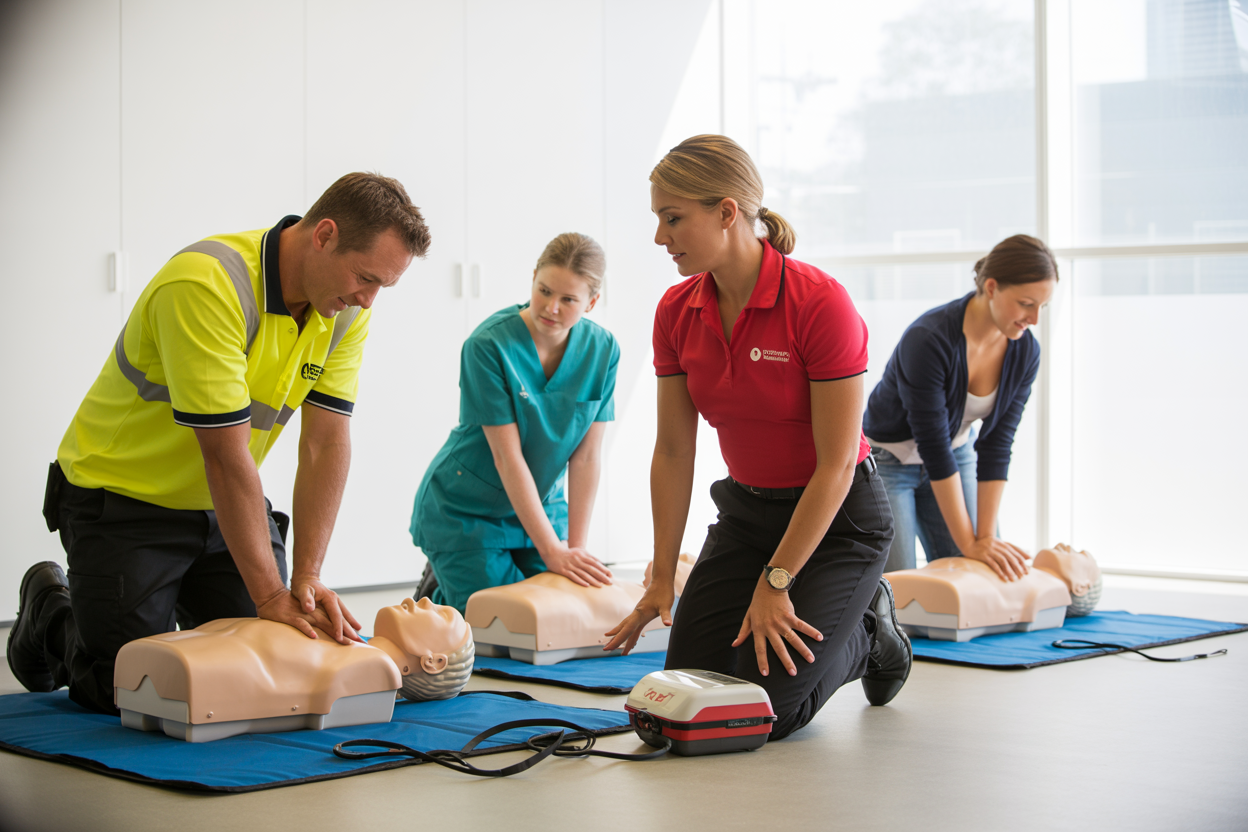
Stories like this happen across Brisbane every year. A parent at a school swimming carnival. A support worker on a home visit. A gym instructor whose client goes down mid-session. An ordinary person who did their CPR course and, when the moment came, didn't freeze — because they'd done it before, on a mannequin, with a trainer beside them. That muscle memory is exactly what CPR training builds.
Reason 2 | It's Easier to Fit In Than You Think
What the HLTAID009 Course Actually Covers
One of the most common reasons people put off CPR training is the assumption that it's a massive time commitment. It's not. The HLTAID009 qualification — Perform CPR — is completed in a single session. That's it.
Here's roughly how the course breaks down:
Theory component — understanding cardiac arrest, the chain of survival, how to recognise an emergency, and when to act
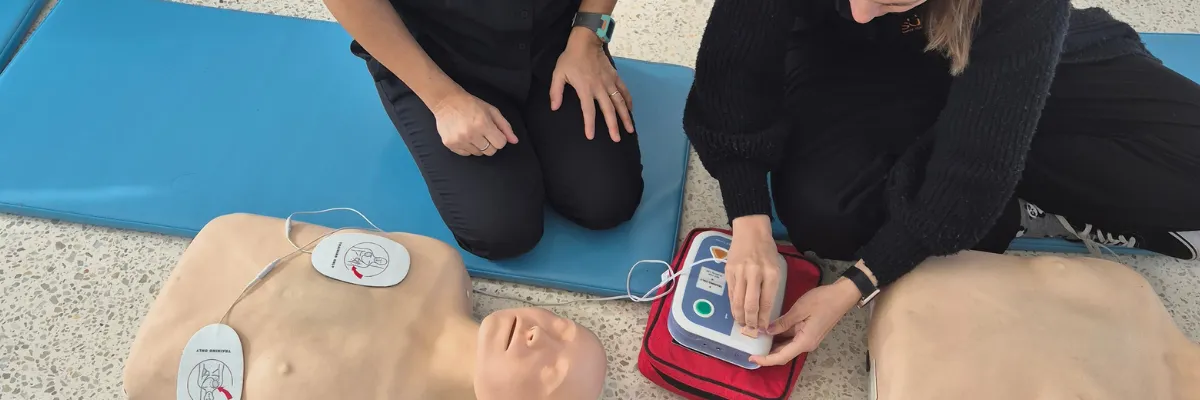
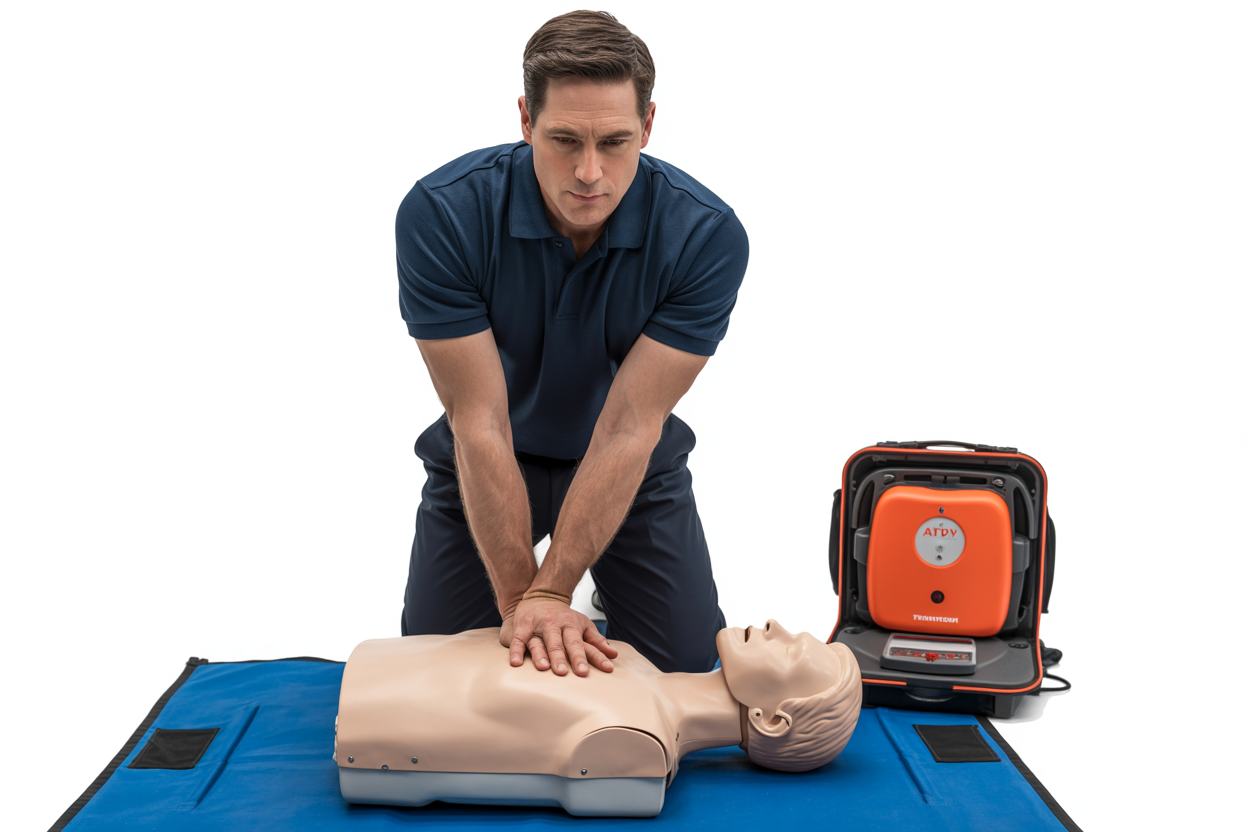
Practical skills — hands-on compression technique, rescue breathing, AED familiarisation, and infant/child CPR
Assessment — demonstrated competency on a mannequin with your trainer observing; no written exam, no trick questions
Nothing in that list should feel intimidating. The practical assessment isn't a performance — it's a check that you can do the technique correctly. Good trainers know that most students walk in nervous and walk out confident. That's the whole point.
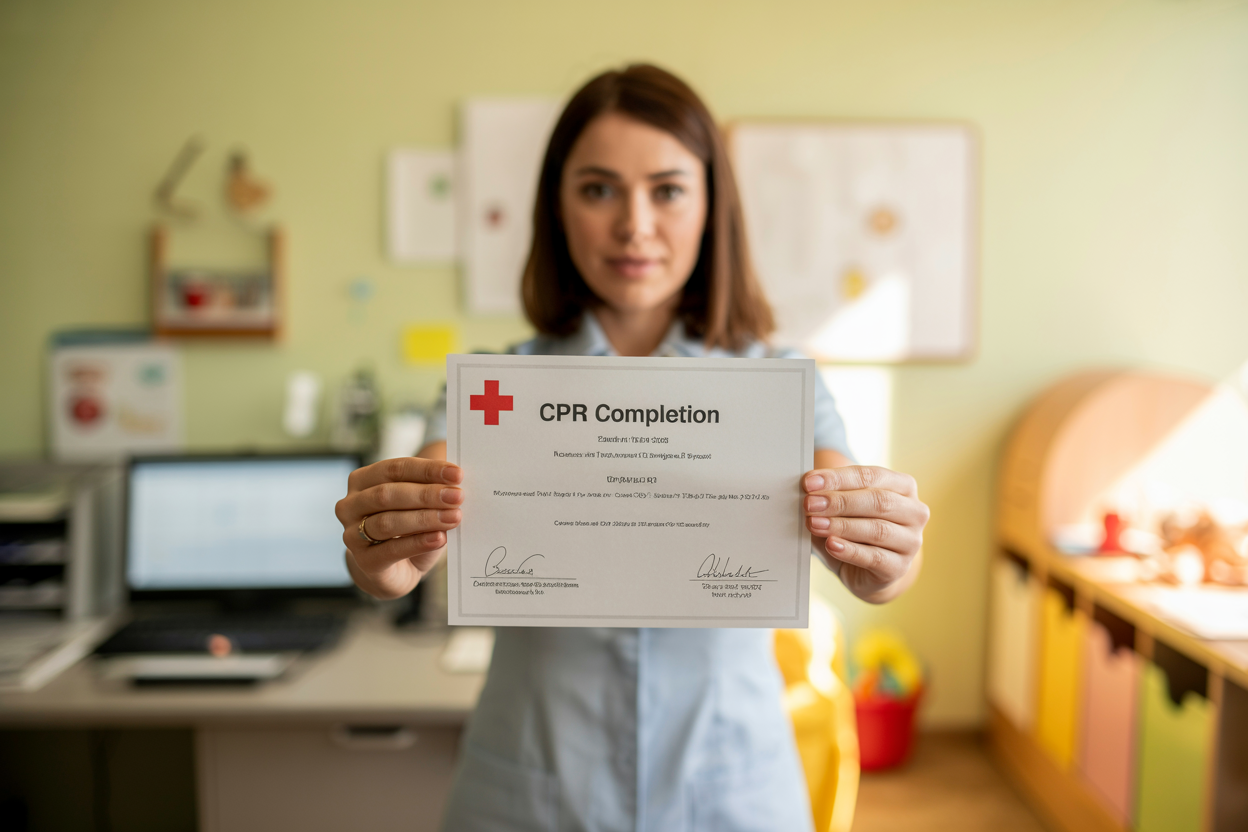
Your certificate is issued the same day. You don't wait weeks for paperwork. You leave with proof of your HLTAID009 qualification in hand.
Flexible CPR Sessions That Fit Around Real Life
The scheduling objection is real and it's valid. The answer is yes — if you're choosing a provider that runs weekend and flexible sessions.
Weekend morning courses are the most popular format for a reason. Some providers also offer early morning weekday slots for shift workers and blended delivery options — where you complete a short online pre-learning component before attending the practical session in person.
If a provider only runs standard weekday business hours, keep looking. Flexible availability isn't a bonus feature — it's a basic expectation for anyone with a job or a family.
Reason 3 | Your Certificate Is Nationally Recognized
What HLTAID009 Means and Why the Course Code Matters
Not all CPR certificates are equal. This is something a lot of people don't realise until they submit one to an employer or a registration body and it comes back rejected.
HLTAID009 — Perform CPR — is the nationally recognised unit of competency under the Australian Skills Quality Authority (ASQA) framework. It's the specific course code that employers, ACECQA, NDIS providers, WorkSafe, and most industry bodies are looking for when they ask for a current CPR certificate. It's not a brand name. It's not a provider's internal certification. It's a standardised qualification that means the same thing whether you completed it in Brisbane, Cairns, or Perth.
The problem with cheap online-only CPR courses — and there are a lot of them — is that they don't satisfy the hands-on practical requirement. ARC guidelines are clear that CPR competency requires demonstrated physical skill, not just a multiple choice quiz. An online-only certificate won't be accepted by childcare licensing bodies, NDIS quality auditors, or most Queensland employers in regulated industries.
How to Check If Your CPR Provider Is a Registered RTO
Before you book, check two things. Look up their RTO number on training.gov.au — every legitimate Registered Training Organisation in Australia is listed there. Then confirm that HLTAID009 is listed as a qualification they're approved to deliver. If either isn't immediately findable on their website, that's a red flag.
A legitimate CPR certificate should clearly show:
Your RTO's registered name and RTO number
The unit code: HLTAID009
Your full name as the participant
The date of issue
Choosing an ASQA-registered provider isn't just about compliance — it's about knowing the qualification you walk away with will actually be accepted when you need it to be.
Reason 4 | It's a Workplace and Career Requirement for Thousands of Jobs
Industries That Require HLTAID009 in Queensland
For a lot of workers, the question of whether a CPR course is worth it isn't really a question at all — it's a condition of employment. HLTAID009 is a mandatory requirement across a wide range of industries in Queensland, and the list is longer than most people expect.
The NDIS segment in particular has grown significantly in recent years. Support workers often don't realise that a current HLTAID009 certificate is a non-negotiable employment condition — not something you get around to after you start.
What Happens If Your Certificate Lapses at Work
An expired CPR certificate isn't just a paperwork problem. Depending on your industry, it can mean being stood down from client-facing duties until you're recertified, failing a workplace compliance audit, or having a job application knocked back at the final stage. Some employers carry liability exposure if a staff member without a current certificate is involved in an emergency incident.
That said, the more useful way to think about it is this — CPR certification doesn't just keep doors open, it opens new ones. Room leader roles in childcare. Higher-care client approvals in NDIS. Insurance eligibility for independent fitness professionals. Career progression in aged care. A current HLTAID009 certificate is a small credential that carries real weight across a lot of Queensland workplaces.
Reason 5 | CPR Skills Fade Faster Than You Think
What the Research Says About CPR Skill Retention
Here's something most people don't know — and it's a bit uncomfortable once you do. CPR motor skills start degrading within months of training. Not years. Months.
Research published in resuscitation science literature consistently shows that the physical mechanics of CPR — compression rate, compression depth, chest recoil, hand positioning — deteriorate significantly within months of initial training. The knowledge of what to do tends to hang around longer. The muscle memory of actually doing it correctly does not.
What that means in practice is that someone who did a CPR course a few years ago and hasn't refreshed since is likely operating on recall that's both rusty and potentially outdated. In a real emergency, broad strokes aren't enough. Compression depth matters. Rate matters. Full chest recoil matters. That's exactly why the Australian Resuscitation Council recommends annual renewal — the evidence on skill retention supports it.
What's Changed in CPR Guidelines — ARC Updates You Need to Know
If you did your CPR training a few years ago, there's a reasonable chance some of what you learned has been updated. ARC and ANZCOR guidelines are reviewed on an ongoing basis as new resuscitation research comes through, and the current specifications are worth knowing.
Current ARC guidelines for adult CPR:
Compression to breath ratio: 30 compressions to 2 breaths
Compression rate: 100–120 per minute
Compression depth: 5–6cm
Chest recoil: Full recoil between every compression — don't lean on the chest
CPR-only protocol: If you're unwilling or unable to give rescue breaths, continuous compressions alone are better than nothing
The version of CPR you learned previously may not reflect current best practice. Annual renewal isn't a repeat of what you already know — it's an upgrade.
If your certificate has lapsed or you're not confident your technique is current, a CPR renewal gets you back up to standard in the same format as your initial certification.
Reason 6 | In Queensland, the Odds Are Higher Than You Think
Queensland's Drowning and Cardiac Arrest Statistics
Queensland consistently records some of the highest drowning rates in Australia. According to Royal Life Saving Society Queensland data, the state loses more lives to drowning each year than most Australians would expect — and a significant proportion of those incidents involve children under five and adults in recreational settings, not open water or surf beaches. Backyard pools. Calm waterways. Familiar environments where people let their guard down.
Out-of-hospital cardiac arrest figures follow a similar pattern. Queensland Health data points to thousands of cardiac arrest events occurring outside hospital settings across the state each year — the overwhelming majority in locations where a bystander is present before any medical professional arrives.
These aren't abstract statistics. They're events that happen at places Queensland residents go every single week.
Brisbane's Outdoor Lifestyle and Why It Raises Your Risk Exposure
Brisbane's lifestyle is one of its best features. It also means you're more likely to be near an emergency than someone living in a city with a different climate and a different way of spending weekends.
Think about the environments you're regularly in:
Backyard pools and inflatable pools during summer
School swimming carnivals
Moreton Bay foreshore — kayaking, fishing, family days out
Weekend sport sidelines — rugby, soccer, cricket, netball
Outdoor community events, markets, and festivals
Construction and trade sites with physical exertion in Queensland heat
Swimming season is Brisbane's highest-risk window. Heat, water, and physical activity overlap across a stretch of months where cardiac and drowning emergencies are at their peak. The Royal Life Saving Society Queensland tracks this seasonality clearly in their annual drowning reports.
Brisbane's infrastructure boom heading toward 2032 means more public events, more crowds, more large gatherings — and more situations where an emergency becomes possible in a public setting.
None of this is fear-mongering. Brisbane's outdoor lifestyle is genuinely one of the best things about living here. But it does mean the odds of being near an emergency are higher than they would be somewhere else.
Reason 7 | The Value Far Outweighs the Investment
What You're Actually Getting
A CPR course delivers a nationally recognised, practically assessed, same-day certificate from a registered RTO — valid for 12 months and accepted across every state and territory in Australia.
In many Queensland workplaces — childcare, construction, aged care, healthcare, NDIS — employers routinely cover or subsidise the cost for staff. It's either mandated by their industry body or simply good risk management. If you work in one of those sectors, check with your HR team before you pay out of pocket.
Annual renewal costs the same as initial certification. No escalating price, no loyalty tax. The investment is flat and predictable.
The Calculation That Actually Matters
There's a side of this equation that doesn't have a dollar figure attached to it at all. Standing there without knowing what to do while someone in front of you is dying — that's the alternative. That's not a sales line. It's just the honest framing of what the decision actually is.
A CPR certificate is one of the few qualifications where the worst-case scenario for not having it isn't a missed job opportunity. It's something much harder to come back from.
Ready to Get Your CPR Certificate?
You've probably been thinking about this for a while. Most people who search whether a CPR course is worth it already know the answer. Maybe it was a near-miss at the pool last summer. Maybe your cert lapsed and you keep meaning to sort it. Maybe you just became a parent and the thought of not knowing what to do is sitting heavier than you'd like to admit.
The course fits into a single session. The confidence it gives you lasts until you need it — and then it lasts a lifetime.