How to Use EpiPen Correctly: A Step-by-Step Guide
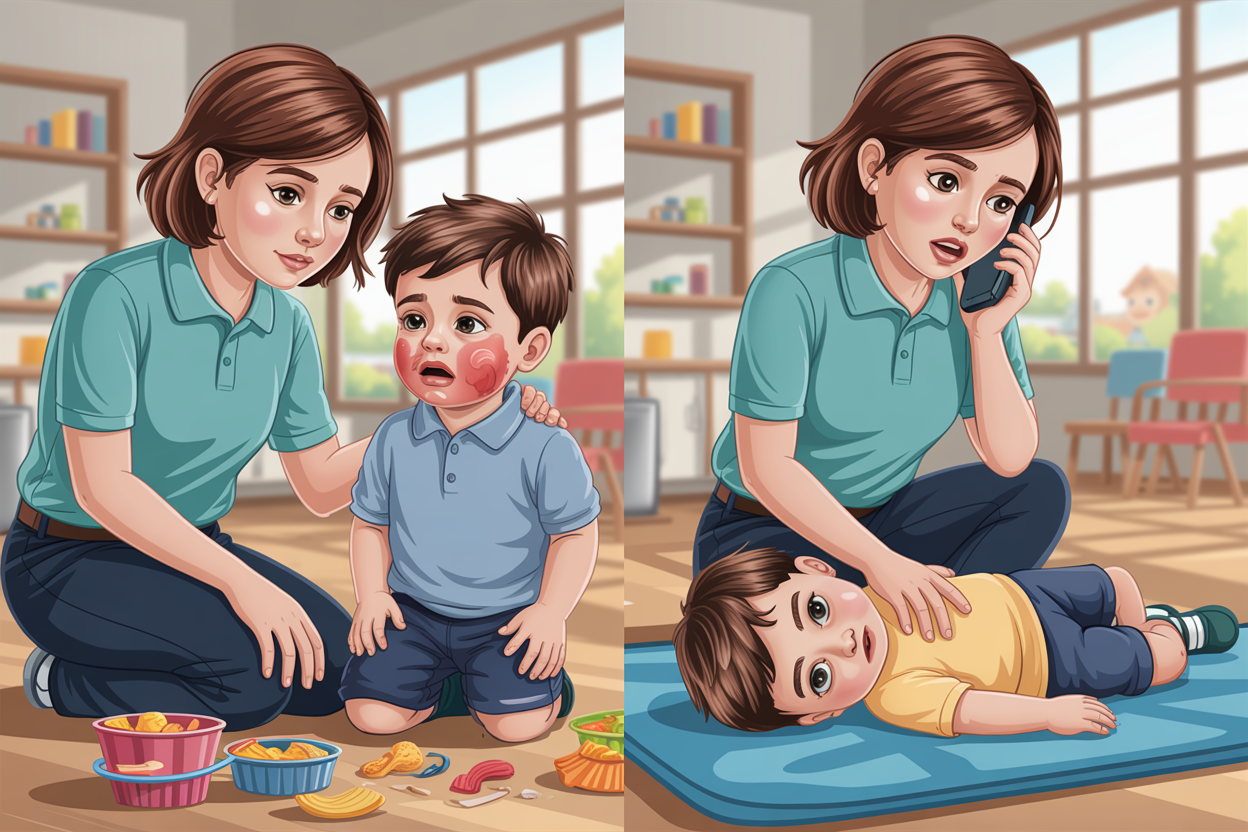
You're in the middle of afternoon snack time when a child's face starts to swell. His lips are puffy. He's struggling to breathe. The EpiPen is in the bag on the hook by the door. You've held one before but right now, your mind goes blank. Which leg? How long do you hold it? Do you call 000 first or inject first?
If that scenario made your stomach drop, you're not alone. It's the fear that sits quietly behind every childcare educator who has an EpiPen in their care but hasn't had genuinely hands-on practice with one.
This guide walks you through exactly how to use an EpiPen correctly, step by step, aligned to current ASCIA guidelines. We cover correct technique, what to do before and after administration, and why reading about it is only half the preparation you actually need.
How to Use an EpiPen: Step-by-Step
Using an EpiPen correctly in an anaphylactic emergency follows a clear sequence. Act quickly. Epinephrine is most effective when administered at the first sign of a severe allergic reaction.
Call 000 immediately or instruct someone nearby to call while you prepare the EpiPen
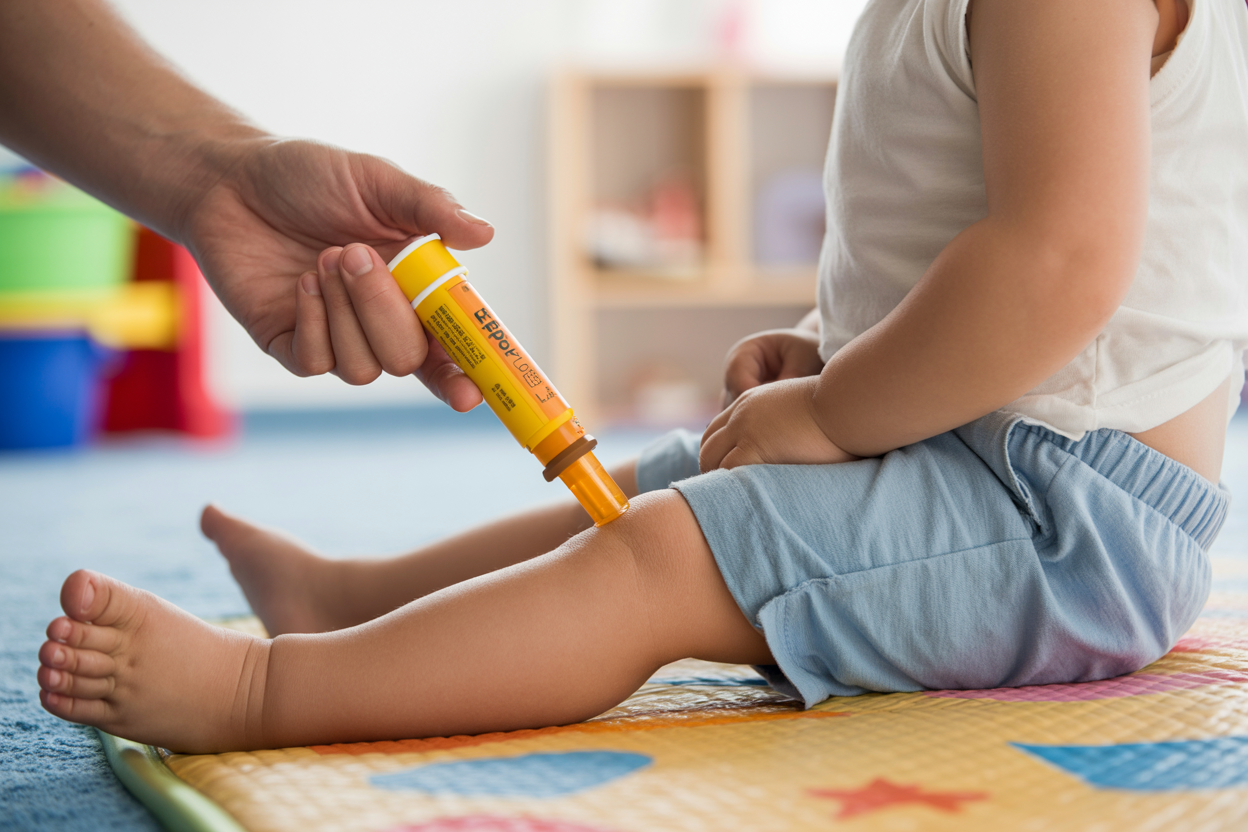
Remove the EpiPen from its carrier and take off the blue safety cap
Hold the EpiPen firmly in your dominant hand, needle end pointing down
Position on the outer mid-thigh can be administered through clothing
Push down firmly until you hear a click, then hold in place for 3 seconds
Remove the EpiPen and massage the injection site for 10 seconds
Note the time of administration and lay the child flat with legs elevated (unless breathing is difficult)
Stay with the child until paramedics arrive. A second dose may be required after 5 minutes if there is no improvement
What Is an EpiPen and How Does It Work?
An EpiPen is an auto-injector that delivers a pre-measured dose of epinephrine (adrenaline) directly into the muscle. During anaphylaxis, the immune system overreacts to a trigger and floods the body with chemicals that cause blood vessels to dilate, blood pressure to drop, and airways to narrow. Epinephrine reverses those effects rapidly and buys the time needed for paramedics to arrive.
Why Epinephrine Is the First-Line Treatment for Anaphylaxis
There is no alternative to epinephrine in a severe allergic reaction. Antihistamines don't work fast enough. They treat mild symptoms, not anaphylaxis. The EpiPen is the only intervention that addresses the life-threatening mechanisms of anaphylaxis directly. That's why it's always Step 1 on every ASCIA anaphylaxis action plan.
EpiPen Jr vs EpiPen: Which One Does Your Centre Use?
The standard EpiPen delivers 0.3mg of epinephrine and is prescribed for children over 20kg and adults. EpiPen Jr delivers 0.15mg and is prescribed for children between 10-20kg. The device looks identical from the outside. The label is the only visual difference. Know which device belongs to which child, and make sure every educator in your room does too.
It's also worth noting that EpiPen is a brand name. Anapen is an alternative adrenaline auto-injector (AAI) that works differently. You remove a red pin rather than a blue cap, and the needle is exposed differently. If a child's action plan references an Anapen, the technique is not identical. Knowing how to use an EpiPen correctly does not automatically mean you're ready for an Anapen.
Knowing how the EpiPen works is the foundation. Knowing when to reach for it is what saves lives.
Recognizing Anaphylaxis Before You Reach for the EpiPen
The EpiPen only helps if you reach for it in time. One of the most common reasons educators hesitate isn't lack of training. It's uncertainty about whether what they're seeing is serious enough to act on. That hesitation is the real risk.
Signs of Anaphylaxis in Young Children
Anaphylaxis doesn't always announce itself the same way twice. Symptoms can appear within minutes of exposure, and in young children, they can escalate faster than in adults. Know what to look for across all body systems:
Skin and face:
Hives, redness, or flushing
Swelling of the lips, tongue, or face
Pale or floppy appearance (particularly in infants)
Respiratory:
Noisy breathing, wheezing, or stridor
Persistent cough
Difficulty breathing or swallowing
Cardiovascular:
Sudden drop in energy or collapse
Loss of consciousness
Rapid or weak pulse
Gastrointestinal:
Sudden vomiting
Stomach cramping or pain
Here's the piece that trips up even experienced educators: anaphylaxis can present without any skin symptoms at all. A child can be going into anaphylaxis with no hives, no swelling, no rash, and the only sign is respiratory distress or sudden collapse. If you're waiting for hives before you act, you may be waiting too long.
When in Doubt, Use the EpiPen: Why Hesitation Is the Real Risk
Every child prescribed an EpiPen has an ASCIA anaphylaxis action plan. That plan tells you exactly when to act. The clinical guidance from ASCIA is clear: if you are uncertain whether a child is experiencing anaphylaxis, administer the EpiPen. Epinephrine will not harm a child who is not experiencing anaphylaxis. Mild symptoms can progress to severe anaphylaxis within minutes, and there's no reliable way to predict which reactions will escalate. When symptoms are present and an action plan is in place, act.
Once you've identified anaphylaxis, the next 60 seconds are everything. Here's exactly what to do.
How to Use an EpiPen Correctly: Step-by-Step
The 8-step sequence above gives you the framework. This section gives you the detail behind each decision point, the questions that actually run through your head when a child is in front of you and you have an EpiPen in your hand.
Before You Inject: What to Do in the First 10 Seconds
The first thing you do is call 000, or point to a specific person nearby and tell them to call, while you prepare the EpiPen. Don't wait until after the injection. Don't assume someone else has already called. Name a person and give a direct instruction: "Sarah, call 000 now."
Retrieve the EpiPen from the child's bag. Check the viewing window. The solution should be clear, not cloudy or discolored. If it's expired or discolored, use it anyway. An imperfect dose is better than no dose. Remove the blue safety cap straight off. Don't put your thumb over the orange tip. That's the needle end. Outer mid-thigh, either leg, through clothing.
The Injection: Common Mistakes and How to Avoid Them
Hold the EpiPen firmly in your dominant hand, orange tip pointing down. Place it against the outer mid-thigh at a 90-degree angle. Push down firmly and hold until you hear a click. That click means the needle has deployed and medication is delivered.
Hold it in place for 3 seconds after the click. Not 1 second. Three full seconds, counted deliberately. This is where most errors happen under pressure. People pull away too early, before the full dose has been delivered. After 3 seconds, remove the EpiPen straight out and massage the injection site firmly for 10 seconds to help the medication absorb.
If the child moves or pulls away mid-injection, stay calm, hold the leg as still as you can, and check the orange tip after removal. It should have extended to cover the needle. If you're not confident the needle is fully deployed, be ready to administer a second device if one is available.
After the EpiPen: What Happens Next
Note the time of administration. Paramedics will need this. Lay the child flat with their legs elevated to help maintain blood pressure. The only exception is if the child is having difficulty breathing. In that case, let them sit in whatever position they find easiest to breathe.
Stay with the child. Do not leave them alone. If there is no improvement after 5 minutes, a second EpiPen dose can be administered if one is available. The EpiPen buys time. It is not a cure. Every child who receives an EpiPen must be assessed by paramedics, even if they appear to have fully recovered. Epinephrine wears off, and a biphasic reaction (a second wave of anaphylaxis hours later) is a real clinical risk.
Common EpiPen Mistakes That Put Children at Risk
These aren't mistakes made by careless educators. They're mistakes made by trained professionals under the kind of acute stress that anaphylaxis produces. Knowing them in advance is the closest thing to a defense.
The blue cap comes off the top, not the orange end. If you remove it from the wrong end, you'll inject yourself in the thumb before the EpiPen ever reaches the child. The fix is repetition with a trainer device until the orientation is automatic.
Waiting to see if symptoms resolve is the single most dangerous response to suspected anaphylaxis. Epinephrine does not harm a child who doesn't need it. Act on the action plan.
EpiPens should be stored between 15°C and 25°C, away from direct sunlight. Check the viewing window regularly. If the solution is discolored, cloudy, or has visible particles, notify the parents immediately.
Injecting into the buttocks instead of the outer thigh risks hitting the sciatic nerve and reduces medication absorption
Not holding long enough means a partial dose at best, no dose at worst
Removing the cap from the wrong end leads to accidental needle-stick; the EpiPen never reaches the child
Waiting too long to administer hoping symptoms self-resolve; they may not, and the window is short
Not calling 000 because "the EpiPen worked" epinephrine wears off; paramedic assessment is non-negotiable
Storing incorrectly heat exposure degrades the medication before the expiry date
EpiPen Training for Childcare Educators: What ACECQA Actually Requires
This is the compliance mistake that catches childcare centers off guard more than any other. A director books her team through a first aid course, the box feels ticked, and then an ACECQA auditor asks for the 22300VIC and 22556VIC certificates and they don't exist. That's a regulatory breach under the Education and Care Services National Regulations 2011.
Does HLTAID012 Cover Anaphylaxis Training? The Answer Childcare Directors Get Wrong
HLTAID012, Provide First Aid in an Education and Care Setting, does include some anaphylaxis content. That's where the confusion starts. But including content is not the same as satisfying a regulatory requirement for a separately coded qualification.
Regulations 136 and 137 require approved providers to hold 22300VIC (anaphylaxis management) and 22556VIC (asthma management). When an auditor reviews your records, they look for specific course codes on the certificate. If those codes aren't there, the training doesn't count.
What the ACECQA Auditor Is Actually Looking For
The certificate must display the correct course codes, 22300VIC and 22556VIC, the RTO number, the date of completion, and the participant's full name. If any of those elements are missing or incorrect, the certificate will not satisfy the audit requirement. A correctly delivered session with a poorly issued certificate is still a compliance gap.
Online EpiPen Training: Why It Doesn't Count
Both 22300VIC and 22556VIC require a practical component. Hands-on practice with EpiPen trainer devices cannot be replicated online. An educator who completes an online-only course will find it rejected at audit. If those course codes aren't on the certificate, the course doesn't count.
How Often Do You Need to Renew? ASCIA vs ACECQA
ACECQA sets the legal minimum every 3 years. ASCIA recommends annual renewal because technique guidance evolves. An educator who trained three years ago may be working from outdated techniques. The legal minimum is a floor, not a target.
Practicing EpiPen Technique: Why Reading Isn't Enough
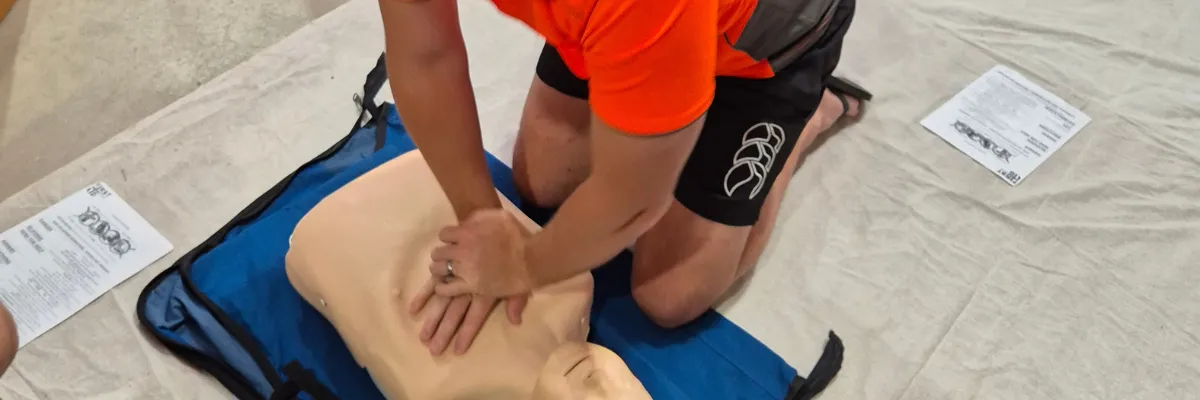
Reading about how to use an EpiPen correctly builds familiarity. But it does not build muscle memory, and that's what actually determines your performance in the first 60 seconds of anaphylaxis. When a child goes into anaphylaxis in front of you, your hands will do what they've done before, not what you've read. Recalled reading doesn't survive an adrenaline surge. Practiced movement does.
A quality face-to-face session uses EpiPen trainer devices, non-functional replicas that replicate the weight, grip, click mechanism, and hold position of a real EpiPen. Every participant practices the injection sequence repeatedly. A good trainer runs scenario-based simulations that build decision-making under pressure, not just procedural recall. That's what separates training that builds genuine confidence from training that builds a certificate.
Next Steps
If you've read this far, you already know more than most educators about what correct EpiPen administration looks like. The next step is making sure that knowledge is backed by hands-on practice.
If you're not sure which course your center needs, don't guess. The compliance distinction between HLTAID012 and 22300VIC/22556VIC has real consequences at audit, and it's worth getting a clear answer before you book anything. Call phone number and we'll confirm exactly what your ACECQA audit requires.
If you want to share this with your director or start a conversation about getting your whole team certified, forward this page directly or download the free employer letter template. It's a simple, professional document that makes it easy to start that conversation.
Whatever your next move is, the most important thing is that you don't leave today's reading as the last step. The child in your room with the EpiPen in their bag deserves an educator whose hands already know what to do.