

How to Get CPR Certified in Australia: Step-by-Step 2026
Most people only really think about CPR certification after something happens. A workmate collapsed on site. A family member had a cardiac event at a backyard barbecue. Or they rocked up to a site induction and got turned away because their certificate had expired.
If that's where you're at, you're not the first. The honest truth is that getting CPR certified in Australia is a lot more straightforward than most people expect. The course is practical, and walking away with a nationally recognized certificate that's accepted at any workplace induction in the country doesn't take as long as people assume.
This guide cuts through that. Whether you're renewing a lapsed cert, meeting a site compliance requirement, or you've had a moment that made you realize you want to actually know what you're doing if someone collapses in front of you, here's everything you need before you book.
What Is CPR Certification in Australia, and Why Does It Matter?
There's a difference between knowing CPR and being certified in it. Most people have a rough idea what CPR looks like, chest compressions, maybe some rescue breaths, half-remembered from a school health class. Actually doing it under pressure, when the adrenaline hits and your hands are shaking, is a different thing entirely.
CPR certification means you've completed a nationally recognized, hands-on training course delivered by an ASQA-registered RTO, and been assessed against a set competency standard. You get your hands on a mannequin, practice compressions until the depth and rate feel automatic, and an assessor watches you work through scenarios before signing you off.
Knowing CPR vs being certified
Knowing CPR means you've seen it done. Being certified means you've done it, repeatedly, with feedback, until your body knows what to do without your brain having to talk it through. When someone collapses, there's no time to think. Your hands need to already know. Certification also means the training was standardized and current, aligned with the Australian Resuscitation Council's (ARC) latest evidence on compression depth, rate, and AED use.
When a valid CPR certificate is legally required
In a lot of workplaces, current CPR certification isn't optional, it's a condition of site access. Under Safe Work Australia's first aid guidelines, in high-risk industries like construction, manufacturing, and electrical trades, a set number of workers need to hold a current, valid certificate at all times.
For childcare, aged care, and community services, renewal is non-negotiable. Most major construction and industrial sites require current CPR for site induction. If your cert is expired, you don't get through the gate.
Why annual renewal matters
The Australian Resuscitation Council recommends CPR skills be renewed every 12 months. Research consistently shows CPR skill retention, compression depth, rate accuracy, and confidence, all degrade faster than people expect.
An expired certificate isn't just a compliance problem, it means the muscle memory from your last course has probably faded. Renewal resets that physical confidence. If your cert has lapsed, getting back on track is the same as getting certified the first time, no penalty, just book and do it again.
Which CPR Course Do You Actually Need? (HLTAID009 Explained)
This is where a lot of people get stuck. Search for a CPR course and you get a list of providers, half advertising courses with unit codes that mean nothing to you. HLTAID009. HLTAID011. HLTAID014. The short answer for most people, especially anyone renewing for workplace compliance, is HLTAID009.
What HLTAID009 covers
HLTAID009, Provide Cardiopulmonary Resuscitation, is the nationally recognized CPR-only unit of competency under the Australian training framework, listed on training.gov.au and delivered by ASQA-registered RTOs across the country. The course covers:
Recognizing when someone needs CPR
The DRSABCD action plan (Danger, Response, Send for help, Airway, Breathing, CPR, Defibrillation)
Adult, child, and infant CPR techniques
How to use an AED (automated external defibrillator)
When to start CPR, how long to continue, and when it's safe to stop
HLTAID009 vs HLTAID011
The other code you'll see everywhere is HLTAID011, Provide First Aid, the full first aid course, covering everything in HLTAID009 plus bleeding, burns, fractures, shock, allergic reactions, asthma, and other medical emergencies.
If your site induction, employer, or industry body specifically requires HLTAID011, you'll know, it'll be written into the requirement. For most people doing an annual CPR renewal or ticking off a compliance box, HLTAID009 is the right course.
Who should do HLTAID009
Anyone renewing an expired or expiring CPR certificate
Construction workers, tradespeople, and site supervisors meeting site induction requirements
Workers in high-risk environments where CPR-only renewal is the annual requirement
Anyone who completed HLTAID011 within the last three years but needs their CPR component renewed
People who want genuine CPR confidence without committing to a full first aid course
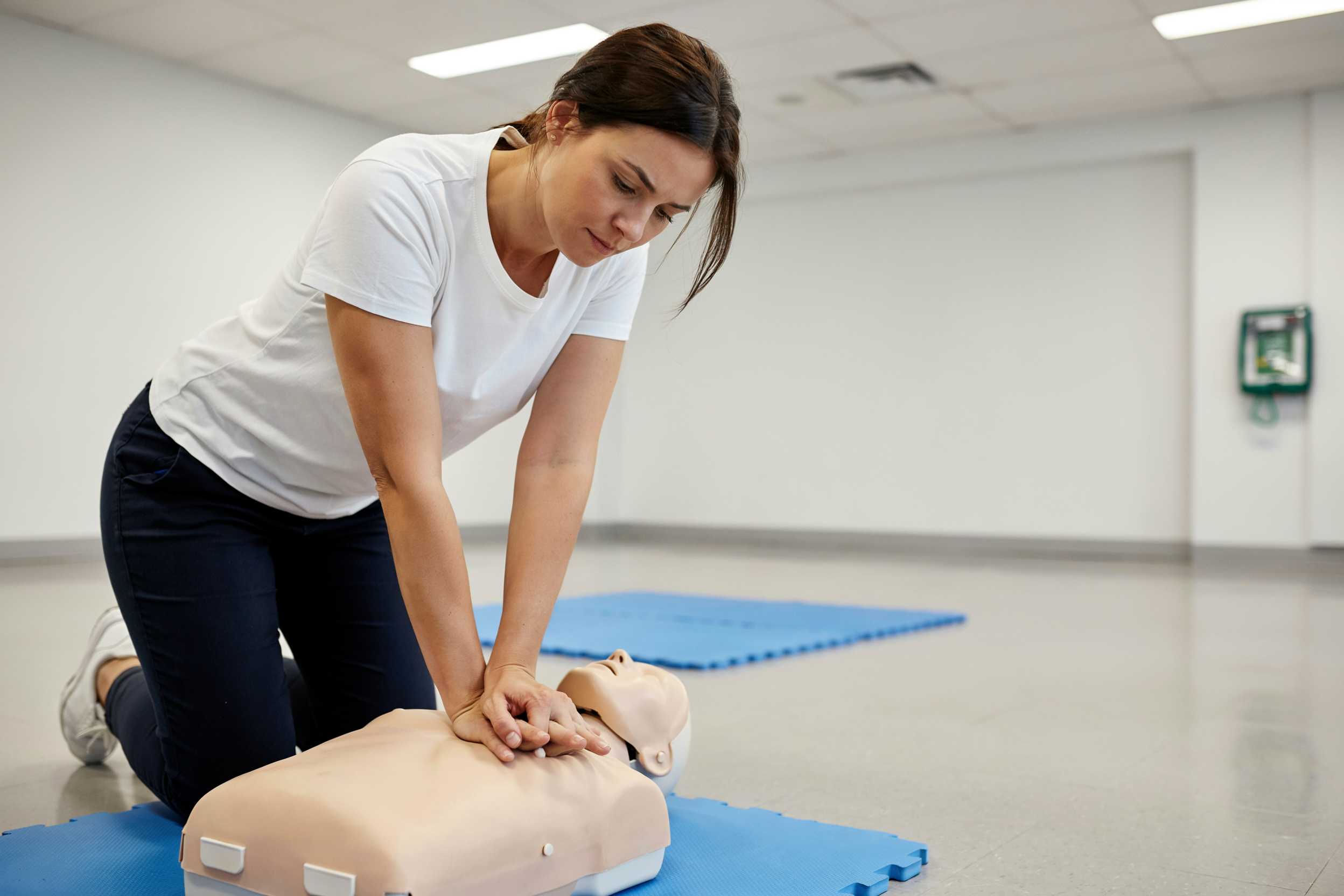
Step-by-Step, How to Get CPR Certified in Australia
The process of getting CPR certified doesn't have a lot of moving parts. Five steps, and you walk away with a nationally recognized certificate.
Step 1, Choose an ASQA-registered RTO
Not every provider advertising CPR courses is a legitimate RTO. Some issue certificates that aren't backed by any accredited framework, and those get rejected at site inductions. Check the provider holds a current ASQA registration, verifiable at training.gov.au, and look for individual mannequins, a trainer with real-world resuscitation experience, and reviews mentioning trainer quality and hands-on practice.
Step 2, Select your course format
Most RTOs offer HLTAID009 either face-to-face, the entire course delivered in person, theory, practical, and assessment in one session, or blended, a short online pre-learning component followed by a shorter face-to-face practical. Both result in the same statement of attainment. Face-to-face is the better option if you want to build genuine confidence, more time on the mannequin means more repetitions.
Step 3, Book and confirm your session
Booking should be simple, a reputable RTO lets you book online in a few minutes. You pick a date, pay, and get a confirmation covering what to bring, any pre-reading for a blended format, and your certificate turnaround time, same-day digital issue is standard with good providers.
Step 4, Complete the training
You'll spend most of your time in practical exercises, compressions on a mannequin, rescue breathing, and AED scenarios. An assessor observes your technique against ANZCOR standards. There's no written exam, and a good trainer corrects you on the spot if your technique needs adjustment.
Step 5, Receive your certificate
Once assessed as competent, your statement of attainment is issued, typically a digital certificate delivered to your email the same day, accepted at any Australian workplace induction regardless of state or territory. Save it somewhere accessible, site inductions will ask for it.
What Happens on the Day, What to Expect From Your CPR Course
A lot of people show up to their first CPR course, or their first one in years, with a low-level anxiety they haven't really named, not sure whether they'll be put on the spot or look incompetent in front of strangers. That's more common than most people let on.
A well-run HLTAID009 session isn't a test you can fail by walking in the door. The trainer's job is to get you to competency, not to catch you out. If your compressions are too shallow, they'll show you how to adjust. If you freeze up during an AED scenario, they'll walk you through it again. You're not being judged. You're being trained.
What equipment you'll use
You'll use CPR mannequins for chest compressions and rescue breathing, ideally your own rather than shared, AED trainer units, non-functional replicas that simulate the real device prompts and pad placement, and face shields or pocket masks for rescue breathing practice.
How you're assessed
Assessment is practical and observational, no written test, no exam. Your assessor confirms your technique meets the ANZCOR standards, compression depth of at least 5cm for an adult, 100 to 120 compressions per minute, full chest recoil, and correct pad placement. If you need another attempt, a good trainer gives you the time to get there.
What to bring
Bring photo ID, comfortable clothes you can move in (you'll be kneeling on the floor), closed-toe shoes, a water bottle, and any pre-reading completed if you chose a blended format. You don't need prior knowledge or experience, and you don't need to be physically fit. CPR is about body mechanics and timing, not strength.
How Long Is a CPR Certificate Valid, and When Should You Renew?
The short answer is 12 months, the renewal frequency recommended by the Australian Resuscitation Council, and the standard most Australian workplaces and site inductions work to. It's worth understanding why that number exists, because it's not arbitrary red tape.
The 12-month recommendation
The Australian Resuscitation Council's position is clear: CPR skills should be practiced and updated at least every 12 months. Studies consistently show compression quality, depth, rate, and confidence all deteriorate within weeks to months of training. By the 12-month mark, a significant proportion of people once assessed as competent can no longer perform CPR to the standard required to give someone a realistic chance of survival. The annual renewal cycle keeps your response automatic, so your hands know what to do before your brain has finished processing what's happening.
What happens if your certificate expires
An expired CPR certificate creates two problems. You won't pass a site induction with an expired cert, since most major sites check certificate dates. And it signals it's been more than 12 months since you last practiced, meaning the confidence and muscle memory you built has had time to fade. The certificate expiring is the reminder, the real issue is the skill gap underneath it. Getting back on track is simple, there's no remediation process, you just book a course again.
How to set up a renewal reminder
The most common reason certificates lapse is that 12 months pass faster than anyone expects, with no system reminding them it's coming. Note your certificate issue date in your calendar with a reminder set for 11 months out, and ask your RTO if they offer an email renewal reminder. If you manage certification for a crew, a spreadsheet of issue dates with calendar alerts does the job.

How to Spot a Quality CPR Provider
There's no shortage of CPR providers out there. A search returns a page full of options, many looking similar at first glance. The difference isn't always obvious from the outside.
Quality provider vs tick-and-flick operation
The term "tick-and-flick" gets used a lot in this industry, for good reason. Some providers run on volume, get as many people through the door as possible, issue the certificates, move on. The training technically meets minimum requirements, the cert is real, but the person who just sat through it couldn't tell you with confidence what they'd actually do if someone collapsed in front of them.
A quality provider looks different: experienced trainers who've seen real resuscitation situations, individual mannequins for every participant, a hands-on practical focus, and honest upfront information. The reviews tell you most of what you need to know. Look for comments mentioning the trainer by name, the hands-on component, or something like "I actually feel like I could do this now."
Ready to Get Your CPR Certificate Sorted?
Most people put off getting CPR certified for the same reason they put off a lot of things that matter, not because they don't care, but because life stays busy and the urgency doesn't feel real until something happens. By the time it arrives, it's too late to wish you'd booked earlier.
Getting CPR certified in Australia isn't complicated. It's a practical session with your hands on a mannequin, and a nationally recognized certificate that proves you're ready to act if someone needs you. The bigger thing you walk away with is physical confidence, the kind that comes from actually doing the compressions, running the AED sequence, and having a trainer confirm your technique is right. That's what stays with you when the adrenaline hits and someone is on the ground in front of you, not a certificate in your email, the memory in your hands.
Annual renewal exists because skills fade, and keeping your certification current is how you make sure your response is automatic rather than uncertain when the moment comes. Choosing the right provider matters too, a course that leaves you genuinely prepared feels different from one that just processes you through.
Pick a session, show up, and get it done. The hours you spend getting certified could be the most important hours someone else ever benefits from, they just won't know it until the day it matters.