How to Enroll in the Asthma Risks Course: Quick Guide
A new enrolment form lands on your desk with an asthma action plan clipped to it, and just like that, the question in your head isn't whether your team needs the asthma risks course. It's how fast you can get everyone booked, certified, and compliant before that child's very first day.
If you've never had to enroll staff in the 22300VIC asthma risk minimization course before, the whole process can feel a lot murkier than it should be. Which course code actually covers what your center needs? How do group bookings work when you're trying to get a whole roster through, not just one person? What documents do you need sitting in front of you before you even start the form? And once it's done, how fast will those certificates actually land in your inbox so you can drop them into your compliance file?
This guide walks you through enrolling in the asthma risks course step by step, starting with confirming it's actually the right course for your center, through to booking (whether that's just you or your whole team), what happens on the day, and how to get your certificates filed away for ACECQA in good time. Whether you're getting one new educator sorted or racing to get the whole team certified before an assessment, you'll know exactly what to do next by the time you finish reading.
Quick Answer: How Do I Enroll in the Asthma Risks Course?
To enroll in the asthma risks course (22300VIC), most learners follow these steps:
Confirm the right course: check whether you need the standalone asthma unit or the combined asthma and anaphylaxis course (22300VIC/22556VIC).
Choose a session: pick an available date, or a group booking slot if you're getting multiple staff through at once.
Complete the enrolment form: provide learner details, or for centers, a staff list.
Pay and receive confirmation: payment secures your spot, and a confirmation email follows straight after.
Attend and complete assessment: work through the practical and written components with your trainer.
Receive your certificate: issued fast, ready to go straight into your compliance file.
Which Course Should You Enroll In?
Before you book anything, it's worth pinning down exactly which course your center actually needs, because this is the bit that trips a lot of people up.
Standalone Asthma Course vs. Combined Asthma & Anaphylaxis Course
The 22300VIC asthma risks course can be taken on its own, or combined with 22556VIC, the anaphylaxis unit. For most childcare centers, you'll want both. ACECQA doesn't just ask for anaphylaxis training or asthma training on its own, it expects educators to hold current training in both, so booking the combined asthma and anaphylaxis course tends to be the simpler and more sensible option if your staff don't already hold one or the other.
One thing worth flagging here: if you're searching around and start seeing course codes like VU22927, VU24021, VU24022, or 22702VIC pop up, those aren't this course. They're Victorian-issued unit equivalents from different RTOs, and while they cover similar ground, they're not interchangeable with 22300VIC and 22556VIC on paper. Worth double checking you're looking at the right code before you book, especially if you're cross-referencing against what ACECQA expects on your compliance file.
Who Needs This Course
This one isn't just for your lead educators. It applies to:
Childcare educators
OSHC staff
Family day care providers
Primary school admin staff
Sports and hospitality staff with regular contact with children
And here's the group that tends to slip through the cracks: casual and relief educators. If they're on your roster at all, even occasionally, they need this training too. It's one of the easiest gaps for a busy director to miss.

Requirements and What You'll Need to Enroll
The good news here is there's nothing complicated standing between you and getting booked.
Eligibility and Prerequisites
There are no formal prerequisites for either 22300VIC or 22556VIC. Any adult learner can enroll, and the only real requirement is enough basic English literacy to work through the written assessment component. No prior first aid experience needed, no other course you have to complete first.
Documents and Details You'll Need
Before you sit down to book, it helps to have a few things on hand:
Your Unique Student Identifier (USI): if this is your first time enrolling in a nationally recognized course, you'll need one of these. It's a free, government-issued reference number that follows you across any accredited training you do in Australia, and without it your certificate can't actually be issued.
Learner details: for an individual booking, just your own details. For a center or group booking, you'll want a full staff list ready to go rather than entering everyone one at a time.
Before You Book Checklist: ✓ USI number on hand (or ready to apply for one) ✓ Staff list prepared, if booking for a group
Getting these things sorted before you open the booking form is honestly the difference between a five-minute enrolment and one that drags out over three browser tabs and a phone call.
Step-by-Step: How to Enroll (Individual Booking)
Once you've confirmed which course covers your center's needs, here's what you'll need before you book, and here's exactly how the process runs from start to finish.
The Enrolment Process, Step by Step
Confirm the right course. Decide whether you need the standalone asthma course, or the combined asthma and anaphylaxis course. For most childcare staff, it's the combined option.
Choose an available session. Browse the current listings and pick whatever fits your schedule, or your center's roster if you're booking on behalf of a team.
Complete the enrolment form. Enter your name, contact details, and USI. The form is straightforward and shouldn't take long if you've got your details ready.
Pay and receive confirmation. Payment locks in your spot. You'll get a confirmation email almost immediately, and it's worth actually opening it, because it usually includes what to bring and what to expect.
Attend and complete assessment. Work through both the practical and written components with your trainer. There's no need to come back a second time.
Receive your certificate. Once you've completed the assessment, your certificate is issued fast, ready to go straight into your files.
If you're booking close to a compliance deadline or an upcoming ACECQA visit, it's worth grabbing a spot as soon as you see one that works, since sessions for this course pair tend to fill fast around enrolment and assessment periods.

Group Bookings for Centers and Teams
That process works well for a single enrolment, but if you're booking a whole team, there's a faster way, and it's built specifically for centers in your position.
Booking Multiple Staff in One Transaction
Instead of filling out the enrolment form over and over for every staff member, a group booking lets you submit one form covering your whole staff list, pay once in a single transaction, and still have individual certificates issued to each person by name. Nobody ends up sharing a certificate or trying to work out whose name should be on it. Each staff member gets their own, and it lands in your compliance file exactly the way an assessor expects to see it.
If you've ever sat there entering the same details five or six times over for different educators, this is the bit that saves you the actual hours, not just the annoyance.
Fitting Training Around Centre Operations
A center can't just close its doors for a training day, so session options exist around that. After-hours, weekend, and on-site sessions are all options, meaning your team doesn't need to disrupt nap times, ratios, or your day-to-day roster just to get certified.
Here's how individual and group bookings stack up against each other:
If you're getting more than a couple of staff through at once, the group option is going to save you a genuinely frustrating afternoon.
What Happens on the Day and How Certificates Are Issued
Course Format
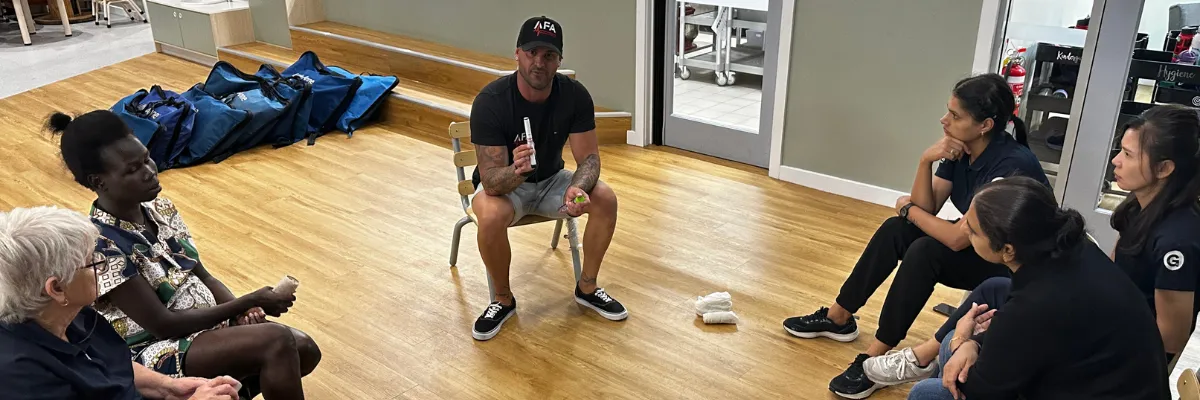
The course covers both the theory and the hands-on practical component, with everyone getting real hands-on time, not just a seat watching a demonstration from the back row. You'll walk through what asthma and anaphylaxis reactions actually look like, how to use the relevant medications and devices correctly, and how to respond under pressure, because reading about it and doing it under a trainer's eye are two very different things.
Certificate Turnaround and Compliance Filing
This is the part center directors care about most, and fair enough. Certificates are issued fast, so if an ACECQA assessor turns up with little notice, you're not scrambling to prove your team is covered. You can produce it on the spot.
A small tip that saves a lot of pain later: set up a simple naming convention for how you file each certificate as it comes in, something like staff name plus course code plus completion date. It sounds like a minor thing, but when you're pulling files together fast for an assessment, a consistent naming system is the difference between finding everything in thirty seconds and digging through a folder full of "certificate (3) final.pdf."
One more thing worth stating plainly: this course is delivered under RTO 31106 as co-provider, so what you're getting is nationally recognized, accredited training, not a generic in-house workshop. Given how little room there is for ambiguity when it comes to anaphylaxis response, that accreditation isn't a small detail, it's the whole point.
Wrapping It Up
Getting your team enrolled in the asthma risks course doesn't need to be the stressful scramble it can feel like when a new enrolment form lands with an action plan attached. Once you know which course actually covers your center's needs, the rest of the process is genuinely straightforward: pick a session, get your details together, book, attend, and get your certificate filed away where an assessor can find it in seconds rather than minutes.
The part that trips most directors up isn't the course itself, it's the admin sitting around it. Chasing a USI number at the last minute, entering five staff members one at a time into the same form, or realizing a casual educator's certificate lapsed months ago and nobody flagged it. None of that is actually hard once you know what's coming, and that's really the point of walking through it step by step like this.
If there's one thing worth taking away above everything else, it's this: don't wait for the enrollment form with the allergy action plan attached before you check who on your roster is actually current. Renewal cycles are far easier to manage proactively than reactively, and a five-minute check now saves a genuinely stressful afternoon later.
Group bookings exist specifically because centers don't run like individual learners do. Nobody has the time to sit there filling out the same form six times over for six different staff members, and nobody should have to. One form, one payment, individual certificates for everyone involved, filed and ready the same day, is about as low-friction as compliance training gets.
At the end of the day, this training isn't really about ticking a regulatory box. It's about your team knowing exactly what to do at the moment it actually matters, calmly and correctly, for a real child with a real medical condition. The certificate is proof of that, but the actual value sits in what your educators walk away knowing how to do.
So if there's a new enrollment sitting on your desk right now, or an assessment date circled on your calendar, that's your cue. Confirm the course, get your staff list together, and book. Everything else on this page exists to make that next step as easy as it should be.