
How Long Does an LVR Course Take? Less Than You Think
Every hour your crew spends in a training room is an hour nobody's billing. Good news is, LVR eats up a lot less of it than most sparkies expect. As for how long an LVR course takes, it's a single morning face to face, plus a bit of online theory you knock over beforehand.
Nine days. That's how far one electrician's LVR had lapsed when he got turned away at a commercial site induction, and the whole job moved with him. It's a pretty common story. Queensland wants rescue and resuscitation training done every year under the Electrical Safety Regulation 2013, and the principal contractor at the gate doesn't care how flat out you've been.
So here's a straight breakdown you can plan the crew's morning around. We're talking about the LVR and CPR course: Perform rescue from a live LV panel, paired with HLTAID009 CPR. And if dragging everyone across town is the real headache, we can come to your workshop too.
Below you'll find how the time splits up, why some sessions run longer than others, whether CPR has to come along every time, how an onsite crew session works, and how quick the certificates turn up.
How Long Does an LVR Course Take?
An LVR course takes a single morning face to face when it's booked as an LVR and CPR combo, plus a short block of online theory done beforehand. Most electricians are finished before lunch and walk away with their certificate the same day.
Typical LVR and CPR course breakdown:
Online theory: done at your own pace before the session
CPR practical (HLTAID009): hands-on, on the day
Live LV panel rescue and assessment: hands-on, on the day
Certificate: issued same day
In Queensland, LVR and CPR must be renewed every 12 months.
Same-day certificates | Onsite training available | Nationally recognized
Already know your dates? Book your LVR course and get it off the list.
Here's where the morning actually goes.

What Happens in Each Part of an LVR and CPR Course
A course time only means something once you can see where it goes. So here's the morning, block by block.
Online theory before the day
This is the self-paced bit. You work through the theory and a short knowledge assessment, and it has to be finished before you turn up for the practical. It runs fine on a phone, so plenty of blokes knock it over in the ute or on a lunch break.
Here's the honest bit though. Unfinished pre-work is the number one reason sessions run over. One person sitting there doing it on the day holds up the whole group, and nobody wants to be that guy.
CPR practical (HLTAID009)
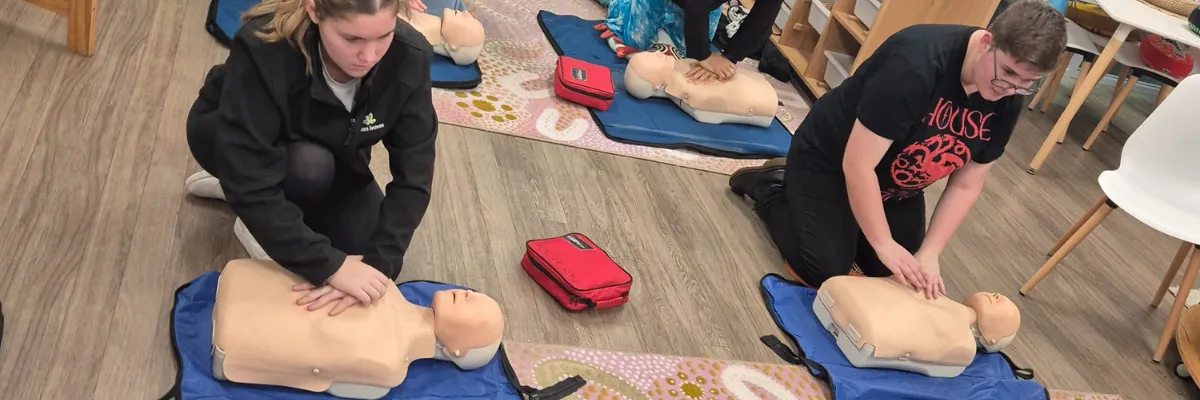
Hands-on from the start. You'll run through DRSABCD, do compressions on manikins and use an AED trainer, all following the ANZCOR guidelines. Even if you've done it fifteen times, your knees will remind you it's real work.
Live LV panel rescue scenario and assessment
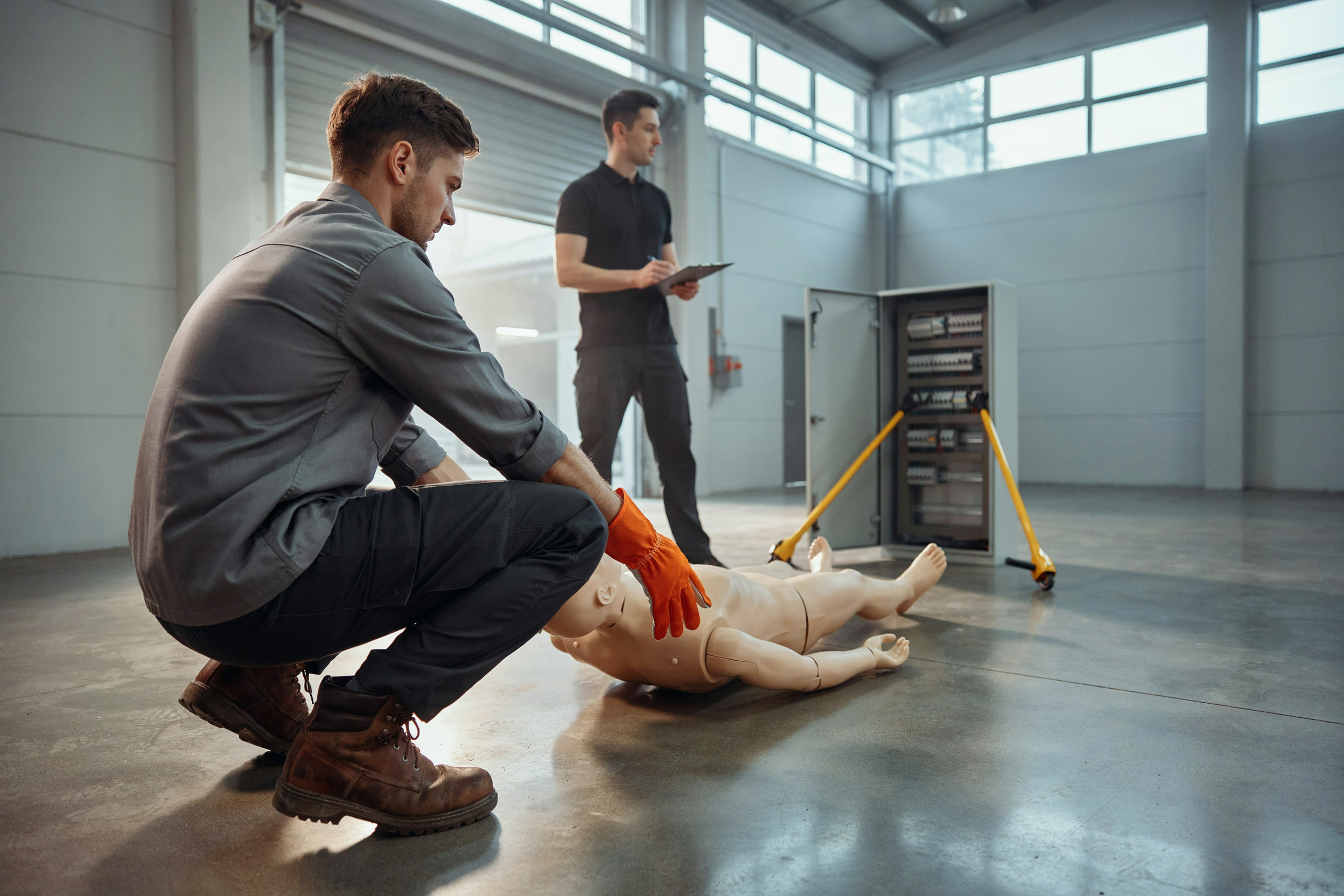
This is the part that actually matters on a job. You'll check the rescue kit, identify the point of isolation, do a one-person drag and perform a demonstration rescue.
It's competency-based, so you're marked competent or not yet competent. No written exam. The trainer watches you do it properly, and that's the test.
Certificate issued
You get a digital certificate the same day, ready to upload straight to the builder's induction portal before you're even back at the ute.
If you want the wider picture, here's what's involved in electrical rescue training.
LVR and CPR in one morning. Certificate same day. Book LVR and CPR
If another provider quoted you something different, there's usually a simple reason.
Why Course Times Differ Between Providers
Google "how long is an LVR course" and you'll get a different answer from nearly every provider. Same unit, wildly different numbers. Nobody's lying though. They're just not quoting the same thing.
What's included changes the time
This is the big one. An LVR course duration depends heavily on what else is packed into the booking.
Format | Units | Renewal |
LVR and CPR | Perform rescue from a live LV panel + HLTAID009 | Every 12 months |
LVR, CPR and first aid | + HLTAID011 | LVR and CPR yearly; first aid every 3 years |
LVR only | Perform rescue from a live LV panel | Every 12 months |
So when someone says "full day", there's a fair chance first aid is in there too. That's not a bad thing, it's just a different course.
Blended or fully face to face
Doing the online theory beforehand cuts a good chunk of time out of the room. The catch is some providers count that online time in their total and some don't. So when you're comparing, ask them straight out which figure they're quoting. It saves a lot of confusion.
Does LVR Have to Be Done With CPR Every Time?
Short answer, yes, if you're doing electrical work in Queensland. LVR and CPR both expire after 12 months, so they come due at the same time anyway. Booking them together just means you're not dragging the crew out for a second session a few weeks later. One morning, both tickets were sorted.
Where people get tripped up is first aid. Your first aid course (HLTAID011) runs on a 3-year expiry, not yearly. And HLTAID011 already includes HLTAID009, so in the year your first aid is due, you don't need a separate CPR course on top of it. One combined day covers LVR, CPR and first aid in one go.
The other two years, it's just LVR and CPR. Easy.
That's one person. For a crew, onsite is where the real time savings are.
Onsite LVR Training: How Long for a Whole Crew?
For one bloke, a public course is fine. For a whole crew, you're paying for everyone's time plus everyone's drive, and that's before anyone's touched a job. That's where onsite LVR training earns its keep.
What an onsite morning looks like
We come to you. Your workshop, your unit in the industrial estate, or a client's site. The trainer brings the rescue kit and a switchboard mock-up, so all you need to supply is the floor space and the crew.
Putting the whole crew on one renewal date
Staggered expiry dates are a pain. Someone's always about to lapse, and you only find out when a builder asks for the ticket. Doing the crew together puts everyone on one date, once a year.
Say you've got a new starter whose ticket is due in March, but the crew renews in October. Bring him forward to October, and from then on he's on the same cycle as everyone else. One booking, one date, done.
Prefer a public date instead? Book your LVR course.
We bring the rescue kit to your workshop. Get an onsite quote for your crew.
Once the crew's done, the next question is when you'll be doing it again.
How Long Is an LVR Certificate Valid in Queensland?
12 months. That's it. If you're wondering how often you need to do LVR in Queensland, the answer is every year, no exceptions.
The Electrical Safety Regulation 2013 requires rescue and resuscitation training for people doing electrical work, and the Electrical Safety Office expects your records to show it's current. Not last year's ticket. This year.
What happens if it lapses? On most commercial jobs, you just don't get through induction. Principal contractors check the date, and if it's out, you're turned around at the gate. That's common site practice, not some official grace period, so don't count on a builder letting a few days slide. Most won't.
And one lapsed ticket doesn't just cost that one person the day. It can push the whole job back.
12 months, no exceptions at the gate. An expired LVR ticket means no site entry, however many years you've been doing it.
You can't make the course shorter, but you can stop it from running over.
How to Keep Your LVR Morning as Short as Possible
The course takes as long as it takes. But whether it runs over? That's mostly down to the crew. Here's how to keep it tight.
Finish the online theory a couple of days before. Not the night before, not in the car park. A bit of breathing room gives you time to sort any login dramas.
Have your USI ready. Apprentices and new starters are the usual culprits here. If someone doesn't have one, they can grab it at usi.gov.au in a few minutes.
Arrive a bit early. One late arrival holds up the whole group, and everyone's rescue and CPR gets pushed back with it.
Honestly, most sessions that blow out have the same story. Someone skipped the pre-work, someone forgot their USI, someone rolled in at five past. Fix those three and you're out on time.
Pre-course checklist, forward this to the crew:
USI number ready
Online theory done a couple of days before
Start time confirmed, and arrive a bit early
Got the crew's dates sorted? Book your LVR course.
Get Your Crew Sorted
So that's the answer to how long an LVR course takes. A morning, not a day. The online theory gets done at home or in the ute, the rescue and CPR happen face to face, and everyone walks out with their certificate. For a crew, onsite is where you claw back the most time, since nobody's burning an hour in traffic just to get there.
Getting it done is simple. Book online, or ask for an onsite quote if you've got a few of the boys to sort at once. Make sure everyone finishes the online theory a couple of days before, then turn up, do the rescue and the CPR, and leave with your certificate in hand.
Put the whole crew on one date and you only have to think about it once a year. No spreadsheet surprises, no builder ringing about a lapsed ticket, no one standing at the gate while the job waits. One morning a year keeps the whole crew through the gate.