HLTAID015 Unit: What You Need to Know in 2026
Not sure if you need HLTAID015 or whether your current cert still cuts it? You're not alone.
The difference between HLTAID011 and HLTAID015 isn't always explained clearly. Most employers or regulators just hand down a requirement without much context. Whether you're a nurse, an aged care worker, or a WHS manager, you're all asking the same underlying question from very different angles.
This article breaks down what the HLTAID015 unit covers, who's required to hold it, how it differs from HLTAID011, how it fits into AHPRA CPD requirements, and how to get certified through advanced resuscitation training in Brisbane. Everything here is updated for 2026 ARC guidelines.
Start with the unit itself.
HLTAID015 Provide Advanced Resuscitation and Oxygen Therapy is a nationally accredited unit of competency that trains workers to perform advanced resuscitation techniques and administer oxygen therapy in emergency situations.
What the HLTAID015 unit includes:
Advanced CPR techniques aligned to current ARC guidelines
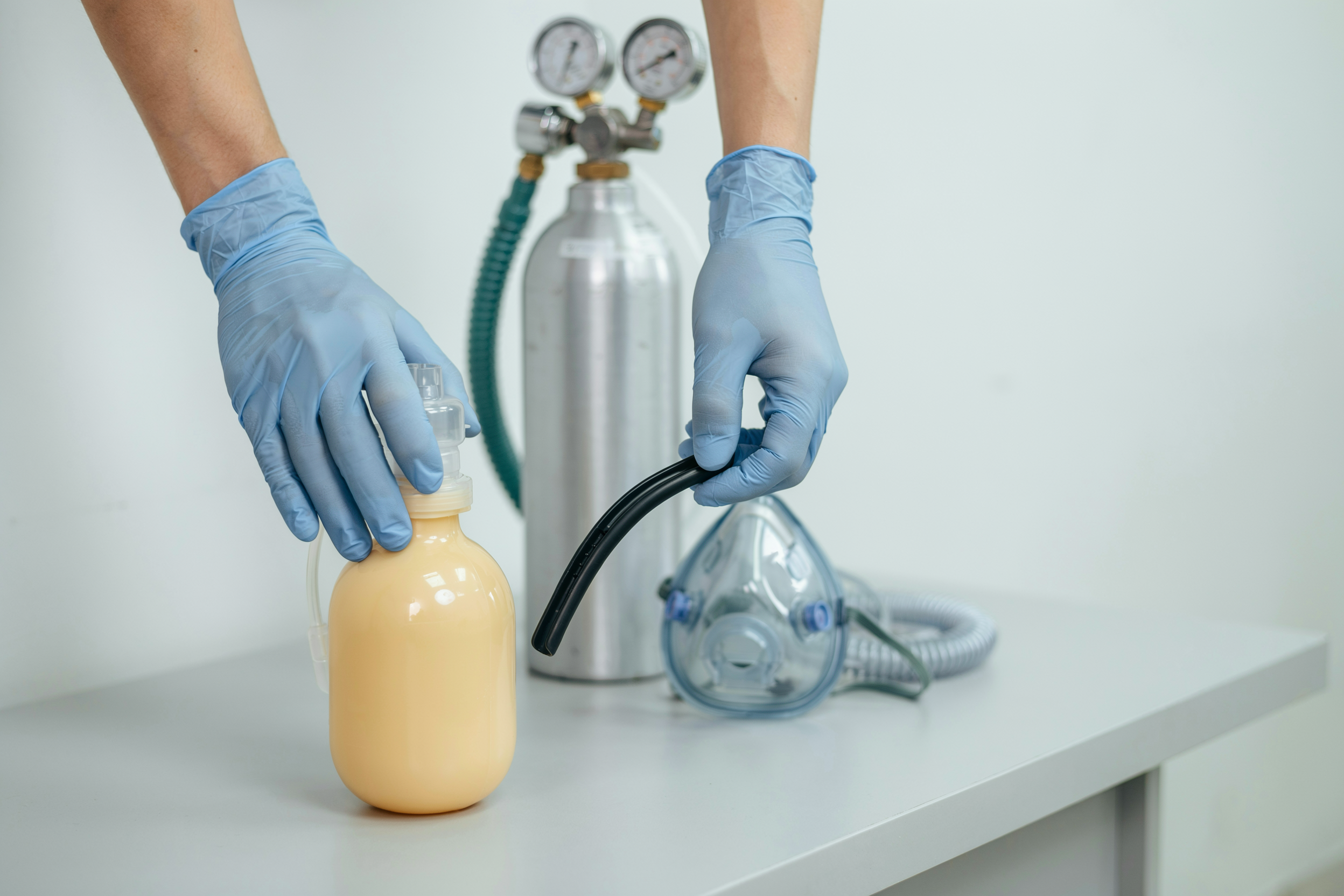
Oxygen therapy administration using supplemental oxygen equipment
Advanced airway management (bag-valve-mask, oropharyngeal airway)
Automated External Defibrillator (AED) operation
Recognition and response to cardiac and respiratory arrest
Documentation and handover to emergency services
HLTAID015 sits above HLTAID011 and HLTAID009 in the first aid qualification hierarchy and is required in healthcare, aged care, NDIS, and high-risk workplace environments.
What Does the HLTAID015 Unit Actually Cover?
If you've ever looked up a course and come away more confused than when you started, unit codes don't exactly paint a vivid picture. Here's what actually happens inside an HLTAID015 course and why it sits at the top of the HLTAID first aid series.
Course content breakdown
HLTAID015 is the highest-acuity first aid unit in the HLTAID series, designed for people who genuinely might be first on scene in a cardiac or respiratory emergency, not just as a theoretical possibility, but as a real occupational likelihood.
The unit covers:
Advanced CPR technique, compression depth, rate, and rotation, all aligned to 2026 ARC guidelines
Oxygen therapy how to set up and administer supplemental oxygen using the correct equipment
Advanced airway management including bag-valve-mask (BVM) ventilation and oropharyngeal airway (OPA) insertion
AED operation safe defibrillator use in a resuscitation sequence
Recognition of cardiac and respiratory arrest reading a patient, acting fast, managing until paramedics arrive
Documentation and clinical handover what to record, what to hand over, and how to do it properly
Practical vs theory split
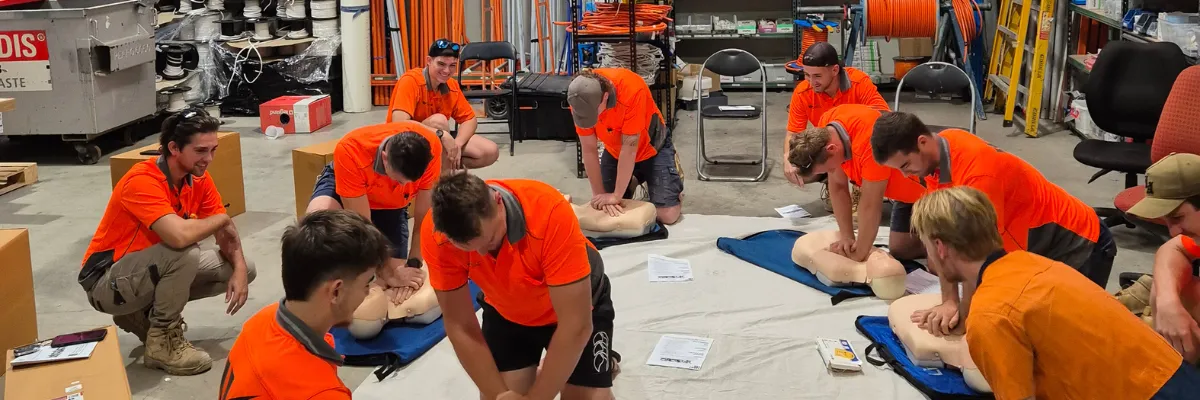
This is not a slide-reading course. HLTAID015 is heavily weighted toward hands-on, scenario-based skill development. Assessment is by direct observation of practical skills plus knowledge questions, not a written exam. You're assessed on what you can actually do under pressure.
For clinical workers like nurses and paramedics, that practical rigor is what makes the cert credible. For aged care workers anxious about whether they'll cope in a real emergency, it's what builds genuine confidence rather than just a certificate on a wall.
Delivery format
Some providers offer pre-course theory reading online to shorten the face-to-face component, but the assessed practical skills must be completed in person. That's not a provider policy, it's a requirement of the unit itself.
You can verify the full unit details on the training.gov.au HLTAID015 listing.
Now that you know what the unit includes, the next question is whether it applies to your role.
Who Needs the HLTAID015 Unit?
HLTAID015 isn't a universal requirement, but for certain roles and industries it's not optional either. Here's how it breaks down across the three groups who most commonly need it.
Healthcare professionals
If you're a registered nurse, enrolled nurse, paramedic, midwife, or allied health professional, there's a good chance your employer has already specified HLTAID015, particularly if you work in an ICU, emergency department, or cardiac care setting.
AHPRA registration comes with annual CPD obligations, 20 hours for RNs, 30 for ENs, 35 for midwives, and resuscitation training contributes meaningfully to that requirement. Hospital HR systems increasingly require a current HLTAID015 on file, not just HLTAID011, even if no one has explained exactly why.
Aged care and NDIS workers
For aged care workers, the compliance driver is the Aged Care Quality Standards, enforced by the Aged Care Quality & Safety Commission under the Aged Care Act 1997. Facilities are audited. Staff training records are reviewed, and an expired or insufficient cert isn't just a personal admin problem. It's an audit finding for the facility.
For NDIS support workers, the NDIS Practice Standards require workers to hold the skills and training needed to support participants safely. The NDIS Quality & Safeguards Commission reviews training records. First aid and resuscitation competency is a core expectation.
Who this applies to aged care:
An aged care support worker at a residential facility receives notice that the facility's next Quality Standards audit will include a review of staff training records. Her HLTAID015 expired six weeks ago. She books the next available course.
Workplace first aid officers in high-risk industries
In industries like mining services, utilities, construction, oil and gas, and emergency response contracting, HLTAID015 is increasingly being named in contract specifications, not just recommended. Under the WHS Act 2011 (Qld) and Safe Work Australia guidance, employers (PCBUs) have a duty to ensure designated first aid officers are competent for the risk environment.
This distinction matters for WHS managers building an internal business case: some requirements come from the regulator (SafeWork QLD), others from contract or client onboarding conditions. Knowing which one applies changes how you frame the conversation with leadership.
Who this applies to corporate WHS:
A WHS manager at a Brisbane utilities contractor is onboarding a new project that requires all designated first aid officers to hold HLTAID015. She contacts First Aid Alive to arrange onsite group delivery for twelve staff across two sites.
For more on the standard first aid cert and how it compares, see our HLTAID011 Provide First Aid course page.
HLTAID015 vs HLTAID011 What's the Difference?
This is the question that comes up more than almost any other, and it's worth answering properly. The difference isn't just cosmetic. It's the difference between a general first aid cert and an advanced resuscitation qualification.
What HLTAID011 covers
HLTAID011 Provide First Aid is the standard first aid certification for Australian workplaces. It covers CPR, management of common first aid emergencies, and basic life support. For the vast majority of general workplaces, offices, retail, hospitality, light industry, it's exactly what's required. It just wasn't designed for environments where cardiac and respiratory emergencies are a genuine occupational likelihood.
What HLTAID015 adds
HLTAID015 picks up where HLTAID011 stops. The additional skills are specifically focused on advanced resuscitation capability:
Oxygen therapy setting up and administering supplemental oxygen using the correct delivery equipment
Advanced airway management bag-valve-mask (BVM) ventilation and oropharyngeal airway (OPA) insertion, which go well beyond what a pocket mask allows
Higher-acuity scenario training the practical assessment is designed to replicate the pressure and complexity of a real resuscitation event
That gap matters enormously when your patient is elderly, medically complex, or in a high-acuity clinical or industrial environment.
When each is appropriate
Some employers run both tiers simultaneously, HLTAID015 for designated first aid officers likely to be first on scene, and HLTAID011 for the broader workforce. The CPR component, HLTAID009, is recommended for annual renewal under Australian Resuscitation Council guidelines regardless of which cert you hold.
For healthcare professionals, there's an additional consideration: how HLTAID015 fits into your AHPRA CPD requirements.
Does HLTAID015 Count Towards AHPRA CPD Hours?
For nurses, midwives, paramedics, and allied health professionals, getting certified isn't just about ticking a box for your employer. There's a second layer to it, your AHPRA registration obligations.
How AHPRA CPD works
AHPRA's CPD registration standard requires registered health practitioners to complete a set number of hours each registration year: 20 for RNs, 30 for ENs, and 35 for midwives. The training doesn't have to come from a prescribed list. What AHPRA requires is that the activity is relevant to your scope of practice and that you can demonstrate that relevance if audited. For most clinical staff, advanced resuscitation training is about as relevant as it gets.
Where HLTAID015 fits in a CPD portfolio
HLTAID015 is nationally accredited under the HLT Health Training Package, which makes it eligible as a formal CPD activity under the AHPRA registration standard. It's widely accepted across nursing, midwifery, and paramedicine boards as a legitimate CPD entry.
You complete the course, receive your Statement of Attainment, and log the training in your CPD portfolio with a note on its relevance to your practice. Certificates are issued within [CERT_TURNAROUND] hours of course completion, which matters when you're working to a registration deadline or need documentation for an employer HR system quickly.
For further detail on AHPRA's CPD registration standard, visit the AHPRA website.

How to Get HLTAID015 Certified in Brisbane
Finding a course isn't the hard part. Finding a provider who delivers it well, with the right trainer credentials, the right scheduling, and documentation that holds up under scrutiny, that's where it gets more selective.
What to look for in an RTO
For a unit like HLTAID015, the quality of delivery matters more than it does for a general first aid cert. When evaluating providers, check for:
ASQA registration verify the provider on training.gov.au before booking. An unregistered provider cannot issue a nationally recognized Statement of Attainment
ARC 2026 guideline-aligned content if a provider can't confirm their course reflects current Australian Resuscitation Council guidelines, that's a red flag
Trainer credentials and real-world experience a trainer who has worked in clinical, aged care, or high-risk industry settings brings a different quality of instruction than one who hasn't. Ask about it
Fast certificate turnaround First Aid Alive issues Statements of Attainment within [CERT_TURNAROUND] hours of course completion. For hospital HR systems and AHPRA CPD deadlines, that matters
Weekend and evening availability
This is the booking barrier that stops more people than anything else, particularly for shift workers in healthcare and aged care who can't get to a weekday course.
First Aid Alive offers weekend HLTAID015 courses in Brisbane specifically because that's when nurses, paramedics, and aged care workers can actually attend. If you're working a rotating roster and you've been putting off your renewal because you couldn't find a Saturday session, check our weekend HLTAID015 availability.
Onsite group delivery
For WHS managers coordinating training across multiple staff or sites, getting everyone to an external venue is often more complex than it needs to be. First Aid Alive delivers onsite HLTAID015 group training across Brisbane metro, which removes venue logistics entirely and minimizes time your staff spend off-site.
How to book
Visit our HLTAID015 course in Brisbane page and select a session
Complete the online booking form
Receive your confirmation and any pre-course materials
Attend your session and complete the practical assessment
Receive your Statement of Attainment within hours
Getting certified at the advanced resuscitation level isn't something most people do on a whim. There's usually a real reason behind it, a roster change, an audit notice, a contract requirement, a near-miss on shift that made everything feel a lot more real. Whatever brought you here, the fact that you've taken the time to understand what the unit actually involves puts you ahead of most people who just book the first course they find.
The compliance piece, AHPRA CPD, aged care audits, NDIS practice standards, contract specifications, is real and worth taking seriously. But the most practically useful thing about completing this unit isn't the certificate. It's the confidence that comes from having actually done it under pressure, in a scenario that felt close enough to the real thing that your hands knew what to do before your brain caught up.
Renewal dates come around faster than they feel like they should. Three years sounds like a long time until you're six weeks past your expiry date and your facility's audit window has just opened. Building a renewal schedule now, HLTAID015 every three years and CPR annually, removes that scramble entirely. The unit is the unit everywhere. The delivery is what makes the difference.