HLTAID015 Requirements: Everything You Need to Know
You've done your homework. You know you're eligible for HLTAID015, you've got your HLTAID011 sitting currently, and now you're staring down a booking page wondering what actually happens next. That's usually where the questions start piling up. Not "am I allowed to do this course" but "what am I actually signing up for."
We get this a lot from nurses, dental staff, and clinicians who've already ticked the eligibility box in their head and now want the practical picture. What's the HLTAID015 requirements before you walk in the door, what happens on the day, what you walk away with, and what keeps that certificate valid past the first year. Because unlike a lot of first aid quals, this one has a shorter clock ticking on it, and if you're the person your clinic relies on to be "the one who's covered," that clock matters.
Most people assume eligibility is the whole story. Check the prerequisite box, book the course, done. But HLTAID015 requirements don't stop at the door. There's what you need before you start, what actually happens once you're in the room, what document lands in your hand afterward, and what it takes to keep that document meaning something a year from now. Skip any one of those stages in your planning and you end up caught out somewhere down the track, either turning up unprepared, or worse, assuming you're covered for something you're not.
This guide walks through it in four stages, before the course, during it, what you get at the end, and what keeping it current looks like. No fluff, just what you need to plan around.
Quick Answer: What Are the Requirements for HLTAID015?
If you just want the short version before we get into the detail, here it is.
HLTAID015 requirements cover four stages:
Entry requirement: current HLTAID011 competency before you enroll
Pre-course requirement: online theory, completed before you show up face-to-face
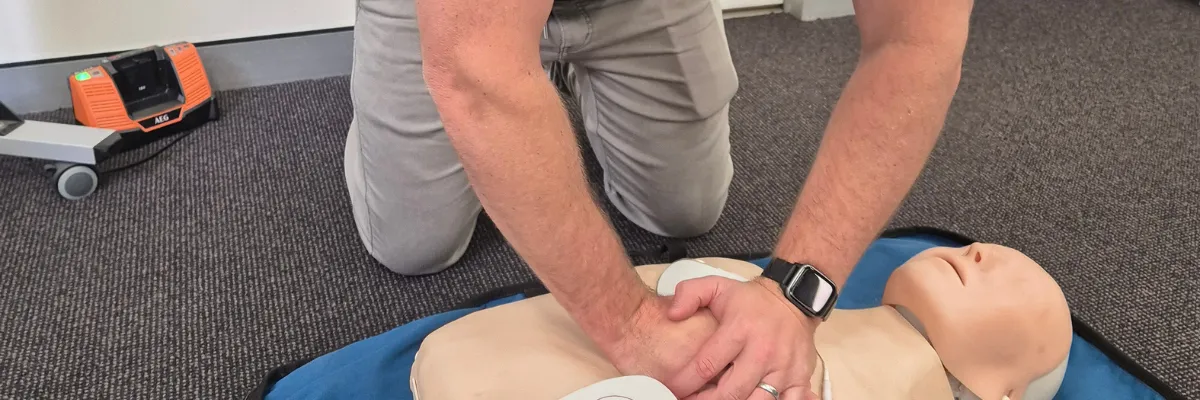
In-course requirement: practical assessment, including uninterrupted CPR, on both an adult and infant manikin, plus oxygen equipment, a bag-valve-mask, and simulated clinical scenarios
Ongoing requirement: renewal on a shorter cycle than HLTAID011, in line with Australian Resuscitation Council guidance
One thing worth flagging early, because people sometimes skim past it. There's a physical capability requirement there. Kneeling, bending, lifting, and a stretch of uninterrupted CPR. That part can't be simulated and it can't be skipped. If you've got a physical limitation that might make this tricky, it's worth thinking about before you book, not on the day.
Entry Requirements: What You Need Before You Start
The HLTAID011 prerequisite
You can't walk into HLTAID015 cold. You need current HLTAID011 competency before you enroll, full stop. This isn't a course that starts from scratch on chest compressions and DRSABCD, it builds on top of what HLTAID011 already gave you. If your HLTAID011 has lapsed, that's a separate conversation to have first.
Think of it this way. HLTAID011 gets you comfortable with the basics, recognizing an emergency, calling for help, starting compressions, using a defibrillator. HLTAID015 assumes all of that is already second nature and pushes further into airway management, oxygen therapy, and the kind of higher-acuity scenarios you're more likely to face in a clinical environment. If the basics aren't locked in yet, layering advanced content on top of shaky fundamentals doesn't serve anyone well, least of all you on the day it actually matters.
We've written a full breakdown of eligibility and prerequisites if you want to check your specific situation in more depth, including what counts as "current" and what doesn't. Check the full prerequisites guide
Physical capability requirements
Beyond the paper prerequisite, there's a physical one. This course expects you to physically perform uninterrupted CPR on both an adult and an infant manikin. You'll also need to kneel, bend, and lift as part of the practical scenarios. It's not something a trainer can talk you through or wave through on your behalf. If that's going to be a genuine issue for you, raise it with us before booking, not on assessment day.
This isn't us being difficult about it. The physical demand is baked into what the qualification actually certifies, that you can perform these skills yourself, under pressure, not just describe them correctly on paper. If you've got an injury, a mobility limitation, or anything else that might affect your ability to get through the practical component, having that conversation early means we can talk through what's realistic, rather than you finding out mid-assessment that something isn't going to work.

Requirements During the Course
Pre-course online theory
Before you turn up face-to-face, there's online theory to get through first. This isn't busywork. It's what frees up your face-to-face time for the hands-on stuff, the scenarios, the equipment, the parts you actually can't learn from a screen. Get this done properly before your session and the day itself runs a lot smoother.
Plenty of people are tempted to rush this part, treat it as a tick-box hurdle to get through before the "real" course starts. That's a mistake. The theory sets up the framework you'll be applying under pressure on the day, the clinical reasoning behind why you act in a certain order, why oxygen therapy gets introduced at a certain point, why airway management decisions get made the way they do. Turn up having actually absorbed it and you spend your face-to-face time practicing and refining. Turn up having skimmed it and you spend that same time playing catch-up on concepts you should already have down.
Face-to-face practical requirements
This is where the uninterrupted CPR requirement comes back into play, on adult and infant manikins both. You'll also be working hands-on with oxygen equipment and a bag-valve-mask, and running through simulated scenarios that mirror what an actual deteriorating patient looks like. Not a slideshow of what a deteriorating patient looks like. An actual scenario, playing out in front of you, where you have to respond.
This is deliberately the part that feels the most like the real thing, because that's the point. Reading about airway management and actually managing an airway while someone is telling you the patient's oxygen saturation is dropping are two completely different experiences. The scenarios are built to put you under a version of that pressure now, in a controlled setting with a trainer watching and coaching, rather than the first time you feel it being an actual emergency in your own clinic.
Assessment structure
Assessment happens in two parts, a theory paper and a practical skills assessment. Both need to be completed, and both need to be passed. There isn't a version of this where the practical is optional because you did well on paper, or vice versa.
The logic here is straightforward once you think about it. Knowing the correct sequence of actions on paper doesn't guarantee you can execute that sequence with your hands shaking and a colleague looking to you for direction. And being physically capable of good compressions doesn't mean you understand when to escalate, when to switch to oxygen, or how to read a scenario correctly. HLTAID015 wants both, because a genuine clinical emergency demands both.
What HLTAID015 Requirements Look Like in Clinical Settings
The requirements above are the same for everyone. What changes is how they show up depending on where you actually work.
Cosmetic and aesthetic clinics
If you're working in a cosmetic or aesthetic setting, the scenarios you'll be thinking about most are things like vascular occlusion or an anaphylactic reaction to local anesthetic. HLTAID015 gives you the airway management and oxygen therapy skills that sit underneath managing those situations, not just the general resuscitation basics. When something goes wrong mid-treatment, the person best placed to manage it is the one who's already rehearsed the sequence, not the one working it out in real time.
Dental practices
Chairside collapse is the scenario dental staff tend to picture. A patient going down mid-procedure, in a chair, with limited room to move. The airway management and oxygen therapy components of HLTAID015 speak directly to that kind of confined, high-pressure moment. You're not managing an emergency on an open floor with plenty of space, you're managing it around a dental chair, with equipment nearby and colleagues who need clear direction from someone who actually knows what they're doing.
Allied health and aquatic or fitness settings
For allied health workers dealing with high-risk clients, or aquatic and fitness staff, the relevant scenarios lean toward near-drowning and exertion-related cardiac events. The same core requirements apply, but the practical scenarios you'll be running through map onto what you're actually likely to face on the job. A physiotherapist working with high-risk cardiac clients and a lifeguard supervisor at an aquatic center are preparing for different situations, but the same underlying HLTAID015 skill set covers both.

Certification Requirements: What You Actually Receive
Statement of Attainment
Once you've passed both the theory and practical assessment, you receive a Statement of Attainment covering HLTAID009 and HLTAID015. This is your formal proof of competency, the document you'll actually be handing over or uploading when someone asks you to prove you're qualified.
It's worth understanding what this document is and isn't. It's not a generic attendance certificate saying you turned up and sat through a course. It's a formal statement, tied to specific unit codes, saying you demonstrated the competencies those units require, under assessment conditions. That distinction matters more than people realize until someone actually asks to see proof of what you're qualified in.
What it needs to satisfy
Here's where it gets a little more layered than people expect. Your Statement of Attainment needs to satisfy two separate systems, and they're not the same thing. One is your AHPRA CPD portfolio, where it gets filed as part of your ongoing professional development record. The other is hospital or clinic credentialing, which is a separate process run by your employer or the facility you work in, with its own requirements about what's accepted and when. Passing the course gets you the certificate. What that certificate needs to do for you afterward depends on which system you're feeding it into, so it's worth checking both if you're not sure.
A lot of clinicians assume that because the certificate satisfies one system, it automatically satisfies the other. Sometimes it does. Sometimes a credentialing body wants additional documentation, or has its own timeline expectations layered on top of what the Statement of Attainment itself says. Better to know that upfront than to assume coverage you don't actually have.
Ongoing Requirements: Renewal and Currency
A shorter renewal cycle than HLTAID011
Here's the bit that catches people out. HLTAID015 sits on a noticeably shorter renewal cycle than HLTAID011, in line with Australian Resuscitation Council guidance. If you're used to the rhythm of your HLTAID011 renewals, you can't apply that same mental calendar here, or you'll find yourself lapsed without realizing it.
It makes sense once you think about why. HLTAID015 covers higher-acuity, more perishable skills, airway management and oxygen therapy specifically are the kind of thing that gets rusty faster than compressions if you're not using them regularly. The shorter cycle isn't bureaucracy for its own sake, it's built around the reality that these particular skills need practicing again more often to stay genuinely reliable under pressure.
Certificate vs. employer requirement
There's a distinction worth understanding here too. The Statement of Attainment itself doesn't carry a hard expiry date stamped on it. But that's not the whole picture. Employers, insurers, and credentialing bodies are often stricter than the certificate technically requires, and they'll set their own renewal expectations on top of the ARC guidance. So the honest answer is, check with your employer or credentialing body what they actually expect, because "the certificate hasn't technically expired" and "my employer considers me current" aren't always the same statement.
This trips up more people than you'd expect, particularly those who assume the absence of a printed expiry date means they've got indefinite coverage. In practice, most workplaces that require HLTAID015 have their own internal policy dictating how often staff need to recertify, and that policy is usually the one that actually gets enforced day to day. Knowing both the ARC guidance and your own employer's expectation means you're never caught out by a gap between the two.
What to Do Next
You've got the whole picture now. What happens before you start, what the actual assessment day looks like, what lands in your hands afterward, and what keeping it current means going forward. That's usually the part people feel shaky about going in, not the CPR itself, but the not knowing what to expect around it.
If you're the person your practice leans on when something goes wrong, that gap between "I've done first aid" and "I can actually manage a deteriorating patient" is a real one. It's not abstract for you. You've probably already had the moment where you wondered if you'd know what to do, or you've heard the story from a colleague who did. That's usually what brings people to this course in the first place, not a compliance email, a real scare or a near miss.
There's no single right time to book this. Some people do it the week their HLTAID011 renews, because it's front of mind. Others do it after a specific incident shakes them, or when a new employer or accreditor asks for it outright. Whatever's brought you here, the requirements themselves don't shift depending on your reason for showing up.
If you're still not sure you meet the entry requirements, that's worth sorting first. Go check the prerequisites guide, confirm your HLTAID011 is current, and come back once you know where you stand. There's no benefit in booking a course if you're not ready to sit.
If you're confident and just weighing up timing, remember the renewal clock is shorter here than what you're used to. Building that into your calendar now, rather than after you've already lapsed, saves you the scramble later.
And if you're already there, eligible, aware of what the day involves, and just need to get it booked, that part's straightforward. Pick a time that works around your clinic, get it in the diary, and you're covered.
Whichever path fits, the underlying point stays the same. HLTAID015 requirements aren't complicated once you've seen them laid out, but they do reward a bit of forward planning. Know what's expected of you before you start, understand what the day actually involves, keep the certificate filed where you need it, and put the renewal date somewhere you'll actually see it. That's the whole system, and once it's set up, it mostly runs itself.