HLTAID015 Renewal Brisbane: When and How to Refresh in 2026
Sixteen staff, sixteen different completion dates and a sedation list that can't be cancelled. For most Brisbane practice managers, HLTAID015 renewal isn't hard to understand. It's hard to schedule. And somehow it always lands in your busiest month.
Here's the short version. Your team should renew HLTAID015 every 12 months. That's the accepted convention, drawn from Australian Resuscitation Council guidance and the annual CPR refresh in the First Aid in the Workplace Code of Practice. And because HLTAID015 includes HLTAID009, one renewal covers your CPR as well.
In a clinic it matters more than most places. You've got sedation lists running, accreditation under the National Safety and Quality Primary and Community Healthcare Standards to front up to, new starters coming through, plus casuals and locums who all trained on different dates.
So this isn't a guide for one clinician renewing on their own. It's a practical system for renewing your whole team at once. Below, we cover how often HLTAID015 needs renewing, what the refresh actually involves, how to renew a whole clinical team without losing appointments, and what to have filed for accreditation.
How Often Should a Dental Practice Renew Advanced Resuscitation Training?
Dental practices should renew HLTAID015 Provide Advanced Resuscitation and Oxygen Therapy every 12 months for every clinical staff member who assists with sedation or emergency care. This follows the First Aid in the Workplace Code of Practice and Australian Resuscitation Council guidance on keeping resuscitation skills current.
Renew every 12 months: oxygen therapy, suction, airway adjuncts, bag-valve-mask ventilation and AED use
Train new starters before their first sedation session
HLTAID015 includes HLTAID009 CPR, so one renewal covers both
Your practice policy, accreditation standards and indemnity insurer set the actual deadline
File every Statement of Attainment and drill log for accreditation
One small thing that trips people up. The Safe Work Australia Code of Practice writes its annual recommendation for CPR, and the same 12 months gets applied to HLTAID015 because the unit includes CPR. Your Statement of Attainment has no printed expiry date either, so your practice policy really sets the deadline. For a whole team though, the hard bit isn't knowing the rule. It's getting everyone onto one date, and that's what on-site group training is built for.

Why a 12-Month HLTAID015 Renewal Matters in a Sedation Practice
Twelve months is the standard. Why it matters more in a sedation practice comes down to how rarely your team touches the equipment.
Skills you use once a year are skills you lose
Think about the oxygen regulator, suction unit and bag-valve-mask sitting in your emergency kit. Most of your team handle them on training day, then not again until next year. That's high-stakes, low-frequency gear, and it's the stuff people freeze on.
So when someone asks how often to renew advanced resuscitation, this is the honest reason behind the 12 months. Hands forget faster than heads do. A dental assistant can recite every step and still fumble the mask seal or the regulator when it's real and the room's gone quiet.
Sedated patients change the risk profile
Sedation can affect breathing. Airway compromise and slowed breathing (respiratory depression) are the moments when oxygen therapy and bag-valve-mask (BVM) skills count the most. BVM is the hand-squeezed bag and mask your team uses to push air into a patient's lungs when they're not breathing well enough on their own.
What's required differs depending on the sedation your practice offers. So check the current Dental Board of Australia guidance for your sedation level, and have that chat with your seditionist too.
Accreditation and indemnity expectations
If your practice is accredited under the National Safety and Quality Primary and Community Healthcare Standards, surveyors expect evidence of emergency response training. A current Statement of Attainment for each clinical staff member is the simplest proof you can hand over.
Indemnity insurers can have their own expectations, and they're not all the same. Give yours a call and ask what they want to see, rather than guessing.
Here's when to book, and what to do when each one comes up.
Trigger | What to do |
Annual renewal is due | Book the whole clinical team onto one session |
New assistant or therapist joins | Train them before their first sedation session |
Accreditation is coming up | Check every certificate is current and drill logs are filed |
Near-miss in the chair | Run a drill and check who's due for renewal |
What a HLTAID015 Refresher Actually Covers
So what does your team actually go through on renewal day? Less theory than most people expect, and a lot more hands on the gear.
The equipment your team will use
A HLTAID015 refresher in Brisbane works through the same equipment your team would reach for in a real emergency in the chair:
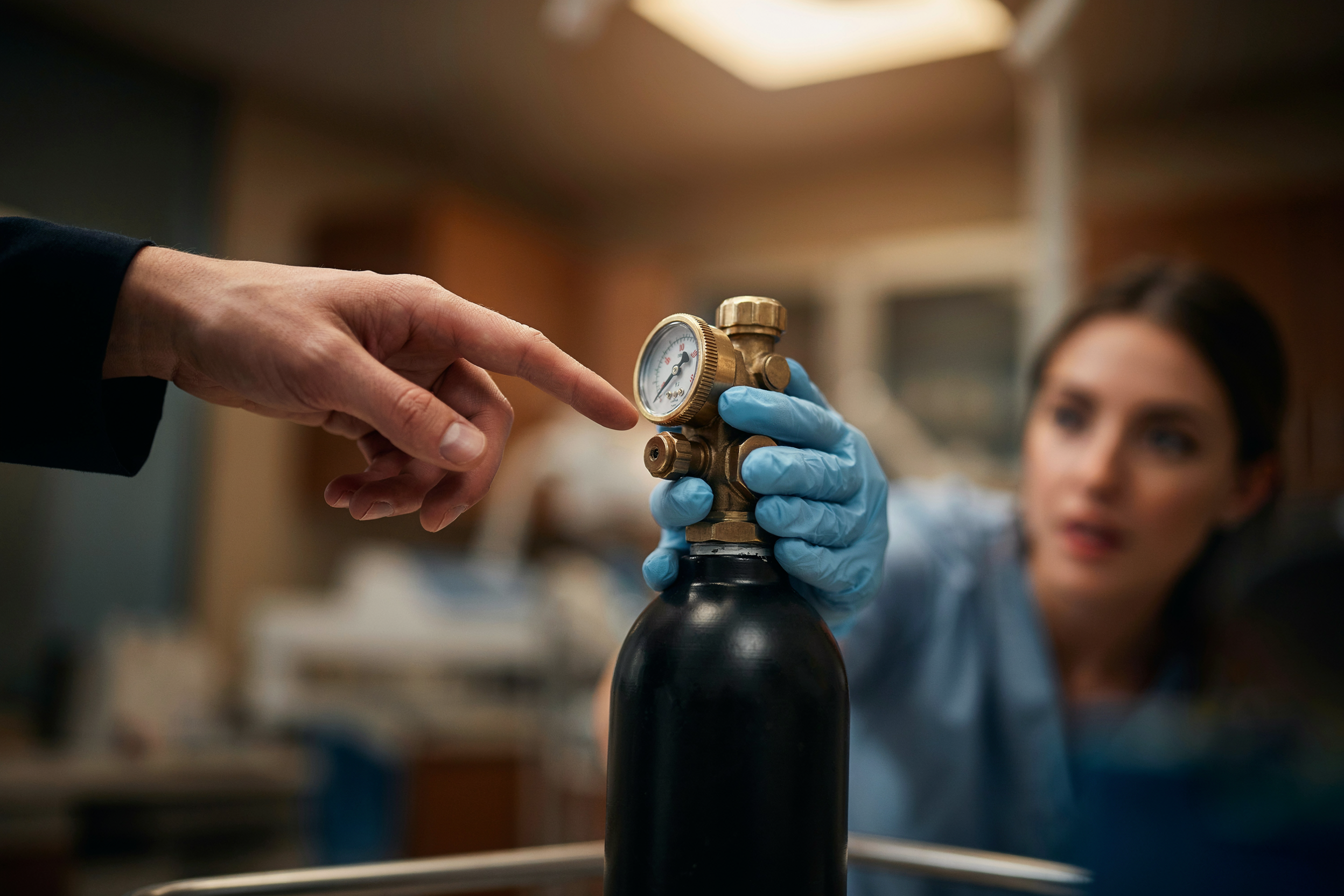
Oxygen delivery: the cylinder, the regulator and a non-rebreather mask (the mask with a reservoir bag that delivers high-flow oxygen)
Suction: clearing vomit, blood or fluid from the airway
Airway adjuncts: oropharyngeal airways that sit in the mouth and nasopharyngeal airways that go through the nose, both used to hold the airway open
Bag-valve-mask ventilation: breathing for a patient who isn't breathing well enough on their own
AED: the defibrillator, used alongside oxygen and CPR
CPR: performed to current Australian Resuscitation Council guidelines
Everything on that list maps back to the HLTAID015 unit on training.gov.au, so there's no filler in the day.
A refresher is the same unit, not a shorter one
This one confuses a lot of people. HLTAID015 renewal means your staff re-complete the unit and get reassessed on it, and the Statement of Attainment they walk away with still says HLTAID015. Some providers sell a "refresher" under their own product code, but that's a booking label, not a different qualification.
You might still see the old code HLTAID007 on older certificates. HLTAID015 superseded it, so if a new starter hands you an HLTAID007 certificate, that's the previous version of the same training.
Good to know: a Statement of Attainment has no printed expiry date. Your practice policy sets the deadline, not the certificate.
There's more practical assessment in HLTAID015 than in a standard CPR course, because everyone has to physically show they can set up oxygen, suction and a BVM. Course content follows current ANZCOR guidelines and the HLTAID015 unit on training.gov.au.
HLTAID015, HLTAID011 or HLTAID009: Who in Your Practice Needs Which
Not everyone in the practice needs the same level of training. And honestly, that's where a lot of renewal planning goes sideways, with the whole team booked into HLTAID015 when half of them never touch the oxygen kit.
It helps to know how these three units fit together, because they aren't competing courses. HLTAID015 includes HLTAID009 CPR. HLTAID011 Provide First Aid includes both HLTAID009 and HLTAID010 basic emergency life support. So it's really a question of how far up the ladder each role needs to go.
Here's how it typically breaks down in a dental practice.
Role | Typical unit | Why |
Dental assistants on sedation lists | HLTAID015 | Hands-on oxygen, suction and BVM during an emergency |
Oral health therapists | HLTAID015 | Clinical team member in the surgery |
Dentists and seditionists | Check registration and sedation requirements | Some hold advanced life support through other pathways |
Front desk and admin | HLTAID011 or HLTAID009 | Call for help, AED retrieval, general first aid |
Treat that as a starting point, not a rulebook. Your practice policy, your accreditation requirements and the sedation you offer all shape the final call. If your front desk person also helps out in surgery on sedation days, for example, they belong in the HLTAID015 group.
Getting this right gets better results. Clinical staff spend their session on the equipment they'll actually use, and front desk staff learn what they need without sitting through airway adjuncts they'll never handle. For front desk and admin, HLTAID009 CPR or HLTAID011 first aid usually does the job.
How to Run HLTAID015 Renewals for a Whole Clinical Team
Knowing who needs HLTAID015 is the easy part. Getting the whole team's HLTAID015 renewal done without cancelling a list is harder, and it's where most practices end up juggling dates all year. It doesn't need to be complicated though, it just needs a system.
Set one renewal date for the whole team
Staggered dates are the real headache. One assistant's due in March, another in July, the therapist in November, and you're forever booking someone somewhere. The fix is pulling everyone onto one annual session, even if it means renewing a few people early. You get one booking and one batch of certificates, and next year you just repeat it.
Run it after hours or on a Saturday, on site
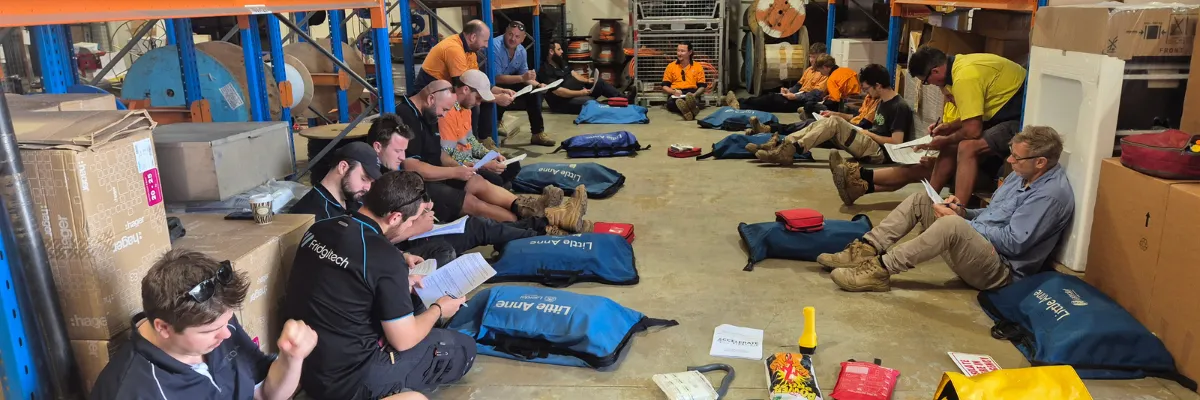
Your surgeries don't close, so the training comes to you after hours or on a Saturday, with no sedation lists cancelled. That's the whole point of onsite advanced resuscitation training in Brisbane. Your team doesn't sit in traffic getting to a venue, and you don't lose a single appointment.
Train on your own oxygen, suction and AED
If your team practices on a different regulator or AED from the one in your kit, that's the one they'll hesitate on in a real emergency. So where it's practical, the trainer works with your practice's own equipment. Your team learns their kit in their own surgery, which is about as close to the real thing as it gets.
Shorten the session with online pre-learning
Staff can knock over the theory online beforehand, so the on-site session goes straight to the hands-on skills and assessment. Less sitting, more doing.
Cover new starters, casuals and locums between sessions
People don't join your schedule. For new staff, casuals and locums who start between renewals, book an on-site session or a seat in a public class before their first sedation day. Nobody should work a sedation list untrained just because the team date is months away.
Keep a simple renewal tracker
A basic spreadsheet does the job. Use these columns: name, role, unit, completion date, renewal due and certificate filed. Update it the day certificates come through and it'll tell you who's due before anyone's overdue.
Put together, that's five steps: set one date for the whole team, book on site after hours or on a Saturday, train on your own kit, cover new starters before their first sedation day, and track every renewal. For HLTAID015 group training in Brisbane, that's the whole system.
Use Renewal Day to Check Your Emergency Kit
While the trainer's on site, use the session to check the kit itself. HLTAID015 renewal day is the one time every piece of equipment comes out and gets put to work, so it's the easiest time of year to spot what's missing or out of date. Nobody has to go hunting for it later.
And it's far better to find a flat cylinder on a Tuesday night in training than in the middle of a real emergency. Here's what to check:
AED pads and battery: both have expiry dates, and pads are easy to forget because they sit sealed in the case
Oxygen cylinder: check the contents gauge and confirm when it's next due for a refill
Suction: tubing and canisters present, connected and in working order
Airway adjuncts: a full range of sizes, not just the ones that got used last time
BVM masks: both adult and child sizes in the kit
Make it someone's job to note anything that needs replacing, then sort it straight after rather than letting it slide.
What to Have Filed for Accreditation
Once the training and the kit check are done, the last job is making sure you can prove it. When a surveyor asks, you want it sitting in one folder, not scattered across three inboxes.
Statements of Attainment
Keep a copy for every clinical staff member. Each one should show the unit code (HLTAID015), the RTO number and the completion date. Getting them emailed in one batch after a team session makes this a quick job.
Drill logs
Training proves your team learned the skills. Drill logs show they keep practising them. For each mock emergency, record:
the date
the scenario you ran
which staff took part
how it went
any follow-up actions, like replacing equipment or a skill to brush up on
Training tracker
This is the renewal tracker from earlier, with name, role, unit, completion date, renewal due and certificate filed. It shows at a glance that nobody's slipped through.
What a surveyor usually asks to see: current training records for your clinical staff, evidence that you run emergency drills, and a way of knowing when each person is next due. With these three files kept together, you've got all of that.
These records won't guarantee an accreditation outcome, but they make your evidence easy to find and hard to question. The ACSQHC primary and community healthcare standards set out what accredited services are expected to show.
If you're after an advanced resuscitation course for dental practices in Brisbane, the trainer comes to your surgery, so your team trains in the room where an emergency would actually happen. And for new starters who can't wait for the team date, a HLTAID015 refresher in Brisbane through a public class fills the gap
Book Your Team’s HLTAID015 Renewal in Brisbane.
Sixteen staff and sixteen different completion dates is how most practices start out. It doesn't have to stay that way, and the fix is a lot simpler than the juggling act most managers put up with all year.
Start with the 12 months. Your Statement of Attainment won't tell you when it's due, but renewing every year is what keeps oxygen, suction and BVM skills from fading on equipment your team barely touches between sessions. Hands forget, and a sedation day is no place to find that out.
Next, pull everyone onto one date. Renew a few people early if you need to, and from then on the whole clinical team renews together. That's one booking and one batch of certificates, every year.
Then bring the training to you. Run it after hours or on a Saturday so no lists get cancelled, and train on your own oxygen, suction and AED. Your team practises in the room where an emergency would actually happen, on the gear they'd actually grab.
New starters, casuals and locums won't line up with your team date, and that's fine. Book them in before their first sedation day, and add them to your tracker so nobody slips through.
While the trainer's there, check the kit as well. Expired AED pads, a low cylinder or missing suction tubing are much better found on a training night than in a real emergency. File your certificates, drill log and tracker together straight after, and your accreditation evidence is sorted in one go.
Do it this way and your HLTAID015 renewal stops being a year-round headache. It becomes one booking a year that looks after itself. And your team walks out more confident with the gear than when they walked in.