HLTAID015 Prerequisites: What You Need Before Enrolling
Thinking about booking HLTAID015 so you can finally close that gap between basic CPR and actually being able to manage a deteriorating patient? Good instinct to have. But before you lock in a date, there's one question worth sorting out first: do you actually meet the prerequisites?
HLTAID015 isn't like HLTAID011. It's not an entry point, it's a step up. Which means there's a baseline of first aid competency, and in most cases some kind of clinical or high responsibility work context, that the course assumes you're already bringing with you. Get this wrong and one of two things happens. Either you turn up to a course you're not actually ready for, or worse, you find out down the track that something's missing from your AHPRA CPD file, or your employer's compliance records, and that's a far bigger headache to sort out after the fact than before.
This guide walks through exactly what HLTAID015 requires, your current HLTAID011 certificate, your experience context, and the physical and theory prerequisites, so you can book knowing you're eligible instead of hoping you are.
What Are the Prerequisites for HLTAID015?
Here's the short answer, if you want it straight up before we get into the details.
To enroll in HLTAID015 (Provide Advanced Resuscitation and Oxygen Therapy), you'll need to meet these requirements:
A current HLTAID011 (Provide First Aid) certificate. This is the core prerequisite and it has to be current, not expired.
A valid USI (Unique Student Identifier) so your certificate can actually be issued.
The physical capacity to perform uninterrupted CPR on a manikin, on the floor.
A minimum age, usually somewhere between 14 and 16 depending on the provider.
Basic digital access, since there's a pre-course online learning component built into the delivery.
If your HLTAID011 has lapsed, don't stress, most providers, Accelerate First Aid included, will let you complete it alongside HLTAID015 in a single combined booking.
The Core Prerequisite: A Current HLTAID011 Certificate
If there's one box you need ticked before anything else, it's this one. HLTAID011 first, HLTAID015 second. No way around it.
Why HLTAID011 Comes First
Think of it like this: HLTAID015 doesn't replace what you learned in HLTAID011, it builds on top of it. Compressions, basic airway, AED use, that's all assumed knowledge walking in the door. The course isn't going to stop and re-teach you how to do CPR from scratch, it's going to layer advanced airway management, oxygen therapy, and higher acuity resuscitation scenarios on top of skills you're expected to already have.
That's the whole logic of the skills progression. You can't manage an airway with an oxygen unit if the basics of compressions and response aren't already second nature. So the RTO sets HLTAID011 as a hard prerequisite, not because it's a box ticking exercise, but because the training genuinely won't make sense without it.
How "Current" Is Defined
Here's where a bit of confusion creeps in for a lot of people. Most RTOs, Accelerate First Aid included, require your HLTAID011 to be non-expired at the time you enroll in HLTAID015. Not lapsed, not "I did it a few years back and I'm pretty sure it's fine."
Worth knowing the difference between two things that get mixed up a lot:
HLTAID011 full renewal cycle sits at 3 years. That's your actual certificate expiry.
Australian Resuscitation Council (ARC) CPR currency guidance recommends redoing your CPR skills annually, even within that 3 year window, because compression technique and response confidence fade a lot faster than the certificate itself expires.
So you can technically hold a "current" HLTAID011 on paper while your actual hands-on CPR confidence has quietly slipped. It's worth being honest with yourself about which one you're actually working with before you walk into an advanced course.
What If Yours Has Lapsed?
If you've checked and your HLTAID011 has actually expired, don't panic and don't assume you need to book two separate courses. We'll cover this properly further down, but the short version is there's a combined booking option that lets you knock both out together.
For the unit of competency detail straight from the source, training.gov.au has the HLTAID015 unit outline if you want to see exactly what's mapped against the qualification. And if HLTAID011 is the one you need to sort first, our HLTAID011 course page has everything for that booking.
Meeting the certification prerequisite is only half the picture, HLTAID015 also has practical and physical requirements worth knowing before you book.

Physical and Practical Requirements You'll Need to Meet
Beyond the HLTAID011 piece, there's a handful of practical things the course expects you to have sorted before you show up. None of them are complicated, but missing one on the day can genuinely hold things up.
The CPR Demonstration
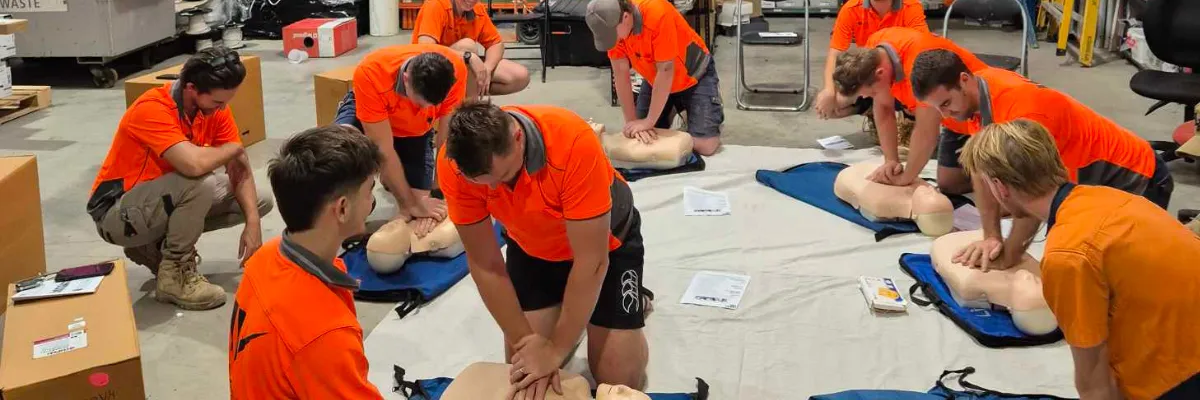
You'll need to physically demonstrate uninterrupted CPR on a manikin, on the floor, covering both adult and infant scenarios. This isn't a theory question, it's hands on. If you've got a bad knee, a shoulder injury, or anything that might affect your ability to get down on the floor and sustain compressions, it's worth flagging with the provider before the day rather than discovering it mid course.
USI (Unique Student Identifier)
Your USI is non negotiable, no USI means no certificate, full stop. If you don't already have one, or you're not sure whether yours is still active, sort it out through the government USI portal before enrolment day. It takes a few minutes and it's free, but it's the sort of thing that's easy to forget until you're already sitting in the classroom.
Digital Access for Pre-Course Learning
HLTAID015 runs on a blended delivery model, which means there's an online theory component you complete before the practical session. You'll need reliable internet access and a device that can handle it, laptop, tablet, whatever works for you, completed ahead of your booked date. Turning up without having done the pre-course work usually means you can't proceed on the day.
Quick checklist before you book:
Current HLTAID011 certificate (not expired)
Active USI on hand
Physically able to complete floor based CPR
Meet the minimum age requirement for your provider
Digital access sorted for pre-course online learning
Prerequisites tell you if you can enroll. The next question is whether your role means you should.
Does Your Clinical Role Actually Require HLTAID015?
This is the question a lot of people skip past, and it's actually the more important one once you've confirmed you're eligible.
When HLTAID011 Alone Isn't Enough
If you're AHPRA registered, or working in a role where things can go wrong fast and go wrong badly, HLTAID011 covers you for the basics. Compressions, AED use, general first response. But there's a real scope gap between that and being the person in the room who can actually manage an airway, run oxygen therapy, and stabilize someone properly until paramedics take over. Our lead trainer's paramedic background is exactly why this gap gets talked about so directly in our courses, the difference between knowing compressions and actually having the confidence to manage a genuine airway and oxygen situation under pressure isn't something you pick up from a manual.
Industry Context
The scenarios that matter look different depending on where you work, which is part of why generic training so often falls short for this audience.
Cosmetic and aesthetic clinics: vascular occlusion, anaphylactic reactions to local anesthetic, cardiac events mid treatment
Dental practices: chairside collapse, airway compromise under sedation
Allied health: high risk client deterioration during treatment or exercise
Aquatic and fitness settings: near drowning, cold water incidents, poolside collapse
Clinical and cosmetic settings see these kinds of events more often than most people outside the industry would assume, which is exactly why role specific training matters more than a generic certificate.
Employer, Insurer, and Accreditation-Driven Requirements
Sometimes the decision isn't really yours to make on gut feel alone. Cosmetic injector accreditation pathways, insurer requirements, and employer policy increasingly name HLTAID015 specifically, not just "a first aid certificate." Worth checking directly with your accrediting body or your practice's insurer if you're not sure whether it's a requirement or a recommendation for your specific role.
If you've read this far and realized a prerequisite is missing, you're not out of options.
What If You Don't Meet a Prerequisite Yet?
Realizing you're not quite eligible yet isn't the end of the road, it just means there's a step to sort out first. Here's how that usually plays out.
Combined HLTAID011 + HLTAID015 Booking Option
If your HLTAID011 has expired, or you've never actually done it, most providers, Accelerate First Aid included, let you book both in one go. You complete HLTAID011 first within the same session structure, then move straight into HLTAID015. No need to book two separate courses and wait around in between. Have a look at our combined HLTAID011 + HLTAID015 booking page for how that works.
Renewing an Expired HLTAID011 Before You Enroll
If you'd rather knock HLTAID011 out separately first, that's fine too, plenty of people prefer to get that sorted on its own timeline rather than combining sessions. Just keep in mind the currency requirement covered earlier, it needs to be non-expired at the time you actually sit HLTAID015.
LLN (Language, Literacy, Numeracy) Support If Needed
If English isn't your first language, or you've got any concerns about the literacy or numeracy demands of the theory component, mention it when you enquire. RTOs are required to have LLN support processes in place, and it's a genuinely straightforward conversation to have upfront rather than something to worry about alone once you're already enrolled.
Once your prerequisites are sorted, here's what to actually expect walking into the course.

Preparing for Your HLTAID015 Course on the Gold Coast
Prerequisites sorted, certificate current, USI in hand. Here's what actually happens once you've got a date booked.
What to Bring
Keep it simple on the day:
Photo ID
Your USI (written down or accessible on your phone)
Clothing you can actually move in and get down on the floor with, this is a hands-on practical session, not a desk day
What Happens If You Don't Meet a Requirement on the Day
Occasionally something slips through, an expired USI, a certificate that turned out to have lapsed without anyone noticing. If that happens, it's not a disaster, but it usually does mean you can't complete the course that day. Better to double check everything on this page before you turn up than find out at the door.
Our Gold Coast sessions run in a location close enough to the surrounding clinic clusters that you're not losing half your day just getting there and back.
If you've read this far and realized a prerequisite is missing, you're not out of options.
Ready to Check Your Eligibility?
If you've made it this far, you've got a pretty clear picture of where you stand. HLTAID011 current or not, USI sorted or not, role context that actually calls for HLTAID015 or not.
Here's the simple version of what comes next:
Confirm your HLTAID011 is current, check the expiry date, not just whether you remember doing it
Check your role's specific requirements, talk to your employer, insurer, or accrediting body if you're not certain
Book your session, combined booking if HLTAID011 needs sorting too, straight into HLTAID015 if you're already covered
Have a look at the HLTAID015 course page for dates and session details, or if you're still weighing up whether HLTAID015 is actually the right step versus HLTAID011, our HLTAID015 vs HLTAID011 comparison guide walks through that decision properly.
Conclusion
Getting HLTAID015 booked isn't complicated once you know what's actually being asked of you. A current HLTAID011, a valid USI, the physical ability to get down on the floor and hold uninterrupted compressions, and a bit of digital access for the pre-course work. None of it is unreasonable, and none of it should come as a surprise on the day if you've read through this properly.
What trips people up more often than the prerequisites themselves is the assumption that they're already covered when they're not. A HLTAID011 certificate sitting in a drawer somewhere, technically current on paper but nobody's actually checked the expiry date in a while. That's a five minute check that saves a genuinely frustrating morning turning up to a course you can't complete.
The bigger question underneath all of this isn't really about eligibility, it's about whether HLTAID015 matches what your role is actually asking of you day to day. If you're the person clients or patients look to when something goes wrong, compressions and an AED are a starting point, not the full picture. Airway management, oxygen therapy, the ability to hold a deteriorating situation steady until paramedics arrive, that's a different level of capability, and it's one a lot of clinical roles genuinely need whether or not anyone's explicitly told you so.
If you've worked through this and realized something's missing, a lapsed HLTAID011, an unclear USI, uncertainty about whether your role even requires it, none of that puts you back at square one. There are combined booking paths, renewal options, and support available for exactly this situation. The people who get stuck aren't the ones missing a prerequisite, they're the ones who never checked in the first place.
Scheduling shouldn't be the thing standing between you and a certification you actually need. Weekend and evening intensive options exist because clinic hours are real and appointment books don't leave much room for a weekday off, and that's worth factoring into when you actually book rather than treating it as an afterthought.
At the end of it, this is a fairly small amount of checking against a genuinely significant gap in capability if it goes unaddressed. Confirm what you're working with, confirm what your role actually calls for, and book once you know, not while you're still guessing.