HLTAID012 Prerequisites: Full 2026 Checklist
Thinking about enrolling in HLTAID012 but you're not actually sure if you qualify? You wouldn't be the first person to get to the booking page, see a list of requirements, and then close the tab because you weren't sure if you tick every box. Maybe you're 16 and wondering if you're even old enough. Maybe English is your second language and you're worried the theory component is going to trip you up. Or maybe you just don't want to book a course and then get turned away at the door for something nobody bothered to mention beforehand.
Here's the good news. The HLTAID012 prerequisites are a lot more forgiving than people expect, and most of what trips people up isn't even about qualifications at all. It's about things like age, language, and what your body needs to physically do on the day. This checklist walks you through every single one of those requirements, so you know exactly where you stand before you book anything.
What Are the Prerequisites for HLTAID012?
Short answer, there isn't a long list of boxes to tick before you can walk in the door. HLTAID012 is built to take people from zero, so if you're expecting some kind of formal entry test, you can relax. Here's what actually matters:
Age. You'll generally want to be 14 or older, since you need to actively take part in the CPR demonstrations, not just watch someone else do it.
Language, literacy and numeracy. You'll need a basic level of English to get through the theory and the assessment questions.
Device access. You'll need a laptop, tablet or phone to work through the online pre-course learning before you show up.
Physical capacity. This is the one people forget about. You'll be getting down on the floor for CPR, kneeling, and doing some manual handling, so your body needs to be able to do that.
That fourth one, physical capacity, is honestly the requirement most other providers barely mention, and it's the one that catches people off guard more than anything else. We'll get into exactly what that looks like a bit further down.
Do You Need Any Prior First Aid Experience for HLTAID012?
No. None. Zero. If there's one HLTAID012 prerequisite people worry about that genuinely isn't a prerequisite at all, it's this one. You do not need to have done a first aid course before, you don't need any medical background, and you certainly don't need to already know what DRSABCD stands for.
Why HLTAID012 Is Designed for Complete Beginners
The course is built assuming you're starting from scratch. Think about who actually enrolls in this. Brand new educators straight out of their Diploma, career-changers coming out of retail or hospitality, mums and dads picking up casual shifts at the center down the road. If HLTAID012 required prior experience, half the childcare workforce in Australia wouldn't be able to get certified, and that's obviously not how it works.
Trainers pitch the whole day at "I know nothing" level and build up from there. Nobody is going to assume you've seen a real emergency before, and nobody is going to judge you for asking a question that feels obvious. That's the whole point of the format.
What You'll Learn From Scratch
By the end of the day you'll walk out knowing how to do CPR on both an adult and an infant, how to manage a choking child, what to do for an asthma attack, and how to respond to anaphylaxis with an EpiPen. None of that is assumed knowledge going in, it's all taught, practiced, and then assessed on the day.
If you're a new hire trying to get ratio-ready as fast as possible, this is genuinely one of the least intimidating courses you'll do all year. No experience needed, no prerequisite knowledge, just show up and learn.
Age and Language Requirements for HLTAID012
Minimum Age to Enroll
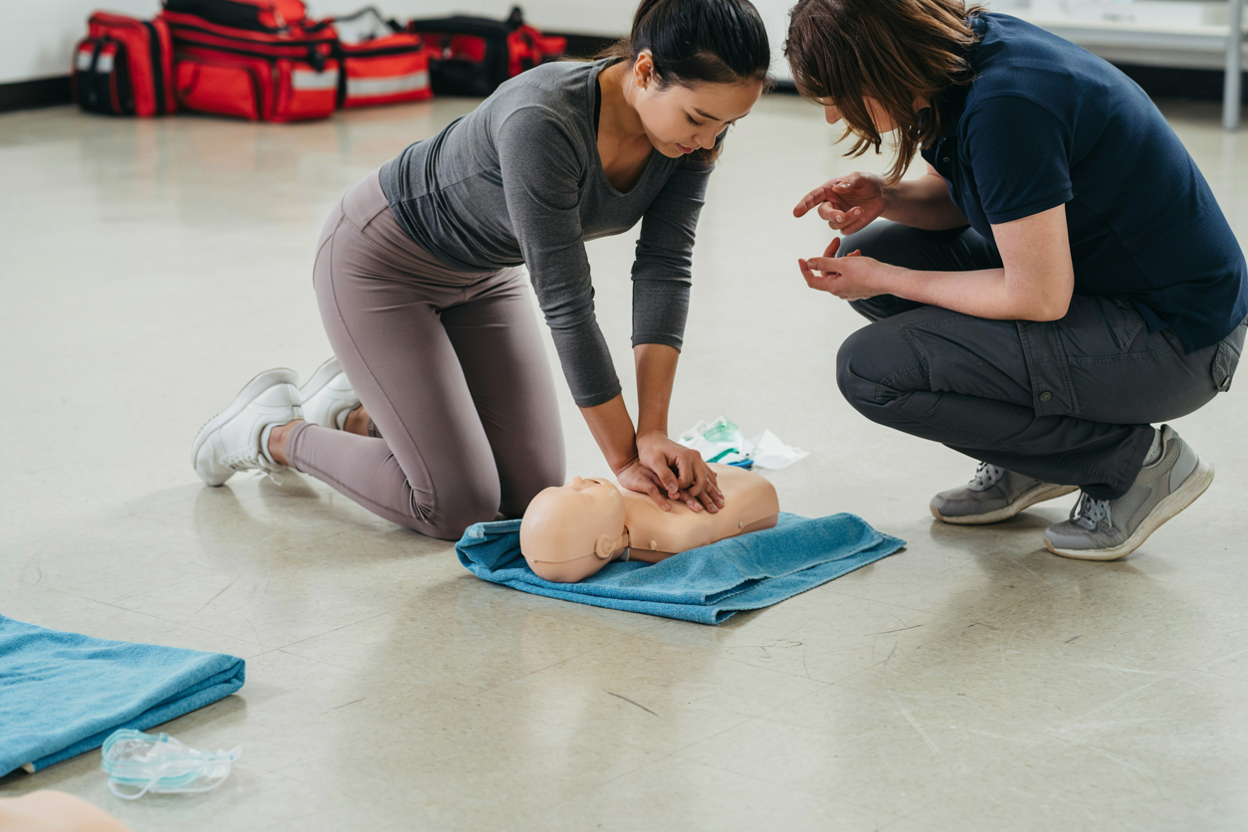
The general HLTAID012 age requirement is 14 years and up. The reason for the age floor isn't arbitrary, it comes back to that active participation piece. You're not sitting in the back of the room during the CPR component, you're on the floor doing compressions on a manikin alongside everyone else. So the age requirement really exists to make sure whoever's in the room can physically and mentally engage with that part of the training.
If you've got a younger family member wanting to get a head start on their childcare career, it's worth a quick call to check age-specific conditions before booking, just so there's no surprise on the day.
Language, Literacy and Numeracy (LLN) Requirements
There's a basic LLN requirement, because the theory component and the final assessment are both delivered in English. You need enough reading comprehension to work through the online pre-course material, and enough written English to answer the assessment questions. This isn't a high bar, it's not an academic English test, it's just "can you read a scenario and answer a multiple choice question about it."
What Happens If English Isn't Your First Language
Childcare centers run on an incredibly multicultural workforce, and providers know this. If English is your second language, that is not automatically a barrier to enrolling in HLTAID012.
The goal here is to get you certified and confident, not to fail you on a technicality. Providers who actually work in childcare understand this reality better than most, because they're training this exact workforce every single week.
Physical Requirements: What Your Body Needs to Do During HLTAID012
Right, this is the section that catches the most people off guard, and honestly, it's the one most other providers gloss over or don't mention at all. HLTAID012 physical requirements are real, and they matter more than most of the paperwork-style prerequisites combined.
Performing CPR on the Floor (Adult and Infant Manikins)
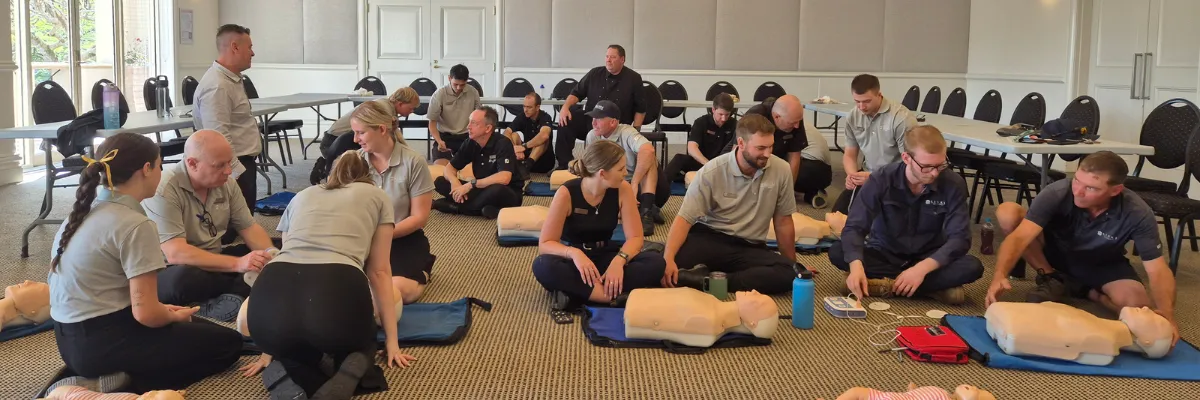
You will be on the floor. Not standing at a table doing compressions on a manikin propped up at waist height, actually down on the ground, the way you would be in a real emergency with a child in your care. You'll practice on both an adult manikin and an infant manikin, since childcare first aid needs to cover both scenarios realistically.
Getting down to floor level, staying there through a set of compressions, and getting back up again is a genuine physical task. If you haven't thought about this part before booking, now's the time to think about it.
Kneeling, Lifting and Manual Handling
Beyond the CPR component, you'll be kneeling for extended stretches, and there's an element of manual handling involved as you work through different scenarios. It's not intense, but it's also not nothing. If your job doesn't normally involve getting up and down off the ground, this might be the most physical thing you do all week.
What If You Have an Injury or Mobility Limitation?
If you've got a current injury, a chronic condition, or a mobility limitation of any kind, please don't just assume you're locked out of getting certified. The right move is to contact the provider before you book, explain your situation, and talk through what's possible. Trainers deal with this more often than you'd think, and there are usually ways to adapt the session so you can still participate and still get certified.
The worst outcome is turning up on the day, not being able to fully participate, and feeling caught out. A quick phone call beforehand avoids all of that.
What You Need Before Your Course: The Pre-Course Checklist
Once you've confirmed you meet the HLTAID012 prerequisites around age, language and physical capacity, the rest is just logistics. Here's what you actually need to sort out before your practical day.
Device Access for Online Theory
Before you set foot in a training room, you'll work through the online theory on a device of your choice. Laptop, tablet, or phone all work. This is blended learning, meaning the theory happens in your own time, at your own pace, and the practical day is reserved for hands-on skills, not sitting through slides.
What to Bring on Practical Day
Nothing complicated. Comfortable clothes you don't mind getting on the floor in, closed shoes, and proof you've completed the online theory component. That's really it.
HLTAID012 Prerequisites vs. HLTAID011 and HLTAID009: Which Course Do You Actually Need?
This is probably the single most confusing part of the whole process, and it's not really about HLTAID012 prerequisites at all. It's about figuring out which course you need in the first place.
Why Childcare Roles Specifically Require HLTAID012
HLTAID012 is the childcare-specific first aid qualification, and it exists because kids aren't just small adults. The course covers infant and child CPR, choking response for different age groups, and the kind of medical scenarios that come up specifically in an early learning environment: anaphylaxis, asthma, allergic reactions in toddlers. A generic workplace first aid course doesn't drill any of that.
Under the Education and Care Services National Regulations, childcare educators need this specific qualification, not a general one. So if you're working in a center, HLTAID012 is the one that actually meets your compliance requirement.
What If You Already Hold HLTAID011?
If you've already got HLTAID011 (standard first aid) from a previous job, that's a good foundation, but it doesn't automatically satisfy the childcare-specific requirement. HLTAID011 doesn't go deep enough into infant CPR and pediatric-specific scenarios the way HLTAID012 does. Most people in this position still need to complete HLTAID012 to be ratio-eligible in a center.
If you're not sure which one applies to you, that's exactly the kind of thing worth a quick call before booking, rather than guessing and booking the wrong course.

Prerequisites for Centre Directors: Booking Staff In Without Breaching Ratios
If you're the one doing the booking rather than the one attending, the prerequisite conversation looks a bit different. You're not just asking "do I qualify," you're asking "does my whole team qualify, and how do I get them through without shutting a room down."
Do All Staff Need to Meet the Same Prerequisites?
Yes. Every educator getting certified needs to meet the same age, language and physical requirements as anyone else. There's no separate, lower bar just because they're booking as part of a group. What changes when you're booking for a center isn't the prerequisites themselves, it's the logistics around delivering the training.
Getting Ready to Book Your HLTAID012 Course
By now you've probably worked out that the HLTAID012 prerequisites aren't really the hurdle they first appeared to be. There's no experience needed, the age requirement is straightforward, language support is available if you need it, and the physical side of things is manageable as long as you know what's coming and you flag any concerns before the day rather than on it.
Most people who hesitate before booking aren't held back by an actual eligibility issue. They're held back by uncertainty. Not knowing whether they qualify, not knowing which course applies to their role, not knowing if a mobility issue rules them out. Once that uncertainty is cleared up, the decision to book usually gets a lot easier.
Centre Directors face a slightly different version of the same problem. It's not "am I eligible," it's "how do I get my whole team eligible without breaching ratios or closing a room for a day." Staggered bookings solve that, and it's a conversation worth having with your provider early rather than scrambling closer to a renewal deadline.
Whatever position you're in, new hire, career-changer, someone managing a mobility concern, or a Director trying to keep a growing center fully covered, the prerequisites themselves are rarely the real barrier. A quick conversation before you book almost always clears up whatever's holding you back.
Ready to check your eligibility, or need to book a group of staff in without breaching ratios? Get in touch to talk through your situation before you book, and find out exactly where you stand on HLTAID012 prerequisites.
Still working out whether HLTAID012 or HLTAID011 is right for your role? Have a read of our HLTAID011 comparison page before you book, so you know you're booking the right course the first time.