HLTAID011 Requirements: Everything You Need to Know
HLTAID011, HLTAID009, HLTAID003: if you've spent ten minutes searching and you're still not sure which first aid course you actually need, you're not alone. Honestly, half the people who ring us are mid-Google-search, phone in one hand, slightly frustrated, trying to work out if the course code they were told to book is even the right one.
That's what this page is for. If someone said "you need HLTAID011" and you want to know exactly what that means before you book, you're in the right spot. We'll walk through the HLTAID011 requirements: who's eligible, what the physical side involves (it's less scary than people think), what to bring, what the course covers, and how long the certificate lasts.
This is delivered as nationally recognized training, aligned with current ARC guidelines. No guesswork, no surprise, fine print. Just what you need to know before you book your HLTAID011 course.
What Are the Requirements for HLTAID011?
Short version, before we get into all the detail below:
Minimum age: 14 years old
Internet access: needed for the online theory component
Basic English: language, literacy and numeracy (LLN) at a conversational level, not academic
Physical capability: uninterrupted CPR on a floor-level manikin, plus the mobility to move into position, kneel, and demonstrate bandaging
Valid photo ID: bring it on assessment day
A USI (Unique Student Identifier): you'll need one to receive your Statement of Attainment
That's the list in full. If any of the physical requirements feel like they might be a concern for you (an injury, a condition, anything at all), get in touch with us before you book. We'd genuinely rather talk it through first than have you turn up worried on the day.
What Is HLTAID011 and Who Needs It?
HLTAID011, "Provide First Aid," is the standard, nationally recognized first aid qualification that most workplaces, insurers, and licensing bodies ask for. It's the one that covers the broad stuff: CPR, basic life support, wound and injury management, and how to respond to asthma and anaphylaxis emergencies. One course, one certificate that covers nearly everything a general workplace needs.
Here's the bit that trips people up though: HLTAID011 isn't a standalone CPR course. It actually has HLTAID009 (CPR) bundled inside it, not sold separately. So when you book HLTAID011, you walk away with two Statements of Attainment, not one, and you don't need to book HLTAID009 on top.
HLTAID011 vs HLTAID009 vs HLTAID003, Which Code Applies to You
A quick breakdown, because this is genuinely the question we get asked the most:
If you're sitting there holding an old HLTAID003 certificate wondering if it's still any good, the short answer is: HLTAID011 has replaced it. You'll need to requalify under the current code.
Jobs and Industries That Require HLTAID011
A pretty wide net of people end up needing this one. Office workers and workplace First Aid Officers, fitness and gym staff (Fitness Australia requires it for registration and insurance purposes), tradespeople and field workers, hospitality staff, community and support workers, and small business owners covering themselves or their staff. If you've been told "you need a first aid certificate for work" without much more detail than that, there's a strong chance HLTAID011 is exactly what they mean.
For more detail specifically on the CPR component, our HLTAID009 CPR page breaks that down on its own. You can also look up the official HLTAID011 unit of competency on training.gov.au if you want to see the formal national curriculum requirements behind the course.

HLTAID011 Eligibility Requirements
Eligibility for HLTAID011 is genuinely simple, more simple than people expect. There's no medical exam, no fitness test you have to pass beforehand, no qualifications needed to walk in the door. A few basic things, and you're good to go.
Minimum Age Requirement
You need to be at least 14 years old to undertake HLTAID011. That covers most school-based vocational programs as well as the adult workplace market, so whether you're a teenager doing this through school or an adult booking it for work, the age bar is the same.
Language, Literacy and Numeracy (LLN) Requirements
This one sounds more intimidating than it is. LLN just means you need a basic, conversational level of English, enough to read simple instructions, follow a verbal briefing, and fill in a short form. It's not an academic test. It's not a written exam in the way school exams work. If you can read a text message and have a normal conversation, you'll be fine.
Do You Need a USI? How to Get One Free
Yes, you'll need a USI (Unique Student Identifier) to receive your Statement of Attainment. Every RTO in Australia is required to issue this through the USI system, it's not unique to us, it's a national requirement.
If you don't already have one, you can create one for free in a few minutes at usi.gov.au. You'll need some form of ID to verify your identity (driver's license, passport, or Medicare card all work). Do this before your course date if you can, it saves any admin delay on the day.
Not sure if HLTAID011 is right for you? Contact us and we'll point you in the right direction.
Physical Requirements: What You'll Actually Be Asked to Do
Right, let's talk about the part that makes people nervous. If you've been putting off booking a first aid course because you're worried about the practical assessment, you're genuinely not alone, and we want to talk you through it properly rather than gloss over it.
The CPR Requirement, Explained
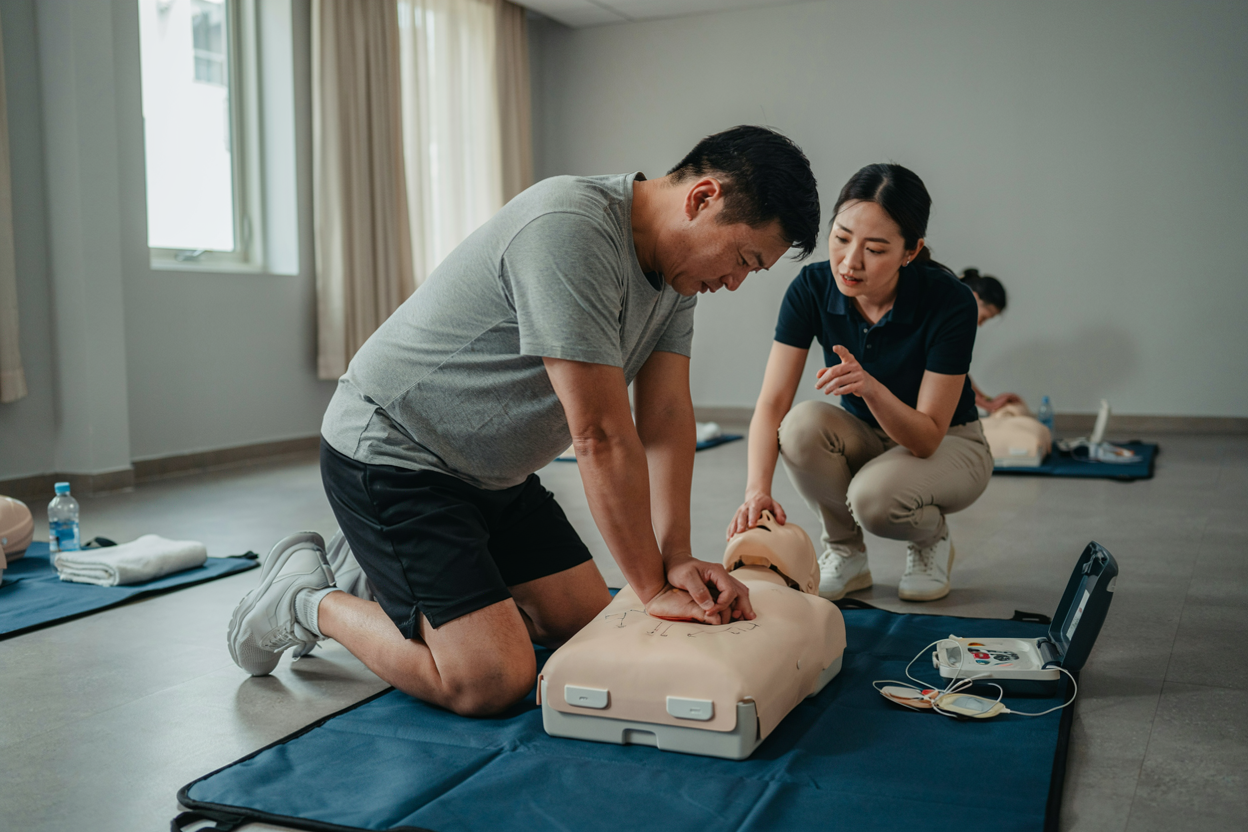
The headline requirement is uninterrupted CPR on a floor-level manikin. That's the benchmark. CPR can feel harder than it looks once you're actually doing chest compressions, we get that. But it's a manageable, achievable standard that's designed to be done by everyday adults, not athletes.
You won't be assessed on speed or perfect form down to the centimeter. The trainers are watching for the right technique and enough sustained effort to know you could do this in a real emergency. That's the whole point of it.
Mobility and Movement During Practical Assessment
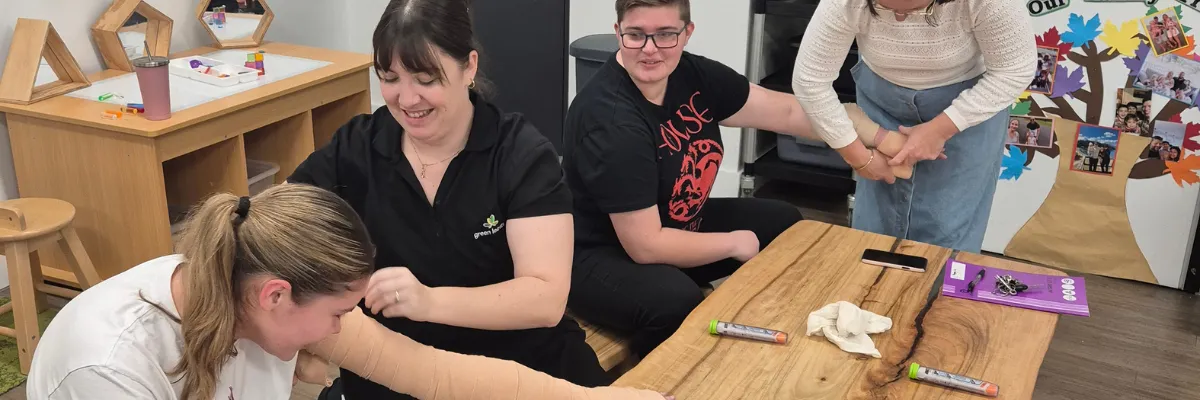
Beyond the CPR component, you'll need enough mobility to get down onto the floor (or alongside a manikin or training partner), move into position, kneel, and demonstrate basic bandaging and positioning techniques. Nothing acrobatic, just the kind of movement most people do without thinking in daily life.
What If You Have an Injury, Condition, or Fitness Concern?
This is the bit we really want to land properly: if you've got an injury, a chronic condition, a fitness level you're worried about, anything at all, please reach out to us before you book. Our trainers work with people across every fitness level, every age bracket, every body type, and we'd far rather talk through a reasonable adjustment in advance than have you arrive on the day feeling anxious about it.
There's no judgment here. Genuinely. A huge number of people walking through our doors haven't done a first aid course since school, or haven't done one in years, and the nerves around the practical assessment are one of the most common things we hear about beforehand. Talking to us first usually sorts it out completely.
Quick take: It's CPR on a floor-level manikin and basic mobility, not a fitness test. Worried about an injury or condition? Talk to us first.
What to Bring on the Day
This part's straightforward, but it's worth running through properly so there's nothing to scramble for on the morning of your course.
Required Documents and ID
You'll need to bring a valid photo ID to your assessment day. A driver's license, passport, or another government-issued photo ID all work fine. And make sure your USI is sorted beforehand, because without it, we can't issue your Statement of Attainment afterwards.
Quick checklist:
✅ Valid photo ID
✅ USI (set up in advance at usi.gov.au)
✅ Online theory component completed
✅ Comfortable clothing for practical training
What to Wear for Practical Training
Wear something comfortable that you can move in. You'll be kneeling, getting down to floor level, and demonstrating bandaging and positioning, so think activewear or casual clothing over anything restrictive or overly formal. No need for anything special, just something you'd be happy moving around in.
Completing the Online Theory Component Beforehand
Part of HLTAID011 is done online before you even walk in the door. It covers the theory side of things at your own pace, whenever suits you, on whatever device you've got handy.
This needs to be finished before your practical session. It's not an optional extra and it's not a separate paywalled product, it's already included, no surprise add-on fees waiting for you later.
What's Covered in the HLTAID011 Course
This is the part that actually matters most, what you walk away knowing how to do.
Skills and Topics You'll Learn
HLTAID011 covers a genuinely broad set of emergency response skills, all built around DRSABCD (the standard action plan: Danger, Response, Send for help, Airway, Breathing, CPR, Defibrillation). Specifically, you'll learn:
CPR and how to use an AED (automated external defibrillator)
How to manage choking in adults
Bleeding control and wound management
How to recognize and respond to fractures, sprains, and burns
Responding to common medical emergencies (seizures, allergic reactions, fainting)
Asthma and anaphylaxis response
How the Course Aligns with ARC Guidelines and Safe Work Australia
Everything taught in HLTAID011 follows current Australian Resuscitation Council (ARC) guidelines, the same clinical standards that paramedics and hospital staff are trained against, just adapted for a lay-responder context. The course also aligns with Safe Work Australia's requirements for workplace first aid, so if your employer needs you certified for compliance reasons, this ticks that box properly.
It's not a watered-down version of "real" first aid training. It's the genuine national standard, just delivered in a format built for everyday people rather than clinicians.
How Long Is Your HLTAID011 Certificate Valid?
This is one of those things that genuinely catches people out, not because anyone's hiding it, but because there are two different timeframes running side by side, and nobody explains it clearly upfront.
The 3-Year HLTAID011 Certificate vs the 12-Month CPR Refresher
Your HLTAID011 Statement of Attainment, the full certificate, is valid for 3 years. That's the headline figure, and it's the one most people are aware of.
Here's the part that's less well known: the CPR component (HLTAID009) is recommended to be refreshed every 12 months, in line with Safe Work Australia guidance. So while your broader HLTAID011 certificate is good for three years, your CPR skills specifically are recommended to be topped up annually.
This isn't a trick or a way to squeeze more bookings out of you, it's a genuine clinical recommendation, because CPR technique and confidence fade faster than the broader first aid knowledge does. We'd rather tell you this now, upfront, than have it feel like a bait-and-switch a year down the track. Good to know going in, not fine print you discover later.
If a 12-month CPR-only refresher is what you need down the track, that's covered separately on our HLTAID009 refresher page.
How to Book Your HLTAID011 Course
You've got the details now, so here's how booking actually works, start to finish.
Step-by-Step Booking Process
Pick a date that suits you
Complete the online theory component at your own pace before your session
Attend your practical session, where you'll run through CPR, AED use, and the rest of the practical skills with a trainer
Receive your certificate, both your HLTAID011 and HLTAID009 Statements of Attainment, sent digitally
Book Your HLTAID011 Course Book Now
After you book, the path is simple: pick your date, work through the online theory whenever suits you, attend your practical session, and walk out with your certificate. No waiting around afterwards wondering if it's coming.
Conclusion
Knowing the actual requirements before you book takes nearly all the stress out of the process. Once you know the age minimum, the basic English requirement, what the physical assessment really involves, and what documents to bring, there's very little left to worry about. Most of the anxiety around first aid courses comes from not knowing what to expect, not from the course itself.
The physical side, in particular, is rarely as hard as people build it up to be in their heads beforehand. CPR on a floor-level manikin, a bit of kneeling, some basic bandaging practice, that's genuinely the extent of it. Trainers work with people of every age, every fitness level, and every background, and a quiet word beforehand about any concern is almost always enough to put your mind at ease.
The two-tier validity system, three years for the full certificate and twelve months for the CPR component, makes a lot more sense once it's explained properly. It's not a hidden catch designed to bring you back sooner than expected, it's a genuine reflection of how quickly CPR confidence and muscle memory fade compared to the rest of what you learn. Knowing this upfront means there are no surprises waiting twelve months down the track.
Clarity matters too, and it's worth choosing a provider who explains the process upfront rather than leaving you to work it out as you go. Knowing what's required, what's covered, and how the certificate works removes one more layer of friction from a process that should already feel straightforward.
At the end of it all, a first aid course is really about one thing: walking away with the confidence that you could actually help someone if it mattered. Not a piece of paper for a drawer, not a box ticked for an employer, but a genuine, practical skill you carry with you. That flicker of "what would I actually do" that sent you searching in the first place deserves a proper answer, and now you've got one.