HLTAID009 Statement of Attainment: What You Need to Know
If you've just finished a CPR course, you've probably had an email land in your inbox with a document called a "Statement of Attainment" attached. And if you're sitting there wondering whether that's the same thing as a certificate, you're not the only one. Honestly, it's one of the most common mix-ups people run into when they're renewing their CPR ticket for work, for coaching, or just for their own peace of mind. It sounds official, it looks official, but the name itself throws people off before they've even read what's on it.
Here's the short version. Your HLTAID009 statement of attainment is the nationally recognised proof that you've completed Provide Cardiopulmonary Resuscitation, the unit covering adult, child, and infant CPR plus AED use. A Registered Training Organisation (RTO) issues it, and it's legally valid for employers, clubs, and licensing bodies right across Australia.
In this guide we'll walk through what's actually on the document, how it differs from what people call a "certificate," how long it stays valid, and, if you've misplaced yours, the fastest way to get it sorted without redoing the whole course.
What Is a Statement of Attainment for HLTAID009?
Quick answer: a HLTAID009 statement of attainment is the official, nationally recognized document an RTO gives you once you've been assessed as competent in Provide Cardiopulmonary Resuscitation. It's not a "certificate" in the strict technical sense, it's proof of a single accredited unit, but employers, sporting clubs, and licensing bodies across the country treat it as fully valid.
Your statement of attainment will show:
Your full name and the unit code, HLTAID009
The RTO's name and registration number
The date you were assessed as competent
A compliance statement confirming it meets the national Standards for RTOs 2015
That last point is the one people tend to skim past, but it's actually what gives the document its weight. Because your RTO is registered and audited against those national standards, the document isn't just a receipt for a course you sat, it's a formal, checkable record sitting inside Australia's nationally recognized vocational training system. That's the same system that underpins trade qualifications, hospitality certificates, and childcare quals, so a CPR unit fits into exactly the same framework as anything else you'd list on a resume.
Most providers, including us, email it out as a PDF once you finish the course. So if nothing's turned up in your inbox, that's worth chasing.
Statement of Attainment vs. CPR Certificate: What's Actually the Difference?
This is the bit that trips nearly everyone up, so let's just sort it properly.
Why it's called a "Statement of Attainment" and not a "certificate"
In the official VET (vocational education and training) world, there's actually a difference between the two. A Statement of Attainment covers one or more individual units of competency, like HLTAID009 on its own. A "Certificate" in the technical sense means you've completed a full qualification made up of a bunch of different units bundled together, think Certificate III in something, not a single CPR skill.
So when you do a standalone CPR course, what you walk away with is technically a Statement of Attainment, not a Certificate. Different paperwork, same seriousness behind it. The distinction exists because the VET system is built around individual, stackable units of competency, you can build toward a full qualification over time by collecting units, and each one gets its own Statement of Attainment along the way. HLTAID009 just happens to be a unit most people take on its own rather than as part of a bigger qualification.
Does it matter which term your employer or club uses?
Not really. For workplace, coaching, and compliance purposes, a Statement of Attainment carries exactly the same legal weight as a certificate would. It's nationally recognised and ASQA-regulated either way. Your boss, your club, your licensing body, none of them care which technical term gets used, they just care that the document is real and current, and that it's traceable back to a genuine RTO.
And honestly, everyone says "CPR certificate" in everyday conversation anyway, including us. That's fine. It's the same document underneath, just a different bit of jargon.
Statement of Attainment vs Certificate/Qualification:
Statement of Attainment | Certificate/Qualification | |
Covers | One or more individual units (e.g. HLTAID009) | A full bundle of units making up a qualification |
Example | HLTAID009 CPR unit | Certificate III in a trade or industry area |
Legal recognition | Nationally recognised, ASQA-regulated | Nationally recognised, ASQA-regulated |
Accepted by employers/clubs | Yes, same standing | Yes, same standing |
In short: same legal weight, different name.
If you're booking your CPR renewal and want to make sure you're getting the right one, our HLTAID009 CPR course page has the full details on what's included.
What Your HLTAID009 Statement of Attainment Actually Covers
The unit: Provide Cardiopulmonary Resuscitation
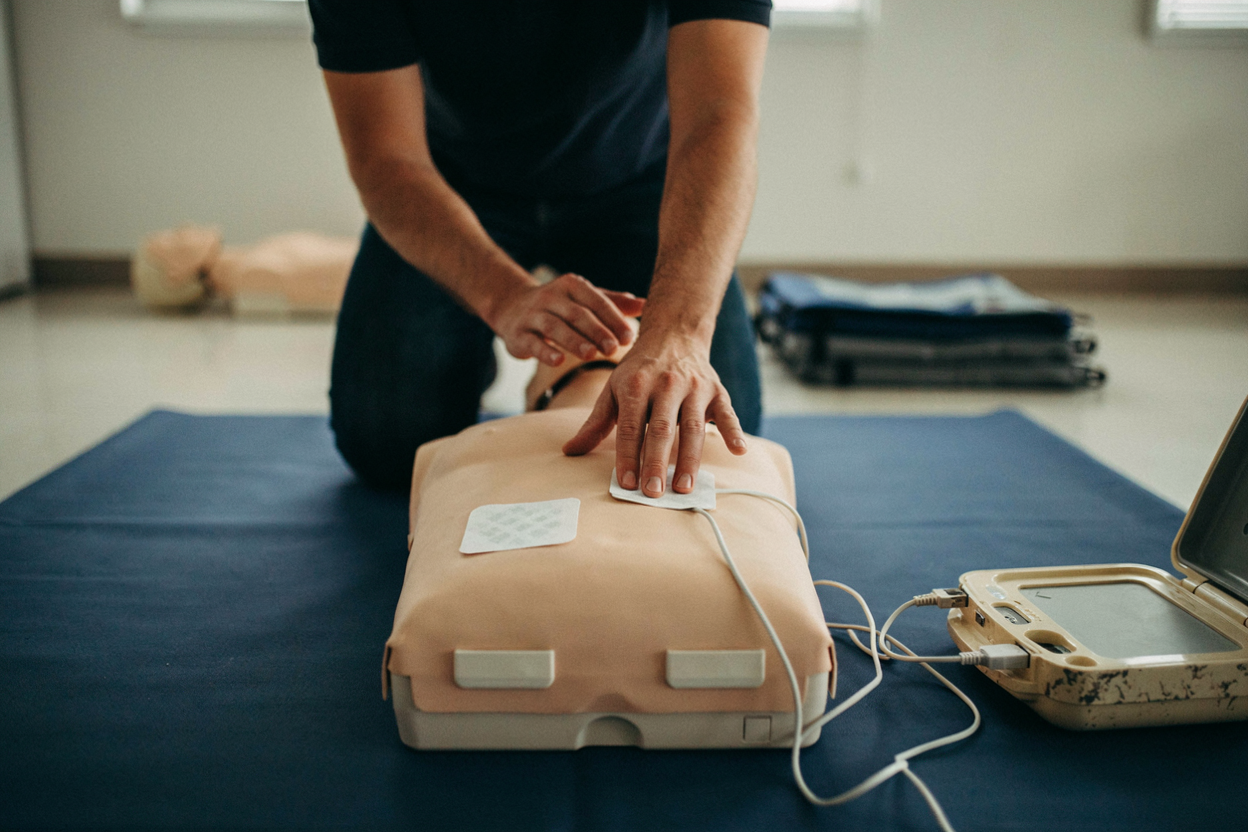
HLTAID009 is the unit code for Provide Cardiopulmonary Resuscitation, and it's a fair bit more than just "chest compressions." When you're assessed as competent in this unit, your statement of attainment is confirming you can:
Perform CPR on adults, children, and infants (the technique and ratios do change between the three, so all three get covered)
Operate an AED, that's the defibrillator, safely and correctly
Follow the DRSABCD action plan, which is the step-by-step framework for responding to an emergency before and during CPR
DRSABCD stands for Danger, Response, Send for help, Airway, Breathing, CPR, Defibrillation, and it's the backbone of how CPR is taught right across Australia. Rather than just drilling compressions in isolation, the unit walks you through the whole sequence, from spotting the danger and checking for a response, right through to getting an AED attached and working alongside emergency services. That's why the document carries weight beyond just "this person can push on a chest," it's confirming a full, structured response.
What's on the document itself
Nothing mysterious here, just the essentials that make it a legitimate, checkable record:
Your full name
The unit code, HLTAID009
The RTO's name and registration number
The date you were assessed as competent
Employers and clubs can look at this document and know immediately it's legitimate, no phone calls or verification chasing required. That's the whole point of the nationally recognised system, it's meant to be checkable at a glance.
How Long Is Your HLTAID009 Statement of Attainment Valid?
The 12-month CPR renewal window
Here's the number that matters most: HLTAID009 is recommended to be renewed every 12 months. That's the guidance from Safe Work Australia and the Australian Resuscitation Council (ARC), and most employers, clubs, and licensing bodies build their own requirements around that same window.
So if your certificate's coming up on a year old, or already past it, that's not something to put off. A lapsed CPR ticket can mean losing shifts, missing a coaching accreditation deadline, or an employer flagging you as non-compliant. And it's worth understanding why employers care so much in the first place, most workplaces have their own WHS obligations to maintain a certain number of staff with current first aid and CPR competency on any given shift, so an expired Statement of Attainment doesn't just affect you, it can leave your employer short on their own compliance requirements too.
Why CPR expires faster than full First Aid (HLTAID011)
If you've done the bundled course, HLTAID009 plus the full First Aid unit HLTAID011, you might be wondering why one part expires so much quicker than the other. Here's why: the full First Aid qualification (HLTAID011) stays valid for 3 years. But the CPR component specifically still needs renewing every 12 months to keep your combined certification current for most employers.
A bit annoying, sure, but it comes down to CPR skills being perishable in a specific way, the physical technique and confidence under pressure fades faster than the broader first aid knowledge does. So even inside a 3-year qualification, that CPR slice gets its own shorter clock.
Quick comparison:
HLTAID009 (CPR only) | HLTAID011 (Full First Aid, includes CPR) | |
Validity | 12 months | 3 years overall, CPR component still refreshed annually |
Renewal trigger | Every 12 months | CPR yearly, full unit every 3 years |

Lost Your Statement of Attainment? How to Get a Replacement Fast
Realised you can't find your Statement of Attainment anywhere? Here's the fastest way to sort it, no need to redo the course.
Contacting your original RTO first
Every RTO keeps digital training records on file, so in most cases a replacement can be reissued without you sitting through the course again. Your first move should be reaching out to whichever provider you actually trained with, they'll have your assessment on record and can usually reissue the document quickly.
If you trained with us, get in touch and we'll help you track down or reissue your Statement of Attainment.
Using your USI to find your training records
If you're not sure where to start, your Unique Student Identifier (USI) is the key. It lets any Australian look up their own nationally recorded VET training history, including every unit you've ever completed with any RTO. You can access it directly through usi.gov.au.
The USI system exists precisely for situations like this. Before it was introduced, training records lived entirely with the individual provider, so if a document was lost and the provider was hard to reach, there wasn't always a clean fallback option. Now every unit of competency you complete anywhere in the country gets logged against your own USI, which stays with you for life and isn't tied to any single RTO.
Here's the process, step by step:
Head to usi.gov.au and log in (or create a USI account if you don't have one)
Check your training records to see which RTO issued your HLTAID009
Contact that RTO directly to request a reissued Statement of Attainment
If the RTO's no longer operating, your USI record still confirms the unit was completed, which most employers will accept as interim proof while a replacement is sorted
It's a fairly painless process once you're logged in, and it's worth setting up your USI account properly even if you're not chasing a lost document right now, since it becomes the single place you can point to for any training you complete going forward, CPR or otherwise.
What to do if you can't remember which provider you trained with
Genuinely common, especially if it's been a while or a workplace organised the course for you. Your USI record is the fix here too, it lists every RTO you've trained with, so even if the name slipped your mind completely, it's sitting right there in your training history.
Why Your Statement of Attainment Matters: Work, Coaching & Compliance
Understanding what the document proves is one thing, here's why it actually matters day-to-day.
Employer and WHS obligations
If your job requires CPR certification, and a lot do, from hospitality to aged care to construction sites, your Statement of Attainment is what your employer needs on file to meet their own WHS obligations. It's not just a box for you to tick, it protects them too.
Coaching accreditation and club requirements
Junior sports coaches, swim instructors, surf club volunteers, this document is usually a non-negotiable part of your accreditation. Clubs need to know that if something happens on the field or in the pool, someone present is actually equipped to respond. Your Statement of Attainment is the proof they need to keep on file. For a lot of coaches this ends up being the deciding factor between being allowed to run a session solo or always needing another accredited adult present, so it's worth keeping on top of well ahead of any club-imposed deadline.
Childcare, hospitality, and lifeguard-specific requirements
Same story again in childcare, hospitality, and lifeguarding, industries where you're regularly around kids, the public, or water. These sectors tend to have strict currency requirements, so keeping your 12-month renewal on track matters more here than almost anywhere else. Childcare centres in particular are often required to have a set number of staff on site holding current first aid and CPR competency at all times under their regulatory framework, so an expired Statement of Attainment can genuinely affect rostering, not just paperwork.
Because it's nationally recognised, your Statement of Attainment is accepted by any employer or licensing body across every state and territory, not just Queensland. If you move interstate, or a Gold Coast-issued cert needs to satisfy a Sydney or Melbourne employer, it holds up exactly the same. That portability is one of the genuine strengths of the nationally recognised training system, you're not locked into needing to redo anything just because you've changed states or changed industries.
At the end of the day, a Statement of Attainment is just paperwork, but it's paperwork that quietly does a lot of heavy lifting. It's what your employer files away so they're covered. It's what your club checks off so a coach can actually take the field. It's what lets you move interstate, change jobs, or pick up a new shift without anyone questioning whether you're actually qualified to respond if something goes wrong.
And that word, respond, is really what this is all about underneath the compliance side of things. The document proves you sat through the training, but the training itself is what matters when it counts. Most people who book a CPR course aren't thinking about a job requirement the moment they're actually performing compressions on someone. They're thinking about the person in front of them.
That's especially true for the parents and coaches among you. Renewing every 12 months can feel like a chore when you've already done the course three or four times before. But muscle memory fades faster than people expect, and the whole reason the renewal window exists is so your skills stay sharp enough to actually be useful, not just current on paper.
If you've lost your Statement of Attainment, don't panic and don't assume you're starting from scratch. Between your training provider's records and your own USI, that document is almost always recoverable, no repeat course required.
And if your 12 months are nearly up, that's honestly the easiest problem on this whole page to solve. A renewal session is straightforward and doesn't require relearning anything from zero, you're just topping up a skill you already have.
So whether you're chasing a replacement, confirming what your existing document covers, or staring down a renewal date that snuck up on you, the fix is rarely as complicated as it feels at the moment. A bit of paperwork, a short session, and you're covered again for another year.
Renewal creeping up, or already gone past its date? It happens to almost everyone at some point, life gets busy and it's easy to lose track. The good news is that sorting it is straightforward.\