Good Samaritan CPR in QLD: Are You Legally Protected?
Queensland paramedics attended 6,787 out-of-hospital cardiac arrests in 2023/24. Here's the bit that stays with me. When someone actually saw the collapse happen, a bystander had usually started CPR before the ambulance even pulled up. Close to 86 out of every 100 times, where resus was attempted. Ordinary Queenslanders, stepping in every single day. Yet plenty of Gold Coast parents still hold back over one nagging worry. Would good Samaritan CPR protections actually cover them if something went wrong?
Short answer, Queensland does things differently. A lot of advice online assumes a blanket protection that just doesn't exist here. That confusion makes good people hesitate right when seconds count.
This guide breaks it down in plain English. What Queensland law says, who it covers, what it expects from someone helping (spoiler, not perfection), and why legal worry shouldn't stop you helping your own child or a stranger at the beach. Plus how hands-on practice builds the calm confidence to act.
Does Queensland Have Good Samaritan Laws?
No. Queensland is the only Australian state or territory without a general Good Samaritan law covering every member of the public who gives CPR. Legal protection is limited to specific groups, and everyone else is judged under ordinary negligence law.
Doctors, nurses and other prescribed persons are protected under section 16 of the Law Reform Act 1995 (Qld) when they help in good faith and without gross negligence.
Members of listed organisations, such as certain volunteer emergency and rescue groups, are protected under section 26 of the Civil Liability Act 2003 (Qld) while acting for that organisation.
Parents, bystanders and other members of the public are assessed on whether they acted reasonably in the circumstances of an emergency. The standard is reasonable care, not perfection.
To see why Queensland stands apart, it helps to look at how the rest of the country handles it.
Good Samaritan Law in Australia vs Queensland
How other states protect everyday rescuers
Good Samaritan law in Australia is set state by state. Every other state and territory has a general statute protecting any member of the public who helps in an emergency in good faith. In New South Wales, for example, it's section 57 of the Civil Liability Act 2002.
Queensland is the odd one out. There's no general good Samaritan law Queensland applies to every bystander. Protection only covers certain groups.
The 2007 bill Queensland didn't pass
This isn't an oversight. In 2007, the Civil Liability (Good Samaritan) Amendment Bill 2007 tried to extend protection to everyone, and the government declined to support it. When it was debated on 22 August 2007, the government's position was that ordinary rescuers would stay under common law negligence. Queensland deliberately went a different way.
Why so much online advice gets this wrong
A lot of content is written for a national audience. It talks about good Samaritan law in Australia as if it's one rule, and Queensland gets lumped in. Even in 2023, a submission to the Queensland Parliament pointed out a misconception among some Queensland organisations that these protections applied to them.
Jurisdiction | Act and section | General bystander protection? |
New South Wales | Civil Liability Act 2002, s 57 | Yes |
Victoria | Wrongs Act 1958, s 31B | Yes |
South Australia | Civil Liability Act 1936, s 74 | Yes |
Western Australia | Civil Liability Act 2002, s 5AD | Yes |
Tasmania | Civil Liability Act 2002, s 35B | Yes |
ACT | Civil Law (Wrongs) Act 2002, s 5 | Yes |
Northern Territory | Personal Injuries (Liabilities and Damages) Act 2003, s 8 | Yes |
Queensland | Law Reform Act 1995, s 16; Civil Liability Act 2003, s 26 | No (specific groups only) |
So if the general protection isn't there, who does the law actually cover?
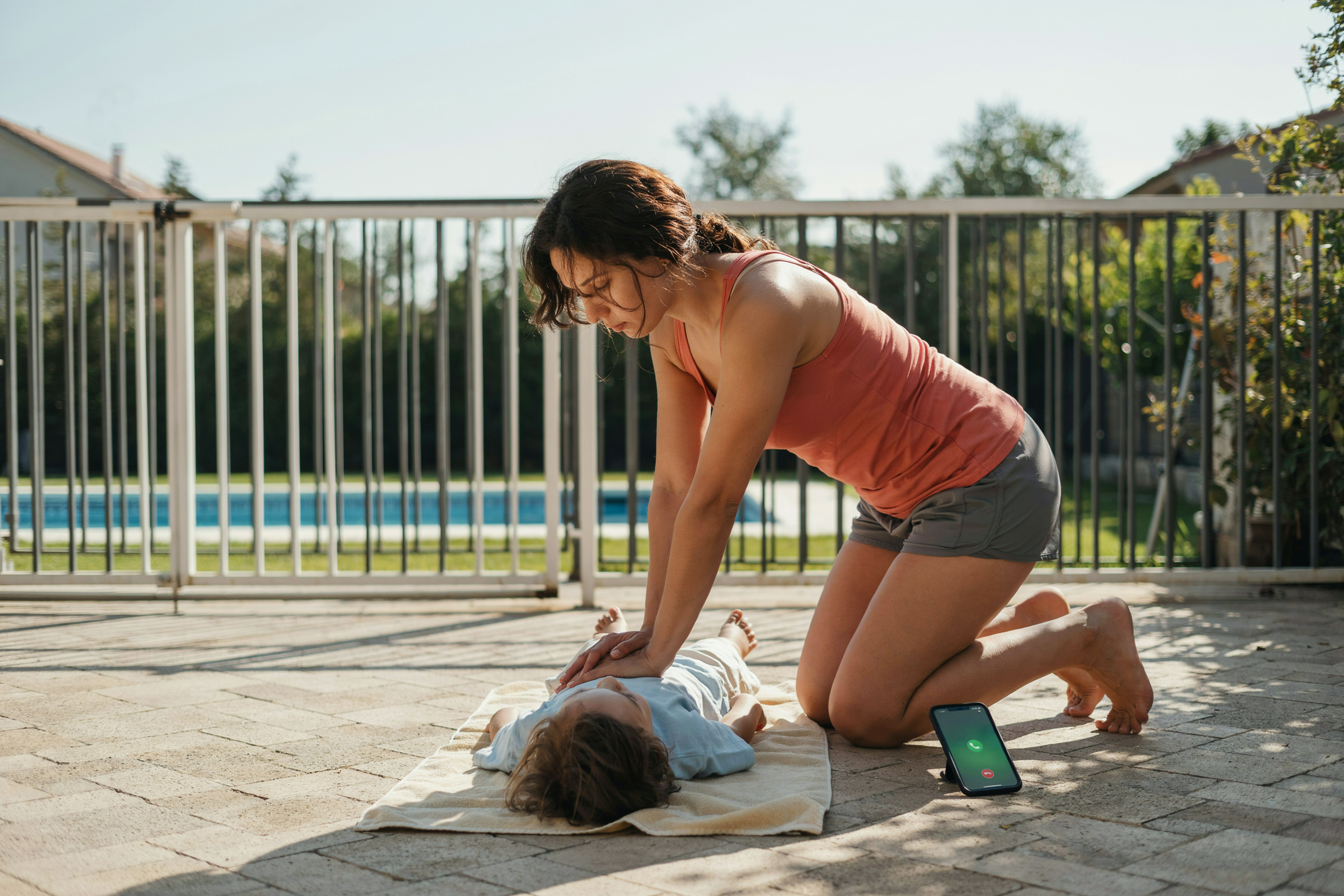
Who Is Legally Protected When Giving CPR in Queensland?
When it comes to CPR legal protection QLD law offers, it comes down to which of three groups you're in. Most of us sit in the third.
Doctors, nurses and other prescribed persons (Law Reform Act 1995, s 16)
Under Law Reform Act 1995 section 16, doctors, nurses and other prescribed persons are protected when they help in an emergency, in good faith and without gross negligence. Gross negligence is a much higher bar than an ordinary slip. Think seriously reckless, not "I wasn't sure if I'd counted to 30 properly."
Members of listed organisations on duty (Civil Liability Act 2003, s 26)
Section 26 of the Civil Liability Act 2003 Qld protects members of certain listed organisations, but only while acting for the listed entity. And signing up to the GoodSAM app, which alerts nearby responders to a cardiac arrest, doesn't by itself bring someone under section 26.
Everyone else: parents, bystanders, grandparents
That leaves the rest of us. Parents at the pool. The bloke in the queue at the servo. Grandparents minding the kids. You're covered by ordinary negligence law, as modified by Chapter 2 of the Civil Liability Act 2003 Qld.
This sounds worse than it is. Here's why.
Which rule applies to me?
Doctor or nurse? Yes → Law Reform Act 1995 s 16. No ↓
On duty for an emergency or rescue organisation? Yes → Civil Liability Act 2003 s 26. No ↓
Neither → Ordinary negligence law: reasonable care, not perfection.
General information only, not legal advice.
Falling into that third group sounds worrying. In practice, the risk looks very different.
Can You Be Sued for Doing CPR in Queensland?
Can you be sued for doing CPR? Technically anyone can start a claim. Whether it could succeed is a very different question.
What someone would have to prove
The person bringing a negligence claim would generally have to show:
You had a duty to act. The law expects you to take care of that person.
Your response was unreasonable. Not imperfect. Unreasonable, for someone in your shoes in an emergency.
A different response would have changed the outcome. That doing it "properly" would have led to a better result.
That third one is the hardest by a long way. Someone in cardiac arrest is already clinically dead without CPR. So it's very hard to argue your help made things worse than doing nothing.
Why the real-world risk is very low
In 2002, the panel behind the national Review of the Law of Negligence said it wasn't aware of any Australian case where a good Samaritan had been sued for negligence. There's still no known successful claim against a good Samaritan in Australia.
There are practical barriers too. Lawyers here can't take a percentage cut of what you win, and they have to certify a claim has reasonable prospects of success. A good Samaritan CPR lawsuit just doesn't stack up well against those rules. Not impossible, but the CPR liability risk is far smaller than the internet makes it feel.
Reasonable care, not perfection
You'd be judged against a reasonable person in an emergency, not a paramedic.
It's worth knowing upfront that rib fractures can happen during effective CPR.
Reasonable care, not perfection
The Australian and New Zealand Committee on Resuscitation is clear that "any attempt at resuscitation is better than no attempt." You don't need to be perfect. You need to start.
This article is general information about Queensland law, not legal advice. For advice on your situation, speak to a lawyer.
For most Gold Coast parents, though, the person they're picturing isn't a stranger. It's their own child.
Giving CPR to Your Own Child, Partner or Parents
Mother sitting beside a fenced backyard pool on the Gold Coast while her toddler plays, feeling confident about good samaritan CPR
It's a hot Tuesday morning. The baby's finally asleep on your shoulder, your three-year-old is splashing a bucket around on the pool deck, and your partner's away for another week. You click the pool gate shut and the thought pops up. If something happened right now, it'd just be me.
Parents already have a duty of care to their children
As a parent, you already have a duty of care toward your children, so whether to help simply doesn't come up. What matters is the same as everywhere else in this guide, acting reasonably in an emergency.
Grandparents and babysitters minding the kids by the pool
Grandparents who mind the kids each week, or the friend who babysits, are held to the same reasonable-care standard as anyone else. No higher bar because they're older, no lower one because they're "just helping out". Which is exactly why it makes sense to train the whole family.
What "reasonable" looks like at a backyard pool
If you're ever wondering what to do if a child drowns, reasonable doesn't mean flawless. It looks like this:
Call 000
Start CPR
Follow ANZCOR's infant CPR or CPR on a child guidance, depending on their age
Send someone for an AED if there's one nearby
It's sobering to know that 182 children aged 0 to 4 drowned in Australia in the 10 years to June 2025, with 48% in pools and 91% of the pool deaths in residential backyard pools. That's also why Queensland requires a compliant CPR sign at regulated pools.
If it happens at your pool: Call 000. Start CPR. Send for an AED.
Ask us for our free printable infant and child CPR card for the fridge or pool gate. It follows current ANZCOR guidance and sits alongside your compliant pool CPR sign, not instead of it.
The same thinking applies when there's a defibrillator within reach.

Using a Defibrillator: Are You Protected?
Wall-mounted defibrillator in a Queensland shopping centre that any bystander can use in a cardiac arrest
The same rules apply to AEDs
When it comes to defibrillator legal protection, Queensland has no separate rule for AEDs. If you're a parent or a bystander, you're judged on the same reasonable-care standard as CPR. Grabbing the AED and using it is exactly what a reasonable person would do.
AEDs are built for untrained users
An AED is designed for someone who's never used one. Once the pads are on, the device analyses the heart rhythm and only delivers a shock when one is needed. It talks you through each step, so knowing how to use an AED is mostly about not being afraid to open the cabinet.
Bystander defibrillation in Queensland: 1.8% → 9.5% (2018/19 to 2023/24, Queensland Ambulance Service Cardiac Arrest Report 2023/24)
One situation does change the picture slightly: helping someone while you're at work.
At Work vs Off Duty: When Different Rules Apply
Designated workplace first aiders
If you're a designated first aider at work, you're not just a passer-by anymore. Your employer has its own first aid obligations, and things like their insurance generally come into play. Workplace first aid liability in QLD sits within that bigger picture, set out in WorkSafe Queensland's First Aid in the Workplace Code of Practice. If you've been given that role, have a chat to your employer about what it covers.
Going back to work after parental leave
Lots of employers in dental, healthcare, education and fitness want staff to hold current CPR, so you may need to refresh yours before your first shift back. HLTAID009 is nationally recognised, so it meets that kind of HLTAID009 workplace requirement no matter which state you trained in.
Off duty | Designated workplace first aider | |
Your role | Helping as a parent or bystander | Appointed by your employer |
What applies | Reasonable care, not perfection | Employer obligations and insurance also apply |
Whatever the setting, the thing that turns hesitation into action is practice.
How a CPR Course Gold Coast Parents Trust Builds Real Confidence
When your heart's pounding and it's your own little one on the pool deck, reasonable care usually looks like doing what you've practised.
What training does and doesn't do legally
This gets muddled a lot. A CPR certificate doesn't give you legal protection. And an expired certificate doesn't automatically make you negligent. The law doesn't care about the piece of paper.
What training does give you is correct technique and the confidence to use it. Hands that know where to go. Someone who acts instead of freezing.
What you practise in an Accelerate First Aid CPR session
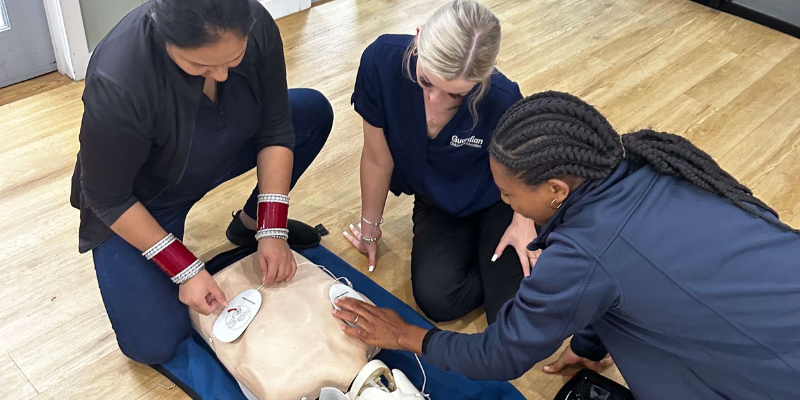
Parents practising CPR on infant and child manikins during an Accelerate First Aid HLTAID009 course on the Gold Coast
Every session gives you hands-on time with infant and child manikins, not only adult ones. You'll practise with an AED trainer too, so that wall cabinet stops feeling off limits. And everything's taught to current ANZCOR guidelines.
The Bottom Line on Good Samaritan CPR in Queensland
Queensland really is the odd one out. Every other state and territory protects bystanders who help in good faith. Here, that blanket protection isn't there, and a 2007 bill to add it didn't get government support.
The protection that does exist is narrow. Doctors, nurses and prescribed persons are covered under section 16 of the Law Reform Act 1995. Members of listed organisations are covered under section 26 of the Civil Liability Act 2003 Qld, only while acting for that organisation.
For the rest of us, it's ordinary negligence law. It sounds heavy, but what it asks for is reasonable care, not perfection.
And the real-world risk is very low. There's still no known successful claim against a good Samaritan in Australia, and the person was already clinically dead without CPR.
The same goes for defibrillators. No separate rule, and the device does the hard part. At work, your employer's obligations come into play too.
When it's your own child at your own pool, reasonable looks simple. Call 000. Start CPR. Send someone for the AED.
A certificate doesn't protect you legally, and an expired one doesn't make you negligent. What training gives you is technique and calm confidence, so your hands already know the way.
So my honest take? Don't let worry about the good Samaritan CPR law keep you frozen at the pool gate. Get yourself, your partner and the grandparents trained, and you'll be the one who steps in. This is general information, not legal advice, so for your own situation, have a chat to a lawyer.