Five Rights of Oxygen Administration Explained for Clinics
Wednesday's sedation day. Mid-afternoon in surgery three, the patient in the chair goes pale and quiet and the reading on the oximeter starts to drop. The dentist calls for oxygen. Your dental assistant pulls the emergency kit, opens the cylinder and the gauge is sitting lower than it should be. Then she realizes the mask in the bag isn't the one the dentist asked for.
She knows the five rights of oxygen administration. She's done the training. But right now, two of them have already failed, and the patient hasn't had a single breath of oxygen yet.
Those five rights come from nursing medication practice, and they translate pretty neatly to a dental or medical clinic. Right patient, right oxygen, right dose, right route and right time. Work through them in order and they turn a scramble into a set of checks your whole team already knows by heart. Like a pilot's pre-flight check, nobody skips it just because they've flown before.
This guide explains each right in plain English, where clinic teams slip up, and how oxygen fits with your HLTAID015 training, finishing with a checklist for your emergency kit.
What Are the Five Rights of Oxygen Administration?
Right patient: Confirm this patient needs oxygen, based on their signs, your assessment and the treating clinician's direction.
Right oxygen: Make sure it's medical oxygen, the cylinder is in date with enough contents, and the regulator is fitted and leak-free.
Right dose: Set the flow of your practice protocol, HLTAID015 training and ANZCOR guidance support for the patient's condition.
Right route: Pick the mask or device that suits that flow and whether the patient is breathing on their own.
Right time: Start oxygen promptly once it's indicated, reassess often, and continue until paramedics take over.
The five rights of oxygen administration are a safety check that treats oxygen as a medicine. Many practices add a sixth right, documentation, so there's a record of what was given and when.
Why Oxygen Is Treated as a Medicine in Your Clinic
Most practice teams think of the oxygen cylinder as a kit, sitting in the emergency bag next to the AED. But oxygen isn't just equipment. It has indications, a dose, a route and risks, same as anything in the drug cupboard.
Treated as kit | Treated as a medicine |
Pulled out whenever someone looks unwell | Given when it's indicated |
Dial left wherever it was last set | Flow set to the protocol and clinician's direction |
Whatever mask is in the bag | Device matched to the patient's breathing |
Nobody writes it down | Time, device, flow and response recorded |
That's why the five rights started life in nursing, where staff run the same checks before giving any medication.
The Australian and New Zealand Committee on Resuscitation (ANZCOR) takes the same view. Its Guideline 9.2.10 on oxygen therapy in first aid says oxygen should be given when it's indicated, not by reflex just because someone looks unwell. So oxygen therapy in first aid isn't about reaching for the cylinder first and asking questions later. It's about giving the right patient the right oxygen, the right way, at the right time.
In a dental or medical practice, the roles are usually split. The dentist, sedationist or GP directs, and the dental assistant or nurse sets up the cylinder and mask. The five rights give the whole team one shared checklist, so the person calling for oxygen and the person turning the regulator are thinking the same thing.
If you want the hands-on steps for setting up the cylinder and mask, our guide on how to administer oxygen therapy walks through it.
In practice, each right looks a little different from the version taught on a hospital ward. Here's how each one works when the patient is in your chair.
The Five Rights of Oxygen Administration in a Dental or Medical Practice
Right Patient: Who Needs Oxygen, and Who Makes the Call
Right patient means this person actually needs oxygen. Not that the room feels tense.
The signs are pretty plain. Trouble breathing. A change in color, going pale, grey or blue around the lips. Getting drowsy, confused or harder to rouse.
But spotting the signs and making the call are two different jobs. In most practices the treating clinician decides whether oxygen starts, and that should be written into your practice protocol so nobody's guessing on the day.
Where teams slip up is starting oxygen because everyone's anxious. Somebody says "should we put her on oxygen?" and suddenly the mask is on, without anyone actually deciding it was needed.
Check: "Is there a reason this patient needs oxygen, and has the lead clinician called it?"
Right Oxygen: Cylinder, Contents and Regulator
Remember that gauge sitting lower than it should in the opening scene. That's right, oxygen is failing before the emergency even starts.
Right oxygen means the cylinder holds medical oxygen, it's in date, it has enough contents to last until paramedics take the patient, the regulator is fitted properly and there's no leak. And there's a spare cylinder close by in case the first one runs short.
The big slip-up here isn't clinical at all. It's that nobody owns the weekly kit check. Everyone assumes someone else looked at it.
Check: "Did someone look at the gauge this week, and is their name on the log?"
"Most oxygen errors in a clinic aren't clinical. They're a low cylinder, a missing mask or an assistant who hasn't touched the kit since last year's training."
Right Dose: Following Your Protocol, Not Guesswork
The right dose is the flow rate. And you'll notice this article doesn't give you any numbers.
That's on purpose. The right flow depends on the patient's condition and the device, so it should come from your practice protocol, the clinician's direction and your ANZCOR-aligned training. Not from memory, and definitely not from wherever the dial happened to be left.
That last one's the classic slip-up. The regulator gets left on its last setting, someone cracks it open in a hurry and nobody checks what it's actually set to.
Check: "Does the flow match what the protocol and the lead clinician have asked for?"
Right Route: Matching the Mask to the Moment
Back to the opening scene. The assistant reaches into the bag and the mask isn't the one the dentist asked for. That's the right route.
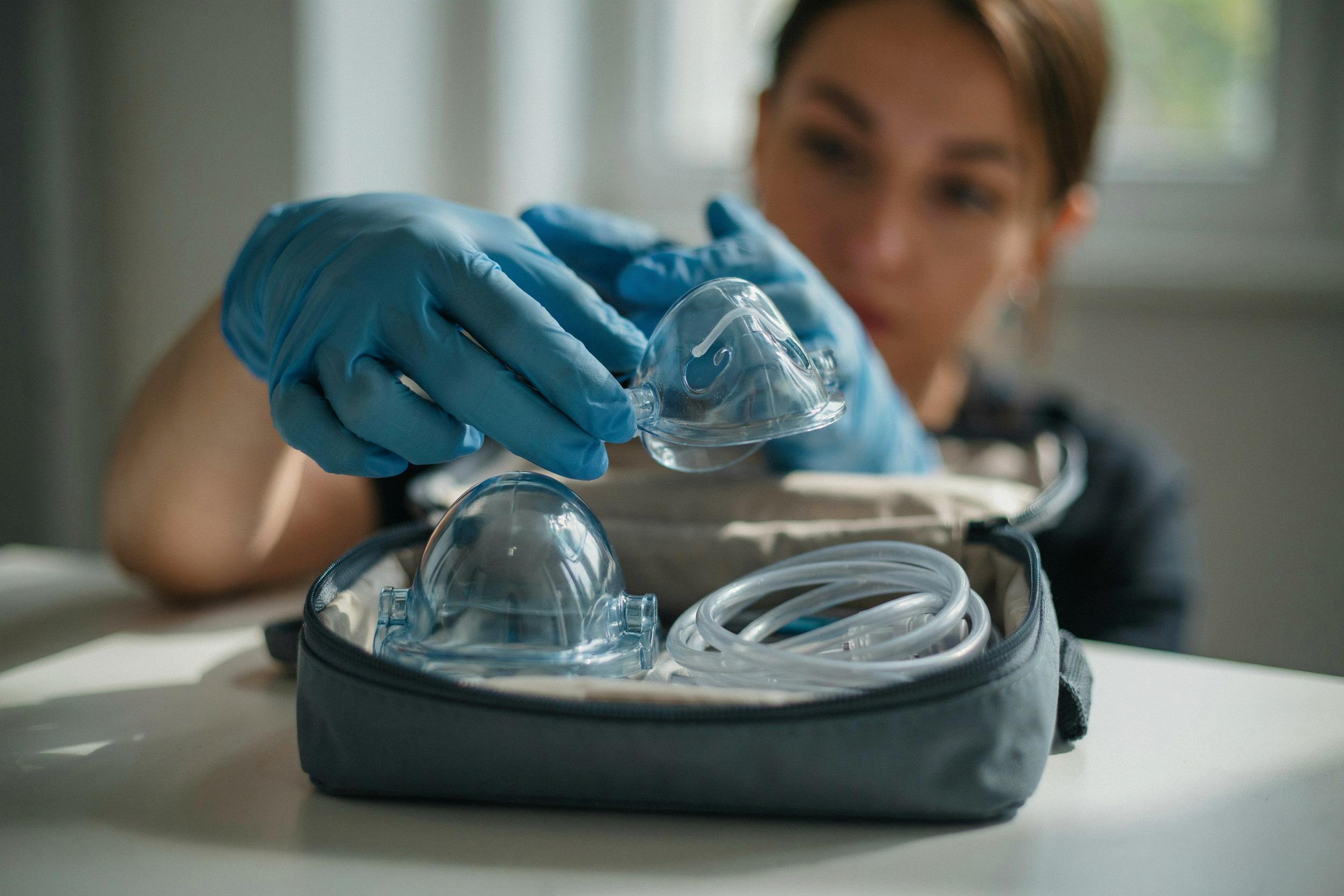
The route is about the device. If the patient is breathing on their own, they need a mask or nasal cannula that suits the flow being given. If they're not breathing adequately, a mask on its own won't do the job. They need bag-valve-mask ventilation with oxygen attached, which is a different skill altogether, and our guide to manual resuscitator use covers it properly.
The slip-up we see in clinic kits is one adult mask and that's it. No different mask types, no pediatric sizes, even in practices that treat kids every week.
Check: "Is the patient breathing well enough for a mask, or do they need ventilation?"
Right Time: Start, Reassess, Hand Over
Right time has three parts. Start oxygen promptly once it's indicated. Keep reassessing the patient. Keep going until paramedics take over. And call 000 early, oxygen buys time but it doesn't replace an ambulance.
The slip-up is that once the mask is on, everyone relaxes. Job done. Except nobody's watching whether the patient is improving, and nobody's watching the gauge creep down.
The fix is simple: give everyone a job. One person on the patient, one on the cylinder, one on the phone.
Check: "Who is watching the patient, who is watching the cylinder, and who has called 000?"
Once the oxygen is running, there's one more step that matters for every practice going through accreditation.
Documentation: The Sixth Right Your Accreditation Depends On
Plenty of practices add a sixth right, and honestly it's the one that gets forgotten most. Once the ambulance has gone, nobody wants to sit down and write. But if it isn't written down, it didn't happen.
What to record
When oxygen started
Who gave it
The device used
The flow as it was set
How the patient responded
When and to whom you handed over
Keep a pre-printed record card in the kit so whoever's free can fill it in as things happen, not from memory later.
The same goes for practice. Medical emergency drills for dental practices are only half useful if there's no record of them. A good drill log notes who took part, the scenario you ran, the equipment you used and any gaps you found, like a missing mask size or a cylinder that needed refilling.
Under the ACSQHC Primary and Community Healthcare Standards, these records are the kind of preparedness evidence a surveyor may ask to see. You can grab our free emergency drill log template to get started.
Records show what happened. The next step is spotting where it tends to go wrong before it does.
Where Clinic Teams Most Often Slip Up
Put all five rights side by side and a pattern jumps out pretty quick.
Right | Common slip-up | Simple fix |
Patient | Oxygen started because the room is anxious | Lead clinician makes the call, as written in the protocol |
Oxygen | Low or expired cylinder found mid-emergency | Named weekly kit check, logged |
Dose | Regulator left on the last setting | Reset as part of the post-use kit check |
Route | Wrong mask, or no pediatric sizes | Stock list taped inside the kit lid |
Time | Nobody reassesses after starting | Assign roles: patient, cylinder, 000 call |
Documentation | Nothing written down | Pre-printed record card in the kit |
Look down that middle column. Hardly any of it is about clinical knowledge. What goes wrong is readiness and skill fade. The kit wasn't checked, the mask wasn't stocked, and the hands on the cylinder haven't touched one since last year's training.
It's like a fire extinguisher nobody's ever pulled the pin on. That's the whole case for regular drills. They shake out the small stuff while the stakes are low.
Those slip-ups matter most on the days your risk is highest.
Oxygen on Sedation Days
Sedation days carry more risk and less margin for a fumble with the kit. Your team can't work as a bunch of individuals who each know their bit. They need to move as one unit.
When it comes to resuscitation training requirements for dental sedation, the Dental Board of Australia's sedation guidelines set out what's expected of the endorsed dentist and the sedation team, and ANZCA PS09 adds guidance on safe sedation practice more broadly. Having your whole clinical team current in HLTAID015 goes further than a strict mandate, but it's best practice, and it means anyone in the room can step in.
The simplest way to make oxygen administration in dental practice reliable on these days is a quick routine before the first patient walks in.
Morning-of-sedation check
Emergency kit checked the morning of each list
Roles assigned at the morning huddle: patient, cylinder, 000 call, records
Oxygen set up and ready before the first patient sits down
A quick huddle beats a few seconds of panic in surgery three.
Have new assistants joining sedation days? Check what they need before they book.
Here's everything above on one page you can keep in the kit.

The Five Rights Checklist for Your Emergency Kit
Print it, laminate it, tape it inside the kit lid. It should be the first thing anyone sees when the kit opens.
Before each sedation day, or weekly
☐ Cylinder contents checked and in date
☐ Regulator fitted, no leaks
☐ Masks in all sizes
☐ Bag-valve-mask and tubing in the kit
☐ AED pads in date
☐ Record card stocked
During an emergency
☐ Patient: Lead clinician has called it
☐ Oxygen: Gauge checked, regulator on, no leaks
☐ Dose: Flow matches the protocol
☐ Route: Mask, or bag-valve-mask ventilation
☐ Time: Roles set for patient, cylinder and 000
☐ Documentation: Someone is writing it down
A checklist only works if your team has practiced with the equipment it lists.
How HLTAID015 Training Covers Oxygen Administration
Your team needs to have done this with their hands, and that's what HLTAID015 Provide Advanced Resuscitation and Oxygen Therapy is built for. The unit covers oxygen delivery, suction, airway adjuncts, bag-valve-mask ventilation and AED use. Learners need HLTAID011 Provide First Aid as the pre-requisite unit before they start.
Not sure if everyone on your team needs the full unit? Our course comparison page shows who needs which course, role by role.
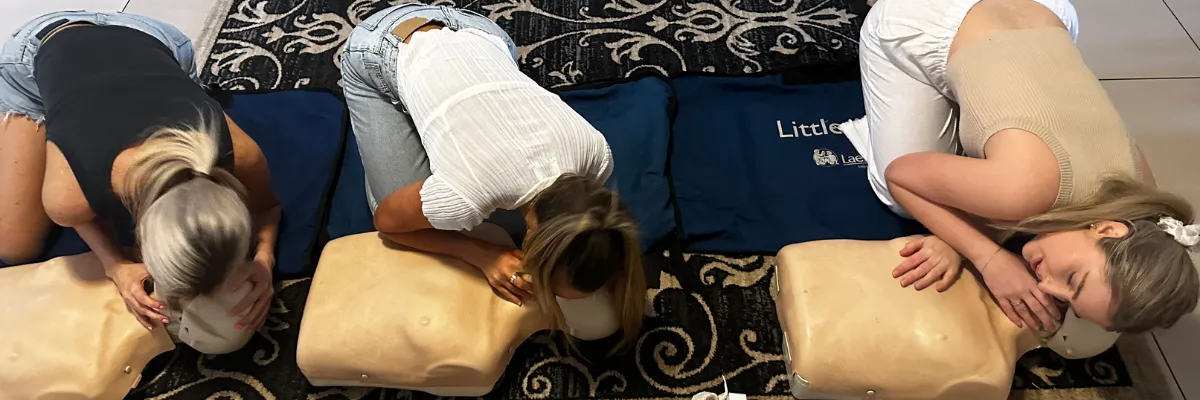
For practices, the format matters as much as the content. We run advanced resuscitation and oxygen therapy training on-site at your practice, using your own oxygen, suction and AED. So your team practices on the regulator they'll reach for on a sedation day, not some other model they'll never see again.
Most healthcare employers and indemnity insurers expect advanced resuscitation skills to be refreshed regularly. Skill fade is real.
Five Checks Between a Scramble and a Calm Response
Go back to surgery three. The low gauge, the wrong mask. Nothing about that moment needed a cleverer clinician. It needed a cylinder someone had checked, a mask someone had stocked and a team that had rehearsed it.
That's really all the five rights of oxygen administration are. Right patient, right oxygen, right dose, right route and right time, with documentation sitting alongside as the sixth. Five plain questions that slow the panic down just enough for everyone to do their bit.
Where teams slip up, it's almost never the knowledge. It's the weekly check nobody owned or the one adult mask in the bag. Small stuff that's easy to fix on a quiet Tuesday and really hard with a patient in the chair.
So start small. Print the checklist, tape it inside the kit lid, and put a name next to the weekly check. Hand out roles at the sedation day, huddle, and write things down so the evidence is there when someone asks.
Then get your team's hands on the equipment, properly and regularly. Reading about oxygen won't stop an assistant freezing when the gauge looks wrong. Practicing with your own kit will, and that's what turns a group of people into a team that moves as one.