5 Reasons to Book a First Aid for Toddlers Course Now
It happened on a Tuesday morning. A toddler at a Brisbane childcare centre started choking on a piece of fruit. The educator nearby had done a first aid course - three years ago. She froze for four seconds.
Four seconds doesn't sound like much. In a choking emergency, it's everything.
Toddlers don't follow safe patterns. They run when they should walk, put things in their mouths that don't belong there, and have no concept of danger. Emergencies arrive without a warning - no build-up, no second chances. One moment everything is fine. The next, it isn't.
A general first aid course gives you a foundation. A first aid for toddlers course gives you the specific skills and, more importantly, the confidence to actually respond when it matters. Pediatric emergencies look different, feel different, and require a completely different technique than anything you'd use on an adult.
Here are five reasons why every childcare educator in Brisbane should have a current, toddler-specific first aid qualification. Not just for ACECQA compliance. Not just to keep their job. But because the children in their care deserve an educator who's genuinely ready.
What Is a First Aid for Toddlers Course?
A first aid for toddlers course is a nationally accredited training program that teaches childcare educators, parents, and careers how to respond to medical emergencies involving children aged one to three years. Unlike a standard adult first aid course, toddler-specific training focuses on pediatric anatomy, smaller airways, and age-appropriate emergency responses.
A quality first aid for toddlers course covers:
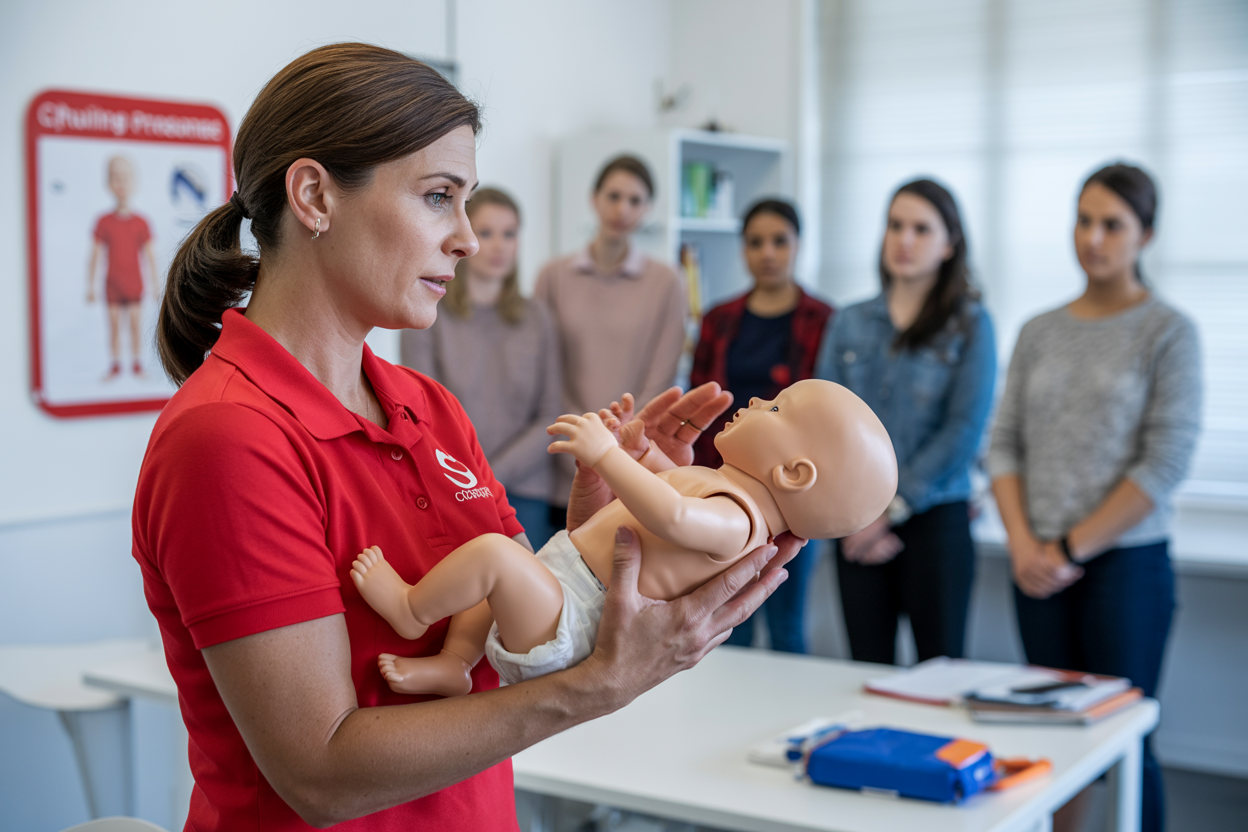
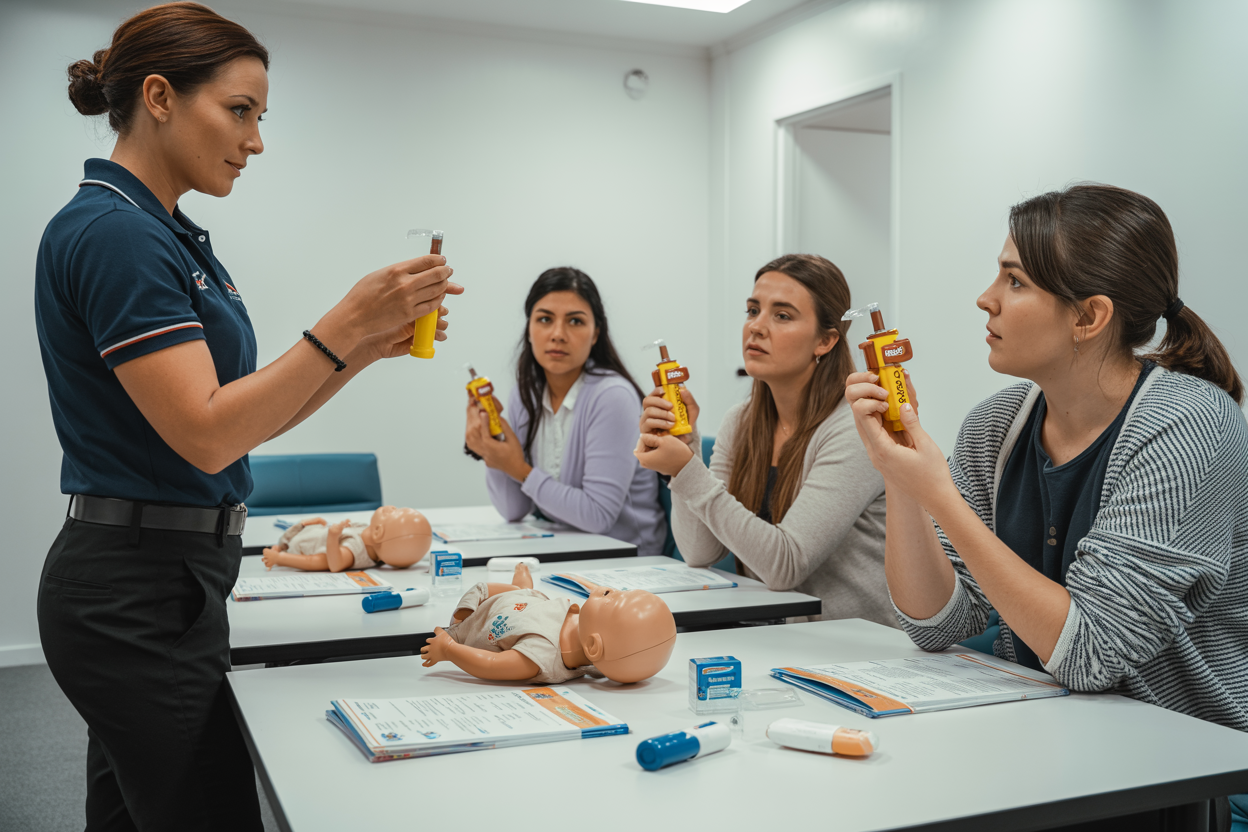
Pediatric CPR and rescue breathing using infant and child manikins
Toddler choking response (back blows and chest thrusts)
Anaphylaxis recognition and EpiPen administration for children
Febrile seizure management
Asthma first aid in young children
Bleeding, burns, and poisoning response for toddlers
1. Toddlers Face Different Emergencies - And Require Different Skills
Why Adult First Aid Training Isn't Enough for a Childcare Setting
Here's something a lot of educators don't realize until they're actually in a pediatric first aid session: everything changes with a child.
The compression depth is different. The rate is different. The technique is different. With an infant, you're using two fingers on the center of the chest - not the heel of your hand like you would on an adult. The airway is narrower. The rescue breaths are smaller. You cannot assume that anything you learned from an adult-focused course will transfer cleanly to a child in front of you.
This isn't a small gap. It's a fundamental difference in how the body works at that age. A toddler's airway is roughly the width of your little finger. A partial obstruction that a healthy adult might cough clear can, in a toddler, become a full blockage within seconds. Adult CPR skills don't account for any of that.
The Most Common Emergencies Involving Toddlers in Queensland Childcare Centers
Choking is the leading cause of accidental death in children under three in Australia, according to AIHW data. That stat alone should stop you in your tracks - and it's exactly why toddler choking response needs to be practiced, not just read about.
Anaphylaxis in toddlers also presents differently than it does in adults. Hives don't always come first. Airway compromise can happen fast, and without the obvious symptoms you'd expect. If you've only ever seen anaphylaxis described in an adult context, you may not recognize it quickly enough in a two-year-old.
Febrile seizures affect approximately 2-5% of children aged six months to five years. That means in any given childcare center, across a full year of operation, you're more likely to encounter one than you might think. And then there's poisoning and burns - both disproportionately common in under-threes, who are curious, mobile, and have absolutely no sense of self-preservation.
Knowing what to do in a pediatric emergency is only half the picture. The other half is making sure your training is formally recognized and that your center stays on the right side of ACECQA.
2. It Satisfies Your ACECQA and NQS Compliance Obligations
What ACECQA Actually Requires for First Aid in Queensland Childcare Centers
This is where a lot of educators - and even some directors - get caught out.
Under Regulation 136 of the Education and Care Services National Regulations 2011, at least one educator with an approved first aid qualification must be present at all times when children are in care. Not on call. Not nearby. Present. On the floor. With a current cert.
That qualification is HLTAID012 Provide First Aid in an Education and Care Setting. Not HLTAID011. Not a general workplace first aid course. HLTAID012 - specifically. HLTAID011, which is the standard adult first aid unit most people have done at some point, does not satisfy the childcare-specific requirement. ACECQA is clear on this. Your service approval depends on getting it right.
The language ACECQA uses is worth knowing: "approved first aid qualification," "nominated supervisor," "responsible person." If you see these terms on an assessment checklist or in your service approval conditions, HLTAID012 is what they're pointing to.
How HLTAID012 Satisfies Quality Area 2 of the National Quality Standard
The National Quality Standard - specifically Quality Area 2, Children's Health and Safety - is the framework your center is rated against. Element 2.1.1 directly references first aid preparedness. When a Queensland DET assessor walks through your door for an assessment and rating visit, this is one of the areas they're checking.
A "Meeting" or "Exceeding" NQS rating isn't just a nice thing to have on the wall. For directors, it's a professional goal that affects the center's reputation, enrolment appeal, and ongoing service approval. Non-compliance in Quality Area 2 isn't a minor note - it's a service approval risk.
Getting your team's HLTAID012 current is one of the most direct actions you can take to protect your rating.
Compliance gets your certificate on the wall. But genuine confidence comes from something the paperwork alone can't give you.
3. Hands-On Practice Builds the Confidence to Actually Act
Why Scenario-Based Toddler First Aid Training Works
There's a version of first aid training that most educators have experienced at least once. A trainer reads from slides. You watch a video. You practice CPR on a manikin that doesn't quite feel real. You get a certificate at the end and leave feeling roughly the same as when you walked in.
That's not training. That's box-ticking with a laminated card.
Research consistently shows that hands-on, scenario-based training produces better retention and response times than lecture-only delivery. The reason is muscle memory. When your hands have physically performed a toddler choking response - back blows, chest thrusts, checking the airway - your body knows what to do when the moment arrives. You don't freeze. You move.
In sessions across Brisbane, educators frequently say that the practical component is what changed everything for them. Not the theory. The doing.
What to Look for in a Quality First Aid for Toddlers Course
Not all courses are equal. When you're comparing providers, these are the things that actually matter:
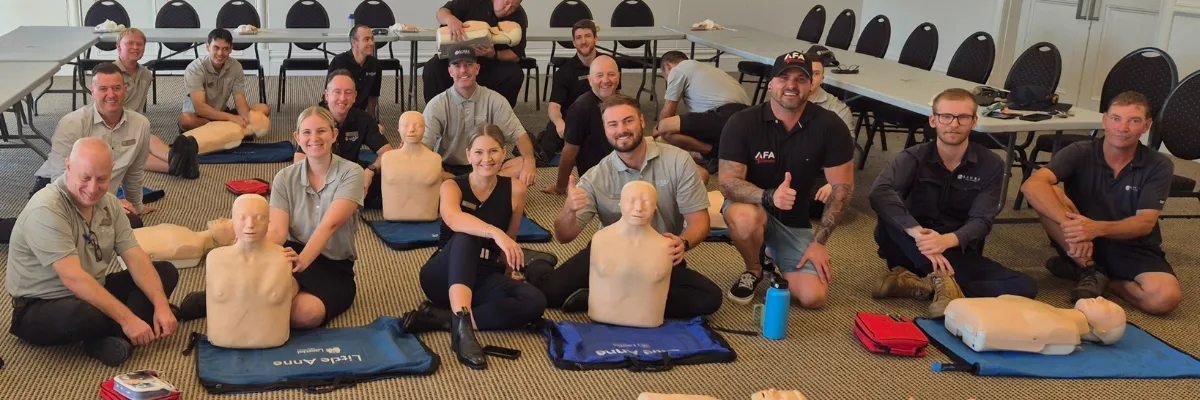
Infant and child manikins - not adult manikins with a different label on them
EpiPen auto-injector trainers - so you've physically held and used one before you ever need to use a real one
Asthma spacer practice - particularly relevant in childcare settings where asthma management plans are common
Scenario-based roleplay - because a real emergency doesn't announce itself, and neither should your training
One more thing worth stating clearly: online-only courses do not satisfy the practical component required for HLTAID012. If a provider is offering a fully remote course with no face-to-face element, it won't meet the ACECQA requirement. That's not an opinion - it's a compliance fact.
That confidence isn't just good for the children in your care - it's good for your professional standing, your center's liability position, and your peace of mind.
4. Your Certificate Covers You - And Your Centre
First Aid Certification and Your Duty of Care as a Childcare Educator
Your HLTAID012 certificate isn't just a piece of paper. It's your professional shield - and it needs to stay current.
Under the Education and Care Services National Law, failure to maintain required qualifications can result in regulatory action against the service approval. That's not a theoretical risk. It happens. And when it does, it's the center director who answers for it - and the educator whose lapsed certificate created the gap.
If a child is injured and your certificate has lapsed, the consequences compound quickly. Insurance outcomes are significantly affected. Personal liability becomes a real consideration. The regulatory conversation with Queensland DET shifts from routine to serious. None of that is where you want to be.
A current certificate is your evidence that you did everything required of you. It puts you on the right side of every conversation that might follow an incident.
What Happens If a Child Is Injured and Your Certificate Has Lapsed
HLTAID012 is valid for three years from your completion date. That sounds like a long time - until you realize how quickly it passes in a sector where staff turnover is high and compliance tracking often falls to one person with too many other responsibilities.
The anaphylaxis unit (22556VIC) and the asthma management unit (22300VIC) are a different story. Both require annual renewal to remain ACECQA compliant. That means even if your HLTAID012 is current, a lapsed anaphylaxis cert creates a compliance gap for the whole centre.
For directors, this is where a compliance calendar becomes non-negotiable. Tracking every on-floor educator's expiry dates - across three different certifications, with different renewal cycles - is not something you want to be doing from memory.
Compliance checklist keep this somewhere visible:
☐ HLTAID012 - valid for 3 years from completion date
☐ 22556VIC Anaphylaxis - annual renewal required
☐ 22300VIC Asthma - annual renewal required
☐ All on-floor educators confirmed current ☐ Next renewal date calendared
So the case for booking is clear. The only remaining question is: how do you fit it into a schedule that's already full?
5. Childcare Educators Can Book Flexible Sessions That Fit the Job
Weekend and Weekday First Aid for Toddlers Sessions
If you work in childcare, you already know the answer to "can you attend training during center hours?" It's no. Almost always no. You can't pull an educator off the floor during operating hours without affecting ratios - and that's not a call most directors are willing to make.
That's why weekend and after-hours availability isn't a bonus feature. It's a necessity.
Public sessions are available for individual educators - family day care providers, nannies, and those booking for themselves rather than through a center. And when you finish, your digital certificate is issued the same day. Compliance locked in before you get home.
Same-day digital certificate issuance matters more than people give it credit for. If you have an ACECQA visit coming up, or a new staff member who can't go on floor without their cert, you can't wait a week for paperwork. You need it done.
On-Site Group Training for Childcare Centers
If you're a director booking for a team of three or more, on-site training is the option that makes the most operational sense. The trainer comes to your center. Your educators don't lose travel time. The session can be shaped around your center's specific emergency action plans - not a generic scenario that has nothing to do with your environment.
This is particularly valuable for centers that have had a near-miss, recently updated their policies, or are preparing for an upcoming assessment visit. Your team trains together, in the space where they actually work, with scenarios that reflect the real risks in your setting.
On-site group pediatric first aid training is available across Brisbane and the Gold Coast. The training comes to you.
The only thing standing between you and a current, valid certificate is booking a date.
Wrapping Up
A first aid for toddlers course is not a box-ticking exercise. It is the difference between knowing what to do and hoping you remember. For childcare educators in Brisbane, it is also a regulatory requirement, a professional obligation, and, most importantly, a commitment to the children who spend their days in your care.
Whether you are booking for yourself or your entire team, HLTAID012 training is designed specifically for the childcare environment. You'll leave with hands-on skills, a same-day digital certificate, and the confidence that only comes from actually practicing - not just watching someone else do it.
Don't wait for a certificate to lapse or an incident to remind you. The children in your care deserve an educator who's genuinely ready. Book your first aid for toddlers course and make sure that educator is you.