First Aid for Caregivers: Skills That Save Lives
There's a moment a lot of caregivers know but rarely say out loud. You're helping your mum up from a chair, or partway into a shift with a client you barely know, and a thought flickers through: if something happened right now, would I know what to do?
Caregiving carries a different kind of first aid risk to the everyday version. You're often looking after someone genuinely more likely to fall, choke during a meal, have a cardiac event, or react badly to something they're allergic to. That's why first aid for caregivers looks a bit different to general workplace first aid.
The good part: you don't need to be a nurse or a paramedic to respond well. A recognized first aid course, specifically HLTAID011 Provide First Aid, gives caregivers the hands-on skills to handle the emergencies that matter most: CPR, choking, wounds, anaphylaxis, all built for real situations, not just a certificate to file away.
This guide covers what caregivers need to know, which certification applies to your situation, and how to get qualified without disrupting your already-stretched week.
What Counts as "First Aid for Caregivers"?
A lot of people skip past this and end up booking the wrong thing.
Why caregiving raises the stakes compared to general first aid
General first aid training assumes an emergency is unlikely but worth being ready for. Caregiving flips that around. If you're looking after an elderly parent, a family member with a disability, or clients through support work, the people in your care are often at higher actual risk of the exact things first aid courses cover.
Falls are more likely. Choking during meals is more likely, especially with swallowing difficulties. Cardiac events, stroke, and severe allergic reactions are all more likely too. None of this is said to scare anyone, it's just the honest picture.
The difference between informal care and a recognized qualification
There's a gap between "I've picked up a few things from experience" and "I've actually been trained and assessed." Plenty of caregivers build genuine instinct over months of caregiving, and that counts for something. But instinct doesn't teach correct hand placement for CPR, or what to say when you call 000.
A recognized qualification like HLTAID011 doesn't replace the care you already bring. It adds the missing technical layer underneath it.
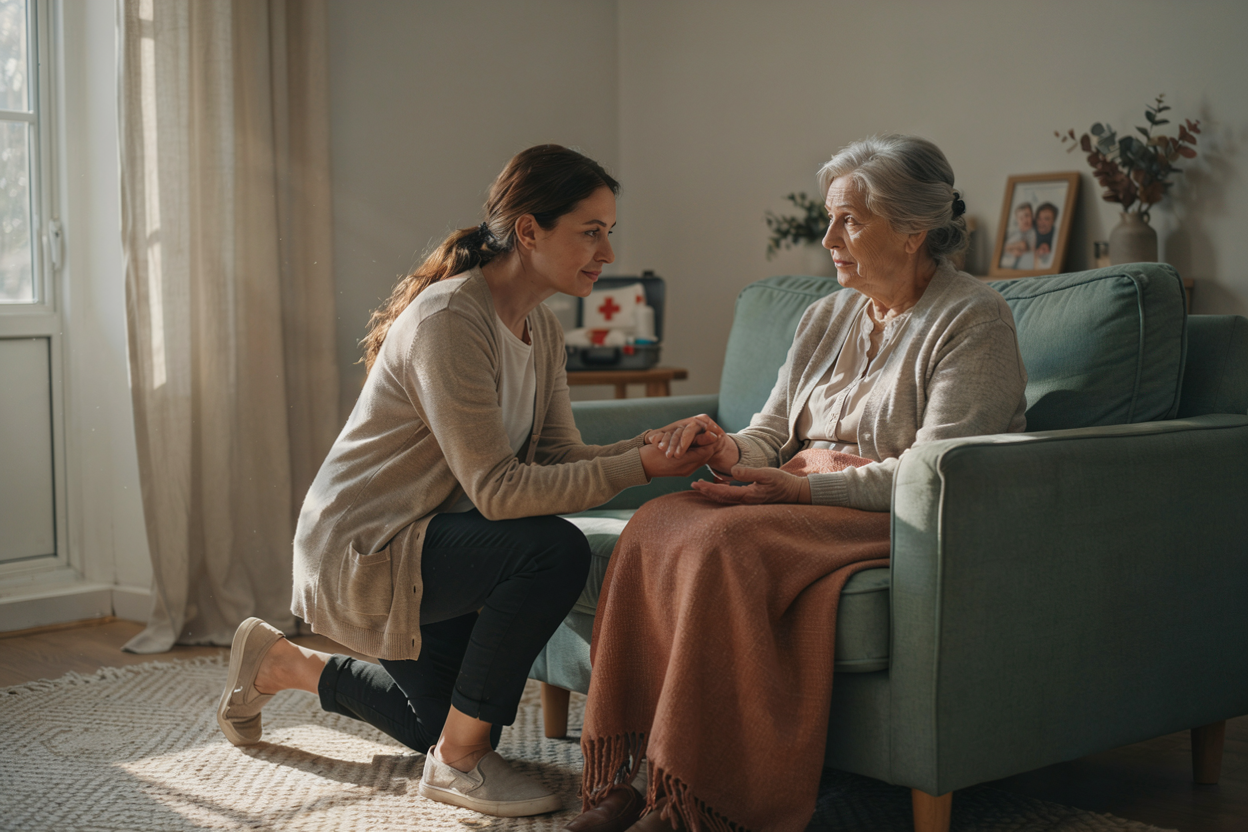
The 7 Core Skills Every Caregiver Should Have
If you're caring for someone at higher risk of a medical emergency, these are the seven skills worth having locked in, not vaguely familiar with, actually trained in.
CPR and basic life support
The one most people think of first, and for good reason. Recognizing cardiac arrest and performing compressions correctly is the foundation skill everything else sits on.
Choking response (conscious and unconscious)
A conscious adult and an unconscious one need genuinely different responses, and mixing the two up costs precious seconds.
Wound and bleeding management
Covers everything from minor cuts to pressure bandaging for serious bleeds. Care recipients with mobility issues are often more prone to injury.
Anaphylaxis and asthma response
Recognizing and responding to anaphylaxis or an asthma attack, including EpiPen use where relevant, matters because severe reactions escalate fast.
Falls and fracture management
Particularly relevant if you're caring for someone elderly or with limited mobility. Knowing what to check, and when moving someone could make things worse, makes a real difference.
Recognizing stroke and cardiac warning signs
Early identification matters most in caregiving settings, because you're often the only person there to notice the first signs.
Emergency action planning and calling 000
Knowing when and how to call 000, and what to say once on the line, is a skill in its own right. Under pressure, people freeze or ramble.
Quick reference
All seven of these are covered in the HLTAID011 Provide First Aid course, alongside basic life support and emergency action planning more broadly.
Which Course Should Caregivers Actually Book? (HLTAID011 Explained)
This is usually where people get stuck. There are a handful of similar-sounding course codes, and nobody explains the difference until you're already mid-booking and confused.
What HLTAID011 covers and why it fits caregiving roles
HLTAID011 Provide First Aid is the broad, nationally recognized course covering everything in the 7-skill list above, in one qualification. For caregivers, this is the one that matches the real range of situations you might face.
HLTAID011 vs HLTAID009, why caregivers need the broader course, not just CPR
HLTAID009 is the CPR-only course. It's shorter and useful for some roles, but it only covers resuscitation, not choking response, wound management, or anaphylaxis. For caregivers, that's a problem, because falls, wounds, and allergic reactions come up just as often as a cardiac event.
At a glance
If you only do HLTAID009, you're trained for a cardiac event and basically that's it. For caregiving, where the range of likely emergencies is wider, HLTAID011 is the one that covers you.
Who this applies to: family careers, support workers, NDIS and aged care staff
This isn't a niche course for one job title. It applies to family careers looking after a parent at home, support workers visiting multiple clients across a week, and NDIS and aged care staff in a home or facility setting. If your role involves caring for someone with a higher chance of needing first aid, HLTAID011 is almost certainly the course you're after.
Knowing how to respond is one thing, knowing whether your role requires formal certification is another.
Common Caregiving Emergencies and How First Aid Training Prepares You
Skills on a list are one thing. Seeing how they play out in a real caregiving situation is what makes them stick.
Falls and mobility related injuries
Probably the most common scenario caregivers face, often in the most ordinary moment. Someone's getting up off the couch, or stepping out of the shower, and then they're on the floor. Training teaches you what to check before moving someone, and when it could make things worse.
Choking during meals: a higher risk scenario in aged and disability care
Mealtimes are when caregivers feel the quiet pressure most, especially with clients who have swallowing difficulties. A choking incident can escalate in seconds, and the response for someone still coughing differs from someone gone silent.
Severe allergic reactions in clients with known conditions
If you're caring for someone with a known allergy, you're dealing with a real possibility, not an unlikely hypothetical. Recognizing the early signs of anaphylaxis turns a situation that could spiral fast into one you can manage.
Cardiac and stroke events in older care recipients
Older care recipients carry a higher background risk of cardiac events and stroke, and caregivers are often the only person there when early signs show up.
Every one of these scenarios is exactly why "informal experience" and "recognized training" aren't the same thing. Experience teaches you that these things happen. Training teaches you what to do when they do.
Do NDIS and Support Workers Need a Specific Certification?
This comes up a lot, and it's worth answering carefully rather than with a quick yes or no.
Employer and NDIS Practice Standards expectations
NDIS Practice Standards expect support workers to respond appropriately to emergencies, and most employers in aged care and disability require staff to hold a current, recognized first aid certification. This varies by employer, so check with whoever you report to if unsure.
How HLTAID011 satisfies most support worker and family carer requirements
For most support worker and family career situations, HLTAID011 is the certification that meets the expectation. It's nationally recognized, covers the full range of emergencies caregivers face, and is the qualification employers generally ask for when it comes to first aid for caregivers. For family careers, there's no formal requirement, but the same logic applies.
When something more specific might be required
Some areas sit outside what HLTAID011 covers. Medication support and manual handling are two examples, separate skill areas with their own training.
First aid training and these other skill areas aren't competing, they're just different. HLTAID011 covers the medical emergency response side. Medication support and manual handling cover a different part of the job entirely.
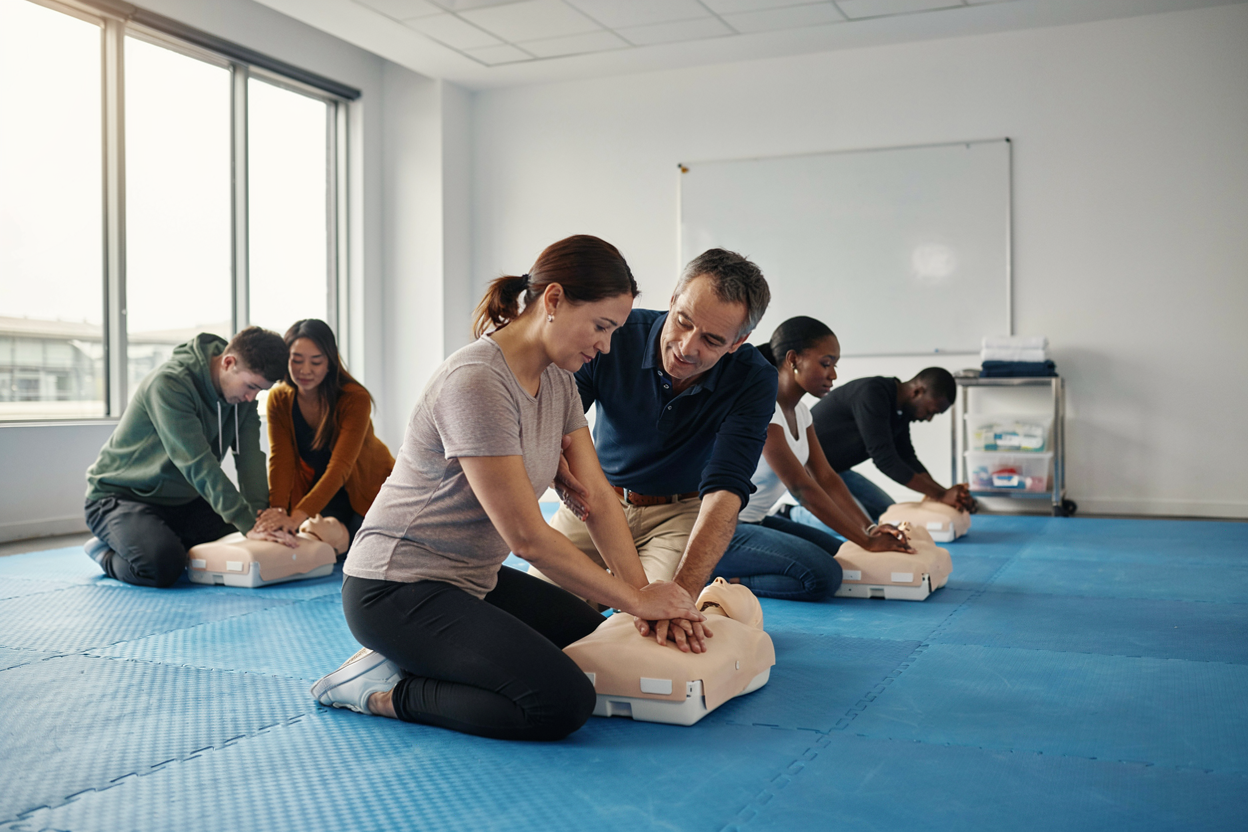
What to Expect on the Day: Manikin Anxiety, Class Format, and Certification
A lot of the hesitation around booking a first aid course has nothing to do with the content, it's nerves about the day itself.
How the practical CPR assessment actually works (de-stigmatizing "manikin anxiety")
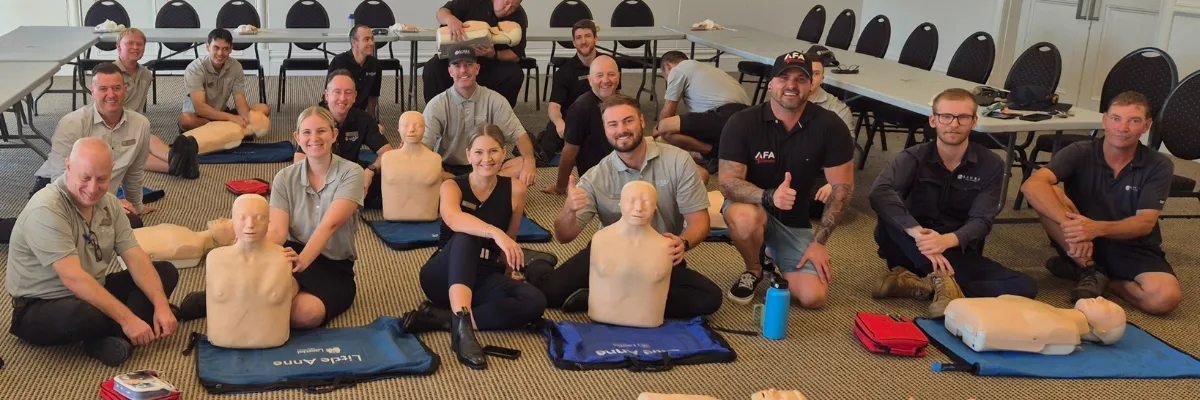
If the thought of doing CPR compressions on a manikin in front of others makes you uneasy, you are not alone. It's one of the most common things people quietly worry about beforehand: performing in front of strangers, worrying about technique.
The room is built for exactly this. Trainers work with people of every fitness level, and the assessment isn't about being perfect, it's about showing you can do the technique well enough to help. Nobody's there to judge you for being rusty or nervous, and that nervous energy settles quickly once training starts.
Course format (workplace delivery vs venue based)
HLTAID011 fits around your existing commitments, which matters if you're already stretched thin between caregiving duties and everything else. Training can be delivered at a venue, or for support worker teams, often delivered directly at the workplace, cutting out travel and making it easier to get a whole team trained together.
Same-day certificate and how long it's valid
Once you've finished the course and the practical assessment, your certificate is issued the same day, no waiting around for paperwork. That certificate is what you'll hand to an employer, an NDIS provider, or keep on file as proof you're current and ready.
How to Book First Aid Training as a Caregiver
Once you've decided this is something you need, the next part should be the easy part.
Individual booking vs employer/organisation booking
If you're a family career, pick a date that works around your week. If you're a support worker, your employer may handle the booking as part of your role, so check with them first.
Mobile/workplace delivery for support worker teams
For organizations with multiple support workers needing certification, training can be delivered directly at the workplace rather than everyone travelling to a venue. This gets the whole team certified together.
What's included is the full HLTAID011 course, the practical assessment, and your same-day certificate.
You don't need to wait for an emergency to find out you weren't ready. Book your HLTAID011 course and walk away knowing exactly what to do.
WRAPPING UP
Good first aid for caregivers isn't about memorizing a textbook. It's about walking into a fall, a choking scare, or an allergic reaction with steady hands instead of a racing mind. The shift from hoping you'd cope to knowing you will is what proper training actually buys you, and it's a different kind of confidence to the sort that comes from years of informal experience. Experience teaches you that these things happen around the people you care for. Training teaches you exactly what to do the moment they do.
That quiet background hum, the what if something happened right now, doesn't fully disappear once you're qualified. It probably shouldn't, because caring for someone at higher risk of a fall, a cardiac event, or a severe reaction means staying alert in a way that never quite switches off. What changes is what sits underneath that alertness. Instead of a flash of dread followed by a scramble to remember half-formed advice from years ago, there's a clear, practiced sequence you can actually follow. The worry stays, but it stops being paralyzing.
This matters whether you're caring for one parent in your own home or moving between several clients across a working week. The emergencies don't care about your job title, and neither should your preparation. A family career facing a choking incident at the dinner table needs the same calm, correct response as a support worker facing the same scenario on shift. The certificate that proves you've been trained matters far less than the actual capability sitting behind it, the kind you only get from doing the compressions, practicing the technique, and working through real scenarios with someone who can correct you on the spot.
There's also something worth saying about the nerves that keep people from booking in the first place. Manikin anxiety, worry about looking foolish in front of strangers, uncertainty about which course code actually applies, these are all real and all completely normal. None of them are good reasons to stay unqualified. The room is built for nervous, rusty, out-of-practice people just as much as it's built for anyone else, and the gap between feeling unready and walking out competent is far smaller than it feels from the outside.
If you've read this far, there's a good chance that quiet thought has crossed your mind more than once already, the one about what you'd actually do if something happened today. That thought is worth listening to. It isn't a flaw in your preparation as a caregiver, it's a sign you already understand the stakes. The only thing missing is the structured, hands-on knowledge to match the care you're already giving, and that's a gap that's genuinely simple to close.