First Aid Course: What to Wear on the Gold Coast (and What to Leave at Home)
It's a Friday night. The house is finally quiet, your online theory's done, and your practice is booked for tomorrow morning. And there you are in front of the wardrobe, jeans in one hand, leggings in the other, trying to work out which one won't let you down when you're on your knees in a room full of strangers. If you've ended up googling "first aid course what to wear" at this hour, you're in good company. Heaps of people do.
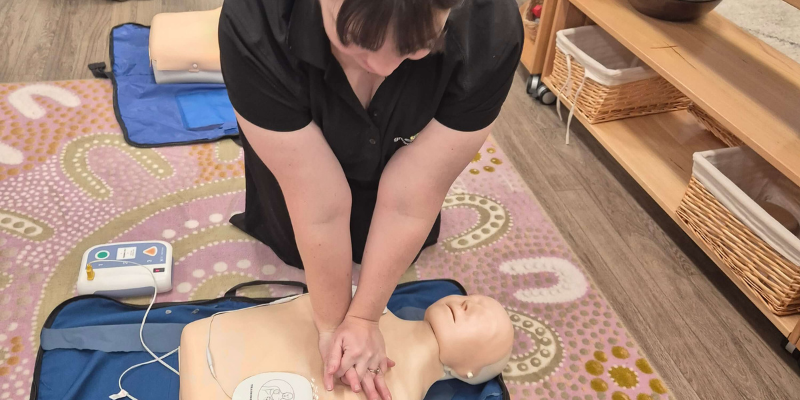
Here's the thing. It sounds minor, but the practical session is hands-on. You'll kneel on the floor for CPR, lean over a manikin, practice the recovery position and apply bandages. Usually in a room full of people you've only just met.
The wrong outfit won't fail you. But it can make an already nervous morning harder than it needs to be. Jeans that dig in when you kneel. A top that rides up every time you lean forward. Thongs on a training-room floor. Every one of them pulls your focus away from the skills you actually came to learn.
Honestly, your outfit is the one part of the day that's completely in your hands. Get it right and you'll forget about it by morning tea, which is exactly the point.
This guide covers what to wear to a first aid course on the Gold Coast, what to leave at home and what to throw in your bag. It also covers dressing for hot, humid days, what to do if kneeling is hard for you, and how to handle a course squeezed between work and daycare drop-off. So you can walk in comfortable, focused and ready to learn.
What Should I Wear to a First Aid Course?
Wear comfortable, loose or stretchy clothing that lets you kneel, bend and lean forward easily, plus flat, closed-toe shoes. The practical part of a first aid course includes CPR on a manikin at floor level, so choose clothes you can move freely in for the whole session.
Wear:
Stretchy pants, leggings or trackpants
A top that stays put when you lean forward
Flat, closed-toe shoes such as sneakers
A light layer for air-conditioned training rooms
Leave at home:
Short skirts, dresses or stiff, tight jeans
Heels, thongs or open sandals
Dangly jewelry or bulky rings
Anything you'd hate to get dusty or creased
Why What You Wear Matters at a First Aid Course
Most people walk into first aid training expecting to sit and listen. And sure, there's some of that. But the practical assessment is where you show you can actually do the skills, and it happens mostly on the floor.
What you'll physically do during the practical
Here's a rough idea of how your body gets used on the day:
CPR on adult and infant manikins, kneeling beside them at floor level
The recovery position, bandaging and slings
Placing AED pads on a training manikin
Kneeling, leaning and getting up and down, over and over
CPR is the big one. Under the ANZCOR guidelines (Guidelines 6 and 8), compressions run at 100 to 120 per minute, pushing down about a third of the chest's depth. You do all of that from your knees, using your whole upper body. It's honest work. So clothes that stretch and shoes that grip the floor aren't fussy extras. They just make the job easier.
What you'll do | What your clothes need |
CPR from your knees | Stretch at the knees and hips |
Leaning over a manikin | A top that stays put |
Bandaging and slings | Free movement in your arms |
Getting up and down | Flat shoes that grip |
Online theory first, practical in person
HLTAID011 Provide First Aid is blended. You do the theory online at home, in your pajamas if you like, then come in for a face-to-face practical. Only the practical affects what you wear.
Want to know more about what's covered? Have a read of our post on what HLTAID011 assesses. Not sure you even need the full course? Our CPR or full first aid? guide sorts that out.
So what does that look like in an actual outfit?
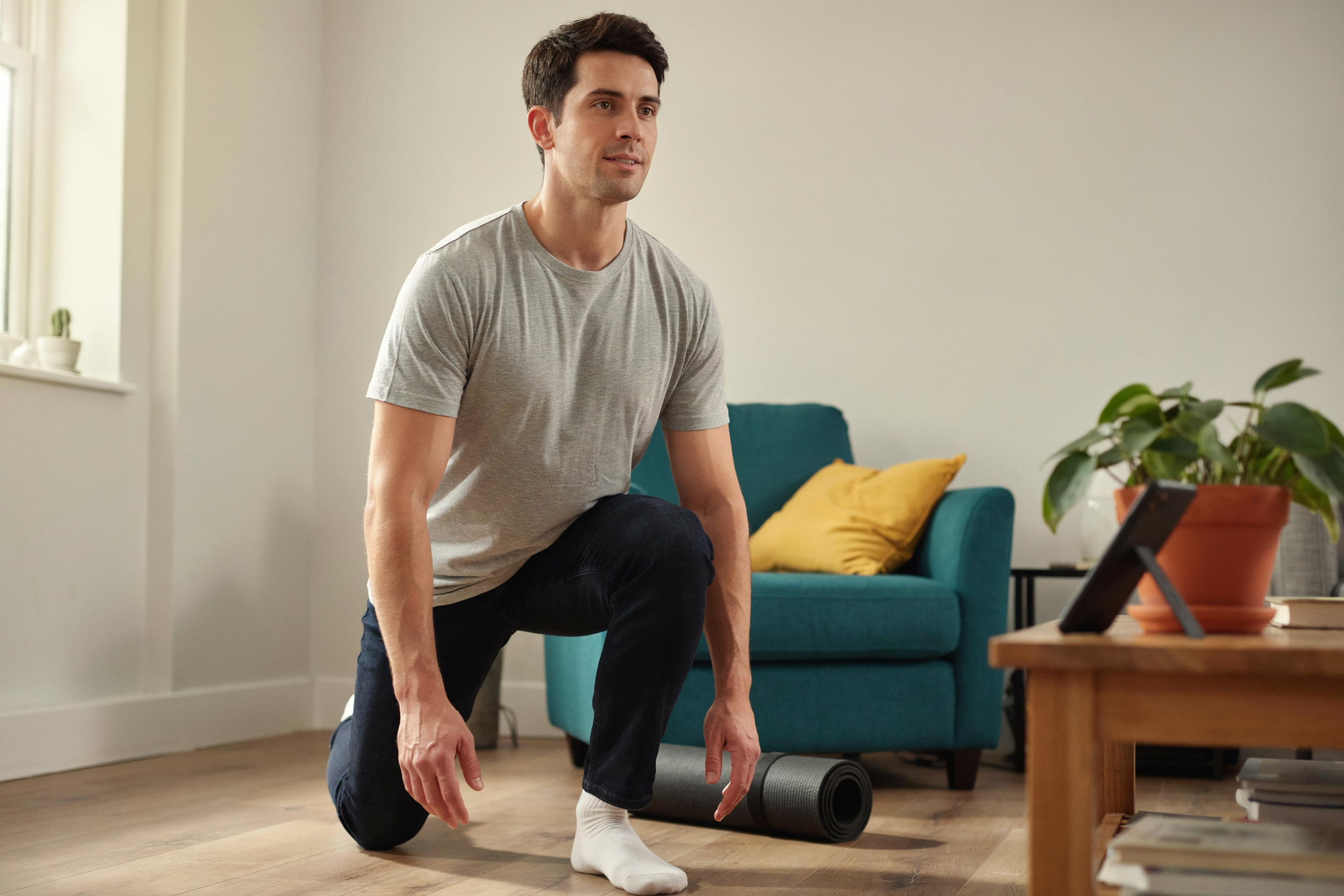
What to Wear to First Aid Training, Head to Toe
Good news. You don't need to buy anything. The best outfit for first aid training is probably already in your drawers, it's just the stuff you'd wear to the shops on a Sunday. Here's how it breaks down.
Bottoms
This is where most outfit problems start, so get this bit right and you're most of the way there.
Stretchy pants or leggings
Trackpants
Relaxed chinos with a bit of give
Try the kneel test. Before the day, kneel on the floor at home and do a quick squat. If you can do both without anything pinching, pulling or sliding down, those pants will work fine on the day. It's quick and saves you a whole morning of tugging at your waistband.
Tops
A t-shirt or top that's long enough to stay tucked when you lean over a manikin. You'll be bent forward a fair bit during CPR, so a cropped top or a short shirt will keep creeping up your back.
A t-shirt or long, plain top
Nothing with a low neckline
Skip very loose or floaty sleeves, they get in the way of your hands
Shoes
Flat, closed-toe shoes such as sneakers. You're up and down off the floor all session, and you want something that grips and supports your feet while you do it. Your everyday runners are perfect.
Layers
Bring a light jacket or cardigan. Training rooms are air-conditioned and can feel chilly first thing. Then you start CPR and warm up fast, so having something easy to pull off and on beats one heavy jumper.
You know what to wear. Now pick your day.
Just as useful is knowing what to leave in the wardrobe.
What Not to Wear to a First Aid Course
Knowing what not to wear to a first aid course matters just as much. None of these will get you sent home. They'll just make the day a bit more awkward than it needs to be.
Skirts, dresses and short shorts
These are hard to kneel in and they ride up the moment you lean forward. It's the outfit people tend to mention most, usually during their first round of CPR. If you love a dress, save it for after.
Can I wear jeans to a first aid course?
Yes, if they stretch. The internet's a bit split on this one, so here's the simple answer. Soft, stretchy jeans are fine. Stiff, tight denim is the problem, because it digs in behind your knees every time you kneel and makes bending a chore. Do the kneel test at home. If they pass, wear them.
Heels, thongs and open sandals
You're up and down off the floor all session. Heels make that awkward and wobbly. Thongs and open sandals leave your toes exposed in a room where people are moving around, kneeling and shuffling into position.
Jewelry, accessories and long nails
Dangly necklaces swing forward onto the manikin
Bulky rings press into your hands during compressions
Very long nails can make interlocking your hands awkward, so mention it to your trainer
Leave valuables and your good white clothes at home
Instead of this | Try this |
Short skirt or dress | Leggings or trackpants |
Stiff, tight jeans | Stretchy jeans or chinos |
Heels or thongs | Sneakers |
Statement necklace | Nothing, or a small stud |
Then there's the Gold Coast weather to factor in.
Dressing for Gold Coast Weather
Anyone who's lived here a while knows the Gold Coast does its own thing with the weather. One morning's sticky before you've left the driveway, the next you're driving through a storm. So if you've booked a first aid course on the Gold Coast, it's worth a quick glance at the forecast before you get dressed.
Hot, humid days
Go for breathable fabrics. Cotton or activewear that lets your skin breathe is best. You'll be doing CPR, and that's a workout on its own, so heavy layers just leave you sweaty and uncomfortable. Pack a water bottle and keep it handy.
Cold air-conditioned rooms
Here's the Gold Coast catch. It can be steamy outside and properly cool inside. Training rooms run the air-con, and sitting still during the talking bits can feel chilly. One light layer that's easy to whip off when you warm up sorts it.
Storm-season mornings
Summer storms roll in fast. If you're driving in, chuck a towel or a spare pair of dry shoes in the car. Nobody wants to kneel on a training-room floor in soggy sneakers. Give yourself a bit of extra time for peak-hour traffic too.
If you're squeezing the course around a shift, your work gear might already do the job.
Coming Straight From Work, or Heading There After?
Plenty of people fit their course around a shift, either rushing in after work or heading straight there once the practical wraps up. The good news is your work gear might already be fine.
Support work and healthcare
A polo and work pants are usually fine, and so are scrubs. They're made for bending, lifting and moving around, which is exactly what the practical asks of you. If you're starting out in disability support, check out our first aid for NDIS workers page. It covers the first aid course for NDIS workers on the Gold Coast in more detail.
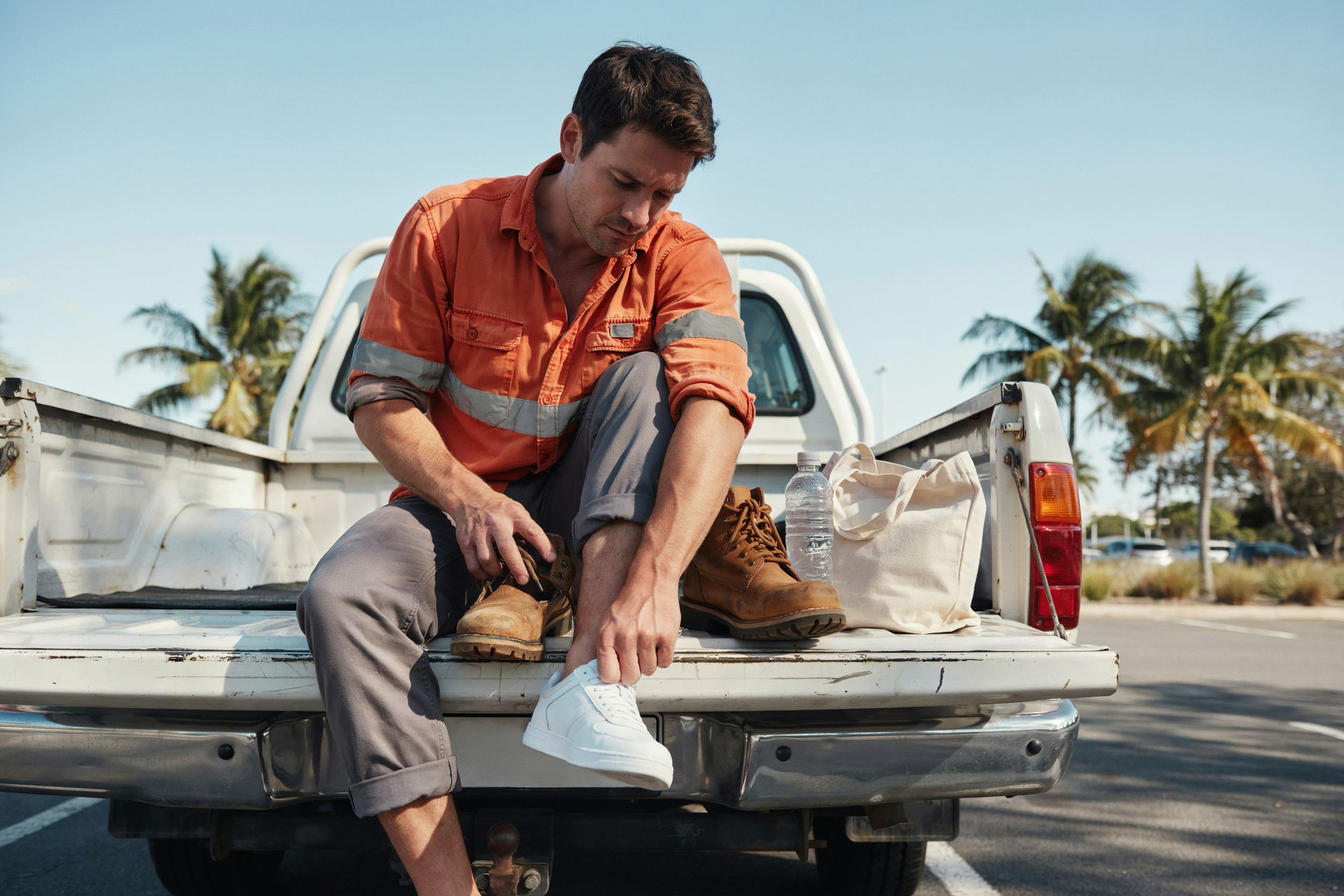
Trades and hi-vis
Work pants are fine. Steel caps are the problem. They're heavy and stiff, and kneeling in them for CPR gets uncomfortable fast. Throw a pair of sneakers in the ute and swap them over when you arrive.
Gym and hospitality
Activewear is pretty much the ideal outfit, so if you're a PT booking a first aid course for personal trainers on the Gold Coast, come as you are. A black hospitality uniform works too, as long as the pants have some stretch.
Changing at the venue
Don't count on a change room being there. If you can, arrive already dressed for the practical so you're not hunting for somewhere to get changed.
Your job | What works | Quick swap |
Support work | Polo, work pants, scrubs | None needed |
Trades | Work pants, hi-vis | Steel caps for sneakers |
Fitness | Activewear | None needed |
Hospitality | Stretch black pants | Stiff pants for stretchy ones |
Office | Smart casual with stretch | Skirts and heels for pants and flats |
Whatever you're wearing, the one thing left to think about is your knees.
If Kneeling Is Hard for You
A lot of people quietly worry about this one and never say it out loud. Bad knees, a sore back, an old injury, or you're pregnant and the thought of kneeling on a floor isn't appealing. If that's you, you're definitely not the first, and it's worth sorting before the day rather than stressing about it in the morning.
Tell the team before the day
Got a knee, back or other physical concern, including pregnancy? Let us know before you book or well before your session. Knowing about the first aid course physical requirements ahead of time means there's no surprise for you or your trainer, and the team can talk you through what's possible.
Clothing that helps
Your outfit can take a bit of pressure off. Thicker leggings or sturdier pants give your knees a little cushioning against the floor, much more than thin activewear or bare skin under shorts. If you're wondering about mats or knee pads, ask the team before the day.
Once your outfit's sorted, the rest of your bag is easy.
What to Bring to Your First Aid Course
Here's what to bring to a first aid course, and the good news is it all fits in a tote bag. Pack it the night before and you'll walk out the door without that "what have I forgotten" feeling.
Must-haves
These are the non-negotiables. Without them, you could run into trouble getting your certificate.
Photo ID
Your USI (Unique Student Identifier)
Your online theory, finished before you arrive
You need a USI for any nationally recognized training in Australia. If you haven't got one yet, you can set it up at usi.gov.au. Do it the night before so you're not doing it on your phone in the car park.
Comfort items
These won't make or break the day, but you'll be glad you packed them.
Water bottle
A snack
Your glasses, if you need them for reading
A light layer
Your own medication, like an asthma reliever
Leave in the car
Keep valuables and anything bulky locked away. You'll be moving around the room, and a big handbag just gets in the way. Thinking of bringing the kids along? Check with the team first.
Wondering what to expect at a first aid course beyond your outfit and your bag? Your trainer will walk you through everything on the day. All that's left for you to do is pick a session.
Book Your First Aid Course on the Gold Coast
So your outfit's picked, your bag's packed and you've got a good idea of how the day will go. All that's left is choosing a session that fits around work, daycare and everything else you've got going on. And honestly, that's usually the trickiest part.
We run HLTAID011 on the Gold Coast, and if you've been typing "first aid course near me" into your phone late at night, there's a good chance a session is closer than you'd expect.
The course is HLTAID011 Provide First Aid, which includes CPR, and it's nationally recognised through RTO 31106. You do the theory online at home, then come in for the practical in person.
Once you've finished, your certificate comes through ready to forward to your employer, so you can get on with starting your new job.
Getting sorted is easy. First, pick your session at the nearest Gold Coast venue on a date that works. Second, do the online theory on your phone before the day. Third, wear something you can kneel in, bring your ID and USI, and you're ready.
Still got questions about kneeling, your job or anything else? Call or text us on 0434 778 243 and we'll talk it through before you book.
Already hold HLTAID011? Book your annual CPR refresher to stay current.